
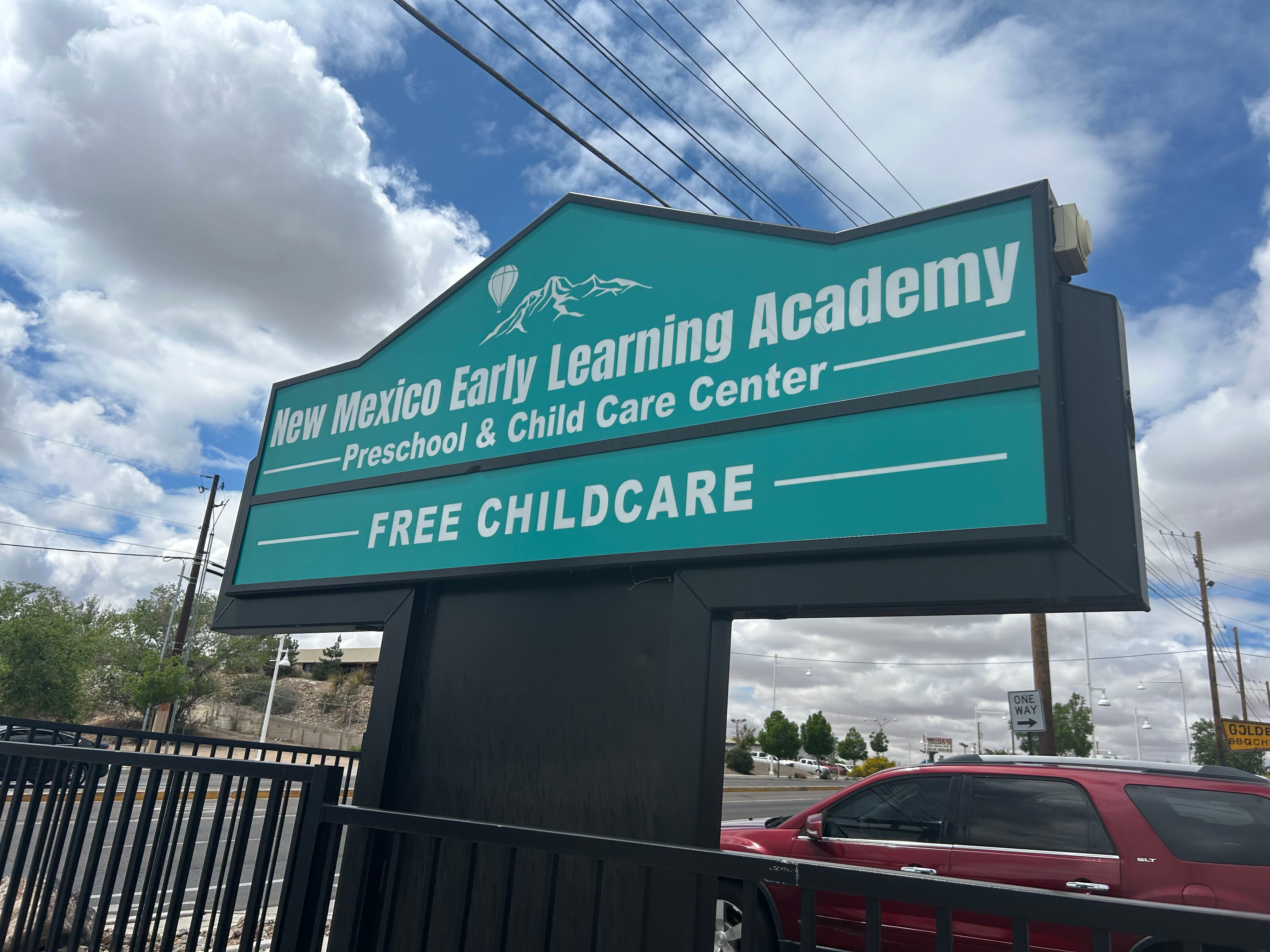
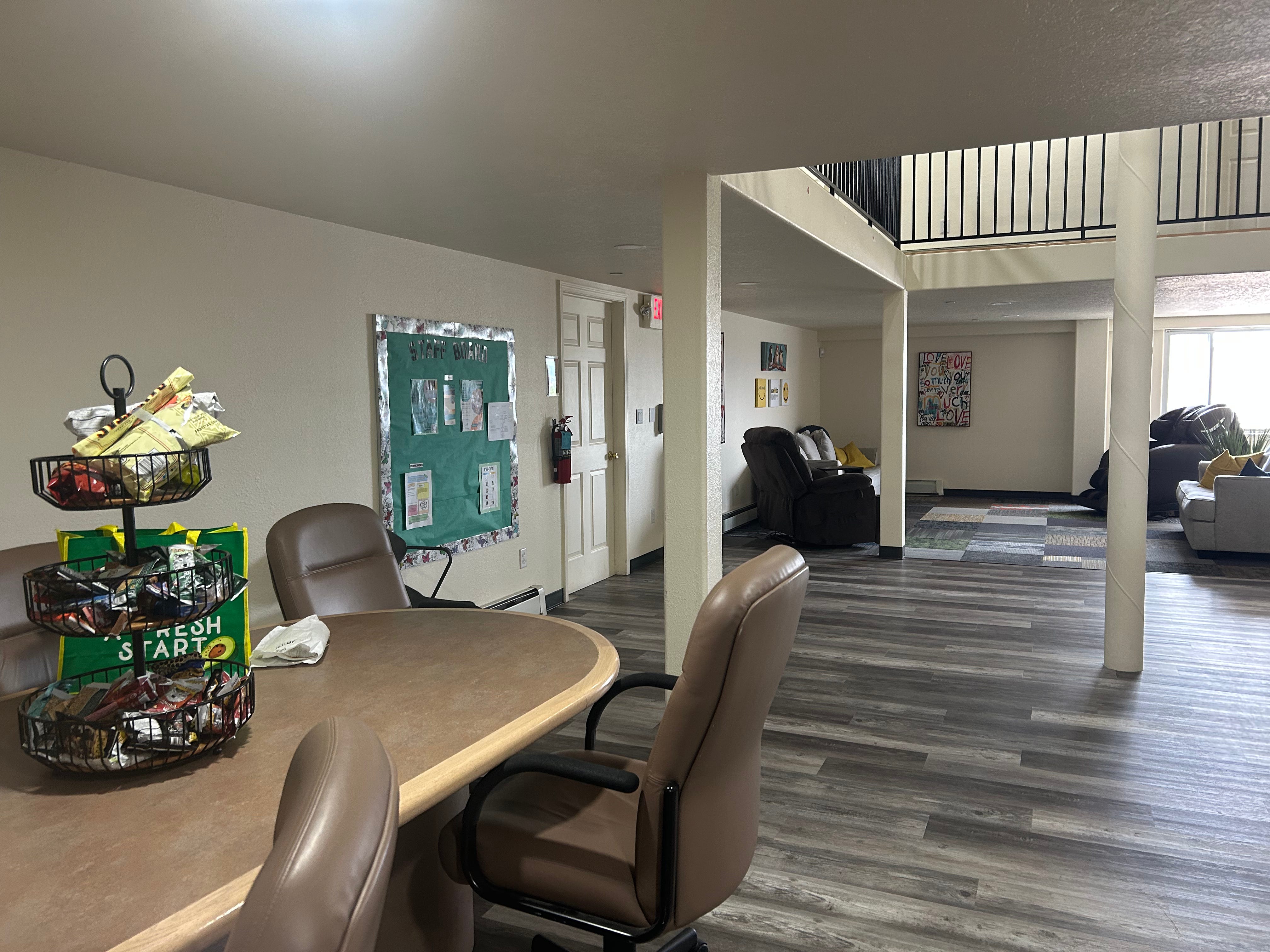
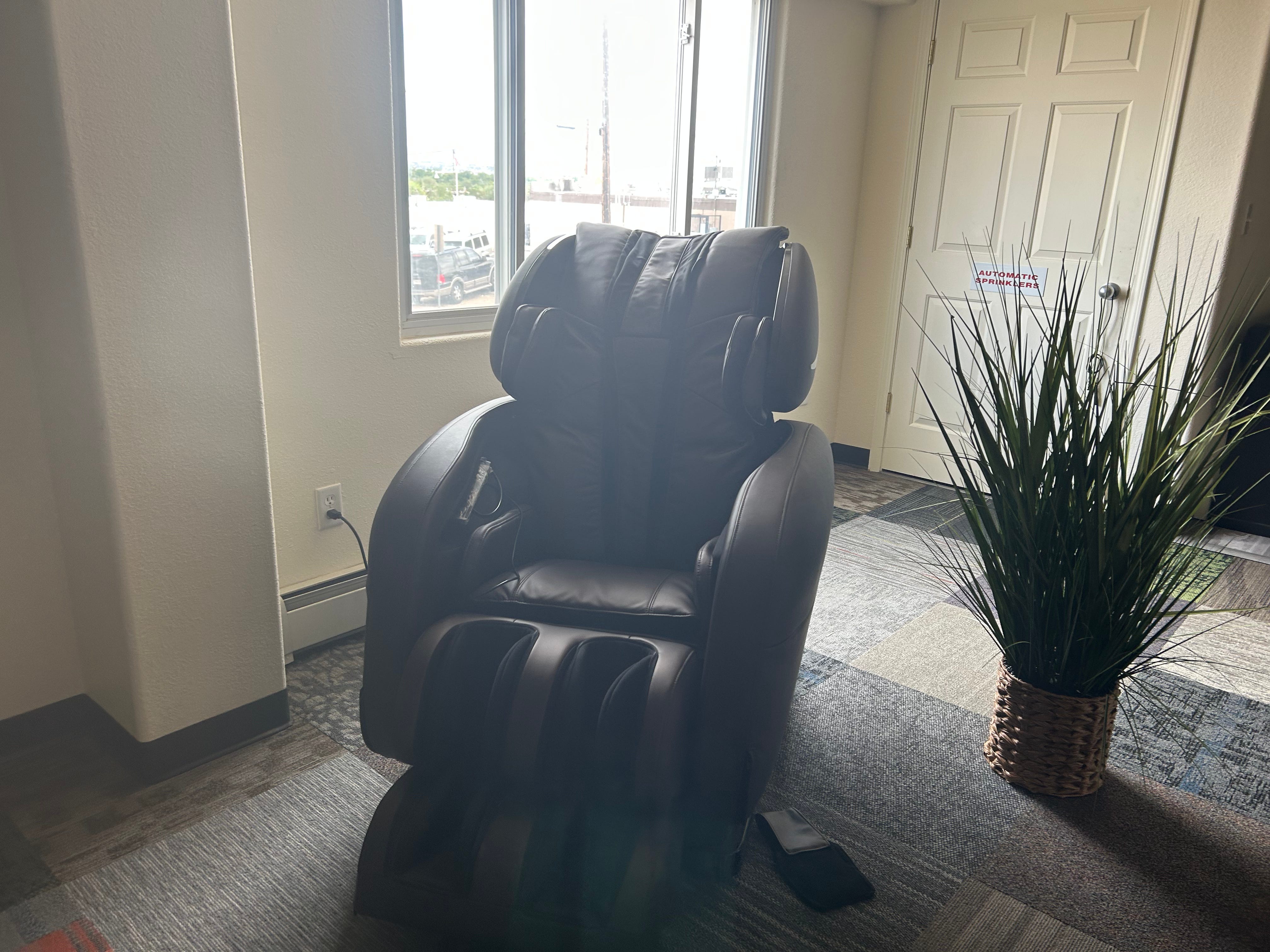
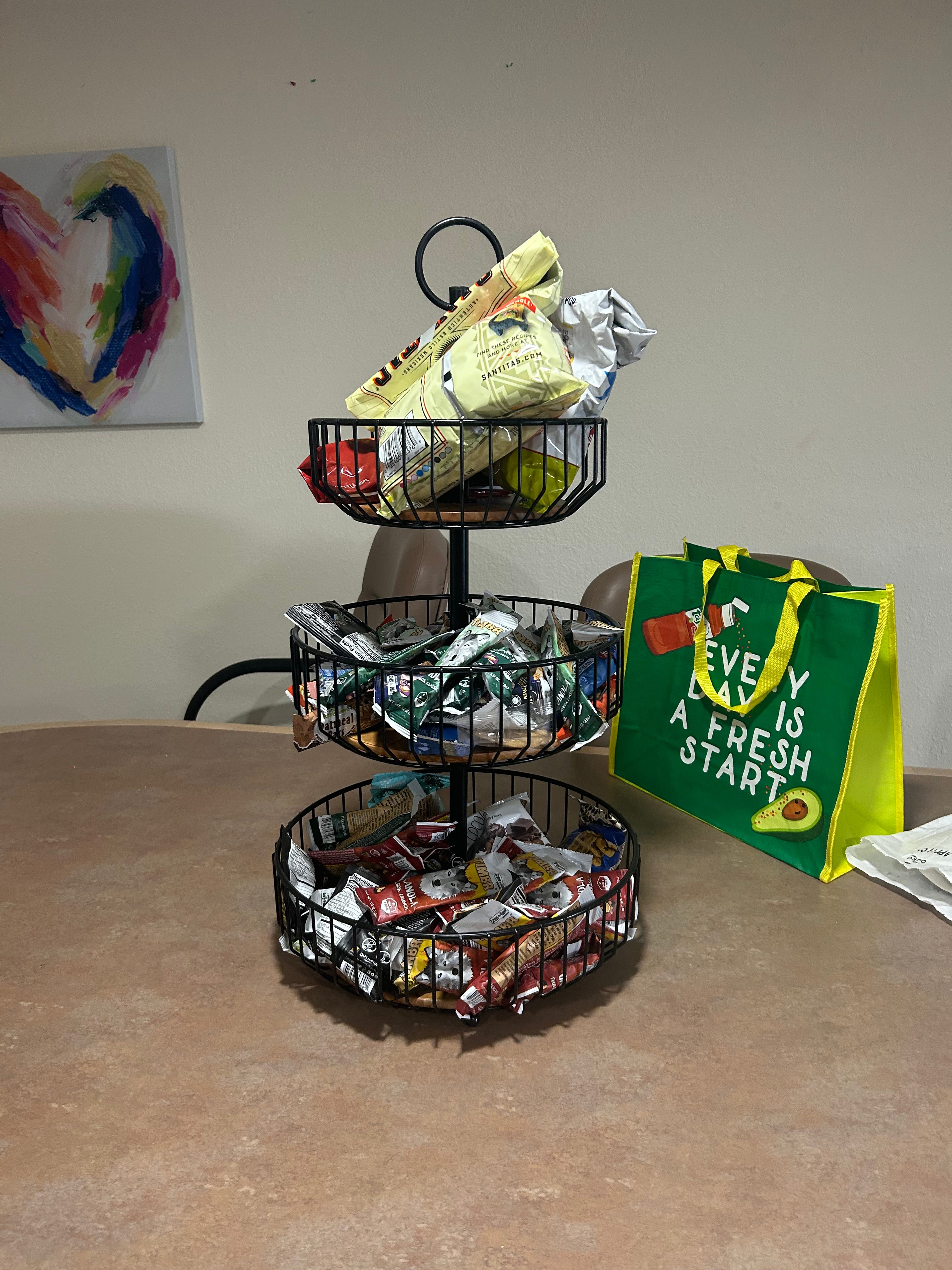
The first big surprise I had when I was given a tour of New Mexico’s Early Learning Academy was just how spacious and luxurious the staff break rooms were, complete with massage chairs and baskets of free snacks. I met with Crystal Romero, the head of ELA, and she talked about how taking care of her staff is her top priority and that is what allows ELA to have full enrollment.
“Twenty years ago, I had to furnish classrooms by shopping at thrift stores and yard sales, sanding things myself and repainting them,” she says. But New Mexico’s unprecedented investment in child care, first through American Rescue Plan dollars, then through higher child care subsidies and now with universal child care, has changed the way she runs her business and motivated her to expand.
Romero says the extra funding has allowed her to improve problem areas, like staff turnover, which is high in a labor-intense low-wage job like child care compared to other industries. She revamped her on-boarding system to include a two-week immersion where new staff shadowed a more senior teacher. She implemented 30, 60 and 90 day benchmarks to train staff properly, and she included a mentor teacher and coordinator team. Turnover, which had been as high as 40 percent per year dropped to 9 percent, and she estimates is now around 15 percent, lower than the industry average.
“It takes a savvy business person to realize ‘here is how we make the math work [in child care]’,” said Elliot Haspel, in a story I reported for Vox. He acknowledges that there are fundamentally different profit motives of independent programs like Romero’s that are profitable because of the state support, compared to investor-backed chains, who are obligated to report profits to shareholders, and may not be able to keep the needs of the children and educators above their concerns for profit.

Romero has now expanded ELA to four centers, and she is under contract to purchase two additional pieces of land. They have close to 700 children enrolled and approximately 165 employees. Romero says they are the highest paying child care program in the state, and all employees are eligible for full benefits, including health, vision, dental, and retirement. In October, she announced that every staff member would get a $5 an hour raise, which was met with cheers and shrieks. (She sent me the YouTube video, another indication of the strong online presence they can maintain).
“Staff come first before our families, because if they are happy and treated right and feel safe and secure, that is going to be received with our children and families when they enroll,” Romero said. “If the staff are not happy, the families will reap the consequences, and I can’t have it.”
As part of their community program, they host an event each year where every child gets a brand new pair of shoes. “Nikes and Air Jordans,” she explained. “We gave away 500 at this location,” she says, of the original Early Learning Academy in West Albuquerque. This year, they sponsored a Make-A-Wish request for a three-year old in their community suffering from a brain tumor, and paid $8,500 to send the family to Disney World. Framed photos along the wall of the conference room, where she and I met, show her with her husband at local University basketball games and community events, on behalf of ELA.
And yet, Romero gets “lots of flack from people who say you are using state money to get rich,” she says. “I don’t see any other industry that receives state money that feels like they can’t do well.”
New Mexico is one of several states that has made child care more profitable for people who work in the industry. I recently covered this issue for Vox - where I delved into the different regulations that are being considered as more for-profit entities enter the space. Romero is very much a local businesswoman - her efforts are very different from, say, a private equity company who is looking to extract profits without focusing on the quality of services delivered or the needs of the staff. Romero has figured out a better way to make child care profitable without skimping on quality - and she has done so by focusing on staff wellbeing and compensation.
(And there are excellent newsletters on some of the concerns with private equity and the child care space, a few of which are here: Elliot Haspel has written extensively about this, including this report from Zero2Eight, and I’ve covered this on Substack previously too.)
But back to New Mexico. Here’s the fine print of how child care has become more profitable: the state subsidy pays for full-time child care, even if children only show up for three or four days each week. Romero studies her average daily attendance records, and is able to enroll more students while keeping her staffing levels the same, without going over the state-mandated teacher-to-child ratios. She keeps floaters on hand to allow her staff to take breaks, so if more students show up than the daily average, she still has the staff to provide appropriate cover.
This idea is both genius and a bit of a head-scratcher. Child care should be high quality, staff should be paid well, and government support is necessary for it to be a stable industry. And yet it is only the larger spaces, like Romero’s, that could have a system with sufficient economies of scale to bring in a stable of floaters as the daily attendance fluctuates. I think a lot about the home child care spaces who might not be able to compete in the same way - whose ability to flex their enrollment so that they can maximize the state subsidies while providing care isn’t going to be the same. And I also wonder about the child care model of providing full day care, five days a week, if families don’t actually need to utilize that amount of time. Yes, they need to provide adequate staffing, but that model is predicated on the idea of traditional 9-5 jobs, which we know much of the population - particularly low wage workers - doesn’t access.
And yet, there aren’t enough examples out there of providers and states looking to be innovative leaders. I agree with Romero that she should be prioritizing what she is doing - compensating her staff well and providing high quality care for kids. Because of the locations of her child care centers, in lower-income neighborhoods, all of the families qualified for state aid, even before New Mexico expanded child care subsidies to include all families regardless of income.
Part of my reporting at the Better Life Lab is to keep highlighting these states and localities who are doing innovative work. Because supporting child care through government dollars is still a relatively new concept in America. It’s up to us to 1) normalize this practice, 2) point out where it works and where it can be improved, and 3) take a close look at the innovators like Romero. If she is keeping staff turnover low, providing high quality care, and expanding - this is something to watch with a close eye.
No posts
Comments
Nothing yet. Say the first thing.
Sign in to join the conversation.