
You can also listen to this episode on iTunes or wherever you listen to podcasts.
Some words and experiences come with a lot of baggage, conjuring up fear, stigma, and shame.
But being afraid or ashamed doesn’t protect us from those experiences or those words. It just keeps us from really understanding them or being able to talk about them. And what we can’t process for ourselves, we can’t help those we love and lead with either.
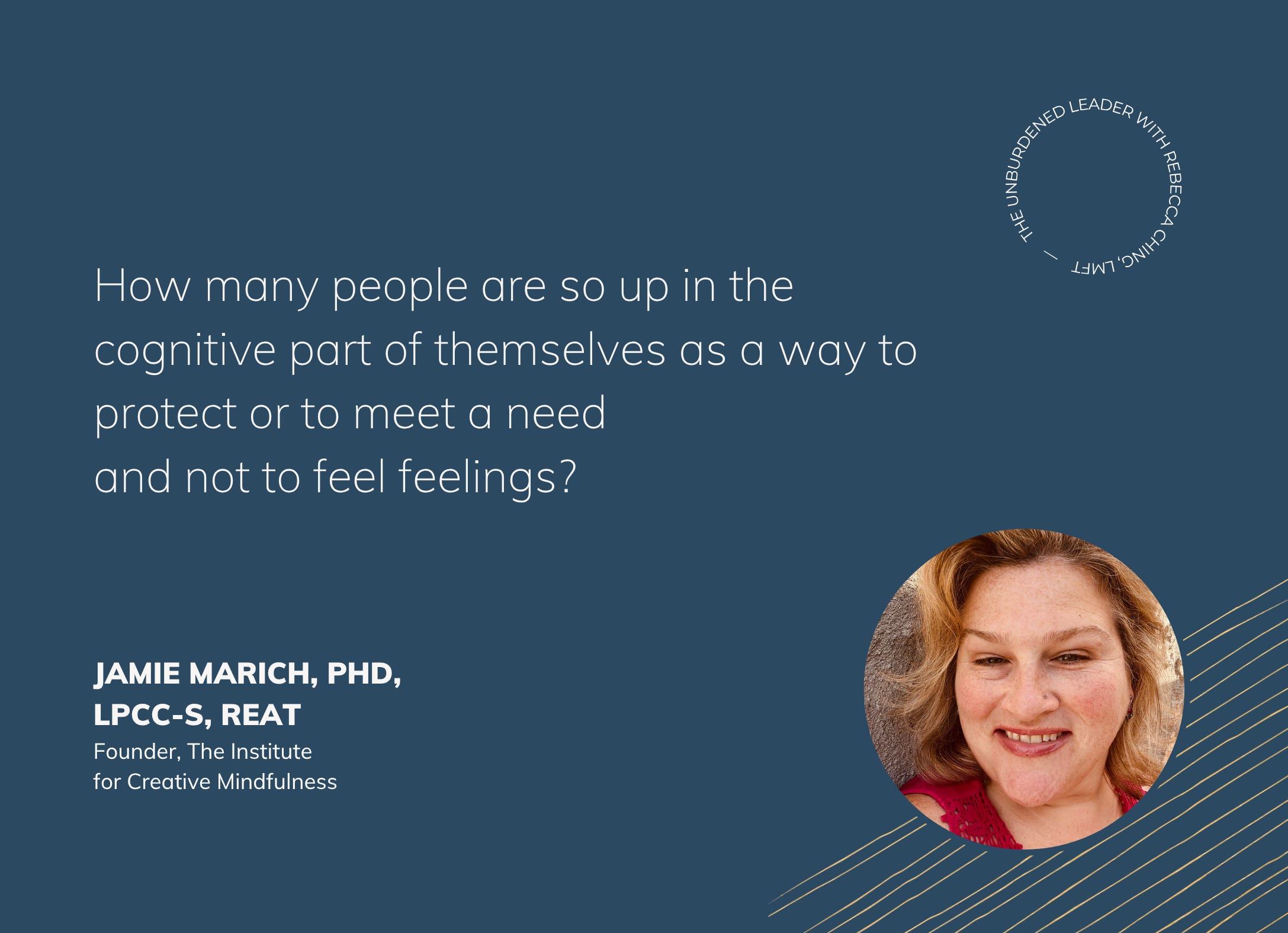
How people were taught and trained to address dissociation often perpetuates shame and stigma, and its pop culture depictions and usage haven’t helped either.
But my guest today has spent her career making the case that dissociation isn’t rare, or even necessarily pathological; it’s actually a common and deeply human experience that ranges from everyday zoning out to more complex presentations that do need support.
And as you’ll hear, Dr. Jamie Marich believes understanding this spectrum isn’t just a matter of clinical education, but is vital for our own self-knowledge and how we lead others.
Dr. Jamie Marich, PhD, LPCC-S, REAT (she/they) began her career as a humanitarian aid worker in Bosnia-Herzegovina from 2000-2003, primarily teaching English and music. Jamie travels internationally teaching on topics related to trauma, EMDR therapy, expressive arts, mindfulness, and yoga, while maintaining a private practice and online education operations in her home base of Akron, OH. Marich is the founder of the Institute for Creative Mindfulness and the developer of the Dancing Mindfulness approach to expressive arts therapy, and the author of several books on EMDR, dissociation, mindfulness, recovery, and more.
The stakes of identifying as having a dissociative disorder, and why Jamie felt it was vital for them speak up anyway
How no longer being “zipped in” has given Jamie access to true authenticity and flow in her personal and professional lives
Defining dissociation at its most basic, and how and why it shows up in everyday situations
Why having parts is not necessarily pathological and why for some people those entities become so distinct
The most persistent and harmful myths about dissociative disorders, for both patients and providers
Why Jamie starts trainings with having people learn to recognize their own dissociative tendencies
Why DID is not a TikTok fad, and why more recognition and discussion is better than ignorance
Instagram: @drjamiem, @traumatherapistrants
TikTok: @traumatherapistrants
YouTube: @DrJamieMM
Apple / Spotify
Click here for the full archive of The Unburdened Leader
What’s one experience, feeling, or coping strategy you’ve carried shame around that became easier to understand once you had better language for it?
I love that you’re here. Thanks for reading, listening, subscribing, and sharing!
Comments
Nothing yet. Say the first thing.
Sign in to join the conversation.