
I was en route when I last wrote, and have since landed in a strange place. Where things are fragmented and foggy. The same, but profoundly different. Where the heart lurches, and language falls short.
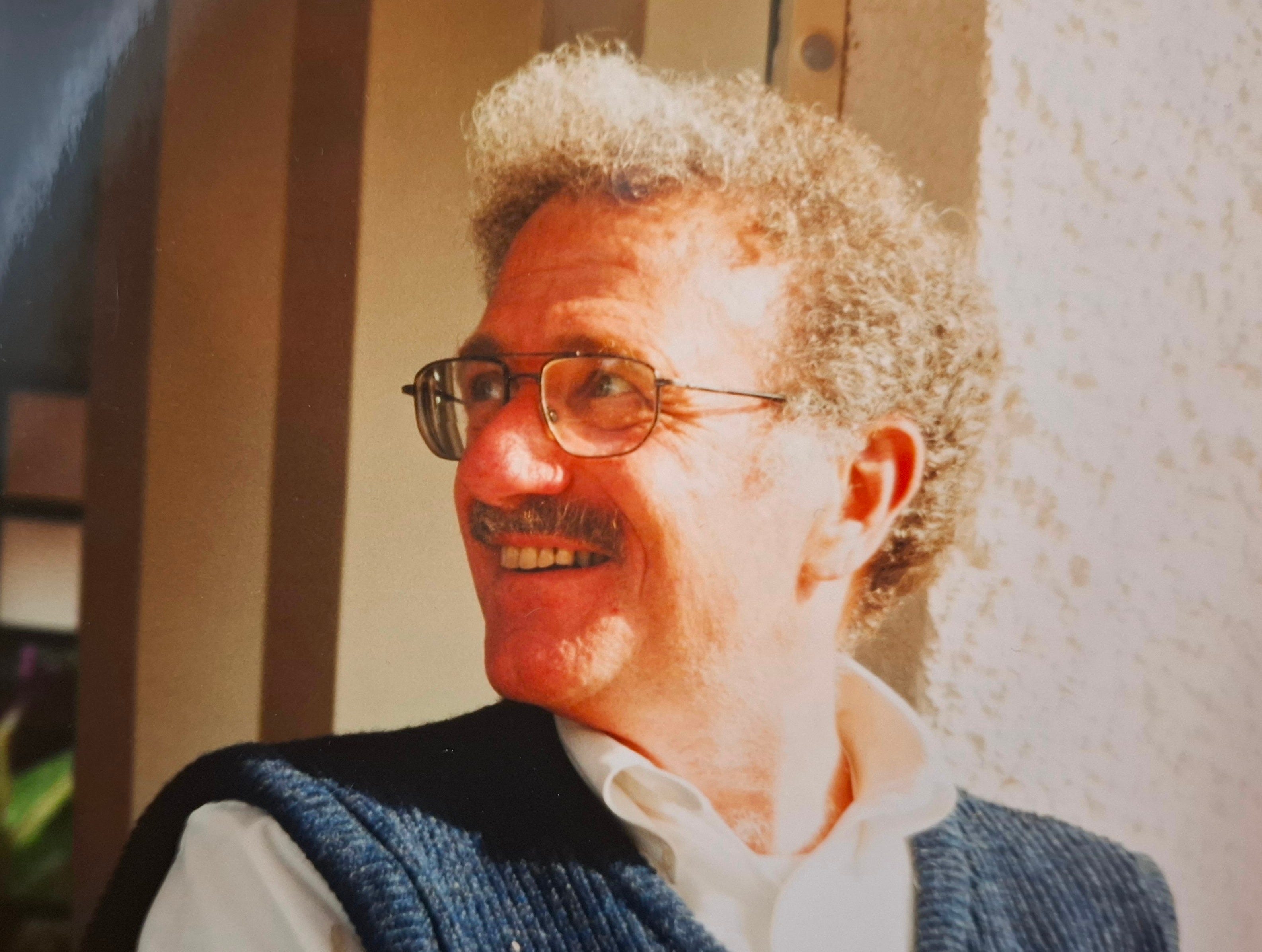
Twenty-four hours after I landed, on Friday April 24, in the evening shortly before Shabbat, my father, Gene Bardach, passed away. We have already marked shloshim – the thirty days since a burial in Jewish tradition – and I still struggle to write z”l next to his name (the abbreviation for the traditional Hebrew zichrono l’vracha, may his memory be a blessing) – or to write at all.
/ \ /
As we coordinated final details on the morning of the funeral, my sister wrote to me: “The phrase ‘we can do hard things’ keeps coming in handy.”
“He would have loved that!” I responded.
Which he would have. But this was the first time I had used that phrase - the particular language and tense of the bereaved - and it stung. Another signal that we had arrived in a reality permanently altered from the one we’d known just a few days prior.
\\ /
My father was always matter-of-fact about these things. One night, when I was a kid, he came down to dinner and announced cheerfully: “I just made a computer file with everything you’ll need to know when I die. I saved it under: ‘Gene Dead!’ I figured that was the easiest way to remember it!”
We did, indeed, find the file easily enough.
But that was the only easy part.
Death. Health problems. The bigger problems of the world. He cared deeply, but was also matter-of-fact about all of it. Do what you can. Accept what you must. Don’t get bogged down. Keep moving forward.
/ \
He was the cat with nine lives, having survived multiple nearly-fatal health scares. One of his medical episodes took place the summer of 2024, here in Jerusalem, a day before he and my mother were to fly home. He ended up in the hospital for a month, undergoing an emergency operation, and then a second one, and then a month of rehab in my home before he could travel.
At the time, our cousin Hersh was still hostage in the tunnels in Gaza, and we placed one of the “Bring Hersh Home” stickers above my father’s bed in his hospital room. It felt like Hersh was watching over my father – or was my father watching over Hersh? Not that either was exactly in the position to do that for the other. And now I keep imagining them hanging out up there, somewhere, discussing books and politics, and for sure sharing a beer.
Here, in Israel, we have been inundated for so long, by too many stories of tragic, horrific too-early dying. Even now, alleged ceasefires have not brought an end to the almost daily news of yet more lives lost.
I am acutely grateful that my father lived until 86. That he had a life overflowing with so much good. I do find in that some real comfort. But still, it’s just a different kind of painful.
\ \ /
“Ima, what’s deceased?” my daughter asked me some days after I’d returned home, and I explained that it is a slightly softer way to say that someone has died. Sort of like passed away. She thinks deceased sounds harsher.
But really - is there any good word to use for this? Consider: “I lost my father.” But we didn’t lose him. We know exactly where he is. We are the ones who are lost.
// \
I read that the rabbis of yore said mourners should eat lentils, because just as lentils have no mouth, mourning has no mouth. Why? Lentils, unlike other beans, have no crack or cleft in them, so they are mouthless; like mourners sitting in stunned silence over their loss are left as though without a mouth.
\ / \
He was an exceptional father, friend, teacher, mentor, community member, citizen, as I shared in my eulogy. As a professor of public policy, being a good academic was necessary, but not, for him, the main point. He loved teaching and mentoring his students, helping them grow into their best selves, as people, and as policymakers and practitioners. He never lost sight of the end goal: the responsibility we carry to make people’s lives and communities better. This was the spirit that imbued his teaching – and his parenting - and so much that he did.
\ / \
I have that feeling I get at the end of time spent with people I love, when, even as we’re waving goodbye, we’re somehow always still mid-story, mid-sentence, with so much more we didn’t get to. I hated that. Until I finally understood: it’s never enough time with the people you love.
I’ve spent my whole life in deep, ongoing conversation with my father. It was never going to be enough time to get to all the things there are to talk about, to explore, to wrestle with.
Now I am trying to figure out the words and ways which will help us… (?) me… (?) continue the conversation.
///
But I have found one sign for what continuing the conversation looks like. It has come riding in with the waves of stories from friends, family, colleagues and his former students which we’ve received since he died, each telling of how he affected them. It’s like each person is carrying a little piece of him embedded in their lives, their deeds, their sense of self. And so many of the stories exemplify what he most believed: that we can make the world a better place through our actions, our words, our relationships.
I need this reminder now more than ever. This belief guided so much that he did. As it has guided so many of my own choices. And yet this is profoundly challenged by the increasingly, achingly vast gap between our aspirations and our current dark reality – in the two places I have called home, Israel and America, and in so many places.
He died still in the middle of projects which kept him variously excited about or sleepless with worry — a paper on antisemitism, revisions to his book A Practical Guide for Policy Analysis: The Eightfold Path to More Effective Problem Solving with his co-author – and a former student - Eric Patashnik, and a just-published book, Betrayed: America Didn’t Vote for This, spearheaded by Ira Shapiro, also one of his early students. He would have been thrilled to see it out in the world.
My friend Reuven reached out when he heard about my father’s passing, saying that he had read my father’s Eightfold Path book as part of his studies in educational leadership, and, upon hearing the news he sat down and looked over the book and his highlights. “It’s clear,” he wrote to me, “that for your father, policy analysis was infused by tikkun olam [the Jewish concept of repairing the brokenness of the world] - you do it because it leads to tackling problems that matter, and you have to do it smartly because there’s a lot at stake.”
I love that. It so perfectly captures the spirit of my father’s approach. And as I try to figure out how to continue the conversation with my father, I know it starts in part with these gifts which he left behind.
The books and articles he wrote, and interviews and speeches I have found online.
The cups of strong coffee he and I both loved to sip over conversation, reading the paper or working.
The people he loved and cared for.
His bookshelf – which I regularly plundered when I went home to visit. My bookshelf – which he always scoured when he visited me. The pile of books we would read and discuss.
And the continuing work of tikkun olam which I, his students, his colleagues, his friends, are all a part of, each in our way.
No posts
Comments
Nothing yet. Say the first thing.
Sign in to join the conversation.