
“The Lord is close to the brokenhearted. Today, I stand with you, my brothers and sisters.”
This was the message that Ahmed al Ahmed requested be shared on his behalf at a commemoration last weekend for the 15 victims of the massacre at the Hanukkah celebration at Bondi Beach, in Sydney, Australia. He couldn’t be there to share it in person, since he was still recovering from the wounds he received in the process of heroically disarming one of the two gunmen who planned and perpetrated the mass killing.
Broken and brokenhearted we are. I have been unable to look away from the unfolding story of the Bondi massacre, with its myriad tragedies and broader implications, both in Australia and beyond. My list for feeling brokenhearted these days is long. Given all that is happening these days, I expect yours may be also.
Throughout Hanukkah, as I soaked in the miracle of the light of each additional candle, I kept wondering how we can really do the work needed to heal, rebuild and try to change things for the better, when so many are feeling so brokenhearted?
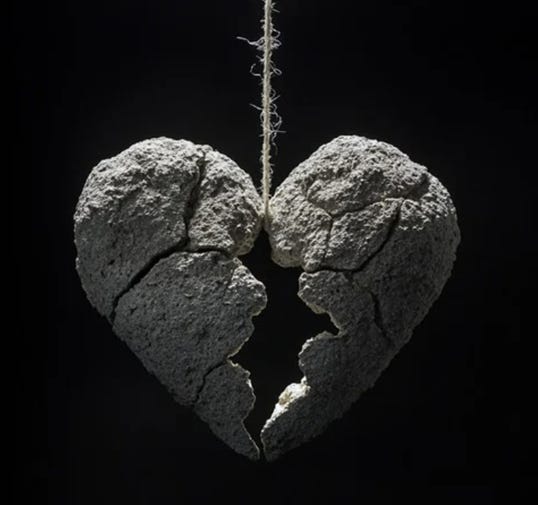
As I’ve wrestled with this question, I happened upon a story shared by management guru Jim Collins of his encounter with Admiral Jim Stockdale, a military officer who had been a prisoner-of-war in Hanoi for eight years during the Vietnam war. Ultimately his could be considered a story of triumph, having survived and since thrived.
There were multiple aspects of this story which felt acutely relevant to this moment.
Collins shares that when he read Stockdale’s book, In Love and War, written together with his wife in which they each describe their experience of those eight years, he became depressed just reading about the brutality and suffering Stockdale endured. He wondered, if this is what he felt even from the safety and comfort of his own life and knowing that Stockdale’s story ends well, then “how on earth did [Stockdale] deal with it when he was actually there and did not know the end of the story?”
When Collins posed this question to him, Stockdale explained: “I never lost faith in the end of the story. I never doubted not only that I would get out, but also that I would prevail in the end and turn the experience into the defining event of my life, which, in retrospect, I would not trade.”
And who, Collins asked Stockdale tentatively, didn’t survive?
“The optimists,” Stockdale says, explaining: “They were the ones who said, ‘We’re going to be out by Christmas.’ And Christmas would come, and Christmas would go. Then they’d say, ‘We’re going to be out by Easter.’ And Easter would come, and Easter would go. And then Thanksgiving, and then it would be Christmas again. And they died of a broken heart.”
I’m hitting pause on the story for a moment here. Because ever since Hanukkah of 2023, not long after we all found ourselves plunged into the war and the hostage situation, I kept thinking about an almost identical story that John McCain shared from his own experience as a POW in Vietnam, and how there were fellow prisoners who had pinned their hopes on being home by Christmas in particular and gave up the struggle to survive when it came and went. And then I came across an almost identical description by Victor Frankel in his Man’s Search for Meaning, in which he tells his story of surviving Nazi concentration camps. So it feels like there is something deeply true, even universal to understand better here, about what helps people persevere in the depths of extreme ongoing difficulty.
Stockdale pinpoints the cause of giving up to despair as their misplaced optimism. But isn’t the faith that he described having - that the ending would be good - also a form of optimism? It seems to me that the critical thing here is not to pin our hopes on a specific milestone - like a holiday, date or event. I’d broaden that - just like we can’t pin our hopes on any given elections, or any particular leader necessarily doing the trick of saving us from ourselves either.
Which is why Stockdale homes in on the next lesson he took from his experience, when he explains what is needed instead of optimism. “You must never confuse faith that you will prevail in the end—which you can never afford to lose—with the discipline to confront the most brutal facts of your current reality, whatever they might be.”
There is truth and power to this. And it is in conversation with our times again, with the cry of Sarit Zussman, who has had to learn to live with a broken heart ever since her son Ben was killed in Gaza in December 2023. She said the same thing at Ben’s funeral: that we must believe our story will have a good ending.
But this truth also has a hard-edged limit. Because we also know it to be true that this faith that everything will work out is no guarantee against bad endings.
This past week Israelis have been painfully reminded of what happened to Hersh Goldberg-Polin and the other five hostages held with him with footage that was just made public.[1] We got a glimpse into what they did to hang on while in the tunnels of Gaza. And they seemed to be doing everything right. They were helping each other out. They were adhering to their values. They were keeping faith that they would come home to their families – that their story would have a happy ending. But it didn’t.
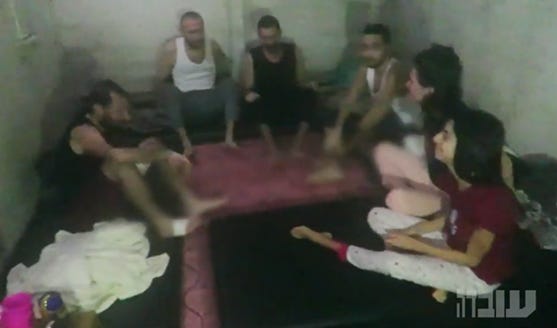
A friend of mine recently told me that the killing of the six hostages was one of the things which has shattered her. “It really shattered my belief in the state and the fact that we entrust them to save us if we need them,” she shared, articulating what I think many Israelis feel about this situation.
Which brings me to Stockdale’s warning that in having this faith, we must “confront the most brutal facts of your current reality, whatever they might be.”
Which is of course the catch. Because the unvarnished brutal reality can also break our hearts.
It feels like a very, very narrow bridge to walk between the risk of misplaced optimism, and a clear-eyed assessment of the brutal reality facing us, with the abyss always lying far, far below us.
I grew up singing the Hasidic song that “the whole world is a very narrow bridge, and the main thing is not to fear at all.” It was a simple cheery melody, which we always sang at Jewish day school and summer camp with great gusto. We were young and hadn’t experienced any great tragedies to make us think much about the deeper truth to this song.
I see that song quite differently these days.
Over the last two+ years of the war, I kept having moments when I’d see a long narrow shaky bridge of rickety wooden planks strung together by rope, stretching over an abyss, with an endless backdrop of dark grey above, below and on either side.
I know that the only choice to be made is to cling tight to the ropes on either side and keep walking forward, one foot in front of the next, finding my balance with each swaying step.
But it’s easy to lose your balance when you are brokenhearted.
Which is why I was so deeply moved by Ahmed Al Ahmed’s story, the support voiced by his family in Australia and in Syria, and his message to the mourners in Sydney, Australia. “The Lord is close to the brokenhearted. Today, I stand with you, my brothers and sisters.”
In these bitterly polarized times, where voices of hate and enmity are amplified, this kind of solidarity offers a steady warm hand. And it helps me at least take another step forward on this rickety narrow bridge upon which we find ourselves.
Faith that we will prevail, and that the ending will be good, cannot guarantee a good outcome. But one thing I am sure of. That if we give up even trying, we will definitely not get there. And that if we do get there, it will only be because we just kept going, one step at a time, on the pathway of trying to heal, build, fix the brokenness around us.
[1] For a version with English subtitles, use this link, with the password UVDA_EN#1234.
Source of the picture of the broken heart.
No posts
Comments
Nothing yet. Say the first thing.
Sign in to join the conversation.