
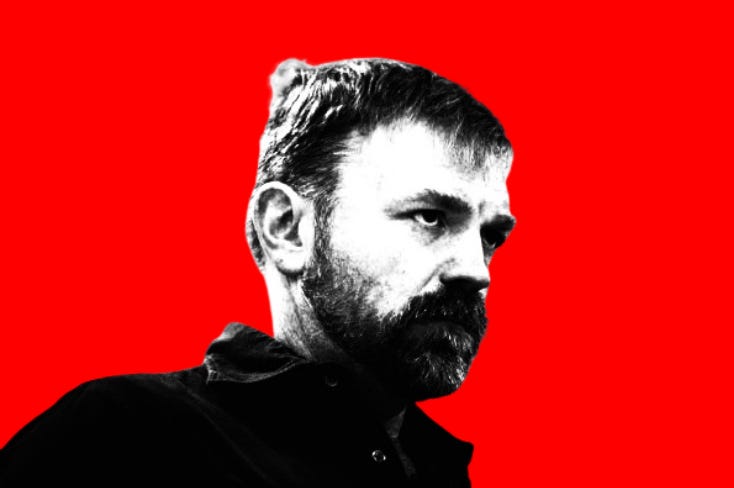
Following his travels in Jacksonian America, the French diplomat Alexis de Tocqueville wrote in Democracy in America
In Europe many people either believe without saying or say without believing that one of the great advantages of universal suffrage is to summon men worthy of public confidence to the direction of affairs. The people, men say, do not know how themselves to rule but always sincerely desire the good of the state, and their instinct unfailingly tells them who are filled with the same desire and most capable of wielding power.
For my part, I am bound to say that what I saw in America gives me no cause to think that so. When I arrived in the United States I discovered with astonishment that good qualities were common among the governed but rare among the rulers. In our day it is a constant fact that the most outstanding Americans are seldom summoned to public office, and it must be recognized that this tendency has increased as democracy has gone beyond its previous limits. It is clear that during the last fifty years the race of American statesman has strangely shrunk.
Tocqueville attributes the poor quality of leadership in the United States to the nature of mass democracy. The average voter is too busy to educate himself about public affairs and therefore dumbs politics down. Furthermore, because Americans value equality so much, they are suspicious of those whose talents and skills surpass those of the average citizen, meaning they are more likely to vote for an Average Joe—someone they could see themselves having a beer with—than an exceptionally qualified candidate. Finally, the talented few who would make excellent public servants often choose not to run for public office since campaigning is often a personally debasing experience. Why would gifted individuals subject themselves to the humiliations of a campaign when there are so many more dignified opportunities available to them?
Tocqueville’s observations about the quality of American political leadership still ring true nearly 200 years after the publication of Democracy in America. Not only do most voters not follow politics very closely, but the little information they do pick up about politics often comes from junk media sources. What’s even more damning is that many of those who do closely follow politics also often consume a poor diet of political news and frequently lack the sort of detailed understanding of policy necessary to responsibly oversee the state.
You can chalk this up as Tocqueville does to the little free time voters have to immerse themselves in the details (or even basics) of public affairs, but political scientists like Anthony Downs would even argue ignorance is rational, since it makes little sense for a single voter in a mass democracy to develop anything close to expertise in policy when it is infinitesimally unlikely their one measly little vote will change the outcome of any election they participate in. Follow Downs to his logical end and not only does it make sense for a voter not to educate him- or herself but to skip voting altogether. That impulse is overridden by many Americans’ sense of civic duty, but that’s still probably not enough to prompt most citizens to take the time to adequately educate themselves about politics. Instead, they settle for shortcuts—political brands, buzzwords, cultural cues—that can signal legitimacy.
Proving Tocqueville right on this point is tricky, as it requires a counterfactual. There are also other less democratic systems of government that, for their own reasons, aren’t well-governed, so perhaps there is more to recommend about democratic governance than Tocqueville’s critique suggests. But Tocqueville may be on more solid ground when it comes to his critique of the quality of leaders in the US. While there are numerous exceptional individuals serving in high elected office, it seems there are many, many more duds.
I always put it this way: Think about the most highly-respected individuals in your local community, the smartest, most trustworthy, most conscientious, most responsible people you know, the sort of person you would send to your state capital or Washington DC if you and your fellow community members could handpick your representatives. Why isn’t that person already serving in elected office?
Democratic politics is probably the reason why. Drop that upstanding citizen into a legislature and a lot of his or her constituents will likely end up disappointed with their voting record. It turns out there’s more to public service in elected office than outstanding character and qualifications. Real-world policy outcomes matter as well. This is one of the reasons why democracies have contested elections, and once you have electoral competitions, the competitors play to win. This sort of competition probably won’t reward the conscientious lawmaker who dutifully leads his or her constituents through the nuances of policymaking on the campaign trail and in town hall meetings. Instead, it will probably attract the gladhanding, backslapping, aw-shucks type, the sort of person who can connect viscerally with the distracted masses, a “man of the people” rather than a “man above the people.” It will also probably attract someone willing to endure public scrutiny and compromise their values for the sake of winning an election.
Consider: Why haven’t Democrats nominated Tom Hanks for president yet? Hanks has massive name recognition, is beloved and very relatable, seems like a pretty smart guy, and is just about the most all-American celebrity imaginable. But Hanks is also one of Hollywood’s most accomplished actors of all-time, meaning he would have to set aside a very distinguished career if he ran for president. A presidential campaign would suddenly make the man behind Forrest Gump, Woody, and Captain Miller a very polarizing figure. A campaign could also tarnish his reputation and drag (maybe not scandalous but perhaps embarrassing) details about his private life into the public eye. Tom Hanks has too much public esteem, self-respect, and dignity to run for public office. No, if a celebrity ran for president, it would probably be an aggrieved D-lister with no shame who thinks he deserves more fame and respect than he’s been granted.

All of which brings me to Graham Platner, the Democrats’ nominee-in-waiting for US Senate in Maine. Platner scans (and I mean “scans,” as that seems to be the level at which Platner’s campaign wants voters to assess their candidate) as a populist-progressive fever dream. He is a veteran, having served three combat tours in Iraq. He is a blue-collar oyster farmer. Other than serving as harbormaster in his hometown of Sullivan (pop. 1,219), he is not a politician. He looks gruff and speaks without a filter. His enemies are billionaires, the oligarchy, and the system. He supports raising the minimum wage, universal health care, and ending foreign wars. He is Bernie Sanders’ platform inside a package that appeals to wayward white working-class voters, the type of candidate whom Democrats believe could deliver them an impregnable majority in service of a transformative national agenda.
A group of liberal activists approached Platner about running for US Senate in July 2025. He launched his campaign within a matter of weeks with a video that was viewed 2.5 million times in its first 24-hours online.
He’s received endorsements from Sanders, Elizabeth Warren, Ro Khanna, and the UAW. Hundreds of Mainers have signed up to volunteer for his campaign. Platner is such a political phenomenon that he forced Maine’s two-term Democratic Governor Janet Mills—who had been recruited by Chuck Schumer to run for the seat—to suspend her own campaign for Senate.
Yet many Democrats are now worried Platner’s recruitment was a case of fire-aim-ready. Last October, multiple media outlets reported on a series of messages Platner had posted to Reddit in which he demeaned police officers and white rural Americans, identified himself as a communist, appeared to support political violence, and argued women need to do more to avoid becoming the victims of sexual assault. Platner posted those messages when he was between 29 and 37 years old. He has since apologized for those posts, which he attributed in part to PTSD. That same month, it was reported Platner had a Nazi Totenkopf tattoo on his chest. Platner said he received the tattoo while on leave with his fellow Marines in 2007 and was not aware of its meaning (which has been disputed by an ex-girlfriend); he has since covered the tattoo up. Multiple high-level staffers left Platner’s campaign following these revelations.
More recently, the New York Times reported Platner had sent sexual text messages to numerous women early in his marriage in 2023. Platner took responsibility for the messages and explained he and his wife had resolved the issue through counselling. The Times also reported Platner had engaged in disturbing and threatening behavior with women he dated prior to marrying his wife. Platner said the worst allegations in those reports were untrue.
The Maine Democratic primary is Tuesday. Platner had a meeting with Sanders and Warren last week and assured them there were no other skeletons on his chest in his closet. His progressive supporters are standing by him. Platner’s defenders have downplayed the severity of these offenses: The Reddit posts, they say, were just provocations posted on a provocative medium, while the tattoo was a mistake made during highly-stressful military service. They insist Platner is a changed man, a better man, someone who should be judged by what he’s turned himself into rather than who he once was. That’s all certainly possible. Yet there is a concern in Democratic circles that Platner wasn’t vetted at all before his campaign took off and that this string of reports is merely a preview of more damning revelations yet to come. At this point, even a minor scandal could torch his credibility.
Platner’s Democratic defenders—and he has many—assert there is a new, lower set of standards when it comes to judging the quality of a candidate’s character in the Age of Trump. Yet Democrats routinely hold Republican candidates to the older, higher standards; lambast Republicans as hypocrites for excusing the bad behavior of their fellow partisans; and bemoan the decline in personal standards for public service ushered in by Trump. If Platner were a Republican, there is no doubt Democrats would be tearing him apart over these allegations.
There are also those who argue Democrats shouldn’t worry about Platner’s past since candidate quality matters little in our polarized times, when most people choose who to vote for based on whether there is a (D) or an (R) after the candidate’s name. But while that has certainly become truer over the past few decades, that’s not the whole story by any means. Numerous Republicans (i.e., Mark Robinson, Herschel Walker, Roy Moore) have recently lost winnable races due to messy personal lives. Furthermore, if the candidate really doesn’t matter—if people aren’t voting for a person but instead a party affiliation—why are people so determined to stand by this one man? According to their own theory, they should be able to swap Platner out without suffering any loss in support at the ballot box.
Maine is a must-win state for Democrats if they hope to take and fortify control of the Senate. It’s considered a blue state since it hasn’t voted Republican for president since 1988 (although it did reward one of its electoral votes to Don Trump in each of the past three elections) but that oversimplifies the state’s politics. Maine may be a New England state, but it is also very rural and independent-minded. Between 1995 and 2012, the state was represented by two moderate Republicans. While Angus King, who succeeded Republican Olympia Snowe in 2013, caucuses with the Democrats, he is officially an independent. For most of the 2010s, Maine’s governor was Paul LePage, a MAGA Republican before Trump made MAGA a thing. Maine may lean to the Left, but it can definitely be pushed to the Right. Democrats can’t take it for granted.
On top of that, Platner’s opponent this fall will be five-term incumbent Republican Susan Collins, who has spent thirty years enabling the GOP by swerving through the center of American politics. She is a formidable opponent. In 2008, as Barack Obama was winning Maine by 17 points, Collins cruised to re-election by 23 points and didn’t lose a single county; in 2020, Joe Biden defeated Trump by 9 points while Collins came out on top by over 8 points. Still, Collins (who has never had to defend her seat in a midterm hostile to Republicans) is viewed as extremely vulnerable this year, with some pundits going so far as to say she’s already toast. Platner has led her in nearly every head-to-head poll conducted this year, frequently by solid margins. Yet that was also true of Collins in 2020, when her Democratic opponent topped her in all but one poll released in the four months prior to November but still somehow got beat down on Election Day. Mainers may be fed up with Collins and ready to do their part to deny Republicans a majority in the Senate, but they also have an independent streak, and they may settle for Collins’ brand once again if they conclude they can’t trust the guy with the Nazi tattoo and a history of misogyny.
The only alternative to Platner at this point is Governor Mills, who took a moment this week to remind voters she only suspended her campaign without formally dropping out just in case they were having second thoughts. I don’t know what Mainers think of the job she’s done as governor (recent polls may reflect a harsher than expected assessment from Democrats due to her challenge to Platner) but it’s understandable many wouldn’t be enthusiastic about sending her to Washington since she would be a 79-year-old freshman senator at the time of her swearing-in.
So I guess my question is this: In what should be a slam dunk, must-win election in Maine, the best Democrats can come up with are Graham Platner and Janet Mills? In a state with over 325,000 registered Democrats, there isn’t a single inspiring liberal under the retirement age without fascist body art that the party could turn to?
I get it: The kind of scrutiny I’m subjecting Platner to is what may dissuade good people with far less embarrassing pasts from running for office in America. But some personal shortcomings are easier to forgive and push back against than others and don’t require defenders to shed their own integrity when standing up for the candidate. I’d also add that scrutiny is how we distinguish good candidates from bad candidates, so while it may discourage some worthy people from running for office, it can also be used to keep scoundrels from ascending to power.
The basic issue seems to be that no one cared to scrutinize Platner before he entered the race: Not those who recruited him, not the state Democratic Party, not his Democratic supporters, who seem more enamored with image than substance. There’s a whole world of difference between something that is authentic and something that seems authentic. You would think Democrats would be on guard against this after everything they’ve gone through with John Fetterman.
I’m worried, though, that Tocqueville’s insights are once again proving true. Platner may prove appealing because he’s an average guy with a populist, straightforward image and message. But instead of simply average, why not seek someone above average, who represents a better version of us? That person could be an oyster farmer or a military veteran. All I’m asking for is a nominee Democrats can take pride in rather than someone they have to excuse. And while Platner may be an easy figure for an inattentive public to latch onto, his flaws may prove just as memorable.
I hope the worst about Platner has dropped. These things tend to spiral, though. I’m worried that the guy who looks the part and says the right things—who “scans” as a great candidate—is potentially so flawed he may end up disqualifying himself in a must-win race. It’s frustrating knowing Democrats could be and need to be doing so much better.
Thanks for reading Reason to Believe! This post is public so feel free to share it.
Comments
Nothing yet. Say the first thing.
Sign in to join the conversation.