
The upcoming 2025 National Defense Strategy (NDS) is turning heads by putting a new priority at the top.
If you don’t work in defense, you likely haven’t even heard of the NDS. Congress mandates that the current administration publish this document every four years to explain how the strategy of the Department of Defense (DoD) will align with the overall National Security Strategy (NSS).
The NDS is as bureaucratic and esoteric as it sounds. The core thrust is rarely novel, although it serves a purpose. Leaders need to document the obvious so they can point to a source of truth when someone inevitably asks, “What’s the strategy?”.
Which is why the latest draft represents a surprising 90-degree turn on current national security assumptions:
A draft of the newest National Defense Strategy, which landed on Defense Secretary Pete Hegseth’s desk last week, places domestic and regional missions above countering adversaries such as Beijing and Moscow, according to three people briefed on early versions of the report.
…
“This is going to be a major shift for the U.S. and its allies on multiple continents,” said one of the people briefed on the draft document. “The old, trusted U.S. promises are being questioned.”
For context, it was Trump 1 that put China ahead of terrorism as the pacing threat in his 2018 National Defense Strategy. Strategic peer competition was back in vogue. At least in retrospect, this was an obvious and overdue shift in priorities, and close observers had seen the trend coming for a while. The political scientist Mearsheimer, a famous proponent of great power competition, had been warning that “China won’t grow peacefully” since the early 2000s.
By the mid 2010s, the DoD and its alarmed defense industrial base began to revive a focus on strategic peer competition. This led to an explosion of private funding and startups to build the software-defined weaponry and dual-use manufacturing capacity required for a large-scale conflict, the likes of which we haven’t seen since World War II.
Washington then became obsessed with the goal of being ready to fight China imminently. DoD programs became framed around the question, “what capabilities can we have working by 2027?”, which is the year that Xi Jinping supposedly has told his forces to be ready for an invasion of Taiwan. The previous military leader of the Navy even had a countdown clock to January 1, 2027 in her office.
So shifting the message to “China is priority #2” will come as a surprise for millions of warfighters, billions of capital, and startups designed to win a Pacific fight. It’s important to know that the NDS is being spearheaded by Elbridge Colby, who, despite writing a book about being laser-focused on countering China at the expense of other adversaries, appears to be currently focused on shedding America’s historical foreign commitments. Apparently, more aggressively than most of the administration.
So this NDS may end up being a political fluke from Colby et al. But there’s a strong argument for all of us to focus more on the homeland. I’ll offer three reasons: America’s historical failure to counter modern threats from China to pockets of terrorism, an acknowledgement that our own policies enabled these threats, and the quiet cost it’s had for life at home.
The Department of Homeland Security (DHS) got an eye-watering $178 billion in reconciliation funding. To put that in perspective, that’s roughly the entire planned budget of Golden Dome and about $20B more than all funded DoD priorities combined. It’s a lot of powder. The “for what” is still pretty unclear. No one can’t spend that much efficiently, so expect enormous waste and grift.
But in line with the upcoming NDS, it put serious funding behind a homeland strategy. DHS was born out of the Global War of Terror. So along with funding, I suspect we may see an overhaul of its mission to fight not just terrorists but also gray zone tactics.
At the same time, we’re seeing the DoD and DHS start to overlap in their mission set. Golden Dome, troops at the Southern border and F-35s chasing drug smugglers (a ridiculous overkill) are all recent examples of where the line is blurring. The message is clear that some in Washington view the fight closer to home, not just 4000 miles across the Pacific.
So here’s a question I haven’t heard asked much - what if deterrence in the Pacific won’t work? If you were a 17th century ruler and you came to that conclusion, you’d probably recall your armies from across the empire to have them man the most critical fortresses and upgrade their defenses. That seems to be in line with Colby’s strategy.
Maybe the NDS is a coded admission that, for all of the talk about bring manufacturing and energy capacity online, and for all of the saber rattling over Taiwan, we’ve already lost the competition with China. Because industrial strength is what wins wars. The emerging era of robotic warfare is only underlining that.
Let me put this in stark numbers. China builds over 2,000 oceangoing vessels a year and the United States cannot manage 10. China is building 6-8 nuclear reactors a year while the U.S. has produced 3 reactors in the last 30 years. The last two reactors cost $30B, over twice the expected budget. China may be facing demographic decline in the future, but their near-term population is four times greater than ours and their manufacturing workforce three times larger. These are gaps that will not close in our current peacetime mindset.
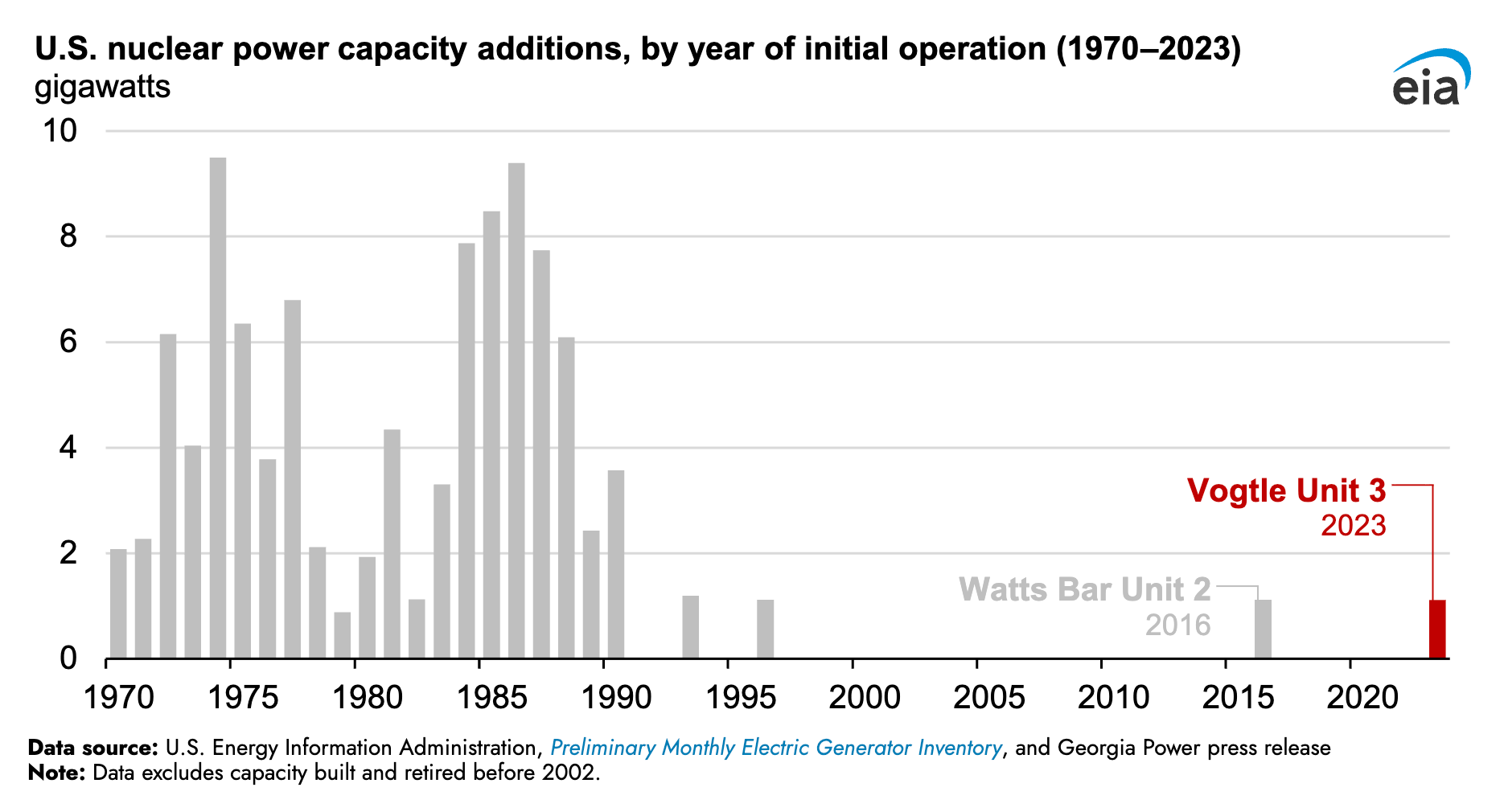
So maybe the policy of being able to win a war at China’s doorstep isn’t viable anymore. The ship has sailed, so to say. And we put the wind in its sails.
Undoubtedly, China has taken increasingly aggressive actions in its military buildup, and it has stolen an untold amount of intellectual property from American companies to build up its weaponry. But the cruel irony is that we willingly handed over a lot of that IP over the last two decades.
Unlike blueprints and emails, that IP came in the form of process knowledge - the “know-how” of how to build things. Legions of engineers from companies like Apple and Tesla were sent to China to teach local manufacturers how to build their products. That workforce became master builders, learning how to build at scale with the greatest cost efficiencies. In turn, American companies got access to unparalleled production capacity for their products and the ability to sell them into the enormous Chinese consumer market.
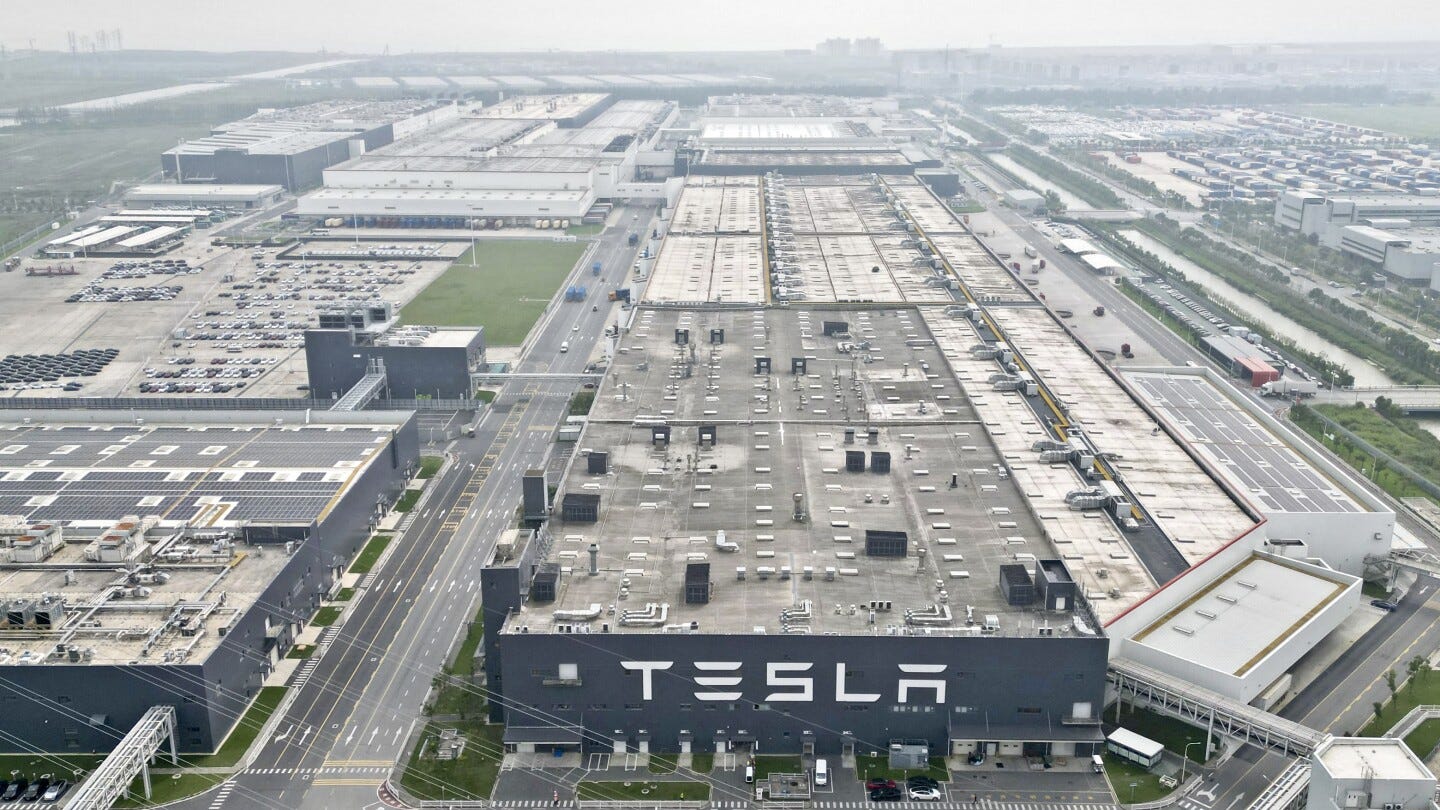
Patrick McGee’s new book, Apple in China, is an authoritative telling of how outsourcing manufacturing to China became an inevitable choice for companies like Apple, with few concerned about the long-term trade-offs it might have.
I want to emphasize how incredibly stupid this was. Nearly all of us (myself included) were either unaware or complicit. The manufacturing know-how we were happy to trade for cheap products was actually sharing the secrets to advantage in a technological race, and it fundamentally enabled China to rise into today’s competitor. We’ve spent decades handing it over, and entrenched interests in the economic and political status quo are capping our willingness to disrupt that trend. As Dan Wang captures so well in Breakneck, “Too many people have argued away the strategic importance of manufacturing.”
Even beyond China, it’s not hard to take a critical look at our modern foreign policy and see that even well-intentioned actions helped our own situation go from bad to worse. In Libya, America intervened to remove Gaddafi out of human rights concerns, but that left the country political unstable and it descended into protracted civil war for several years. In the Middle East, a national focus on energy security, combined with a disastrous invasion of Iraq, engendered a deep hostility and instability within the region that sowed the seeds for groups like ISIL to emerge in their wake.
We are overdue for more reflection of our own actions over the last 30 years, not just those of the world’s authoritarian leaders. However, reflection and guilt isn’t a strategy (the American Left fatally got this wrong on social issues).
Instead of nation-building abroad, what if we focused on building at home?
A nation cannot project power abroad when its foundations are crumbling at home. The American Right has done a horrifying job of articulating this, instead pandering to the nativist and isolationist elements within the party. Trump’s rant at the UN this week embodied that uncoordinated frustration, verbatim posing the question “What is the purpose of the United Nations?” followed by a “100%” endorsement of the Body. Americans are seeking a vision that goes beyond the old order but avoids zero-sum thinking and includes a large dose of humility that Trump has shown he can’t bring.
If Elbridge Colby handed me the pen to fill in the details of a homeland defense strategy, I would add:
American civil infrastructure is the bigger battleground. Smart cities and a networked economy create massive attack surfaces. Flanking oceans that created physical and psychological security for centuries vaporize in virtual warfare. Relative to a theoretical invasion of Taiwan, a major cyberattack on the electrical grid poses greater immediate risk to American lives and is achievable by China today.
Transnational threats require different tools. Cartels have long operated with paramilitary sophistication across American borders and regional states. Yet, we have historically not equipped law enforcement to effectively combat these groups (I can’t help but say “watch Narcos”), while the DoD mostly trains warfighters for nation-state conflict. The convergence of DoD and DHS missions hints at this mismatch.
Reduce forward-deployed forces. From Korea to Bahrain, stationing thousands of servicemen abroad is an artifact of a Cold War strategy to contain Communism everywhere. Taxpayers are ultimately funding these projects through increased debt. And re:unintended consequences of our policies, in some ways these deployments reduce domestic security when misguided policy invites retaliation.
Economically, we must also study our mistakes with China and, like them, formalize the relationship between industrial capacity and national security. Militaries and economies are intricately related, they cannot be treated as separate domains. The era of driving prices down for the consumer at all costs is no longer viable, and the era of policy towards the private sector that serves geopolitical objectives has arrived.
That also means recognizing that not all companies are of equal value to society regardless of their market cap. For example, social media products are highly profitable but also addictive. Advertising subsidizes its misleadingly “free” pricing and its content feeds our myopic global perspective. Should we incentivize our best and brightest engineers to work at companies behind those technologies? What role should government play in addressing counter-productive behavior? Looking at you, Meta.
Of course, our society is still dependent on the chips from Taiwan. The new National Defense Strategy doesn’t appear to ignore China, nor do other actions reflect that. It’s Priority 2.
But consider that even Taiwan isn’t working that hard to prepare for their own invasion. Given China’s extremely clear intent to “re-unify” by force if necessary, it should be spending a percentage of its GDP within range of wartime countries like Ukraine. Ukraine spends 34% of its GDP of defense. Taiwan spends 3%. Embedded in that is either a grave miscalculation or a tacit acceptance that traditional deterrence has limited utility.
As for the industrial base, there may be concerns that de-emphasizing competition with China might diminish precious urgency to revitalize our defense industrial base. But a homeland-centric strategy need not slow it down. After all, DHS just became an extremely well-funded customer. Let’s instead reshape its purpose to be broader than Pacific deterrence. Let’s build for ourselves too. And let’s measure it not just in missile stockpiles, but our ability to install high-speed rail between major cities.
The question isn’t whether America will remain a global power. That status is inevitable given its size and capabilities. The question is whether we will continue chasing the phantom of unchallenged dominance anywhere, anytime. Because we lost that fight by our own hand. With some humility and long-term thinking, America has a very bright future ahead.
No posts
Comments
Nothing yet. Say the first thing.
Sign in to join the conversation.