
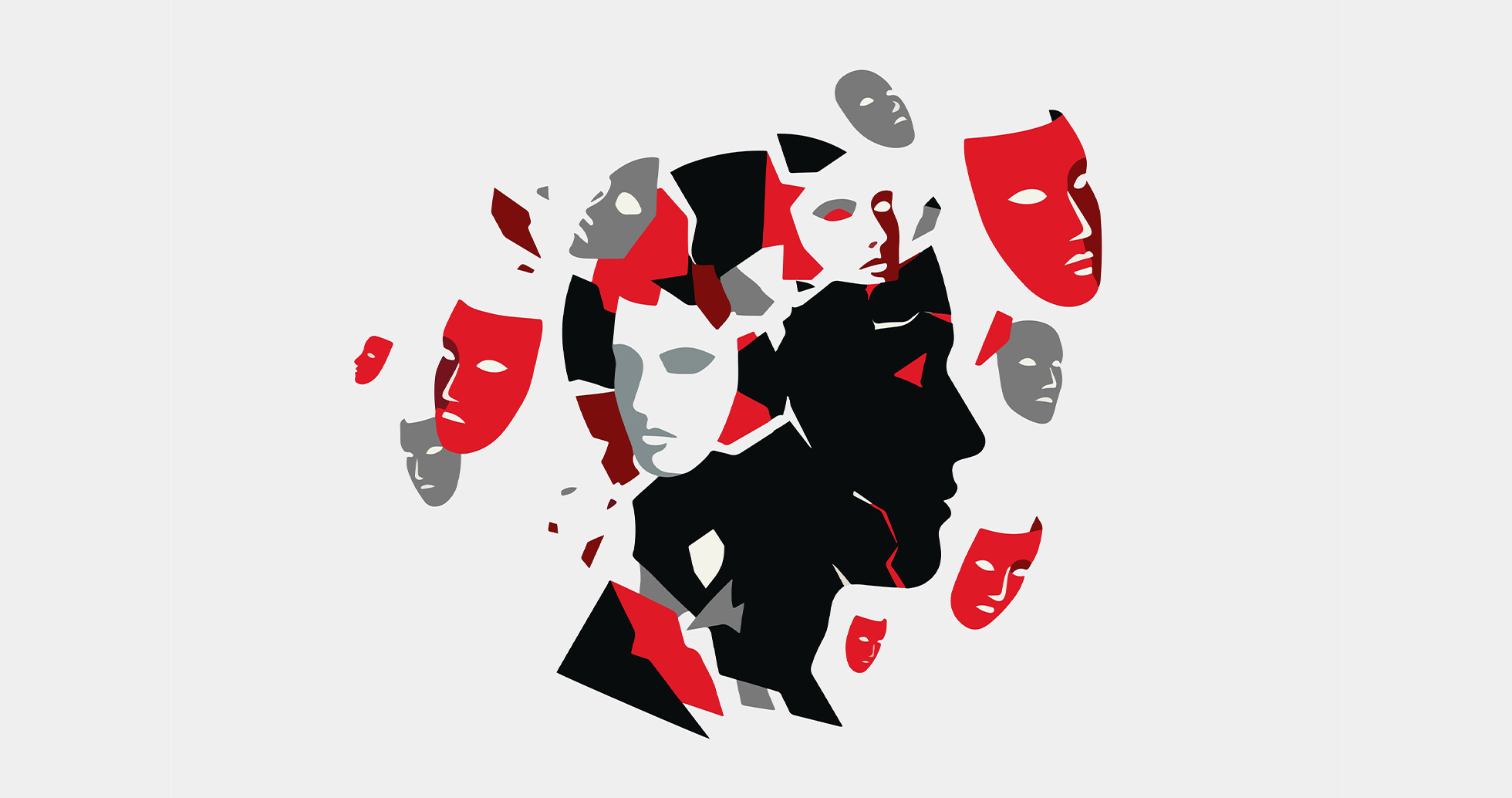
When Michelle Obama was asked to describe her next chapter in one word and answered, simply, “me,” the reaction was instant and revealing. Some people heard a woman stepping into a long-delayed season of self-authorship and applauded the honesty of it. Others heard selfishness, narcissism, excessive self-focus, the whole exhausted vocabulary that gets trotted out whenever a woman stops presenting herself as public infrastructure and starts sounding like a person with a real, interior life. Just one little word, ME, yet somehow big enough to trigger the old panic: what happens when a woman who has spent decades being useful, gracious, intelligent, composed, devoted, and publicly legible finally admits that she would like to orient some part of her life around herself?
A woman who has spent years as daughter, wife, mother, lawyer, author, First Lady, symbol, role model, racial Rorschach test, and repository for more projection than most people endure in ten lifetimes says “me,” and suddenly everyone is clutching pearls about ego. Interesting. Men reorganize the entire emotional atmosphere of a room around themselves every day before breakfast. A woman says one honest syllable and now we are all expected to gather around the town square and discuss the fall of civilization.
Conservative commentators framed Michelle’s answer as selfish, entitled, narcissistic, and elitist, and Stephen L. Miller, posting as @redsteeze, added the line, “Man, she really hates him.” Boom! female self-reference turned into a relational offense. What did her statement have anything whatsoever to do with HIM?! She did not say she regretted her life. She did not say she was done with her marriage. She did not say she no longer cared about the world.
She said “me,” and that alone was enough to trigger the old suspicion that a woman who belongs to herself must be failing someone else.
That is how deep the conditioning runs. Women are still expected to narrate their lives in service language. They can be accomplished, public, brilliant, disciplined, beloved, but the moment they speak as though their own life might finally be organized around their own interiority, people start reaching for moral indictment. A woman can carry everybody, soften and smooth everything, hold it all together, and the culture will call her admirable. A woman can decide that the next chapter belongs, in some meaningful way, to her, and now she is vain, self-absorbed, out of touch, maybe even cruel. The woman must be pushed back where her self is acceptable only if it remains tastefully subordinated to husband, family, service, or some larger socially sanctioned role.
Even the elitism critique follows the same pattern. It pretends to be about civic seriousness, public responsibility, or a broad concern for other people, but it lands with remarkable force on women who dare to sound self-possessed. Men are allowed ambition, pleasure, rest, reinvention, appetite, and self-definition without every word being hauled before the court of public virtue. Women, by contrast, are still expected to justify any visible devotion to themselves by proving how much they have already given away.
In Part One, I said female rage will save us only if it stops being primarily about him. It can start there, of course. Most things do. Some man disappoints you, diminishes you, uses you, confuses you, coasts beside you while feeding off your energy, or simply continues the ancient male habit of treating female labor as an ambient natural resource. That anger is real. It can be clarifying when it becomes the thing that burns off denial and restores your sight. But female rage becomes truly useful only when it stops circling men as the center of gravity and starts reorganizing the woman herself.
And that is where “me” comes in.
Not as vanity or some dumb Instagrammable little slogan about self-care and boundaries and buying yourself flowers while continuing to live the same structurally self-abandoning life. I mean “me” as a radical rearrangement of authority. “Me” as the reclamation of authorship. “Me” as the refusal to keep organizing your life around everyone else’s moods, needs, preferences, comfort, expectations, fragility, or capacity. “Me” as the answer to a culture that still wants women expansive in service and small in selfhood.
They think any movement toward the self is morally suspect. Any insistence on truth is cruelty. Any refusal to overfunction is meanness. Any standard that inconveniences others is arrogance. Any visible devotion to one’s own life is vanity. They have been taught to confuse self-erasure with goodness so completely that the moment a woman stops performing emotional hospice care for everyone around her, the room starts acting like she has failed some sacred feminine exam.
For every woman everywhere, I want this next chapter to be one of ME. You can sense the tectonic shift under the word. You already know, whether consciously or not, that “me” does not mean bubble baths and indulgence. It means a woman who has lived in relation to history, service, family, marriage, race, public scrutiny, and other people’s needs now naming herself as a subject rather than an instrument. And, sure, that is always going to be provocative in a culture that still prefers women translated into utility.
The old arrangement depends on female de-centering. It requires women to become highly attuned to everyone else while losing fluency in their own desire. It thrives on women who know how to smooth, support, intuit, absorb, interpret, soften, repair, and endure. It rewards the woman who can remain relationally available while becoming progressively less real. Then, when she reaches the inevitable point of exhaustion, depression, rage, numbness, boredom, or quiet internal death, it hands her a prettier vocabulary. Burnout. Overwhelm. Hormones. Stress. Midlife. As though the problem is merely that she needs a nap and a better supplement routine, not that she has built an entire life around being other-centered and is now supposed to call the wreckage love.
It is also deeply misunderstood. A lot of women hear “put yourself first” and translate it into some kind of oppositional posture. Withdraw. Care less. Stop loving. Stop giving. Become harder. Become colder. Become one more person on earth obsessed with her own reflection and incapable of intimacy. That is not what I mean, and it is (probably) not what Michelle Obama meant either, at least not in the richer sense I care about here. The point is not to become emotionally stingy or spiritually self-obsessed. The point is to stop treating the self as a sacrificial offering to every role, relationship, and demand that wanders into your life wearing a legitimate expression.
The Era of “Me” is the era in which a woman finally understands that her self is not the leftover.
It is not what gets tended after the kids are okay, the husband is settled, the inbox is cleared, the house is functioning, the team is happy, the parents are handled, the calendar is coordinated, and the world has had its preferred portion of her. It is not the optional layer, the luxury add-on, the private side dish she can maybe come back to if the day ever opens up. It is the center. The organizing intelligence. The actual point of view from which her life should be lived.
This matters especially in love, which is where women are still taught, with remarkable consistency, to disappear elegantly.
They are told to be open, but not demanding. Warm, but not complicated. Honest, but not too much. Clear, but not rigid. Feminine, but not passive. Powerful, but not intimidating. They are coached endlessly on how to calibrate themselves into lovability, how to become a version of womanhood that can slide more easily into the male imagination. Even the “empowering” advice is often still embarrassingly him-centric: How to attract him. How to keep him interested. How to make him pursue you. How to stop scaring him off. How to identify the right one. How to avoid ruining it before he can choose you.
Women are drowning in male-centered instructions and they wonder why starting over in love at midlife feels like returning to the scene of an old crime.
Because so much of what women call trying again is just one more round of de-centering the self. One more round of making him the weather report, him the metric, him the focus, him the plot twist, him the axis around which the emotional meaning of the whole experience turns. Even the resistance to men can remain male-centered. Rage about him. Analyze him. Study him. Explain him. Heal from him. Build entire female identities around being the sort of woman who sees through men, knows men, refuses men, or survives men. It is still him. He remains the gravitational object even in opposition.
That is what has to change.
The Era of “Me” begins when a woman stops making men the central interpretive category of her own life. Not because men are irrelevant, but because they are not the source of her authority. She is. Her body is. Her standards are. Her truth is. Her perception is. Her peace is. Her desire is. Her aliveness is. That shift sounds obvious until you realize how few women actually live from it, especially in love.
A woman in the Era of “Me” is still available for intimacy, maybe more than ever. She is simply no longer willing to achieve closeness through self-erasure. She is no longer dressing up people pleasing as empathy, overfunctioning as maturity, accommodation as femininity, or emotional management as connection. She is no longer waiting to see whether she will be chosen before deciding whether the connection is good for her. She is not auditioning. She is not shape-shifting. She is not translating herself into something more digestible, more patient, more bendable, more likely to survive inside the male ego.
And because she is there, love has a real chance (because it is happening with a real person).
I know this feels disruptive. It upsets the old economy. It disappoints people. It disturbs family systems, work dynamics, friendships, marriages, dating scripts, all the little arrangements built on female compliance and the assumption that a woman’s highest virtue is her willingness to disappear pleasantly. Of course people call her selfish when she stops. They were benefiting from the old arrangement. Why would they applaud its collapse?
So yes, I think Michelle Obama’s “me” was a mic drop, though not for the sentimental reasons people kept repeating. Not because it was cute, not because it was empowering in the mass-market sense, not because it made good television, but because it named the thing women are still most punished for claiming. THE SELF. Not the improved self, the palatable self, the generous self, the self-in-service, the self-with-perfect-balance, the self-after-everyone-else-is-fed. The actual self.
The woman who says: I am no longer willing to live as a function. I am no longer willing to derive my value from how useful I am to everyone around me. I am no longer making emotional martyrdom my main personality trait. I am no longer calling my own exhaustion noble. I am no longer building my life around external approval and pretending that the emptiness I feel is mysterious.
That woman is not selfish. She is sane.
And if you can feel the resistance rising in you while you read this, good. That means we are near the live wire. It means some old conditioning is flaring. It means there is still a part of you that has been trained to hear “me” as danger, as moral failure, as the beginning of abandonment, as the thing that will make you unlovable, difficult, too much, less feminine, less kind, less good.
Because the next chapter of your life is not going to be transformed by understanding men more deeply, diagnosing patriarchy more elegantly, or becoming more articulate about why you have been disappointed. It is going to change when you become willing to examine your own self-abandonment with enough honesty to interrupt it.
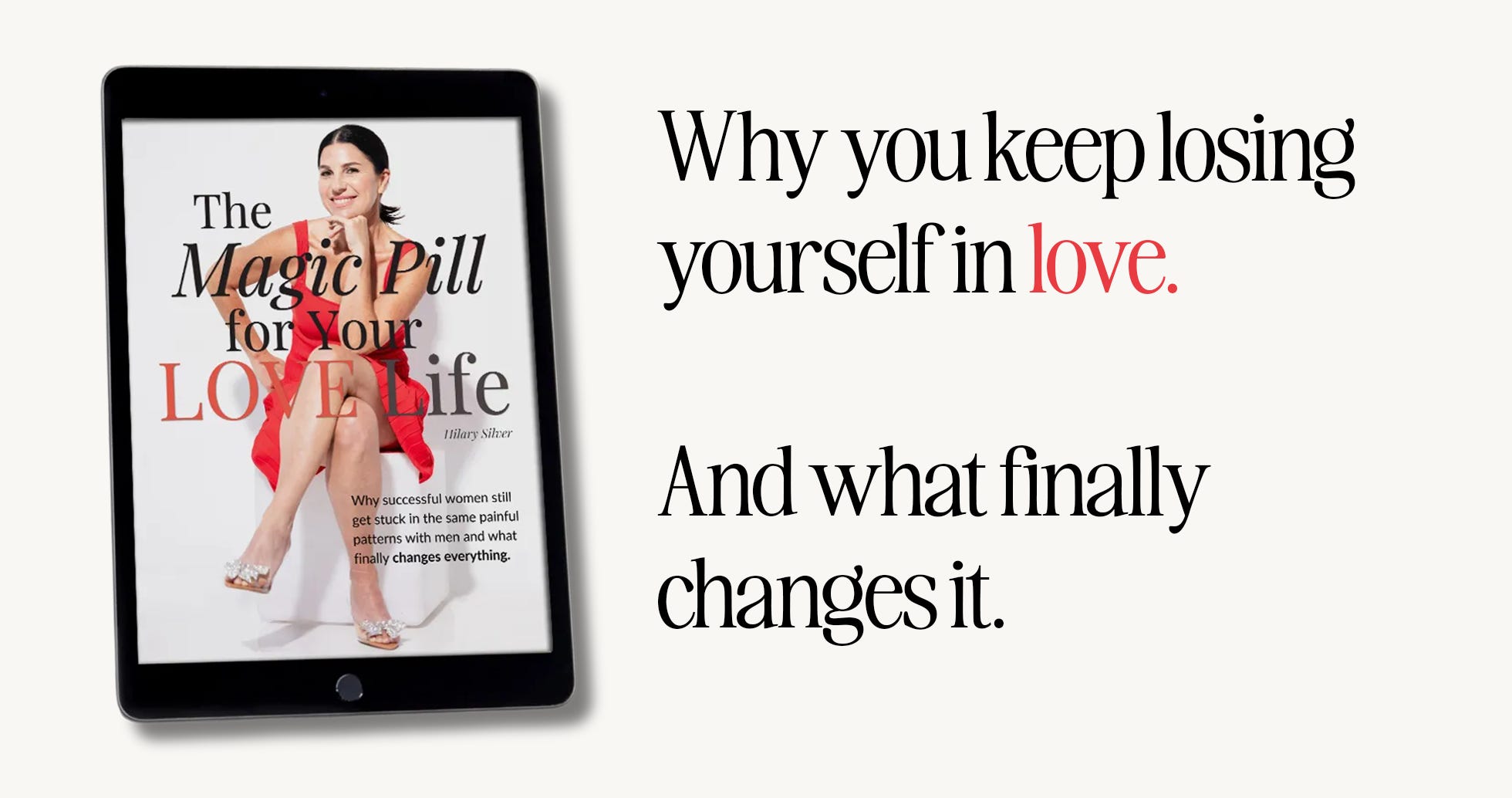
That is why I want you to download The Magic Pill for Your Love Life if you have not already. Read it. Work through it. Let it irritate you a little. Let it challenge the old story. Let it move your attention off him and back where it belongs. Welcome to The Era of “Me”.
Comments
Nothing yet. Say the first thing.
Sign in to join the conversation.