
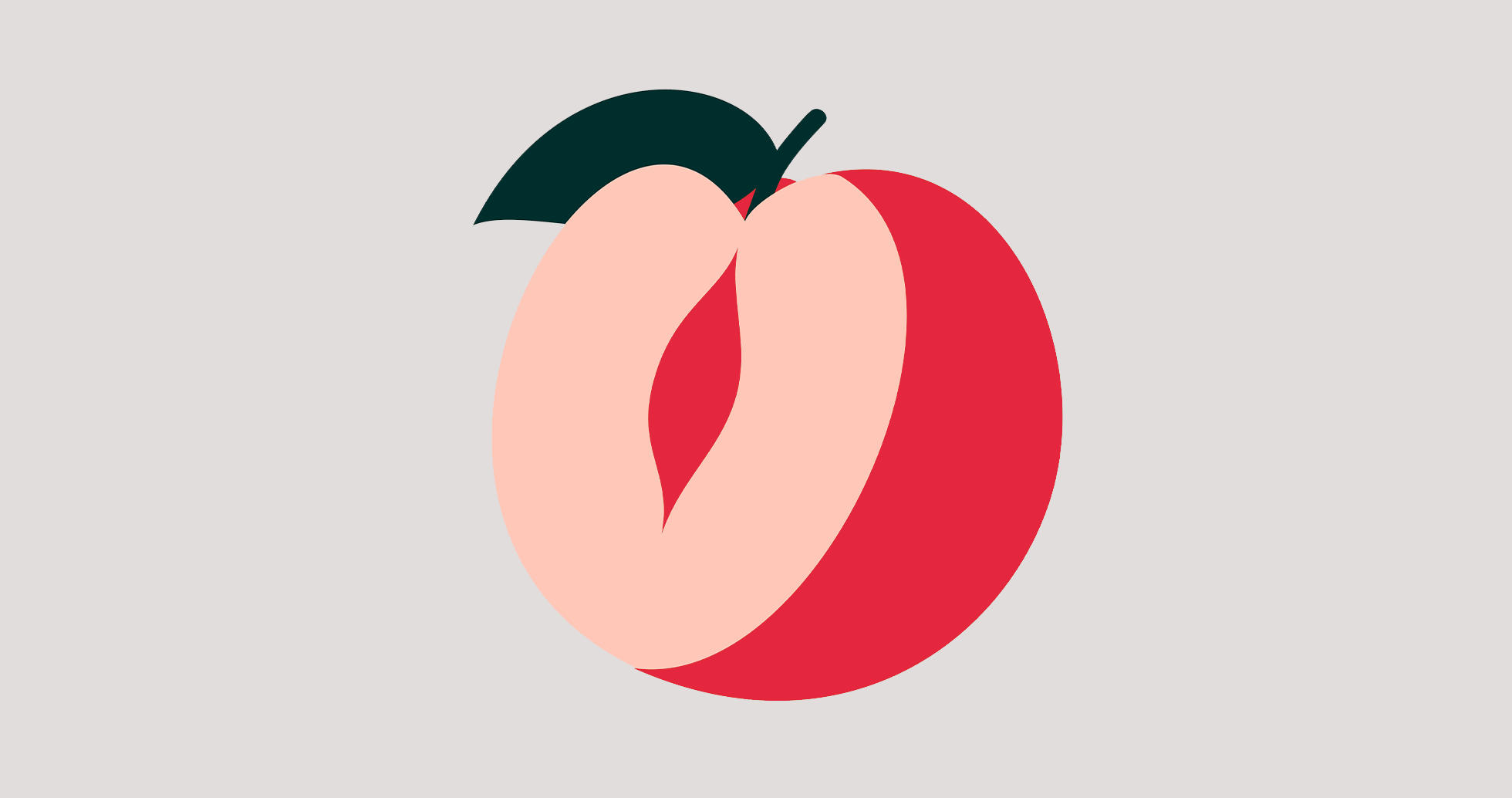
Pussy has become one of the most reliable insults in the English language.
A man hesitates, shows fear, avoids a fight, admits he is hurt, or reveals any emotion that might interfere with his performance of invulnerability, and someone calls him a pussy. The word is meant to reduce him. It suggests softness, cowardice, fragility, passivity, and an embarrassing inability to withstand pressure.
Fascinating, considering the actual body part being referenced.
The insult only works if everyone agrees to accept a remarkably stupid premise: that the female body represents weakness, while the male represents strength. Hardness becomes courage. Softness becomes failure. Penetration becomes dominance. Receptivity becomes submission. The masculine body gets to stand in for power, while the feminine body is invoked whenever someone needs a synonym for pathetic.
It would be funny if this linguistic sleight of hand had not been so effective.
Because pussy is now cultural shorthand for everything the dominant definition of power distrusts: sensitivity, permeability, emotional truth, pleasure, intuition, vulnerability, responsiveness, and the capacity to yield without ceasing to belong to oneself.
But opening and surrendering are not the same thing. Just as softness and weakness are not the same thing. Just as receptivity and powerlessness are not the same thing.
And a woman who is fully at home in herself knows the difference.
I am not interested in reclaiming pussy as a clever little act of linguistic rebellion, the feminist equivalent of putting rhinestones on a curse word. I am interested in what the insult reveals about the hierarchy underneath it. When the female body becomes the symbol of weakness, women are being told something much larger than how society feels about a particular piece of anatomy. We are being taught that everything culturally associated with us belongs lower on the ladder.
Care is lower than conquest. Collaboration is lower than competition. Feeling is lower than force. The body is lower than the mind. Pleasure is lower than productivity. Receiving is lower than taking.
Pussy became an insult because femininity itself had to be made insulting. Otherwise, women might begin to notice that the qualities they were told to overcome were never evidence of inferiority in the first place.
That does not mean every trait lazily labeled feminine is automatically sacred, or that women are spiritually superior beings who float above the grubby moral failures of men. Women can be controlling, cruel, dishonest, manipulative, petty, emotionally avoidant, narcissistic, and spectacularly committed to their own bullshit. Just like men, we contain the entire human range.
The point is not that we are inherintly better but rather that womanhood is never a demotion.
There is nothing inherently lesser about the body, the softness, the emotional range, the sensuality, or the relational intelligence women have been trained to apologize for. There is also nothing empowering about distancing ourselves from those qualities in order to prove we can succeed according to a standard built around hardness, disconnection, and domination. Women have already demonstrated that we can compete, produce, lead, earn, build, endure, and outperform. We have spent decades proving our ability to enter structures designed by men and become exceptionally competent inside them.
The more interesting question is whether we can stop treating masculinity as the only recognizable form of power. That is where pussy power begins, although perhaps not in the way the phrase is usually understood.
The most obvious interpretation centers male desire. Men want access to women, therefore women possess leverage. A woman can use her beauty, sexuality, attention, or availability as currency, and the man who wants what she has becomes easier to influence. There is certainly power in being desired, but it is unstable power because its value is still being determined by someone else’s appetite. The woman remains dependent on being wanted, and the moment his attention shifts, so does her sense of authority.
That is negotiation, not self-possession.
A woman who defines her power through male desire is still orbiting men, even when she believes she has learned how to control the orbit.
Pussy power begins when her body, her pleasure, her attention, her labor, and her life stop functioning as bargaining chips. She no longer needs to make herself irresistible because she has become deeply discerning about what she allows near her. She no longer treats being wanted as proof of value because value is no longer waiting outside her body for someone else to confirm it. She does not weaponize sex, withhold affection to gain control, or turn femininity into a performance designed to produce a response.
She simply chooses.
Choice is far more powerful than desirability because choice begins within. It cannot be revoked when someone loses interest. It does not disappear with age, weight, rejection, divorce, or the arrival of a younger woman in the room. It does not require a particular face, body, relationship status, or degree of sexual attention. It belongs to the woman because she belongs to herself.
A woman in possession of that power may be loving, generous, tender, receptive, and wildly open. She may also be exacting, difficult to manipulate, and unavailable for arrangements that require her to betray herself. Her softness has boundaries. Her generosity has discernment. Her receptivity is active rather than indiscriminate. She is not a permanently open door through which everyone else’s needs may wander.
This is where our culture gets especially confused, because it understands boundaries best when they arrive wearing armor. A woman who becomes hard, detached, and unreachable is legible as powerful because she resembles the masculine ideal. A woman who remains openhearted while refusing exploitation is harder to categorize. She has neither collapsed nor fortified. She is capable of intimacy without becoming absorbent, capable of care without assuming responsibility for everyone, and capable of love without handing over the deed to her own life.
That is fucking formidable.
It is also much closer to the actual nature of a pussy than the insult has ever been.
A pussy is not weak because it is soft. Its softness is part of its intelligence. It responds. It distinguishes between safety and threat, pleasure and pain, willingness and refusal. It can welcome, resist, tense, relax, contract, expand, and communicate through sensation long before the rational mind finishes drafting its explanation. It is neither permanently available nor inert. It has conditions.
Imagine if women treated their whole lives that way.
Imagine if we stopped overriding discomfort because someone else wanted access. Imagine if we trusted contraction as information instead of a character defect. Imagine if openness became something earned through safety, respect, reciprocity, and genuine desire rather than something women offered automatically to prove they were kind. Imagine if a woman’s no did not require a prosecution brief and her yes did not become a permanent subscription.
That would be pussy power.
Our contempt for the word also exposes how terrified we remain of female pleasure. A woman who experiences herself as the subject of her own desire, rather than the object of someone else’s, is difficult to control. She is not performing sexuality for approval. She is not waiting to be awakened by a man who imagines himself as the heroic possessor of secret knowledge. She is not using sex to secure love or tolerating bad love to secure sex.
Her pleasure belongs to her, whether anyone else is invited into it or not.
That kind of woman disrupts the entire arrangement because so much of traditional femininity depends on a woman being estranged from her own appetite. She can be desirable, but she should not desire too openly. She can be beautiful, but she should remain insecure enough to keep purchasing improvement. She can be sexual, but preferably in a way that flatters male fantasy rather than expressing her own authority. She can say yes, certainly, but her no has historically caused a remarkable amount of social, religious, legal, and personal panic.
Female pleasure and female refusal are twins. Both require that the woman is present.
That presence is the part patriarchy cannot metabolize.
A woman who has left herself is easy to direct. She can be praised into labor, shamed into compliance, frightened into silence, or seduced into accepting a lesser arrangement. She can be convinced that exhaustion is devotion, desirability is worth, usefulness is love, and endurance is maturity. The world can extract quite a lot from a woman who has been taught that being good means remaining available.
She notices when the request is actually an entitlement. She recognizes when praise is being used as payment. She can feel the difference between generosity and self-erasure, between compromise and disappearance, between love and a labor contract with terrible benefits. She may still give enormously, but she is no longer giving because she fears what will happen if she stops.
That is the shift from performance to power.
And perhaps this is why pussy had to become an insult. A culture organized around female compliance cannot afford for women to regard themselves as the seat of authority. It needs us embarrassed by our bodies, suspicious of our desires, apologetic about our anger, and permanently available for improvement. It needs us to experience our own softness as something dangerous that must be hardened, hidden, disciplined, or made attractive enough to be approved by someone else.
Everyone loses, although we pay the larger bill.
Men would benefit enormously from becoming less terrified of everything represented by the word they use to shame one another. Sensitivity would not destroy them. Emotional receptivity would not castrate them. Tenderness would not erase their ambition, and vulnerability would not make them less capable of strength. The masculine obsession with invulnerability has produced generations of men who can endure pain but cannot name it, who can provide money but cannot provide emotional presence, and who can perform dominance while privately feeling disconnected from themselves.
Calling those men pussies would be inaccurate.
They should be so lucky.
To call someone a pussy ought to suggest extraordinary sensitivity paired with astonishing resilience. It should mean the person possesses the strength to remain open without becoming owned, the intelligence to respond rather than merely react, and the discernment to know when access should be granted or withdrawn. It should describe someone capable of pleasure, creation, adaptation, recovery, and a depth of feeling that does not require emotional collapse.
That sounds less like an insult than an evolutionary advantage.
Of course, womanhood cannot be reduced to anatomy, and not every woman has or identifies with the anatomy the word traditionally names. Pussy power is larger than biology. It is a symbolic refusal of the hierarchy that placed everything feminine beneath everything masculine and then convinced women to participate in their own demotion. It names an embodied authority that belongs to any woman willing to stop viewing herself through a contemptuous cultural lens.
The reclamation is personal before it is political.
It happens when a woman stops apologizing for the amount of life inside her. It happens when she allows herself to want without turning desire into shame, to refuse without turning refusal into guilt, and to receive without constructing an elaborate case for why she has earned it. It appears when she no longer needs to become harder in order to feel safe or more appealing in order to feel valuable.
She is soft where she chooses to be soft, fierce where fierceness is required, and fully responsible for determining the difference.
So the next time someone uses pussy to mean weak, listen carefully to what is being revealed. The insult tells you that the speaker still imagines hardness as the highest form of strength and femininity as a condition from which a person should distance himself.
You can hear the word and think of sensitivity without fragility, openness without surrender, pleasure without permission, and power that does not need to dominate in order to know itself.
Call me a pussy.
I’ll take it as the highest praise.
Comments
Nothing yet. Say the first thing.
Sign in to join the conversation.