
The student dreaded reading intervention. The moment his Reading Recovery teacher called his name, he’d shut down. Sometimes he would refuse to leave the classroom entirely. The reading interventionist knew something had to change.
Learning more about the student’s background and interests, the teacher decided to place a venus flytrap in her room. She invited this student to feed the plant a dead fly every time they came to work with her. In addition, the teacher integrated texts around this and related topics.
The results after several weeks:
a small pile of dead flies next to the venus flytrap (the student started bringing his own food supply, and the teacher limited how much they fed the plant), and
a more engaged and competent reader.1
You won’t find this type of approach described as “aligned with the Science of Reading.” Not because it lacks evidence or effectiveness, but because the student’s success relied on something that can’t be packaged: teacher ingenuity, engagement and interest, and authentic relationships.
At the core of this teacher's work was a willingness to position herself as a learner. Next are three books that can support you on your own learning journey.
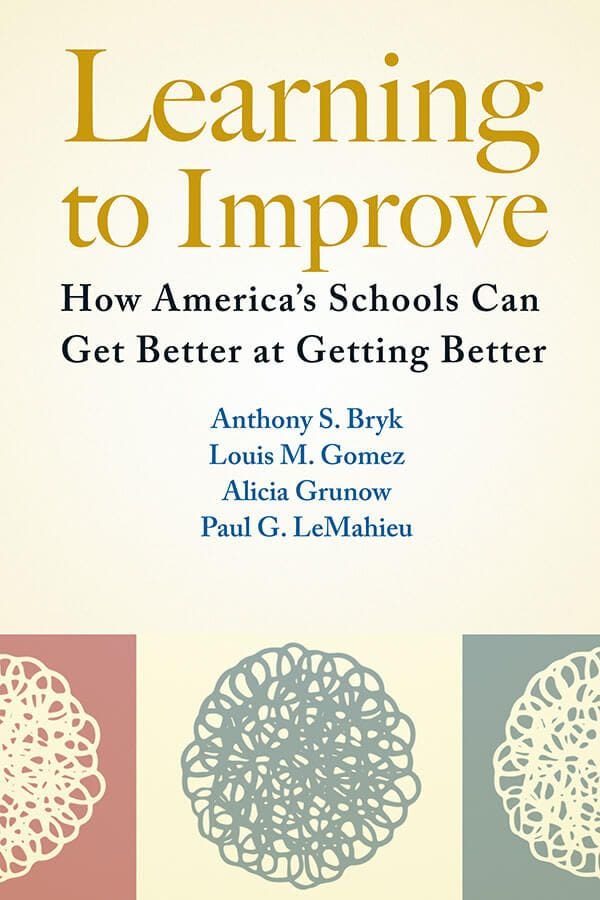
Learning to Improve: How America’s Schools Can Get Better at Getting Better2
Anthony Bryk, Louis M. Gomez, Alicia Grunow, and Paul G. LeMahieu (Harvard Education Press, 2015)
Adapting ideas from the healthcare industry, Bryk and colleagues offer six principles for educators to engage in short cycles of improvement work:
Make the work problem-specific and user-centered.
Variation in performance is the core problem to address.
See the system that produces the current outcomes.
We cannot improve at scale what we cannot measure.
Anchor practice improvement in disciplined inquiry.
Accelerate improvements through networked communities.
At the core of this work are rapid cycles of Plan, Do, Study, Act (PDSA) to learn fast, fail fast, and improve quickly. “That failures may occur is not the problem; that we fail to learn from them is.”
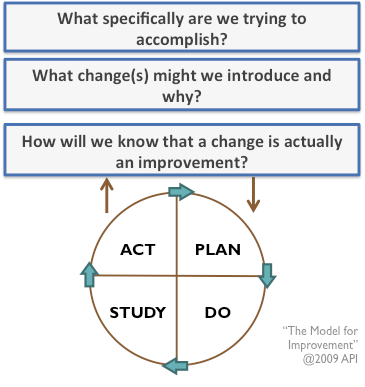
I’ve seen tools like PDSAs a lot in educational resources, such as Solution Tree/PLC literature and on state department websites. What I haven’t seen a lot is an organization’s commitment to this work on a continuous basis. Districts tend to seek answers (what Bryk and colleagues refer to as “solutionitis”) instead of exploring questions. Learning to Improve can be a foundational text for professional learning. (For an example of improvement science in action, check out Jason Drysdale’s and Allyson Matczuk’s work that I profiled in Chapter 7 of my book Leading Like a C.O.A.C.H.)
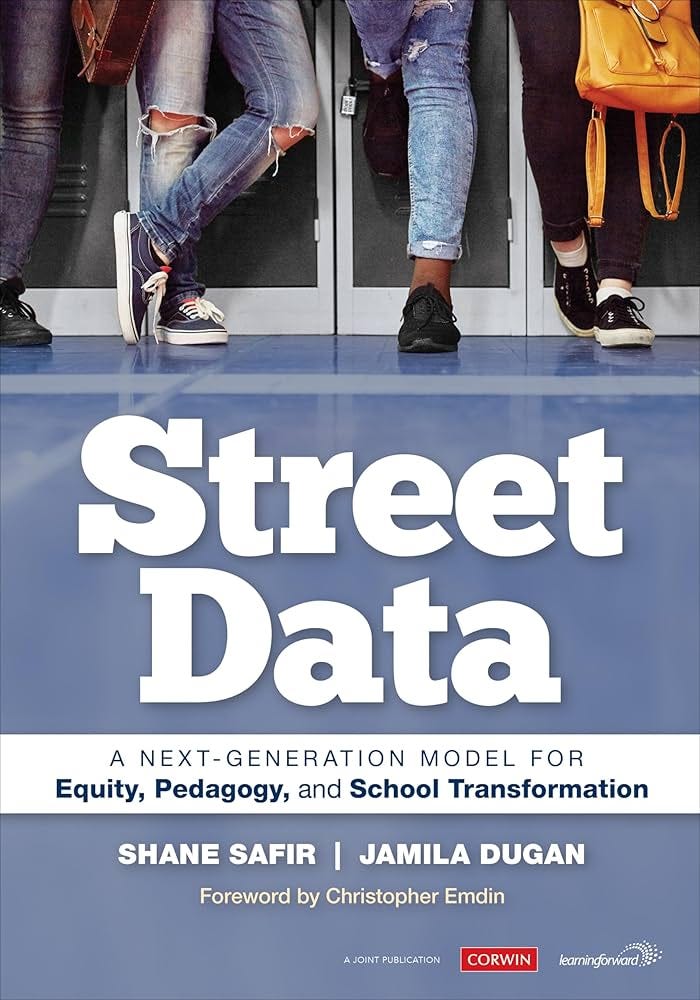
Street Data: A Next-Generation Model for Equity, Pedagogy, and School Transformation
Shane Safir & Jamila Dugan (Corwin/Learning Forward, 2021)
The authors present improvement science through the lens of an anti-racist/anti-bias perspective. It’s not enough to simply identify problems and experiment with responses. Educators have to center students at the margins in this work.
"Street data is the qualitative and experiential data that emerges at eye level and on lower frequencies when we train our brains to discern it. Street data is asset based... helping educators look for what's right in our students, schools, and communities instead of seeking out what's wrong."
The Reading Recovery teacher adopted this perspective in her improvement work. She noticed first the student’s strengths, for example his interest in carnivorous plants, as an entry point for building his skills and confidence.
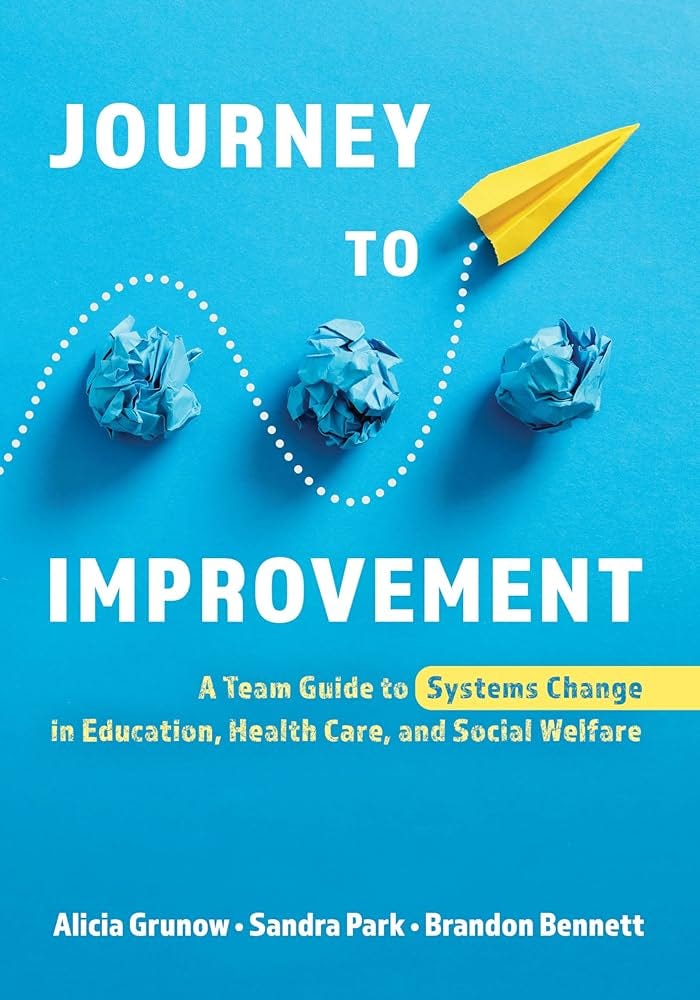
Journey to Improvement: A Team Guide to Systems Change in Education, Health Care, and Social Welfare
Alicia Grunow, Sandra Park, & Brandon Bennett (Rowman & Littlefield, 2024)
What these authors provide is a roadmap for engaging in improvement science, a methodology for teachers and leaders to rely on during the messiness of this work.
"The learn-in-practice phase is the heart of the improvement journey. No matter how diligently teams engage in the initial phases, the dynamism and complexity of systems mean that the initial assumptions about what change is needed will often be wrong and always incomplete."
I especially appreciate the phrase they echo from Learning to Improve: “probably wrong and definitely incomplete.” I have referred to this when interacting with a teacher or a leader having doubts about experimenting at the edges, for example, when I informed a school leadership team that following a literacy program like a script actually creates inequities.
Real science is never settled. It's curious, iterative, and humble. The Venus flytrap wasn't in any program guide. It was a teacher paying attention. That's where the science of reading actually lives.
How are you bridging reading instruction with actual scientific principles?
Enjoyed this post? Share it online and with colleagues.
Interested in learning more about improvement science? Download my free tool, Five Prerequisites for Continuous Improvement Learning Progression. I also have availability to support leadership teams to begin engaging in this work. Learn more here.
This is an adapted excerpt from my free eBook, What School Leaders Need to Know About the Science of Reading. Download it here.
Links for some books listed go to an affiliate account with Bookshop.org. Today is independent bookstore day - support your local bookseller!
Comments
Nothing yet. Say the first thing.
Sign in to join the conversation.