
You give detailed feedback that turns out to be wrong. You correct the record. You keep it short. You keep it professional. You hit send.
Then you sit there.
The feeling doesn’t leave just because the message did.
You know this feeling. You did everything right. You stayed calm. You didn’t relitigate old arguments. You didn’t defend yourself too hard. You said the mature thing.
And still. It sits in your chest like a stone that won’t move.
This is the part nobody prepares you for.
Being right doesn’t make the sting go away. Being professional doesn’t either. You can do everything correctly and still walk around for days with something heavy inside you that has nowhere to land.
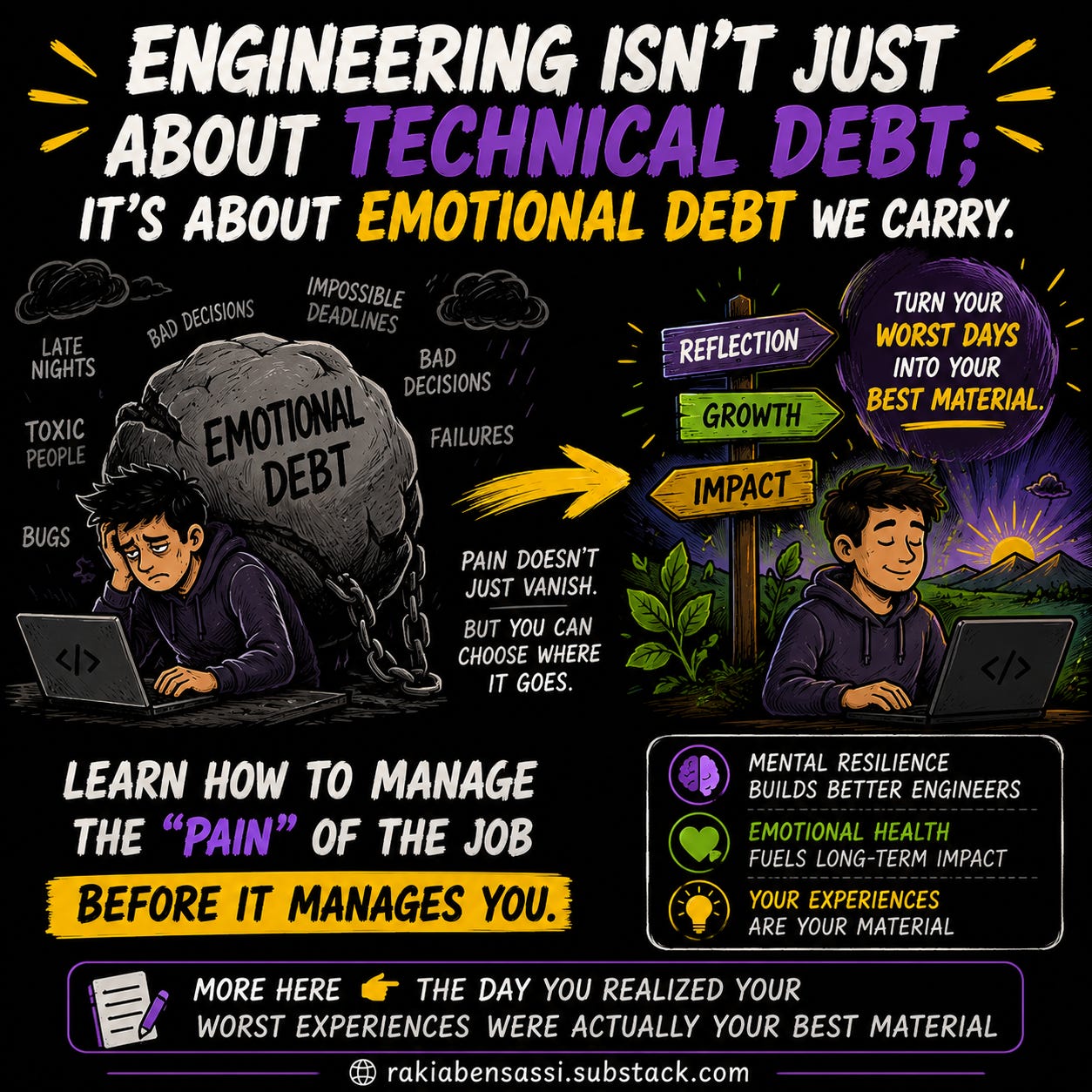
So you open a blank page.
Not to complain. Not to name names. Just to get the weight out of your body and onto something else.
You start typing.
At first it’s messy. Half sentences. Fragments. The kind of writing you’d never show anyone.
Then something happens.
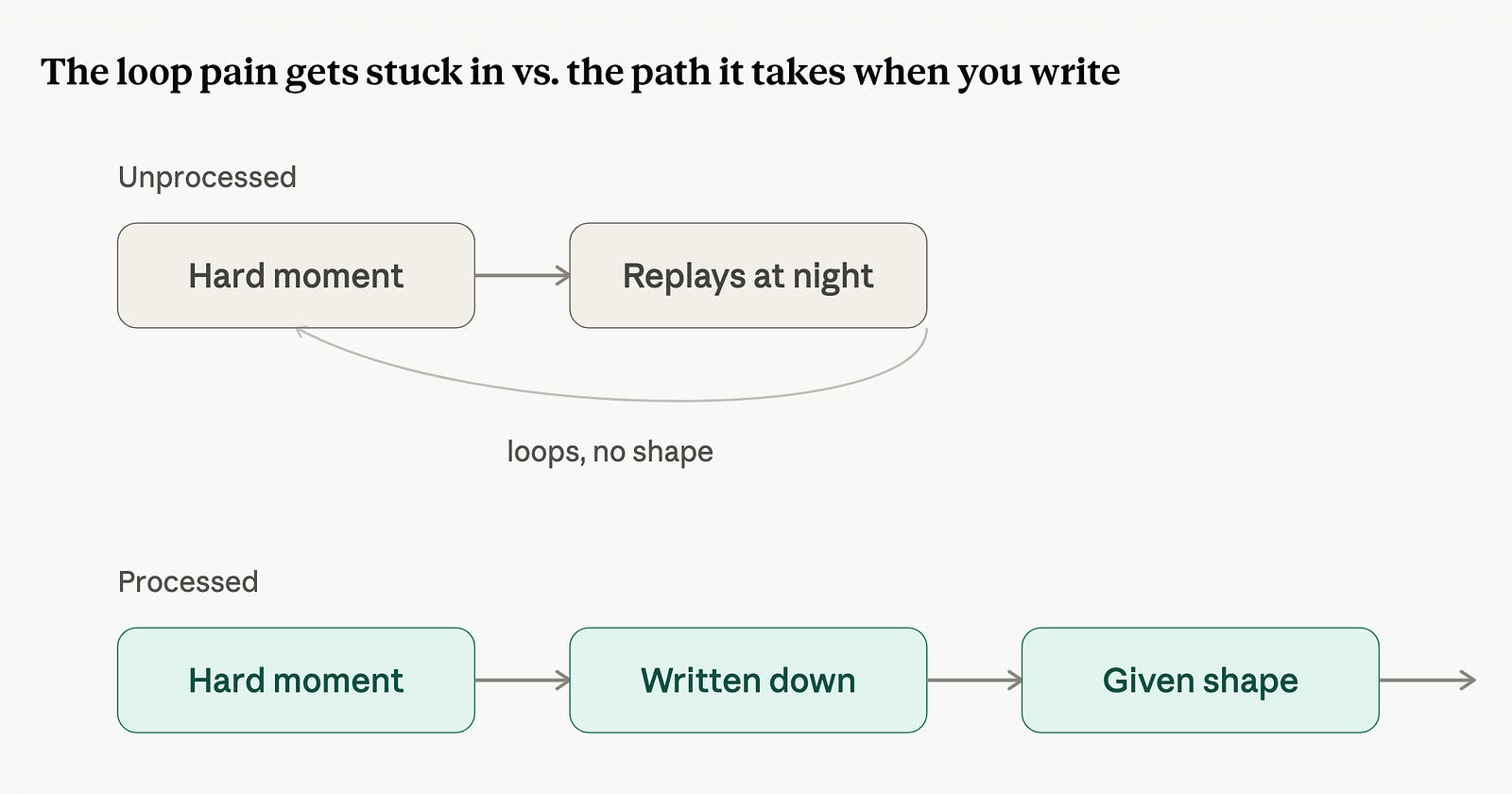
The story starts to take shape. The mess becomes a shape you recognize. A beginning. A middle. Something close to an ending.
And the strange thing is this.
The moment the story has a shape, it stops hurting the same way.
Not because you solved anything. Not because the situation changed. But because the pain finally has somewhere to go instead of looping in your head at mid-night.
This is the secret nobody tells you about writing through hard things.
It’s not therapy exactly. It’s not venting exactly either. It’s something in between. You’re not just expressing the pain. You’re building something out of it.
And building changes your relationship to the material.
Here’s what you notice, once you’ve done this enough times.
The experiences that hurt the most often become the writing that connects the most.
You write about being overlooked for something you deserved. Someone reads it and says, this is exactly what happened to me. You write about a decision you made that got questioned unfairly. Someone reads it and feels less alone in their own version of that story.
The pain becomes useful.
Not because you tried to make it useful. Because turning it into a story forced you to understand it first.
This is different from talking about your feelings out loud. Talking helps. But talking rarely forces you to build structure. You can vent to a friend for an hour and still be in the same confused place you started.
Writing doesn’t let you get away with that.
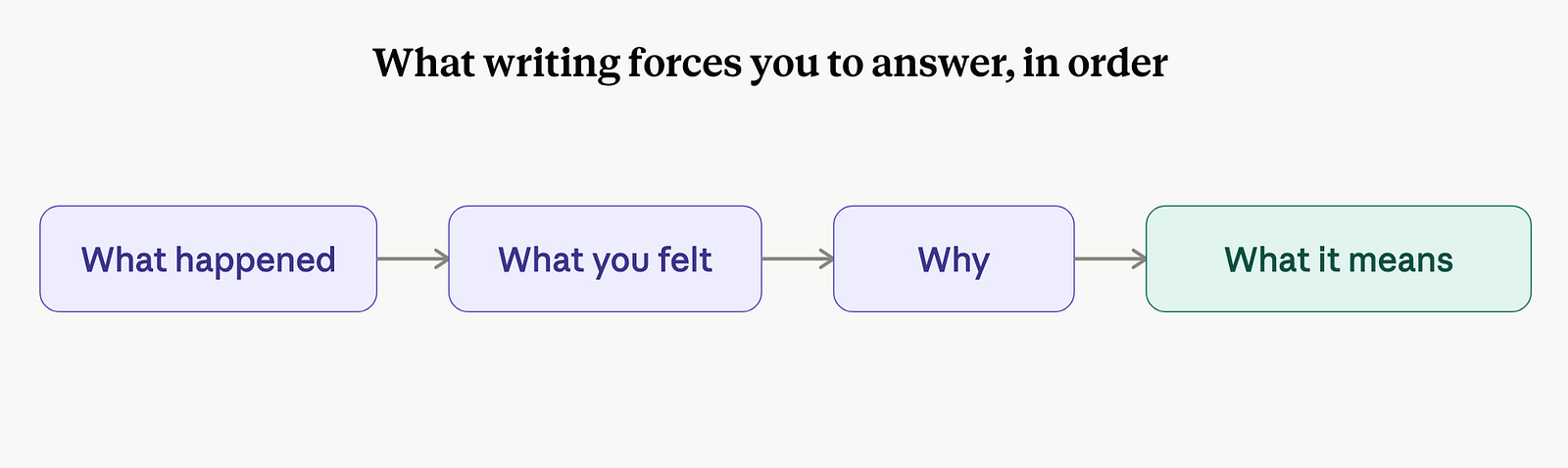
Writing asks you: what actually happened? What did you feel? Why? What does it mean? Writing makes you answer those questions in order, whether you want to or not.
By the time you’re done, you understand your own experience better than you did an hour ago.
That understanding is the actual medicine. The publishing part, the audience part, the response part — that’s just confirmation that the medicine worked on more than just you.
There’s a version of this that goes wrong, and it’s worth naming honestly.
Sometimes you start writing about pain before you’ve actually processed it. You publish the rawest version, the one still full of blame and heat. It gets read. It gets reactions. And for a moment it feels like relief.
But it isn’t relief. It’s performance.
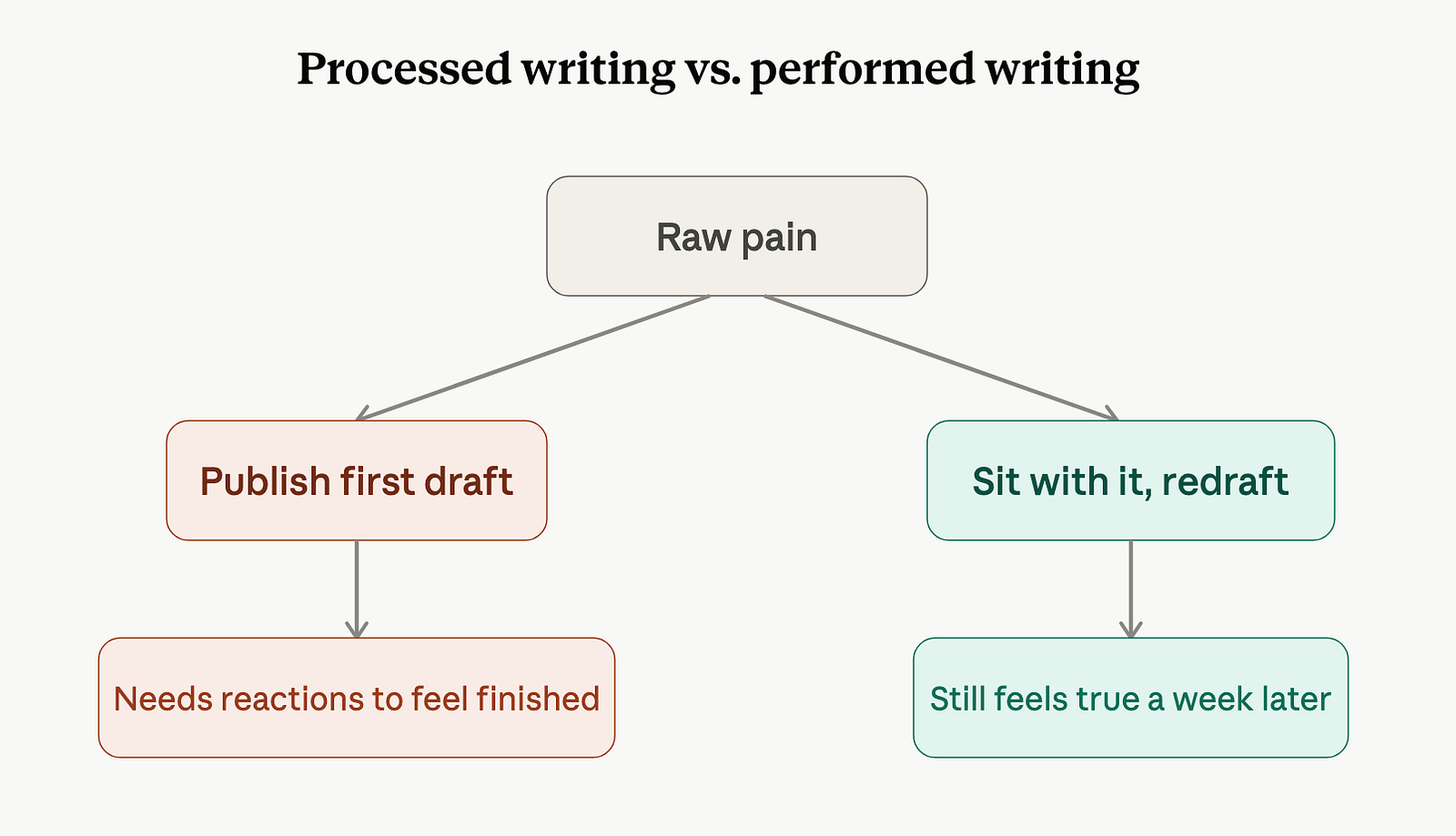
Real processing takes longer than a single sitting. The version worth publishing is usually the third draft, not the first. The first draft is where you get the anger out. The third draft is where you find what’s actually true.
You’ll know the difference by how it feels a week later.
If it still feels honest, it was real processing. If it feels like it needed the reactions to feel finished, it wasn’t ready yet.
This is the quiet work behind every piece of writing that looks effortless from the outside.
Somebody sat with something painful long enough to understand it. Then they gave it a shape. Then they shared that shape with people who needed exactly that shape for their own unprocessed pain.
You didn’t choose most of the hard things that happened to you.
But you get to choose what they become.
A story that helps someone else feel less alone is not a small thing. It’s actually one of the only good uses for pain that otherwise just sits there, taking up space, costing you sleep, costing you peace.
So the next time something hard happens and you feel that familiar heaviness in your chest.
Open a blank page.
Not to complain. Not to perform.
Just to give the pain somewhere to go.
If this found you at the right moment, you know exactly who to send it to. If you want more of this — subscribe, there’s more where this came from.
I’ve got a couple of great offers: FREE & discount access to my video courses - available for a limited time, so don’t wait too long!
🔥 Modern Software Engineering: Architecture, Cloud & Security
Discount coupon RAKIA_SOFT_ENG_13🤖 The Agentic Engineering Bootcamp
Discount coupon AI_ASSISTED_ENG_13_N🔐 Secure Software Development: Principles, Design, and Gen-AI
FREE coupon RAKIA_SECURE_APPS_12FREE coupon RAKIA_API_DESIGN_12
🐳 Getting Started with Docker & Kubernetes + Hands-On
FREE coupon RAKIA_DOCKER_K8S_12⚡ Master Web Performance: From Novice to Expert
FREE coupon RAKIA_WEB_PERF_13
💡 🧠 I break down the real-world engineering wisdom they don’t teach in tutorials. Join my newsletter or my YouTube channel, where I help working developers and engineers navigate the evolving tech landscape with clarity and confidence.
Comments
Nothing yet. Say the first thing.
Sign in to join the conversation.