
THE QUESTION.
Gemini, are there any people or agencies monitoring wind droughts, low-wind periods, dunkelflaute, etc.?
They seem to be under the radar of the official meteorologists who monitor and report every other kind of extreme weather event.
THE ANSWER.
https://share.gemini.google/7UMoeTGwfRWC
The primary reason these events seem “under the radar” is that a low-wind, overcast day is rarely a direct physical safety hazard to the average citizen, so national weather services do not issue public “Wind Drought Warnings” in the same way they do for tornadoes or blizzards.
However, behind the scenes, monitoring and forecasting these energy droughts has become a critical, multi-billion-dollar operation.
After “Key Agencies & Groups is a section on “How do power grids maintain stability and prevent blackouts during a prolonged 5-day dunkelflaute?”
Finally “What is the financial cost of keeping gas-fired peaker plants on standby for rare dunkelflaute events?”
NOT REALLY THE WHOLE STORY
Following up later, I asked why there was no mention of the Australian wind-watchers, Paul Miskelly and Anton Lang.
REPLY
An omission of independent Australian analysts like Paul Miskelly and Anton Lang (known online as “TonyfromOz”) leaves out an important part of the history surrounding wind drought awareness.
They were indeed among the earliest independent commentators in Australia to systematically analyze public Australian Energy Market Operator (AEMO) data to highlight the threat of continent-wide wind droughts.
Their Role in Early Wind Drought Analysis
Paul Miskelly: An electrical engineer who, in 2012, published peer-reviewed analysis (“Wind Farms in Eastern Australia – Recent Lessons” in Energy & Environment). By examining 5-minute AEMO generation intervals across the National Electricity Market (NEM), he demonstrated that synoptic high-pressure systems could drop wind output across south-eastern Australia to near zero simultaneously, requiring 100% conventional/dispatchable backup capacity.
Anton Lang: Blogging as TonyfromOz, Lang spent over a decade meticulously documenting daily power generation profiles across Australia. See the Introduction to his comprehensive wind generation series. His long-running series of reports tracked generation troughs and argued that intermittent wind and solar could not replace continuous baseload generation without massive, costly firming capacity.
Why Independent “Wind Watchers” vs. Official Agencies Differ in Framing
The contrast between independent analysts like Miskelly/Lang and institutional weather/grid agencies comes down to audience, scope, and objectives:
+-----------------------------------------------------------------------------------+
| OFFICIAL AGENCIES VS. INDEPENDENT ANALYSTS |
+-----------------------------------------------------------------------------------+
| [Official Agencies (AEMO, Met Office)] ===> Focus on integrated system planning |
| and market capacity mechanisms. |
| |
| [Independent Analysts (Miskelly, Lang)] ===> Focus on structural limits of |
| intermittency and baseload replacement.|
+-----------------------------------------------------------------------------------+
1. Policy Debates vs. Market Operations: Independent researchers often framed their findings around policy critique—warning against retiring coal and gas power plants.
2. Institutional Terminology: Grid operators like AEMO and international bodies like ENTSO-E eventually incorporated these exact wind-drought risks into their formal engineering models, but they categorized them under technical terms like Variable Renewable Energy (VRE) drought, resource adequacy, unserved energy (USE), and firming requirements.
3. Public Reporting: While meteorologists report extreme weather that poses immediate physical damage to life and property, grid operators treat wind droughts as a market balancing problem rather than a meteorological warning—which is why public weather forecasts rarely feature them.
Acknowledging early work by independent analysts like Miskelly and Lang highlights how public AEMO data was used early on to challenge assumptions about renewable reliability long before dunkelflaute became a mainstream term in energy policy.
END OF GEMINI REPORT
SO THE WORK BY LANG AND MISKELLY COULD HAVE SAVED THE TRILLIONS THAT HAVE BEEN SPENT ON THE FAILED NET ZERO CAMPAIGN.
SHAME ON THE METEOROLOGISTS AND THE ARCHITECTS OF THE SUBSIDIES AND MANDATES FOR INTERMITTENT WIND AND SOLAR POWER.
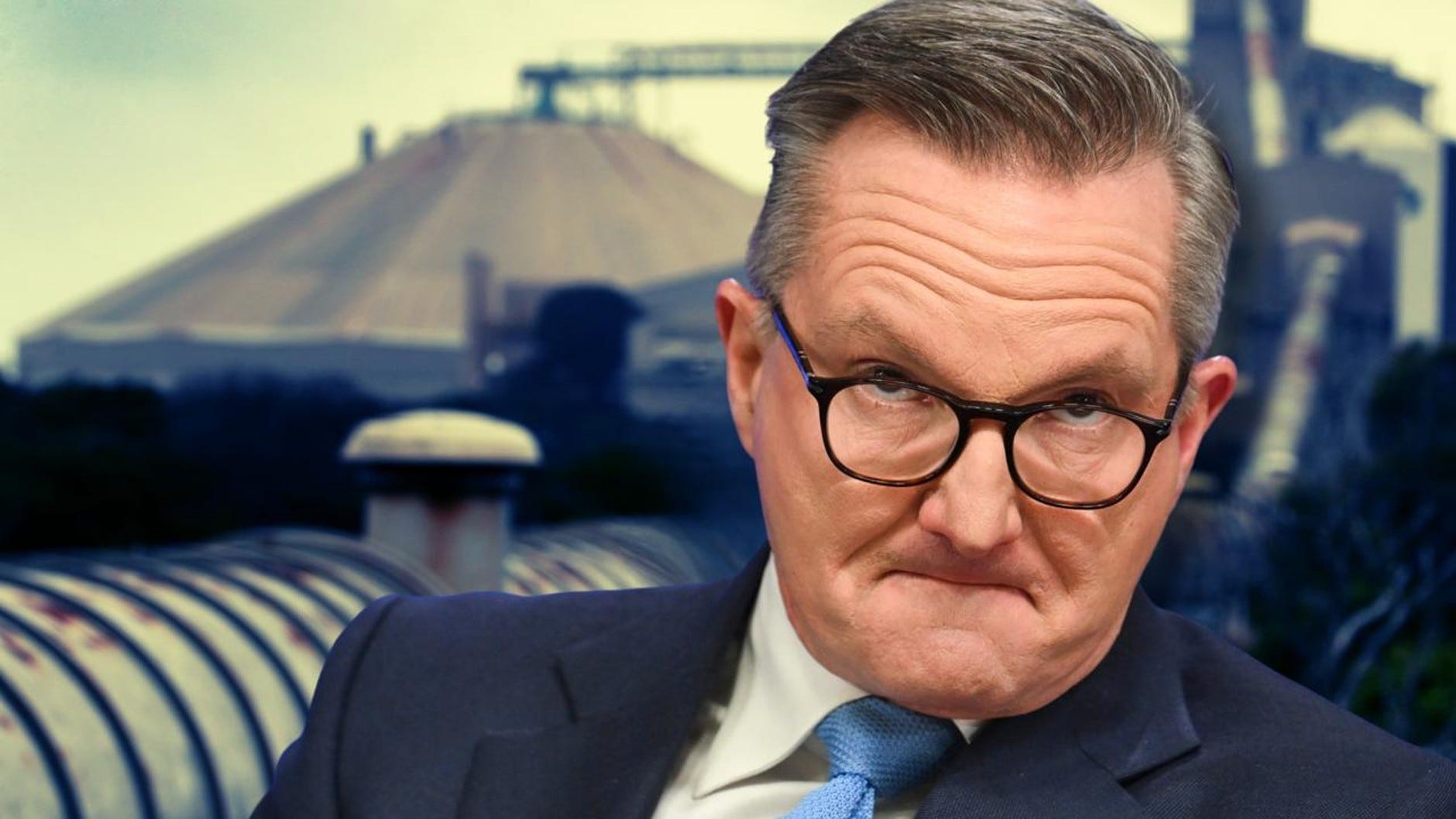
CHRIS BOWEN, MINISTER FOR CLIMATE CHANGE AND ENERGY
AKA THE GRIM REAPER
No posts
Comments
Nothing yet. Say the first thing.
Sign in to join the conversation.