
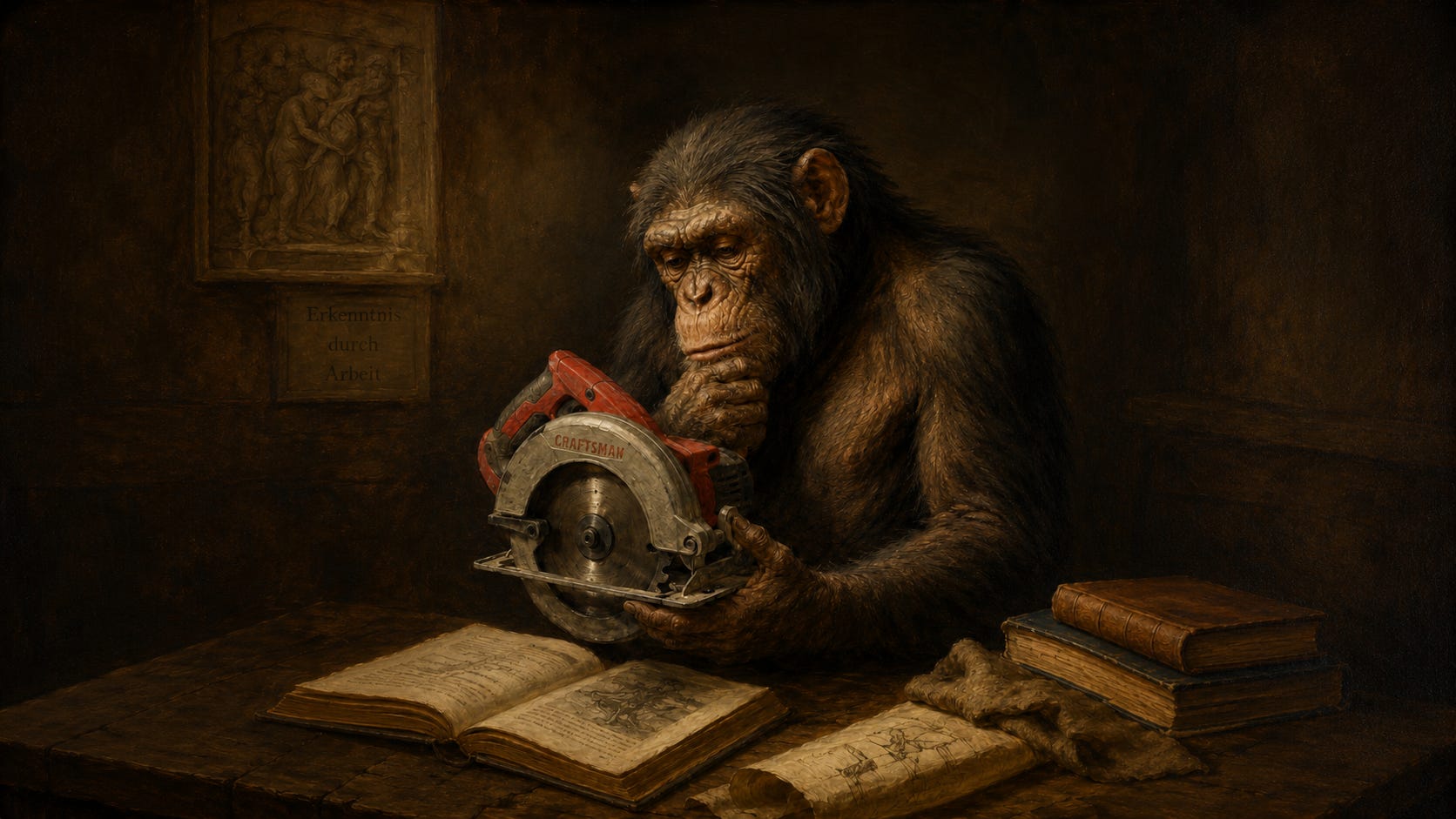
When I first moved to Indonesia, it was prohibitively expensive to bring my tools with me. Upon arrival, my first order of business was to buy a translating dictionary and a toolbox. Even though the toolbox was pitifully empty at first, over 20 years it has grown to a total of four toolboxes full of implements and hardware. Now that I can afford to ship my tools over, my brother has liberated them from storage.
A man who does not own (or steal his brother’s) tools and know how to use them is pretty much worthless in my estimation.
I have another tool quirk that flummoxes Indonesians. They will buy the cheapest possible tool to do a single job right now. If/when it breaks, they just toss it. I buy tools with the thought that my greatgrandchildren will use them, the way I used my grandfathers’ tools. I look for quality materials and manufacturing, as well as brand reputation. I would rather buy a single quality tool, than a whole boxful of crap at the same price.
My philosophy of tools is best summarized by Chapter 31, of Benedict’s Rule for Monasteries:
“Let him look upon all the vessels and all the goods of the monastery as though they were the consecrated vessels of the altar.”
In my theatre, film and video career, many of the tools I used were worth multiples of my annual salary. Proper maintenance, usage and not a small amount of reverence were given to them. In my most recent theatre gig, the rigging system alone was worth more than my lifetime earnings. We had weekly and monthly inspections, constant testing, and regular certifications. One faulty part and people died. That commands respect, and a good legal department.
Hey honey, wanna see my block and fall?
Once upon a time, humans arrogated to themselves the title of “tool users”. We now know that’s not true. Many species use tools, though few actually manufacture them for purpose and revere them as sacred artifacts.
Those tools are mostly found objects, like a stick or a rock, used to achieve a greater purpose, but that still requires intelligence and strategic thinking: “If I insert this stick into the termite mount, I can fish out delicious bugs for dinner.” Using tools requires a hypothesis, observation and experimentation, and refinement.
My current toolbox is rather different. It is a glowing cube about half a meter square, with a labyrinth of electronic wizardry inside. There are dozens of other tools connected to it, and it synchronizes the peripheral tools to achieve the many tasks I use to earn a living.
That box is the most sacred object I own. I lovingly assembled it myself from the highest quality components I could afford. I know every model number of every piece. With proper care, cooling and cleaning, it will serve me for decades, provided the national electrical company doesn’t fry it. But I have tools for that, too.
Tools are the first and last bastion of manhood. I know this because the exes never took the tools. They took the appliances, the furniture, the decorations, the pillows, even the dwelling itself—all things the tools created or afforded—but never the tools themselves. They always left me the drill and the guns, by which I created a new life for myself.
Furniture is the foundation of society, tools are the foundation of civilization.
To my testosterone-addled mind, the Snap-On truck or the Craftsman section at Sears were my tent revival and cathedral, respectively. I love tools. I would rather sacrifice two days of eating for a genuine Leatherman 21-in-1 tool with military-grade belt pouch. I would rather thumb through Flints Theatrical Chandlers catalogue than any issue of Playboy. I would rather, well…you get the idea.
Tools are the basis of all things civilized. From the moment some caveman gave his wife a sharpened rock to carve up the mastodon, humanity has come to dominate the planet…well, except for fungi. We’re working on that. The wife probably took the rock when she left, too, but our boy knew how to make more.
“Hey Ogg!” exclaimed our intrepid caveman. “If I take this gooey stuff here and shape it like my cupped hands and let it sit in the sun a couple of days, I can fill it with vodka and cranberry juice. I have invented the cocktail hour!”
And thus was born the neighborhood pub.
The next time someone calls you a tool, consider they may have paid you a great compliment. They have acknowledged that you are the pinnacle of intelligence and an indispensable part of civilization. You should own it and thank them profusely.
This is an ode to the oft-forgotten tool: symbol of manhood, extension of body, foundation of civilization. Will you ever look at your screwdriver the same way again?
I think not.
Si mundus vult dicipi, ergo dicipitatur.
=====
Today’s topic most certainly cried out for a double feature, because men using tools always equals buffoonery. The first is a Cary Grant-Myrna Loy classic, Mr. Blandings Builds His Dream House (1948). The second offering is The Money Pit (1986), with early Tom Hanks directed by Richard Benjamin. Fun for the whole family!
Building a mighty thirst on the Far Side:
Home Site / Old Blogger Site / LinkedIn / Farcebook / IMdB
E-book: Paper Golem: Corporate Personhood & the Legal Fiction
Contact Bernard Grover: bernard (at) radiofarside (dot) com
Radio Far Side, published (mostly) every Sun/Wed at 7a CST/7p WIB, is a labour of love. We don’t use a paywall, and we don’t sell stuff. We just create things to inform and entertain. Like any good busker on the digital mean streets, we put our hat down and if you feel inspired, drop a coin in to show your appreciation:
BTC wallet: bc1qth6drgzcyt7vlxxpvqh6erjm0lmaemwsvf0272
XRP wallet: rMSQzLyE3RHacCLwYPADBbq4RHQ71HpCzw

Comments
Nothing yet. Say the first thing.
Sign in to join the conversation.