
There’s a principle simple enough to say in one sentence that explains almost everything about power in the world.
Wherever there’s a bottleneck, there’s power. Whoever controls the flow controls what happens next.
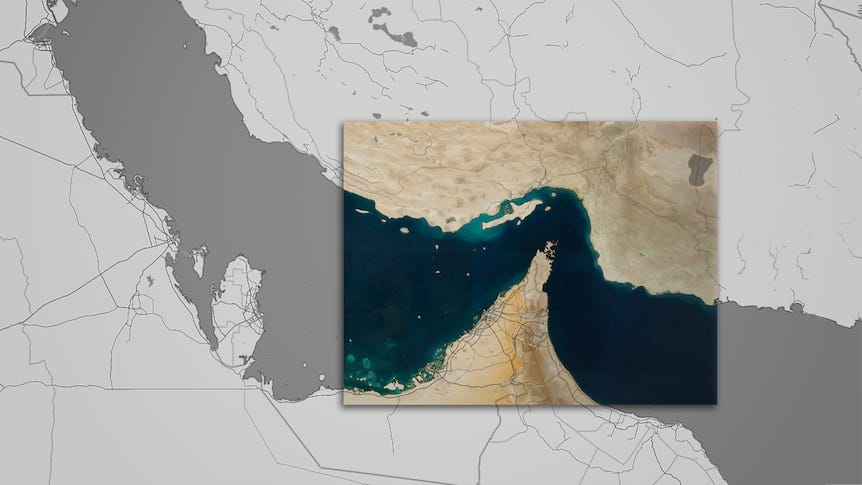
Think about what that means physically. A bridge with one lane. A dam holding back a river. A gate that a whole city has to pass through. The Strait of Hormuz — the narrow channel through which nearly a fifth of the world’s oil supply passes, where a single geopolitical flashpoint can send shockwaves through every economy on earth. The scale differs. The principle doesn’t. Whether it’s a bridge, a border, or a global energy chokepoint — whoever controls that narrow point decides who moves and who waits, who gets through and who doesn’t — not because they’re necessarily smarter or more deserving, but because the architecture put them there. The power lives in the position, not the person.
Now let’s zoom in to your life and ask the question that changes everything:
What is the one bottleneck that almost everything in your life has to pass through?
Housing. Food. Healthcare. Education. Starting a business. Raising a family. Responding to a crisis in your community. Helping someone you love.
Money is not neutral. It never was. And while the architecture of the bottleneck creates the conditions for concentrated power, there are those who exploit those conditions deliberately and ruthlessly. The Epstein class — the ultra-wealthy who operated beyond accountability, beyond law, beyond consequence. The political actors who use control of money flows to strip benefits from ordinary citizens while funding expanding wars. These aren’t accidents of the system. These are people who understand exactly where the bottleneck is, who controls it, and how to use it. The architecture enables it. They choose it.
Money makes more money. Not through harder work or greater virtue, but through the simple mechanics of how the instrument operates: interest, investment, compounding, leverage, inheritance. The more you hold, the more you accumulate. The gate doesn’t just control access — it tilts the entire playing field permanently toward those already inside it. And the more money you have, the more power you have. Not proportionally — exponentially. Enough money buys political influence. More buys legal immunity. More still buys the ability to dissolve the bottlenecks that constrain everyone else — to purchase citizenship, to move capital across borders invisibly, to operate beyond the reach of any single nation’s laws. This is what the Epstein class is. Not an anomaly. Not a few bad actors who slipped through the cracks. But the logical endpoint of a system that converts money into power and power back into money, compounding without limit, until a small class of people effectively lives outside the rules that govern everyone else.
That is asymmetric power1. And money is its engine.
Which makes money the meta-bottleneck2 — the chokepoint through which all other chokepoints are controlled. Every other system sits behind that gate. Energy. Healthcare. Land. Legal protection. Information. You can trace a line from almost any human need to the money required to meet it. Whoever controls money — how it’s created, who can reach it, and who gets to move around it entirely — controls everything downstream.
Not just wealth. Possibility.
Who makes it. Who gets it. Who escapes it.
The money bottleneck doesn’t work the same way for everyone. It has three tiers, and which tier you occupy determines your entire relationship to the system.
Some people don’t just use money. They create it.
Banks create money when they issue loans — the money didn’t exist before the loan was approved. Governments and central banks shape the money supply through policy decisions made in rooms most people will never enter. The financial system itself is a money-generating apparatus, and access to that apparatus is not distributed equally.
Everyone else — meaning most of humanity — earns money that was originated somewhere else, under conditions set by someone else. We arrive downstream of the creation point. We work within a system whose fundamental parameters we didn’t set and can’t change. And much of the work the system requires of us — what the late anthropologist David Graeber called “bullshit jobs,” the vast ecosystem of administrative, financial, and managerial roles that contribute little to actual human welfare but keep the machinery of money-passing running — exists not because it serves society, but because it serves the bottleneck. It keeps the 99% busy earning, spending, and passing back through the gate, while the 1% who control the creation point accumulate power that compounds beyond anything labor can match.
That’s not a minor distinction. That’s a structural difference in your relationship to the bottleneck itself — and the system is designed to keep it that way.
Even once money exists, not everyone can reach it equally.
Credit scores. Collateral requirements. Banking relationships. Zip codes. These aren’t neutral filters. They decide which ideas get built and which die underfunded. Which communities develop and which stagnate. Which futures get prototyped and which remain imaginary.
The bottleneck doesn’t just control access to money. It controls access to what money makes possible — and that means it shapes the future itself, sorting human potential by financial proximity to the gate.

Here’s where the whole system reveals itself.
The wealthy don’t just have more money. They have money that moves around the bottleneck. Passive income. Capital gains. Tax strategies. Global financial mobility. These aren’t perks of success — they’re structural exits from the constraints that govern everyone else. The bottleneck tightens for most people and dissolves for a few.
And nowhere is this more visible than at the border.
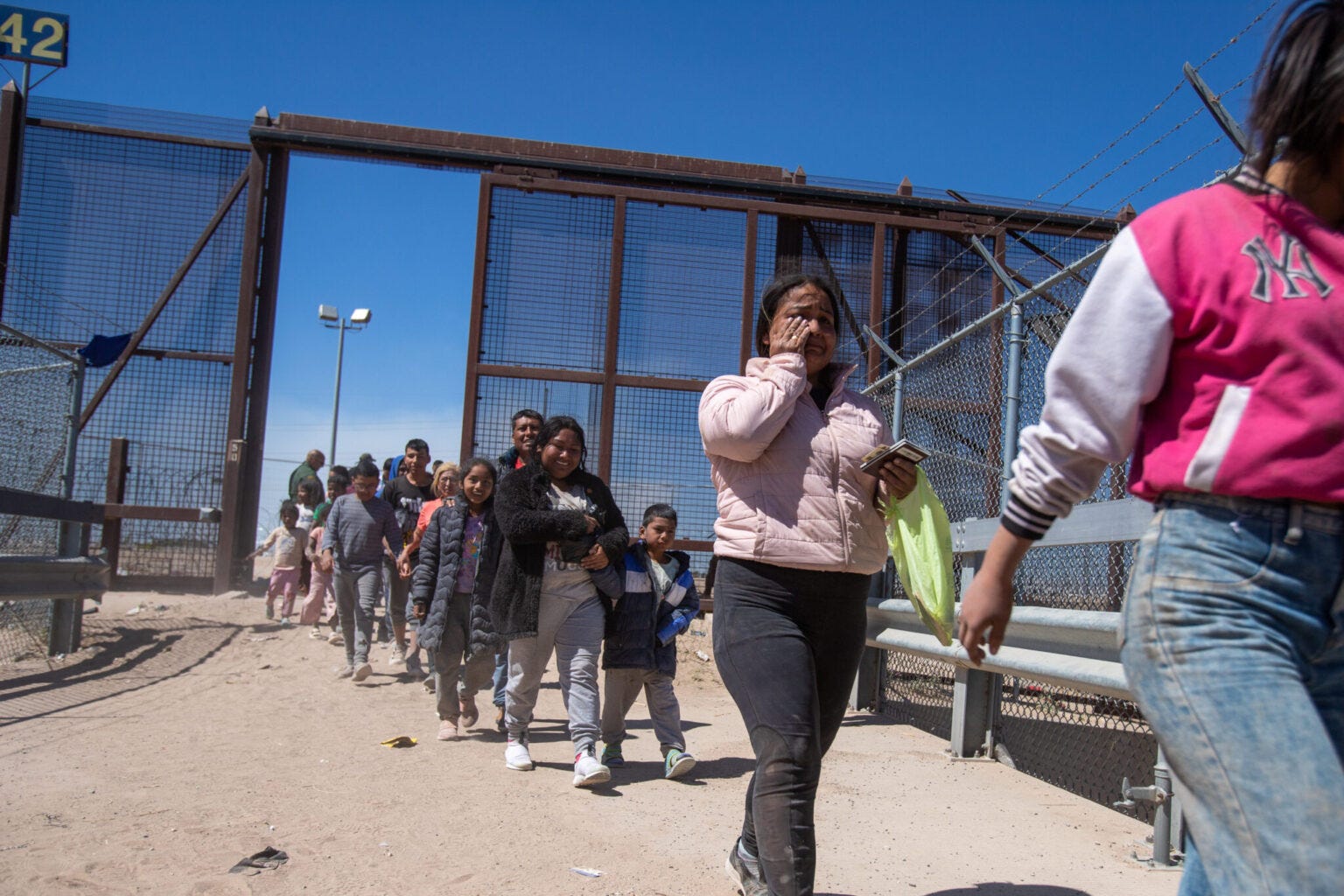
Borders are supposed to be universal constraints. They’re not. Portugal’s Golden Visa. Malta’s citizenship by investment. Caribbean passport programs. The American EB-5 investor visa. For enough money — a few hundred thousand to a few million dollars — the border bottleneck disappears entirely. You hold multiple passports. You move freely. You park wealth in favorable jurisdictions. The border becomes a menu.
Meanwhile, a refugee family fleeing violence faces maximum bottleneck friction at the same border. Detention. Processing. Denial. The ever-present risk of death in the crossing.
Same border. Opposite experiences. The difference is money.
That’s not an anomaly. That’s the system working exactly as designed. The bottleneck constrains those who must pass through it — and dissolves for those who can buy their way around it.
Rivalry isn’t human nature. It’s system design.
We’ve been told for generations that competition is just how people are. That scarcity is natural. That the scramble for resources reflects something essential about the human animal.
It doesn’t.
It reflects the architecture.
When all coordination must pass through a single bottleneck, scarcity of access to that bottleneck becomes the primary axis of competition — even in a world of material abundance. The gate is always narrow. There’s always someone ahead of you and someone behind. Of course you compete. Not because you’re selfish, but because the system made access scarce and then told you that’s just reality.
This is what’s referred to as Moloch3 — not a monster, not a villain, but a coordination trap. A system in which even good people are forced into bad dynamics just to survive. A game where the rules produce destructive outcomes regardless of who’s playing.
You can’t opt out of competing for monetary access while living inside the monetary system any more than you can opt out of breathing. The rivalry isn’t chosen. It’s mandatory. And mandatory rivalry, operating at civilizational scale, is what makes the largest problems we face impossible to solve — not for lack of resources or intelligence or will, but because the bottleneck controls the response.
The system that created the crisis is controlling the response.
We are living inside what is called the meta-crisis4 — not a single emergency but a convergence of them: ecological, economic, social, civilizational. Each crisis feeds the others. Climate destabilizes food systems. Economic instability erodes the political will to respond. Social fragmentation blocks the coordination that response requires. And war — expanding, multiplying war, from Ukraine to Gaza to the escalating confrontation with Iran — consumes the resources, the attention, and the human lives that every other crisis desperately needs. Wars that are rarely accidental. Wars that are extraordinarily profitable for those at the top of the bottleneck. No single crisis in isolation — all of them simultaneously, compounding. This is the meta-crisis. And it requires coordination at a scale and speed that has never been achieved in human history. It doesn’t respect borders or quarterly earnings cycles or the political timelines of any single nation-state.
But every response still has to pass through the bottleneck of money.
Every resource mobilization. Every coordinated effort. Every attempt to organize human energy toward something other than extraction. It all still has to get through the gate — a gate controlled by actors whose incentive structures were designed for a different game entirely.
The meta-crisis is raging — and every response still has to ask permission from money first.
This is the trap that most analysis misses. We keep treating the meta-crisis as a policy problem, a political problem, a technology problem. But it’s an architecture problem. The meta-bottleneck doesn’t just fail to solve the crises downstream of it. It structurally prevents the kind of coordination those crises require.
The system isn’t broken. It’s working exactly as designed. And you cannot solve a bottleneck problem by making the gatekeeper nicer, or more enlightened, or better regulated. The power lives in the position. Change who’s standing there and the architecture remains.
It’s time to play a different game.
So here's the real question: not how do we fix the gate — but what would it look like to build a world that doesn't need one?
If power comes from bottlenecks, then trying to fight that power on its own terrain is a losing game — by design.
You cannot out-resource people with infinite resources. You cannot out-litigate people who control the legal system. You cannot out-compete people for whom the bottleneck itself is the ultimate asset. They have more money, more leverage, and — when it comes to it — a monopoly on organized violence. Fighting them on the money game’s playing field means fighting on ground they own, with rules they wrote, using a currency they create.
That’s not a winnable game. And continuing to play it — election cycle after election cycle, reform after reform, protest after protest within the existing frame — is not strategy. It’s exhaustion on a treadmill they built.
So we have to play a different game entirely.
When you look clearly at the world’s converging crises — ecological, economic, social — they all reduce, at root, to the same thing: money and the power asymmetries it generates. The MMO system5 — Money, Markets, and Ownership — is the bottleneck architecture. Money is the gate. Markets are the mechanism that makes the gate appear natural and neutral. Ownership is the structure that locks control of the gate into heritable, compounding positions across generations. Together they form a system designed not to solve human problems but to route all human activity through a point of control.
The diagnostic for what MMO produces is what I call SCIM6: Scarcity, Competition, Incentive Misalignment. These aren’t accidents. They are the structural outputs of a bottleneck civilization — the inevitable consequences of funneling all human coordination through a single point of control.
The different game is the transition to Post-MMO7 — the open access economy. A world where people have access to what they need without a price tag. Not because everything is free in some naive sense, but because the coordination systems governing resource allocation are no longer organized around a bottleneck. Access becomes the default. Contribution replaces extraction as the organizing principle — you participate by offering what you can, and access what you need, without the gate deciding your worth. The gate dissolves.
This may sound familiar. Marx said it this way: “From each according to his ability, to each according to his needs.” He was pointing at a real human truth. But every attempt to build that world so far replaced one bottleneck with another — the market gate swapped for the state gate, the same asymmetric power in different hands. The Soviet Union didn’t dissolve the bottleneck. It nationalized it. The gate remained. Only the gatekeeper changed.
The Post-MMO transition is categorically different. It isn’t about changing who controls the gate. It isn’t about making the gatekeeper more humane, more democratic, or more accountable. It’s about building coordination systems that don’t require a gate at all — distributed, abundant, and structurally incapable of generating the power asymmetries we’re living inside. That’s not communism. That’s a different game entirely.
The framework for what this world runs on is ACAI8: Abundance, Cooperation, Aligned Incentives. Where SCIM describes the disease, ACAI describes the conditions of health. And the identity frame for who we are in that world is Geotribal9 — humanity as one tribe, coordinating across borderless bioregions rather than the artificial nation-state lines that the bottleneck architecture drew to protect itself.
None of this is utopian wishfulness. It’s architectural diagnosis followed by architectural ambition. The resources to solve our crises exist. The intelligence exists. The human will exists. What blocks them is not scarcity. It’s the gate.
The bottleneck is the MMO system. And everything downstream of it — the inequality, the rivalry, the crises we keep failing to solve no matter how hard we try within the current frame — follows from that single architectural fact.
Change the architecture.
That’s the game worth playing.
Key terms from the author’s ongoing theoretical work. [Link to full Geotribe Glossary]
Asymmetric Power: An imbalance of power between two or more parties that arises from structural position rather than personal merit or effort. Wherever there is a bottleneck, there is power asymmetry — the party controlling the flow holds disproportionate leverage over everyone who must pass through it. In the MMO system (money, markets, ownership), power asymmetry is not an accidental outcome but a designed feature, compounding across money, markets, ownership, and borders to concentrate control in fewer and fewer hands across generations. Artificial intelligence is rapidly becoming a new axis of power asymmetry — as AI infrastructure concentrates in the hands of a small number of corporations and states, it risks becoming another meta-level chokepoint, determining who has access to the tools of intelligence, productivity, and coordination in the emerging economy.
Meta-bottleneck: Money as the universal chokepoint through which all other systems of access and coordination must pass. Unlike sectoral bottlenecks that control one domain, the meta-bottleneck is transversal — it cuts across all domains simultaneously, giving whoever controls it leverage over everything downstream. The MMO system — Money, Markets, and Ownership — is the architecture of the meta-bottleneck.
Moloch: A coordination trap in which even well-intentioned actors are forced into destructive competition by the rules of the system. Not a villain — an architecture. The mandatory rivalry produced when all human coordination must pass through a single bottleneck. The name draws on the ancient Canaanite deity associated with child sacrifice — a civilization feeding its own future into the fire to appease a system it couldn’t escape. The metaphor holds. [See full Geotribe Glossary for a deeper exploration of Moloch as ancient deity, coordination trap, and civilizational pattern.
Meta-crisis: Not a single emergency but a convergence of compounding civilizational crises — ecological, economic, social, and the expanding wars that consume the resources every other crisis desperately needs. Each crisis feeds the others. No single cause, no single solution, no single nation or institution capable of addressing it alone. The meta-crisis is what a bottleneck civilization produces when its coordination failures compound across generations.
MMO: Money, Markets, and Ownership — the three interlocking pillars of the current economic operating system and the architecture of the meta-bottleneck. Money is the gate. Markets are the mechanism that makes the gate appear natural and neutral. Ownership is the structure that locks control of the gate into heritable, compounding positions across generations.
SCIM: Scarcity, Competition, Incentive Misalignment — the diagnostic framework for what MMO produces structurally, not incidentally. These are not flaws in the system. They are its outputs.
Post-MMO: The transition away from Money, Markets, and Ownership as the organizing logic of civilization. Also framed as the open access economy — a world where people have access to what they need without a price tag. Not because everything is free in some naive sense, but because coordination systems are no longer organized around a bottleneck.
ACAI: Abundance, Cooperation, Aligned Incentives — the structural conditions of a post-bottleneck coordination system. Where SCIM describes the disease, ACAI describes the conditions of health.
Geotribal: The framework and stage human consciousness and development that understands humanity as one tribe, coordinating across borderless bioregions rather than the artificial nation-state lines that the bottleneck architecture drew to protect itself. Where nation-states organize human life around borders of power and historical conquest, Geotribalism organizes it around living ecosystems, shared watershed, and genuine human solidarity.
No posts
Comments
Nothing yet. Say the first thing.
Sign in to join the conversation.