
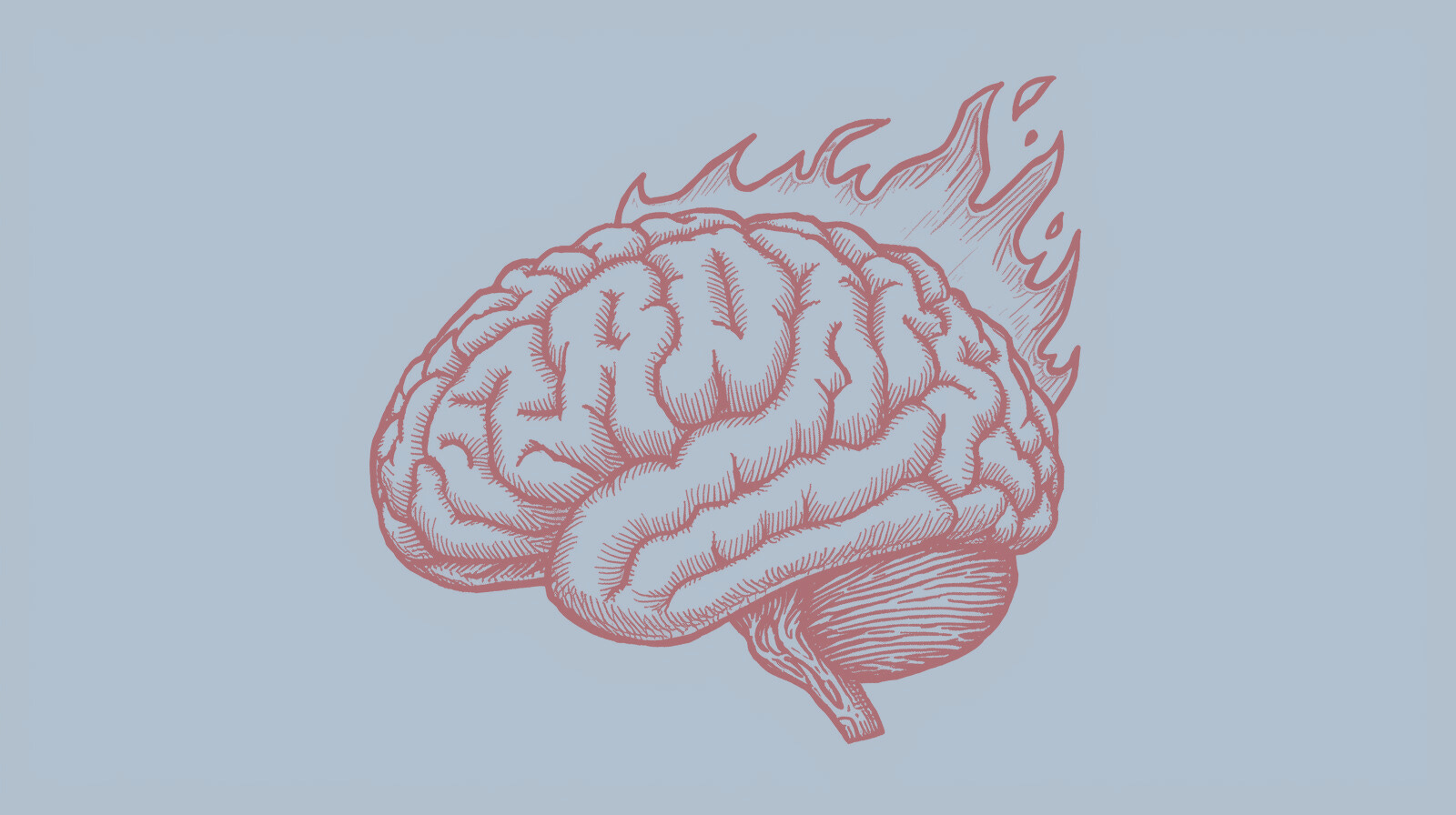
The concept of the gaslit brain has been on my mind for weeks, particularly in light of the underwhelming response from governments and thought leaders to the Epstein files — more on this shortly.
The gaslit brain is a nervous system that has been repeatedly taught to mistrust its own perceptions in order to preserve attachment, safety, or belonging.
Growing up, the pattern I experienced was not simply distortion of events, but something more destabilizing: after episodes of rage, there was never repair. No naming. No debrief. The next encounter would proceed as if nothing had happened — water under the bridge by unilateral decree.
Decades later, when I found the courage to address these events directly, while I was met with small amounts of clarity, my questions mainly yielded sophisticated non-answers.
Neuroscientifically, this matters.
The human brain depends on social feedback loops to calibrate reality. When those loops are repeatedly disrupted, the nervous system does what it must to preserve attachment: it begins, slowly and often unconsciously, to question itself.
Gaslighting occurs when there is a persistent mismatch between our observed reality and the reality insisted upon by someone in a position of power or trust. Over time, neuroscience suggests that this kind of chronic interpersonal disconfirmation can alter how the brain processes its own perceptions.
Research in trauma and predictive processing shows that when lived experience is repeatedly contradicted by trusted others, the brain’s error-monitoring systems are placed under sustained strain. Studies of chronic psychological stress demonstrate increased amygdala reactivity, reduced prefrontal regulatory control, and fragmentation of memory encoding.
Over time, many survivors report exactly what the neuroscience would predict: increased self-doubt, fragmented memory confidence, and a diminished ability to trust their own internal signals.
I’m halfway through Gisèle Pelicot’s memoir of the decades-long abuse she endured while being systematically dismissed. What is striking is not only the violence itself, but the layered social gaslighting that surrounded it — within her family, and at times within the medical system.
Her husband went out of his way to get her to keep her memory lapses private. Whenever she suggested bringing it up with their children he said: “You don’t want to worry them.”
Gisele Pelicot’s brother-in-law was a doctor, and said to Gisele of her memory losses:
“The brain knows best. It’s like how the vacuum cleaner switches off when the bag is full.” Like her weak female brain just couldn’t handle all of her caregiving and household responsibilities.
To top it all off, Gisele was repeatedly dismissed by her doctors after repeated presentation with her cognitive and gynecologic issues. One gynecologist who did a speculum exam and found she had an inflamed cervix, not only didn’t collect STI swabs, the only instructions given were to just “stop having sex altogether.”
What many people misunderstand about gaslighting is that it is not only about overt lies. Sometimes it is the strategic absence of acknowledgement.
Given my life-long training in being gaslit, and the research I’ve done on the neuroscience in this area, my brain is not buying any of what is happening at senior levels of government in the United States.
A low-level anger has resided in the back of my brain since President Trump stated that he and everyone were “tired” of discussing the Epstein files, as if the women who survived the violence and whose names weren’t properly redacted from the files aren’t the most tired. I’m grateful that I could consciously take a break for a week from consuming the news – a luxury not afforded to the survivors living through this.
I have no doubt they are more tired than all of us in the general population who are simply bearing witness and confused over the silence from many of America’s biggest thought leaders.
My brain is not readily accepting the lack of commentary from thought leaders either. What has been striking to me is the relative silence from many prominent voices in the self-development space. While there may be thoughtful reasons for this pause, the absence itself is psychologically noteworthy.
A recent Substack essay by Dr. Scott Mills highlighted a number of prominent self-development figures who, at the time of publication, had not publicly commented on the Epstein files. The author’s list included:
Tony Robbins | 15 million followers | silent.
Mel Robbins | 10 million followers | silent.
Brené Brown | 7 million followers | silent.
Jay Shetty | 50 million followers | silent.
Gabby Bernstein | 1 million followers | silent.
Tim Ferriss | 10 million followers | silent.
Jen Sincero | 1 million followers | silent.
Eckhart Tolle | 5 million followers | silent.
Joe Dispenza | 5 million followers | silent.
Rachel Hollis | 3 million followers | silent.
Brendon Burchard | 10 million followers | silent.
Lewis Howes | 5 million followers | silent.
Marie Forleo | 2 million followers | silent.
Vishen Lakhiani | 3 million followers | silent.
Robin Sharma | 5 million followers | silent.
Mark Hyman | 5 million followers | silent.
Elizabeth Gilbert | 8 million followers | silent.
Danielle LaPorte | 500 thousand followers | silent.
Oprah Winfrey | 100 million followers | silent.
I am familiar with the stunned responses of others, and I respect that many on this list may need time — especially those with personal or professional proximity — to psychologically process what is continuing to emerge.
What gave me pause, however, was watching Deepak Chopra’s wife’s comment to a reporter with a suggestion that we should simply “talk about something nice.” That framing, intentionally or not, edges into what I would call gaslighting-adjacent territory.
None of us want to be having these conversations. But it is precisely the combination of power, proximity, and silence that forces them into the open. When legitimate public questions are met with deflection rather than clarity, trust erodes further.
I felt a measurable sense of relief reading that Andrew Mountbatten-Windsor, King Charles’s brother, had been arrested this week by the UK police as part of an ongoing investigation.
Criticism of the royal response has already begun. Still, I will take King Charles saying “let the legal system take its due process” over Trump’s public expressions of fatigue with the issue.
For the first time in days, my nervous system registered what felt like movement from a trusted authority.
What we allow our brains to believe shapes what we are willing to build. I am choosing — deliberately — to believe that even those thought leaders who have not yet spoken will ultimately respond with integrity and moral clarity.
Within my own circles, I have heard the familiar refrain that justice will not be served. I understand the fatigue behind that belief. And still, I am choosing something different.
There was a time when many believed women would never secure the vote.
There was a time when many believed slavery would never be abolished.
History is, in part, the story of impossible shifts that eventually became inevitable.
We are living in a moment of reckoning where privilege and power are no longer guaranteed shields against accountability.
Today, my nervous system feels slightly less gaslit.
Dr. Anne
Thanks for reading Radical Brain Health. This post is public so feel free to share it.
P.S. If you find this work valuable, please consider becoming a paid subscriber. A great deal of care and courage goes into what I share here, and your support helps sustain it.
If you are already a paid subscriber — truly, thank you. Your ongoing support means more than you know.
No posts
Comments
Nothing yet. Say the first thing.
Sign in to join the conversation.