
I wasn’t online when I first heard about Dr. Peter Attia and the Epstein files. I deliberately avoided reading commentary before writing a first draft of this. I wanted to sit with my own reaction before absorbing anyone else’s interpretation.
My husband (who’s my official second-hand Twitter/X scroller) told me last Saturday night: Attia’s name had surfaced in the Epstein files. Between too many ER shifts, being on call, packing lunches, and being my kids chauffeur — my brain has been trying to decipher what it means.
I deeply enjoyed Peter Attia’s book Outlive and I’ve read it cover to cover. I was especially moved by his final chapter where he discloses he was a victim of private violence himself. I felt deep respect at the vulnerability he exhibited around the long-lasting impact of that trauma. I felt he did a great service in making Dialectical Behaviour Therapy (DBT) accessible to the average person.
But there are allegedly >1700 mentions of Attia in the Epstein files. And the emails between them don’t read like distant professional correspondence. They read like familiarity. And familiarity, when attached to harm, is unsettling. He has subsequently been dropped by two companies: David Protein and AGI. CBS has pulled a ‘60 minutes’ profile that aired in October, but are awaiting more information to decide whether to cancel him.
In Attia’s apology (deemed a non-apology by another doctor, Jen Gunter), he asserts no criminal behaviour.
But now that serious ethical questions have surfaced about proximity, normalization, and responsibility, that, in the very least, he was part of the integral circle that propped up someone who repeatedly raped children -– it becomes another mind-warp to hold onto these complicated versions of Dr. Peter Attia.
My brain wants to know: is Dr. Peter Attia guilty or not? Is his explanatory post on X just another a carefully constructed legal defense, or is it him being vulnerable and honest?
The answer is: I don’t know, you don’t know, and we may not know for a while. It’s the worst kind of answer none of us want. My rigid brain hates ambiguity. I respect all litigators, reporters, advocates, and survivors working hard to bring the truth forward.
But what I can say, is that I deeply understand the visceral shock of these type of revelations.
I know many have felt disbelief to find out that a respected author and physician was named in the files. But I’ll be honest: I didn’t feel that shocked. Mainly disappointment followed by something more familiar: recognition.
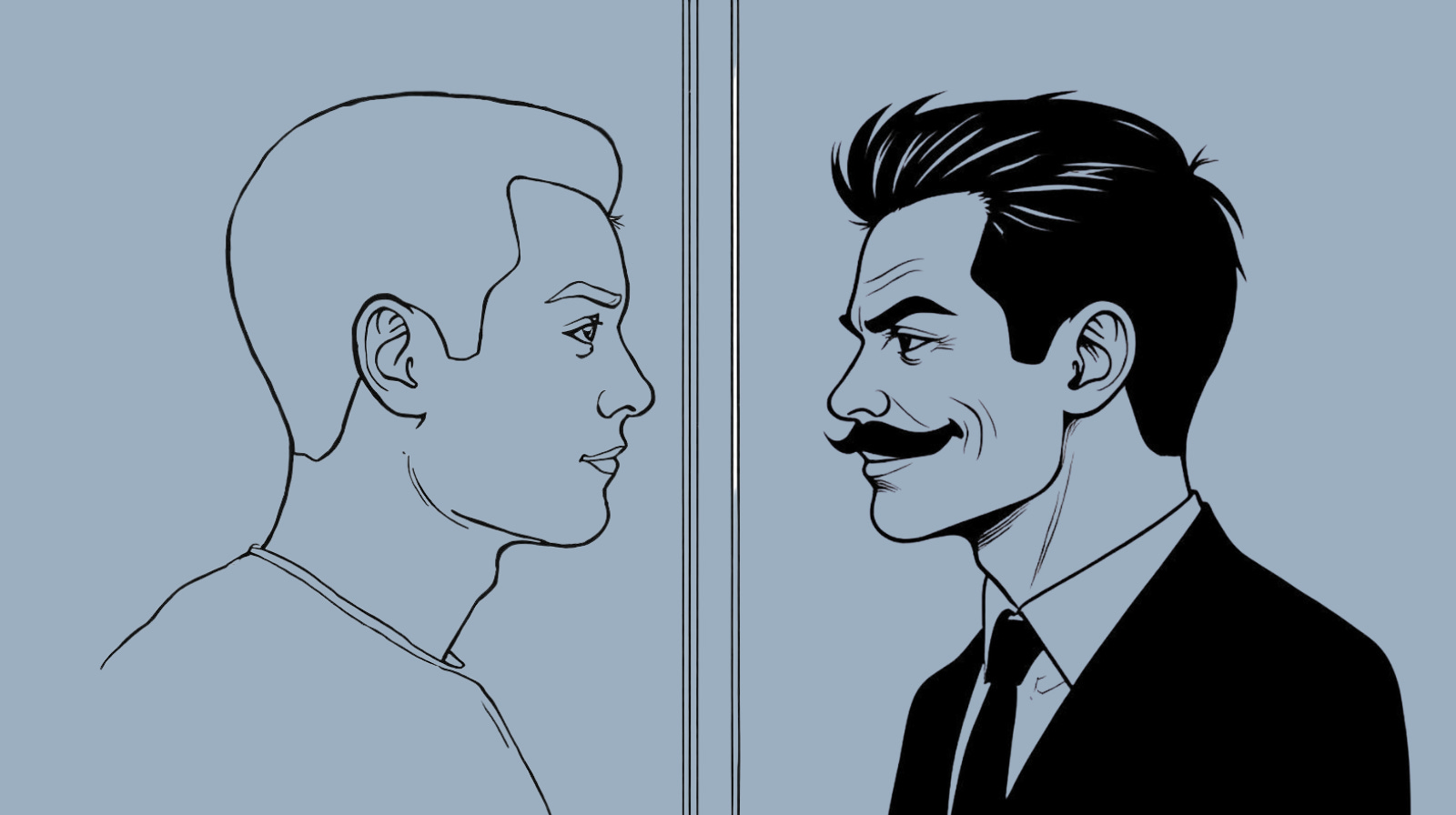
Not because I have certainty about whether he is guilty. But because moments like this land squarely in the question that sits at the heart of why I wrote my book in the first place: How can someone seem normal—generous, even admirable—and still be connected to profound harm?
This is not a new question for me. It’s a deeply personal one.
I wrote my book trying to understand how my father could have some positive influence on my life—how he could be funny, interesting and helpful even—and still be capable of rape. How those two realities could coexist in the same person. How the different versions of him I knew could exist alongside acts that shattered lives, including my own.
For a long time, I searched for a clean explanation. A way to separate “good” people from “bad” people. Monsters from humans and safety from danger. But real life doesn’t work that way.
The Myth of the Obvious Villain is one of the most damaging myths we hold about sexual violence. That perpetrators are easy to identify—that they look a certain way, behave a certain way, or exist on the margins of society. They often don’t. Often they are embedded in families, institutions, workplaces, and communities. They are doctors, professors, coaches, executives. They are fathers. Colleagues. Mentors. Sometimes, people others admire.
This certainly doesn’t mean everyone is secretly dangerous. And through cognitive behavioral therapy, I’m grateful my mind understands that most people and most men are safe and caring people.
But it does mean that our reliance on “profiles” is a failure of imagination—and a failure of prevention. When we cling to the idea that sexual harm is committed only by a certain “type” of person, we miss what’s actually happening. We miss patterns and power dynamics. We miss silence and we miss victims.
This is one of the reasons I try to be deliberate about language—why I prefer phrases like “person who committed assault” and “person who experienced assault.” Not to sanitize harm or to soften accountability, but to strip away the false comfort that comes with labeling.
Words like ‘rapist’ or ‘monster’ can feel satisfying. But they create distance. They reassure us that harm is external—something done by others, not by people we know, love, or admire. And that distance can come at a cost. When we define perpetrators as a separate class of human, we implicitly define victims as a separate class too.
We create a story in which “this happens to them, not to us.” And that story is profoundly dangerous. Because sexual violence does not select its victims based on morality, intelligence, strength, or awareness.
And perpetrators do not have the typical appearance of a classic CP24 newsreel mugshot.
When I think about how my understanding of sexual violence has evolved, I keep coming back to how our cultural understanding of and legal approach to drunk driving has changed over the decades. There was a time when drunk driving was treated as a mistake or an unfortunate accident. Something that “could happen to anyone.”
Accountability was diffuse and harm was minimized. That changed—not because drunk driving disappeared, but because we reframed it.
We stopped asking, “Was this person a bad person?” And started asking, “What behaviors cause harm, and how do we prevent them?” We built systems around prevention, responsibility, and cultural norms. We didn’t rely on identifying “bad drivers.” We addressed the behavior itself.
Sexual violence needs the same shift. Less fixation on monstrous individuals. More attention to power, access, silence, and accountability. Less mythology.
Hearing that a well-known public figure may be connected—however loosely or deeply—to one of the most notorious sexual exploitation cases in modern history doesn’t necessarily tell me something definitive about that individual.
Dr. Jen Gunter has argued that public association helped make Epstein appear “normal,” writing that “that’s the harm [Attia] did.”
And I agree, this tells us all something important about the myth-busting still needed in society at large. It reminds me why survivors are so often doubted and why disclosures are so destabilizing.
It’s why institutions scramble to protect reputations and why people instinctively ask, “But is he really that kind of person?” As if there is only one kind.
My book isn’t about pointing fingers. It’s about helping dismantle the framework that allows harm to hide in plain sight. It’s about sitting with discomfort long enough to see that false binaries may keep us safe emotionally but are ineffective culturally.
And, in part, it’s about telling the truth that many survivors already know:
The person who harmed you may not look like the villain everyone expects. That doesn’t make the harm less real.
It just makes the work more urgent.
I don’t write this to pass judgment. I write it to widen the lens. If we want fewer survivors, fewer silenced stories, fewer lives shaped by private violence, we have to let go of the comforting fiction that danger is obvious and rare.
Since the #MeToo movement almost everyone knows someone who has survived private violence. But few people think that they are friends with or colleagues of someone who has committed violence.
Statistically, perpetrators are not rare outliers—they exist within communities we all move through. Sometimes the most unsettling truth is also the most useful one: The problem isn’t that we failed to spot the ‘monster.’
It’s that we keep on insisting that monsters are uni-dimensional and easy to spot and expose.
And if it were ever established that Dr. Attia was aware that Epstein was raping girls, then the ethical question becomes whether proximity carries responsibility.
That conversation is uncomfortable. But it is necessary.
Dr. Anne
PS. Thank you for taking the time to read. If you regularly read my content, consider becoming a paid subscriber. The vast majority of my content is free, and I spend a considerable amount of time researching and writing on each topic. If you appreciate my work, subscribing would go a long way to helping me continue to make more content! ~Anne
No posts
Comments
Nothing yet. Say the first thing.
Sign in to join the conversation.