
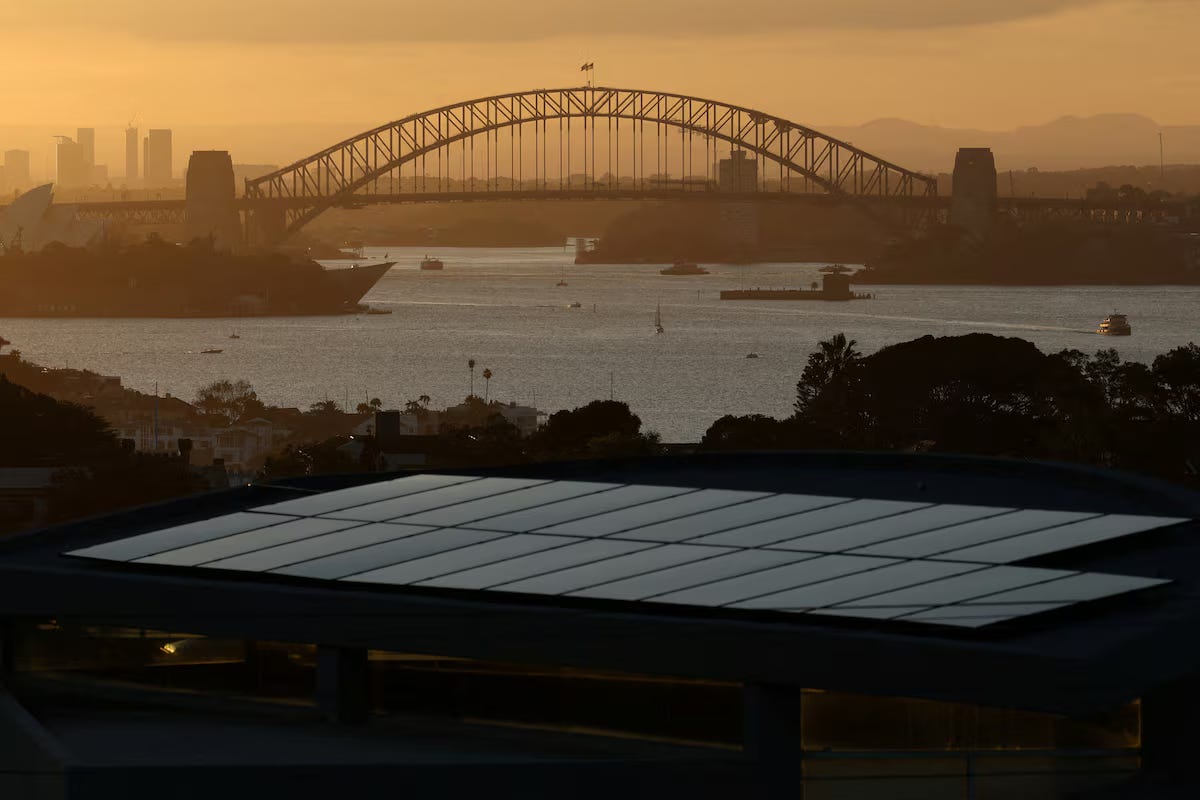
In 2025, global annual renewable capacity increased by nearly 16% despite supply chain strain and policy shifts, marking the 23rd consecutive year that renewables set new expansion records, according to a new IEA report. Clean energy investment reached a record $2.3 trillion and renewables made up nearly 50% of global energy capacity, thanks to a solar boost. (photo: Reuters)
This year already, in April wind and solar generated more electricity than gas worldwide for the first time ever, generating 22% of global electricity. Despite ongoing energy security concerns, most regions aren’t defaulting to coal, according to the analysts with global energy think tank Ember, which produced a comprehensive new report.
“Countries around the world have been turning to wind and solar because they are cheap, homegrown and secure sources of electricity. The current energy crisis has further strengthened the economic case for renewables…while also adding greater political urgency to accelerate deployment.” - Kostantsa Rangelova, Ember
Here’s some news too good not to share: Climate science experts just eliminated the worst-case high-emissions scenario from their modeling, not because of a hoax (as deniers have claimed), but because renewables have scaled to the point that they are slowing down global emissions.
And we’re just getting started, people! Researchers recently announced a breakthrough that can deliver solar cells capable of converting 130% of sunlight into energy. Others developed a solar-powered desalination process that produces potable water without brine and requires no chemicals. Meanwhile, analysts in North America are eyeing untapped geothermal as the next clean energy boom.
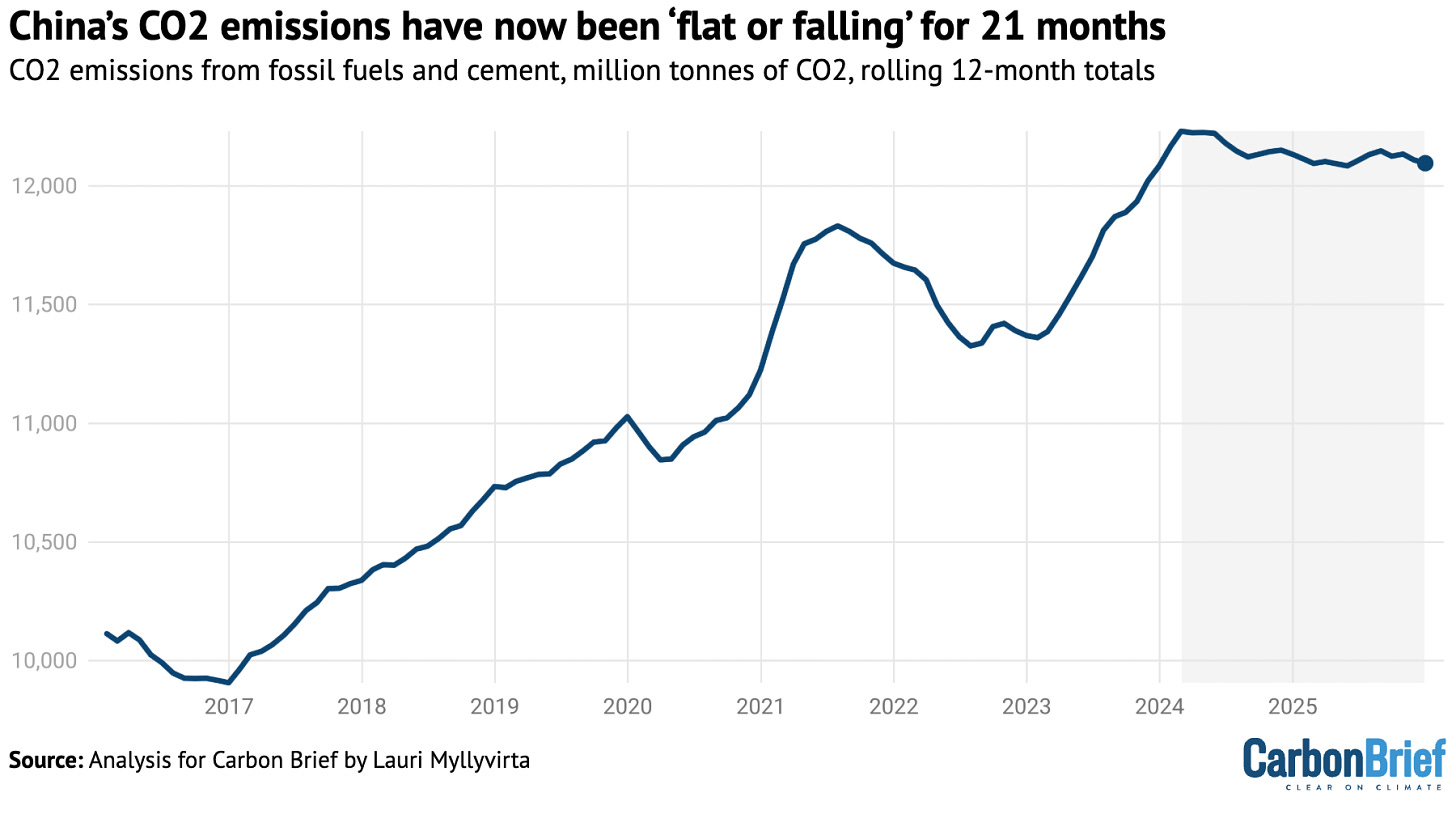
In China, CO2 emissions have been in steady decline for nearly two years (graph: Carbon Brief), while Australia’s solar installation surge means it’s now on target for 82% renewables by 2030 — previously thought unattainable. The EU recently announced it has cut greenhouse gas emissions by 40% since 1990, driven primarily by regulation, while in India, analysis shows solar and battery storage can now meet as much as 90% of the country’s electricity demand – at lower prices than many states are currently paying.
“The economics of clean energy are now on our side. Today, clean energy is the cheapest and quickest way to meet our growing energy demand. As a result, we’re seeing bright spots of hope all over the world.” - Manish Bapna, CEO of NRDC, in the New York Times
Oh, and did someone mention wind? The world’s largest offshore wind farm just hooked up to Britain’s grid, supplying clean energy to more than three million households, while solar farms in England, Scotland, and Wales broke records and the government approved plans for the country’s biggest solar farm yet.
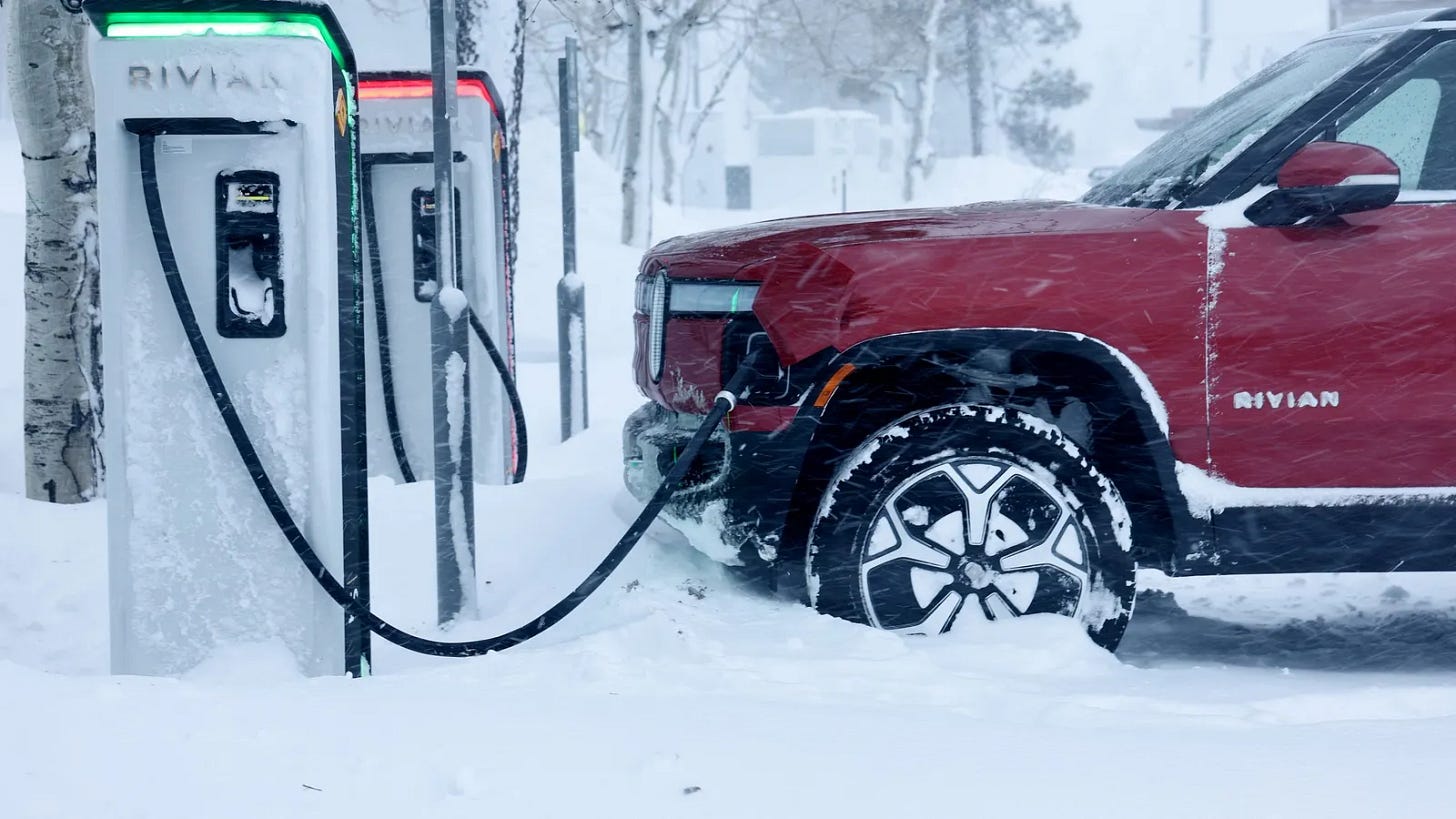
Think Trump killed America’s EV edge? Not even. Sales are solid, even without subsidies. The Wall Street Journal just named used EVs the most affordable cars on the market — and wrote up a how-to-buy guide. New analysis shows how EV-friendly regulation would actually lower gas prices (and increase energy security) for Americans, which should prove even more relevant in 2028. (Photo: Utility Dive)
Meanwhile, Ford is doubling down on a new electric truck that will sell for $30k, investments in battery innovation made by companies like GM are pivoting to storage, and, for the very first time, China exported more EVs than conventional cars.

Yes, the federal government is still trying to prop up coal (at taxpayer expense) but as my grandmother once said, you can’t get blood from a stone: In 2024 the combination of wind and solar generated more energy than coal across the country and this year, solar is set to surpass the stuff in Texas, for the first time ever. California’s 60% carbon-free battery array recently delivered the energy equivalent of twelve nuclear power plants — enough to meet 40% of the state’s demand. (photo: Inside Climate News)
Meanwhile, balcony solar continues to gain traction as Colorado recently became the fourth state — after Utah, Maine, Virginia, and Maryland — to enact a plug-in solar law, while bills progress in California, Washington D.C., and 20 others. In historically conservative Arizona, its second-largest utility (which once fined customers for installing solar panels) will now be majority controlled by clean energy advocates, despite opposition funded by Turning Point USA. “There has been a pent-up demand…for people to have their energy freedom, to have solar panels, batteries and more energy-efficient measures,” said Ken Clark, a newly elected board member. You think?
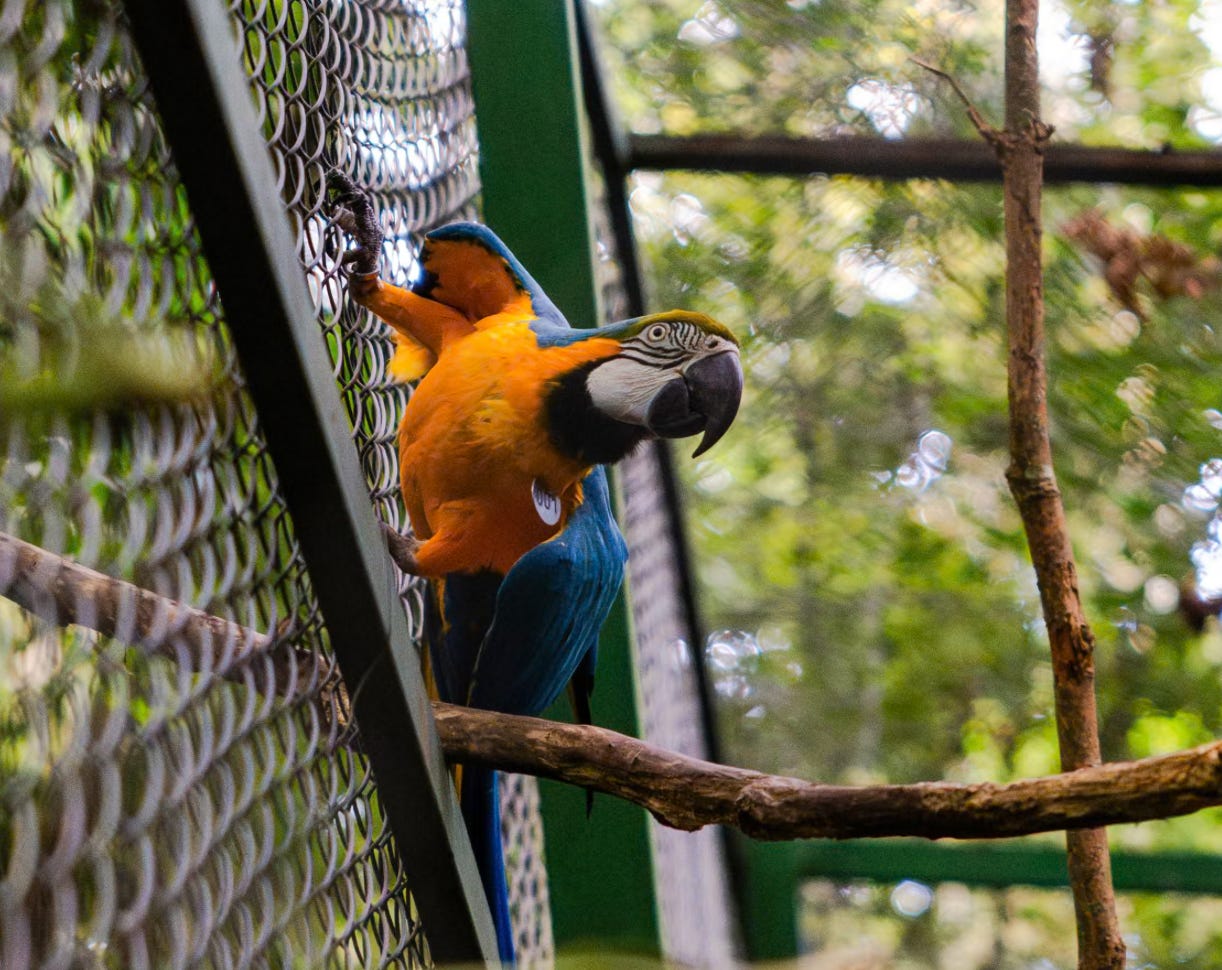
Biodiversity is bouncing back! Snowy owls — like Harry Potter’s Hedwig — are just one of 40 species now internationally protected under a new UN Convention. Researchers thought it would take a century for animals to return to deforested land; turns out, they were wrong. Remember “Rio”? The iconic blue and yellow macaws have finally returned to Tijuca national park after 200 years. (photo: The Guardian)
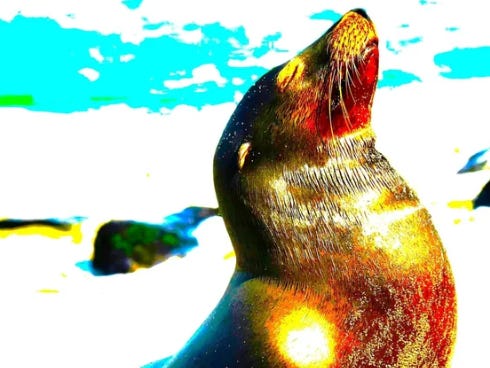
It feels like a hundred years ago that I sat on an Oregon beach and wrote this short essay. I was trying to understand the visceral connection I have with the town of Seaside, which I discovered just before my father’s death was important to him, too. I’ve actually never been able to enter the town’s Aquarium, which seems so impossibly small, but in trying to connect it with the past I arrived at a future in which the seals might swim free. (This idea haunts me, it’s in a novel I’m working on, as well.) The essay published this month in the beautifully-designed Blood + Honey journal.
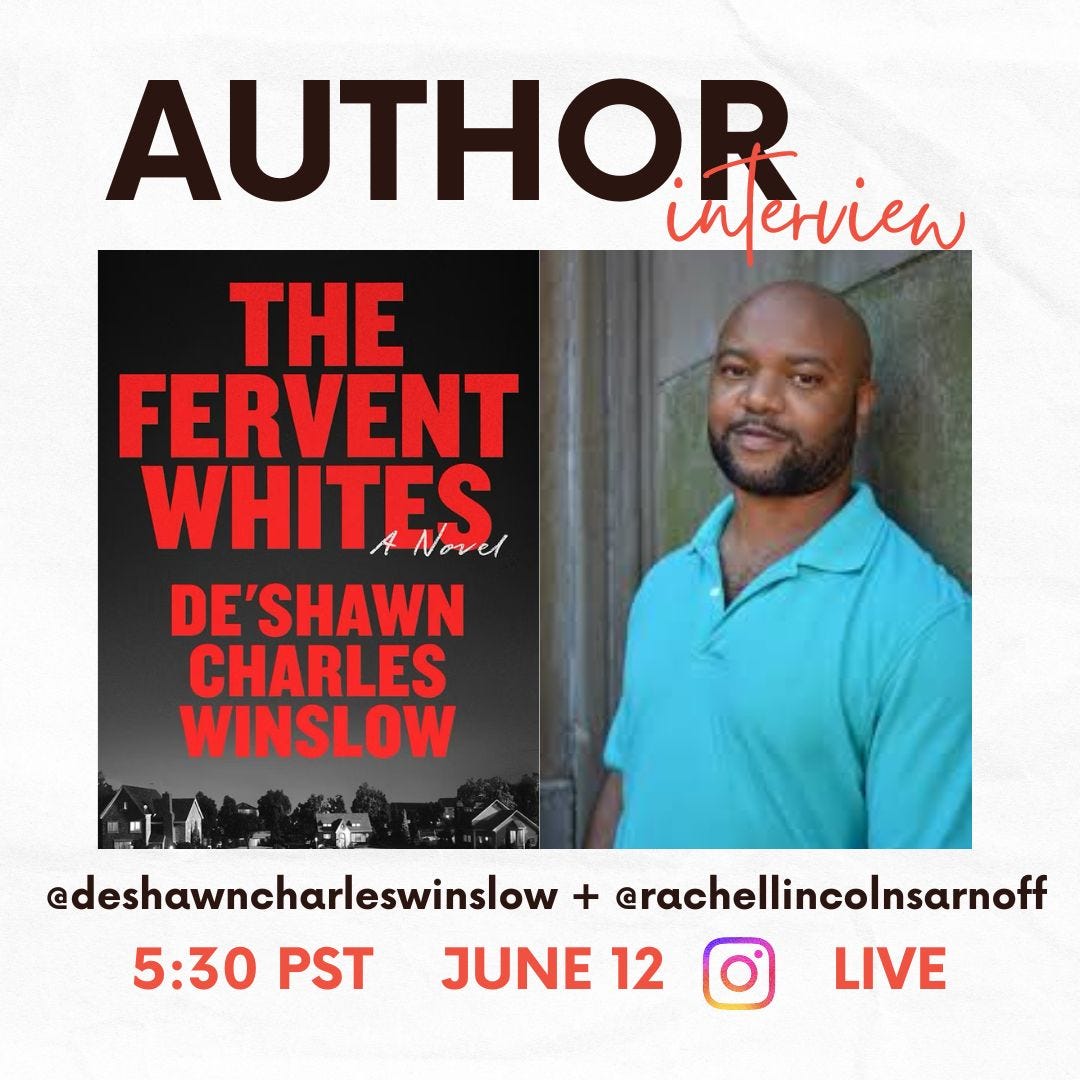
Join De’Shawn Charles Winslow on my Instagram Live June 12th to talk about his new novel, THE FERVENT WHITES as part of my “Ask An Author” interview series. De’Shawn is an amazing author — we met through Pacific University’s MFA program, where he was an instructor. He tackles family and found family and bigotry and racism through super compelling, plot-forward page-turners. The book comes out June 9th so if you pre-order now you’ll have just enough time to finish it and throw some questions our way.
Through the same series, last month, I spoke with Annie Leonard, former head of Greenpeace USA and co-founder of the Story of Stuff (who totally inspired this video of me with weird bangs), about PROTEST, her new book co-written with André Crothers. One of my favorite takeaways: Protest isn’t reserved for “activists.” It belongs to anyone willing to participate in shaping the future. (And studies show it can make us happier.) The authors are on tour now if you need inspiration!
“The whole idea that there’s a small cadre of revolutionaries who do all the political heavy lifting in this country isn’t really accurate; a lot of it…has been not just for decades but centuries by those who might be dismissed as nice ladies.” — Rebecca Solnit
Got book? If you’re a reader in Los Angeles (or just like to travel), sign up for next week’s Santa Monica Silent Book Club on June 2nd! I host this event each month on the cozy couches at Juneshine and it’s a great way to meet fellow bibliophiles and make headway on your real book-club book.
P.S. Do you know a young writer? Share the Youth Alliance for Writers and Poets, a student-led nonprofit community that’s hosting its first contest now through May31st!
The Good Newsletter has been my labor of love for nearly 20 years. But I’m no saint. Like many — like you, probably — I spend most days trying not to get totally depressed about the state of the world. Then I hunker down to research and, after a few hours, start to see threads. Positive threads. Threads that feel like the silver lining of a very dark cloud. As I pull those threads together I begin to feel better. Lighter. Happier. I hope the Good Newsletter delivers that silver lining for you, too.
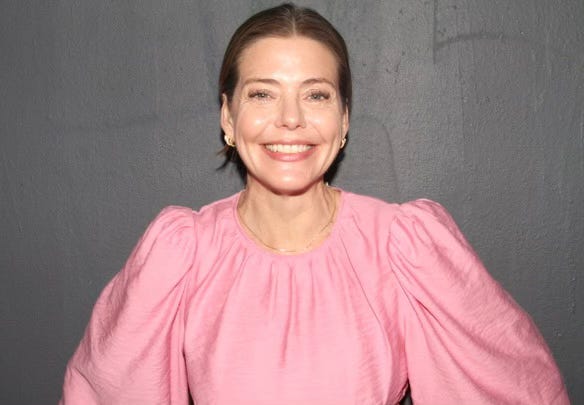
WHO’S THIS? Rachel Lincoln Sarnoff is a journalist, climate communicator, two-time TEDx speaker, and podcast host who was interviewed on the “Today” show and published in the Washington Post, among others. Her career as an environmentalist informs her creative writing, climate content consulting, author interview series, and the Good Newsletter (since 2008). She hosts a monthly Silent Book Club in Santa Monica and is querying her first novel.
Comments
Nothing yet. Say the first thing.
Sign in to join the conversation.