
Click here for a printer-friendly version of this article.
The Torah content for the month of Av is sponsored by Aliza Feder in honor of the yahrzeit of her mother, Mindy Pincus a”h. I had the pleasure of getting to know Mindy during my first year of yeshiva. She and her husband Gersh hosted me so often that she told me I could assume that a place would automatically be set at their table every Friday night. I will always remember her as a living embodiment of chesed and hachnasas orchim.
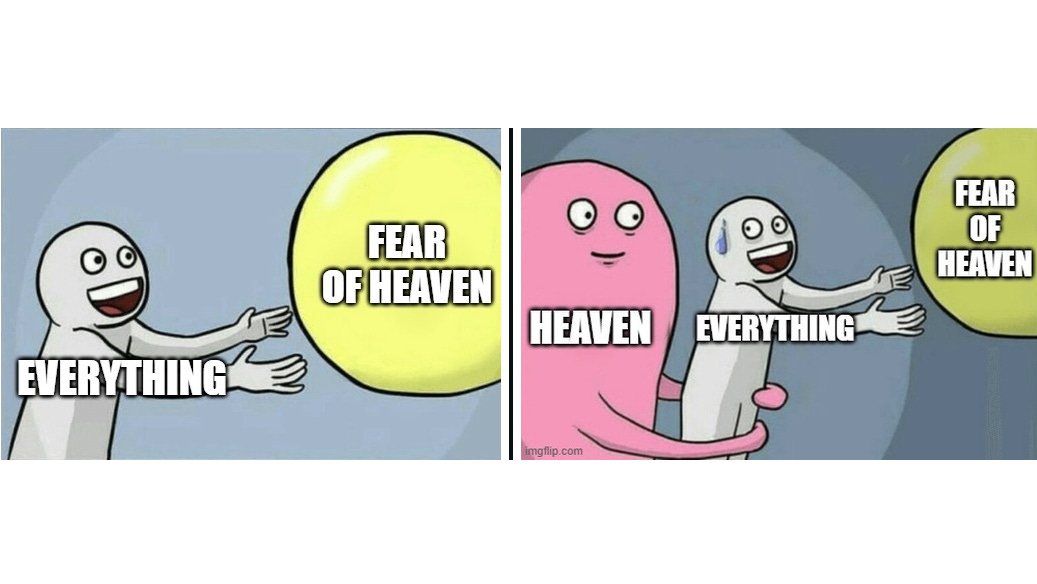
Among the many highly quotable statements Moshe Rabbeinu makes throughout Sefer Devarim is the following:
And now, Israel, what does Hashem your God ask of you? Only to fear Hashem your God, to walk in all His ways, and to love Him, and to serve Hashem your God with all your heart and with all your soul, to keep Hashem’s mitzvos and His statutes that I command you this day for your good. (Devarim 10:12-13)
R. Chanina (Berachos 33b), noting Moshe’s use of the phrase “only,” offers this drashah (exegetical explanation):
Ha’kol bi’ydei Shamayim chutz mi’yiras Shamayim – everything is in the hands of Heaven, except for fear of Heaven, as it is stated: “And now, Israel, what does Hashem your God ask of you? Only to fear Hashem your God.”
The Gemara continues with other statements of R. Chanina on yirah (which I hope to write about someday).
I’m sure I’ve quoted R. Chanina’s statement dozens of times, but only this year was I struck by a question on his reading: Why single out yirah when the pesukim go on to list many other things that God asks of us?
Imagine you’re on your way to the grocery store. You get a text: “Can you pick something up for me?” You respond, “Sure! What can I get you?” The reply comes back: “I only need a carton of milk, a dozen eggs, some onions, a pint of ice cream, and the best ribeye steak you can find.” Would it make sense to summarize their request by saying they only want a carton of milk? Of course not! Similarly, it’s very nice for R. Chanina to give a drashah on Moshe’s use of the phrase “only,” but how can he ignore everything else on the list?
Thankfully, I’m not the only one bothered by this question. The Torah Temimah and the Rambam offer explanations of R. Chanina’s statement that answer it in different (and arguably opposite) ways.
Not only does the Torah Temimah raise and answer our exact question, but he maintains that this is precisely what R. Chanina intends to address! He writes at the beginning of his analysis (Devarim 10:12 Note 12):
Ha’kol bi’ydei Shamayim etc. This means to say that the choice to fear Hashem is given over to the person himself. Regarding the rationale of the proof from this pasuk, it would seem [that R. Chanina made his statement] because it is impossible to explain in accordance with its plain meaning that Ha’Kadosh Baruch Hu demands from man [only] to fear Him and nothing more. Doesn’t this pasuk itself explain many more things that Ha’Kadosh Baruch Hu demands – to walk in all His ways, to love Him, to serve Him, to keep His mitzvos and statutes? And in truth, many things are demanded of a person who fears Hashem: to turn away from all evil, to do good, to bestow kindness, to do justice and righteousness, to walk humbly, etc. and so on! ... Ha’Kadosh Baruch Hu certainly demands all these things from a perfected person who fears and serves Him. If so, what is this that Moshe said that Ha’Kadosh Baruch Hu demands only to fear [Him], given that many great matters cling to the heels of fear?
This is an expanded version of our question: How can yirah be the only thing Hashem demands when (a) Moshe goes on to list other demands, and (b) one who fears Hashem will need to do even more things that Moshe doesn’t mention at all? The Torah Temimah then elucidates R. Chanina’s statement:
And therefore [R. Chanina] expounds that because this middah (trait) of yirah is only in the hands of the person and his will, and through it [his] keeping of the mitzvos and the middos (traits) emerge and branch off, therefore Ha’Kadosh Baruch Hu demands only this from him, but the other acquisitions and perfections are in the hands of Heaven, and He bequeaths them to the person who fears Him. And such is the intent of the expression, “to walk in all His ways etc.,” that is to say: all these are the tachlis (“end,” “culmination,” or “outcome”) of the yirah, and in truth they come about through assistance from Ha’Kadosh Baruch Hu, as is said in Yoma 39a (sic; actually Yoma 38b), “ha’ba le’taheir mesayin oso – one who comes to purify himself is assisted.”
The Torah Temimah then briefly addresses the next statement of R. Chanina in the Gemara before returning to recap his analysis:
… according to what we have written, that everything enumerated in this verse does not refer to Hashem’s demand from man, and rather they are explained as the tachlis that comes from the one who fears Hashem, then Ha’Kadosh Baruch Hu in truth demands only yirah alone, and with the rest of the things he will be assisted from Heaven.
According to the Torah Temimah, R. Chanina’s claim is that the middah of yirah, or “the choice to fear Hashem” (as the Torah Temimah puts it), is the only thing in our hands. Everything else in the pasuk, including shmiras ha’mitzvos (observance of the commandments), isn’t what Hashem is asking of us at all. These are the tachlis of yirah: they “branch off” from it and are bequeathed by God, with His assistance, to those who fear Him.
In short, Moshe can say that Hashem asks only yirah of us because yirah is the only thing given over to our choice.
The Rambam’s Maximalist Reading of Yirah
The Rambam’s understanding of R. Chanina’s statement differs markedly from the Torah Temimah’s. His primary exposition can be found in Shemoneh Perakim Chapter 8:
But the expression found in [the words of] the Sages, namely their statement: “Everything is in the hands of Heaven except for fear of Heaven” – this is true, and accords with what we mentioned, but many people err in it, and they think, regarding some of man’s volitional actions, that he is compelled in them, such as [a man] being paired with a certain woman, or this money being in his hand.
The errors to which the Rambam refers are reinforced by various statements of Chazal implying that matches are made in Heaven, such as the one in Sotah 2a:
Rav Yehudah said in the name of Rav: Forty days before the formation of a child, a bas kol (heavenly voice) goes forth and proclaims: “The daughter of so-and-so is for so-and-so! The house of so-and-so is for so-and-so! The field of so-and-so is for so-and-so!”
The problem with reading such statements literally is simple, as the Rambam explains:
This is not true, for [regarding] this woman – if taking her in marriage was with a kesubah (a marriage contract) and kiddushin (halachic betrothal), and she is permitted [to him], and he married her to be fruitful and multiply, then this is a mitzvah, and Hashem will not decree the doing of a mitzvah. And if there was a blemish in her marriage, then this is an aveirah (transgression), and Hashem will not decree an aveirah.
Likewise, this person who robbed so-and-so’s money, or stole it, or acted faithlessly [with a deposit] and denied and swore to him about his money – if we say that Hashem decreed upon this one that this money should come to his possession and leave from the possession of this other one, then [we are saying that] He has already decreed an aveirah. But the matter is not so.
The Rambam here doesn’t spell out why he finds it objectionable that Hashem would decree the doing of a mitzvah or a transgression, because he writes at length about this earlier in the chapter. Here is the most relevant excerpt:
And if man were compelled in his actions, then the Torah’s command and prohibition would be nullified, and all of this would be absolutely for naught, since the choice is not in man’s hand as to what he will do ... And reward and punishment would also be absolute injustice, whether from us to one another or from Hashem to us, for this Shimon who killed Reuven, if [Shimon] was coerced and compelled to kill and [Reuven] coerced and compelled to be killed, then why should we punish Shimon? And furthermore, how is it possible to say of Him, “righteous and upright is He” (Devarim 32:4), that He should punish him for an act that he is compelled to do in any event, and even if he wanted not to do it, he could not?
This is the premise of the Rambam’s arguments here: if Hashem compelled our actions, then the Torah’s commandments and prohibitions would be irrational and reward and punishment would be unjust. And since a particular man marrying a particular woman is within the realm of mitzvah and aveirah, we cannot accept a literal reading of any statement of Chazal implying Divine interference.
Having stated his objections to these erroneous readings, the Rambam interprets R. Chanina’s statement:
Rather, all of man’s volitional actions – in them, without a doubt, are found obedience and rebellion. For we have already explained in the second chapter that Torah-command and prohibition are only in actions in which a person has choice as to whether he will do them or not do them, and this is the part of the soul in which yiras Shamayim will be, and it is not in the hands of Heaven but is given over to the choice of man, as we explained.
If so, by their statement “everything,” they intend only the natural matters over which a person has no choice, such as his being tall or short, or the falling of rain or drought, or the corruption of the air or its healthfulness, and other things like this from all that is in the world, except for the movements of man and his rests.
He then provides solid Scriptural support for his view from the words of Yirmiyah in Eichah:
But as for this matter which the Sages explained, that obedience and rebellion are not by His decree nor by His desire, but rather by man’s volition – in this they were following the language of Yirmiyah, namely his statement: “From the mouth of the Most High the bad things and the good do not come forth” (Eichah 3:38). For “bad things” [in this context] are the bad actions, and “good” – the good actions. And he said that Hashem will not decree that a person do the bad [actions], nor that he do the good [actions].
A more concise and explicit statement of the Rambam’s view can be found in his response to Ovadiah ha’Ger (shu”t 159, or 436 in the Blau edition):
[Regarding your] question on, “Everything is in the hands of Heaven except for fear of Heaven,” the answer regarding that which you yourself said [is as follows]: That all human actions are not [compelled] by a decree from the Creator is the truth in which there is no flaw. Therefore, a person is rewarded if he follows a good path and punished if he follows a bad path. All human actions are included in “the fear of Heaven,” for every single action eventuates in either a mitzvah or an aveirah. When the Rabbis (of blessed memory) said, “Everything is in the hands of Heaven” [they were referring to] the way of the world and its nature, such as the species of trees, animals, souls, intellects, spheres, and angels – all of them are “in the hands of Heaven.”
The Rambam’s reading is clear but will become clearer if we compare and contrast it with the Torah Temimah’s.
According to the Torah Temimah, yirah (in the context of R. Chanina’s statement) is a particular middah. It is the only middah entirely in our hands. The other qualities and virtues mentioned by Moshe (walking in Hashem’s ways, loving Him, serving Him, keeping His mitzvos), as well as the many others he doesn’t mention (turning from evil, doing good, bestowing kindness, doing justice and righteousness, walking humbly, etc.), are not in our hands, but in the hands of Heaven. He reads R. Chanina’s “everything” as maximal and his “yiras Shamayim” as minimal.
In contrast, the Rambam regards yirah as a stand-in for the complete realm of human freedom and agency. He reads R. Chanina’s “yiras Shamayim” maximally: “All human actions are included in ‘the fear of Heaven,’ for every single action eventuates in either a mitzvah or an aveirah.” R. Chanina’s “everything” refers to physics (i.e., the laws of nature), including man’s physical makeup (“his being tall or short”), but doesn’t touch upon anything in the realm of morality – the “good” and “bad” things Yirmiyah was referring to when he said, “From the mouth of the Most High the bad things and the good do not come forth.”
Consider, for example, ahavas Hashem (love of God). The Torah commands each of us to “love Hashem, your God, with all your heart, with all your soul, and with all your resources” (Devarim 6:5). The Rambam (Hilchos Teshuvah 10:2) writes about one who serves God out of love: “This is an exceedingly great level, and not every chacham (wise person) merits it. It is the level of Avraham Avinu, whom Ha’Kadosh Baruch Hu called ‘My beloved.’” How would R. Chanina speak about ahavas Hashem according to the Torah Temimah and the Rambam?
The Torah Temimah understands R. Chanina to mean that the only choice we really have is whether to fear Hashem. Of those who cultivate that middah of yirah, some will attain the high level of ahavas Hashem and others will not. The results are not in our hands. How far we get depends entirely on Divine assistance.
The Rambam, however, places ahavas Hashem squarely within the category of “things within our control.” While he certainly wouldn’t deny that each of us is given predispositions (as he writes about at length in the same chapter of Shemoneh Perakim) and that the Torah and its mitzvos will not be able to perfect every person in every way, due to the inherent limitations of physicality (see the Moreh 3:34), he would balk at the suggestion that ahavas Hashem is not “in our hands.”
This same machlokess (disagreement) extends to all other middos, perfections, and attainments. This includes shmiras ha’mitzvos, which is not only listed in the parashah but which the Torah Temimah reiterates in his own enumeration. This, more than any of the other particulars included in the “tachlis of yirah,” the Rambam would find objectionable.
The Torah Temimah and the Rambam also differ in how they interpret the pasuk in our parashah. Neither would accept the grocery-run difficulty from the beginning of our article, but each would reframe the analogy differently. The Rambam would reframe it as: “I only need groceries: milk, eggs, onions, ice cream, and a ribeye.” The Torah Temimah would reframe it as: “I only need a ride to the store, and I’ll get the rest myself.”
Lastly, note that the Torah Temimah is focused on resolving a textual problem: the pesukim list more than yirah, so R. Chanina’s proof seems difficult. The Rambam, on the other hand, is addressing a philosophical problem: people mistakenly take R. Chanina’s statement to constitute a denial of free will. Both problems are real. The question is: Which one dictates how we read R. Chanina’s statement? This brings us to the Rambam’s advice.
After explaining R. Chanina’s statement to Ovadiah ha’Ger, the Rambam offers some methodological guidance for how to interpret statements of Chazal that seem to contradict the fundamental principles of Torah:
Anyone who neglects these matters which we have explained and which are built upon the foundations of the world, and goes and searches in one of the aggadic (non-legalistic) statements or midrashim or in the words of one of the Gaonim until he finds one word with which to object to our words – which are words of knowledge and understanding – is only committing suicide; and it is enough for him what he has done to his own soul …
Rather, the following is the proper [approach] for a person of understanding whose heart is set to take the path of truth, namely, that he should make the matter which is explicitly stated in the Torah into a fundamental principle and foundation, and should not demolish a building and a firmly driven peg which does not falter. When he finds a verse from the prophets or a statement from the Rabbis (of blessed memory) which disputes this fundamental principle and contradicts this idea, he should seek and search with his mind’s eye until he understands the words of that prophet or that wise man: if their words come out in line with the idea stated explicitly in the Torah, then it is good; and if not, he should say, “I don’t know the meaning of that prophet’s words or the words of that wise man. They must have a hidden meaning, and were not intended literally.”
Free will is one of the few principles that the Rambam refers to in the Mishneh Torah (Hilchos Teshuvah 5:3) as an “ikkar gadol” (major principle). To take an aggadic statement like R. Chanina’s, which seems to undermine an ikkar gadol, and to make it into its own ikkar is to commit (intellectual) suicide. Instead, we should treat the ikkarim as ikkarim and interpret the statements of Chazal in light of them, rather than the reverse. [1]
How are we to view the Torah Temimah’s stance in light of the Rambam’s harsh condemnation of those who (in his view) egregiously misinterpret R. Chanina’s statement, or commit intellectual suicide with their misguided methodology? Surely he was familiar with the Rambam’s approach to these matters.
Perhaps when the Torah Temimah listed “shmiras ha’mitzvos” as one of the outcomes that are in the hands of Heaven, he was referring to Divine assistance rather than Divine compulsion. This is implied by his citation of Chazal’s statement “one who comes to purify himself is assisted.” He would fully agree with the Rambam that God never compels a person to do a mitzvah or an aveirah. The machlokess might be far narrower than it seems.
Then again, this reading has to contend with his own words, that everything enumerated in the pasuk “does not refer to Hashem’s demand from man.” Divine assistance might explain how these attainments come about, but it doesn’t explain why shmiras ha’mitzvos would be excluded from what Hashem asks of us in the first place. Perhaps the machlokess is exactly as wide as it appears.
The topics of yiras Hashem, free will, and Divine assistance are broad and deep. I am willing to acknowledge that I’ve misunderstood one or both of the two positions I’ve analyzed in this article. Regardless, the Rambam’s methodology stands firm: no matter what stance we take on these ikkarim, we must subordinate our understanding of Chazal’s statements to the ikkarim and not the other way around.
[1] I’ve relegated the Rambam’s interpretation of the Gemara in Sotah 2a here because I don’t want it to distract from the discussion at hand:
Regarding that which your rabbi said to you: “The daughter of so-and-so is for so-and-so! The money of so-and-so is for so-and-so!” – if this were a [Divine] decree which is equal for everyone and the statements were intended to be understood literally, then why would the Torah say, “lest he will die in the war and another man take her (i.e. the betrothed woman)” (Devarim 20:7) or “lest he will die in the war and another man will redeem it (i.e. the vineyard)” (ibid. 6)? Is there any person of understanding in the world for whom this matter would remain in doubt after what is written in the Torah? …
That which the Sage stated: “The daughter of so-and-so is for so-and-so” was intended by way of reward or by way of punishment, namely, that if this man or this woman had done a mitzvah whose reward is fittingly given to them [in the form of] a beautiful and praiseworthy match, Ha’Kadosh Baruch Hu would match them up with each other. Likewise, if they were worthy to be punished by means of a match in which there would be constant strife and war, He would match them up. This is similar to what the Rabbis (of blessed memory) said: “Even if a mamzer (halachically illegitimate male offspring) is at one end of the earth and a mamzeres (halachically illegitimate female offspring) is at the other end of the earth, Ha’Kadosh Baruch Hu will bring them and match them up with each other” (Yerushalmi Kiddushin 3:12). This matter is not equal for everybody, but only for those who are deserving [of punishment] or who merit [reward] – all in accordance with what is upright in the eyes of God.
The Gemara is not saying that God forces a particular man to marry a particular woman, but that He provides a fitting spouse as recompense. This impinges on free will no more and no less than other forms of recompense, like providing or withholding rain in its time.
What do you think of the two answers given to the question we opened with? How would you answer it? How do you think the Torah Temimah would respond to the Rambam?
Like what you read? Give this article a “like” and share it with someone who might appreciate it!
Want access to my paid content without actually paying? If you successfully refer enough friends, you can get access to the paid tier for free!
Interested in reading more? Become a free subscriber, or upgrade to a paid subscription for the upcoming exclusive content!
If you’ve gained from what you’ve learned here, please consider supporting my work via Patreon, Venmo, Zelle, or PayPal — links below. Even a small contribution helps cover production costs and gives me the freedom to create more Torah content. To sponsor a day’s or week’s worth of content, or to inquire about tutoring or teaching, reach me at rabbischneeweiss at gmail. Thank you for listening, reading, and supporting my efforts to make Torah ideas available and accessible to everyone.
Patreon | [Venmo: @Matt-Schneeweiss] | [Zelle/PayPal: mattschneeweiss at gmail]
Substack | YouTube | YUTorah | Instagram
Podcasts: The Stoic Jew | Machshavah Lab | The Mishlei Podcast | Rambam Bekius | The Tefilah Podcast
Comments
Nothing yet. Say the first thing.
Sign in to join the conversation.