
Middle of august. Full summer in the northern hemisphere and half of Europe on holidays. But there are still things going on and the quantum pirate never sleeps.
Yale’s researchers raised the bar on superconducting architectures: their new 500-nanosecond entangling gate for cavity qubits not only runs fast, it reliably flags its own erasure errors (about 0.5% per gate), shoving the remnant bit-flip and dephasing errors down to near-noise-floor levels. Surface code simulations suggest this very specific, self-announcing error channel allows for better logical error suppression than the garden-variety depolarizing noise everyone benchmarks. Translation: this could make scalable error correction genuinely less hellish. In a different vein, Cleveland Clinic and IBM teamed up on Q-CHIPP, a quantum machine learning approach that beats classical methods at predicting whether tumor neoantigens provoke an immune response—especially when data is scarce. Less headline-grabbing but squarely in the “applied” camp, Eaton locked in $7 million from the Air Force to develop quantum methods for power grid resilience, pulling in Infleqtion and Penn State for the hardware and machine-learning legwork. Meanwhile, AWS and JPMorganChase showed that careful algorithmic engineering still pays off: their portfolio decomposition pipeline reduces quantum hardware requirements by 80%, and their hybrid qReduMIS graph solver cracked tough problems with nearly 90% average success, albeit still in a co-processor role on QuEra’s Aquila. On the product front, QuiX Quantum attempted to make photonic research less like a mad scientist’s lab and more like racking a server: the Alquor 2.0 platform touts automated workflows and compatibility with high-performance hardware, sealing up what used to be a hairball of fiber and optics into something reproducible and globally deployable. Now for the bits the industry PR machines might obscure: Daniel Simon—yes, *that* Simon, dropped a preprint for a polynomial-time quantum algorithm targeting the Dihedral Coset Problem, a foundational hard case propping up the entire edifice of lattice-based post-quantum crypto. While the proof scaffolding isn’t complete, a peer-reviewed companion result adds real fuel to the fire that cryptographers should pay attention. Finally, the White House dusted off its “moonshot” instincts, setting out to build the world’s first fault-tolerant quantum computer by 2028, leapfrogging the Pentagon’s already-ambitious 2033 horizon. That’s five years to go from hype to hardware—brutally optimistic, but bracketed by the acknowledgement that even falling short could yank useful advances out of the pipe.
Share this post so your friends can read it from the beach
Lastly, if you happen to speak spanish (and I know many of you do!) This satirical / realistic video that typically touches on economy and markets has tackled quantum this week, with monkeys. And explains very well the situation witht the current publicly listed quantum companies.
Quantum Bits with Quantessa & Atomique
Latest strip published August 9, 2026 · by Yuval Boger
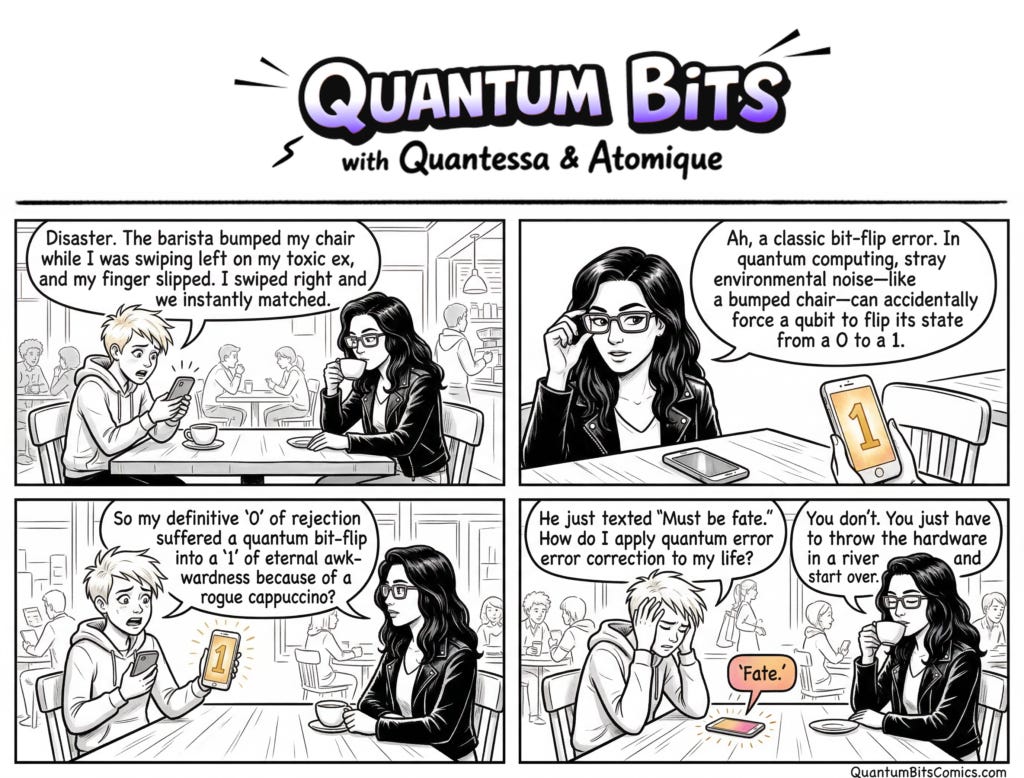
Quantum computers experience several distinct types of errors, each corrupting quantum information in a different way. A bit-flip error swaps a qubit’s state, turning |0⟩ into |1⟩ or vice versa. This is the quantum analog of a classical bit error The post Bit Flips first appeared on quantumbitscomics.com .
Read the full comic on Quantum Bits Comics
AWS and JPMorganChase have established an ongoing research partnership aimed at advancing quantum computing applications for complex optimization problems in finance and industry. Their collaboration has produced a suite of quantum and hybrid algorithms, including a decomposition pipeline that reduces portfolio optimization problems by about 80%, enabling execution on today’s quantum hardware, and a compilation toolkit capable of shrinking qubit requirements for large graph problems by several orders of magnitude. Notably, the qReduMIS hybrid algorithm, using quantum devices as co-processors, achieved over 89% average success rates on challenging problem instances tested with QuEra’s Aquila device via Amazon Braket.
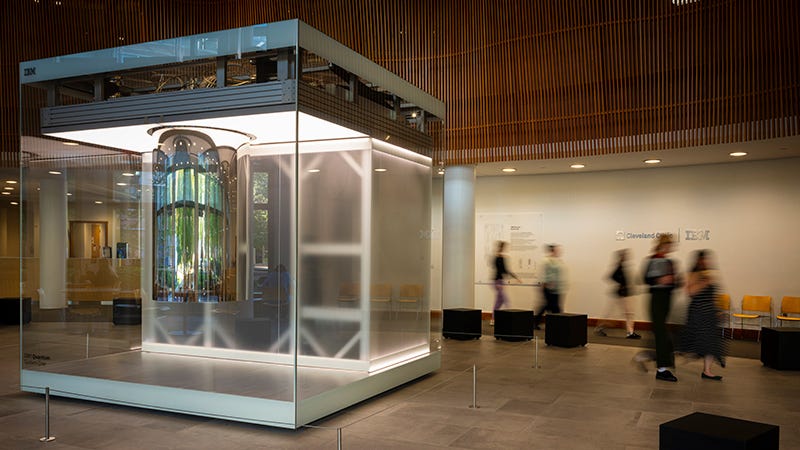
Researchers from Cleveland Clinic and IBM have developed a quantum machine learning framework, Q-CHIPP, aimed at improving the prediction of which tumor neoantigens will stimulate the immune system. This approach, which leverages quantum convolutional neural networks, was shown to outperform traditional computational methods, especially under conditions with limited data, according to findings published in Science Advances. The team plans to further refine this model to enhance identification of therapeutic targets, potentially accelerating the development of personalized cancer immunotherapies and next-generation vaccines.
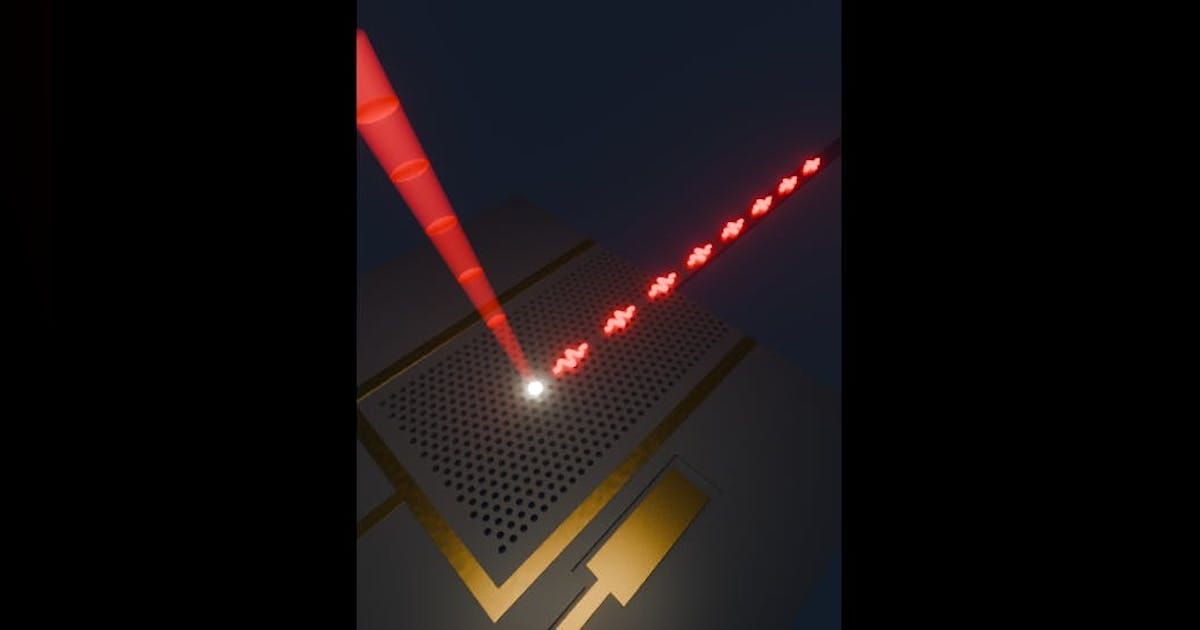
Researchers from the Niels Bohr Institute, Ruhr University Bochum, the University of Basel, and Sparrow Quantum have developed waveguide-integrated quantum dots that emit over 40 million single photons per second directly in the ‘O-band’ telecom range (1260–1360 nm), with a linewidth only 8% broader than the transform limit.
![[PAPER] Yale researchers push cavity qubit entangling gate to 500 nanoseconds—self-flags 0.5% erasure errors, Pauli errors below 0.1%—surface code simulations confirm logical gains over generic noise](https://substackcdn.com/image/fetch/$s_!dmqc!,f_auto,q_auto:good,fl_progressive:steep/https%3A%2F%2Fsubstack-post-media.s3.amazonaws.com%2Fpublic%2Fimages%2F68f5b3a1-3f53-4e11-9241-722b082d6a8c_577x685.png "[PAPER] Yale researchers push cavity qubit entangling gate to 500 nanoseconds—self-flags 0.5% erasure errors, Pauli errors below 0.1%—surface code simulations confirm logical gains over generic noise")
The main result here is a two-qubit entangling gate for dual-rail cavity qubits that not only operates quickly (about 500 nanoseconds) but also flags its own errors as detectable photon losses, with erasure rates around 0.5% per gate and residual Pauli errors below 0.1%. The strongest evidence comes from repeated gate benchmarking: after post-selecting erasures, the per-gate infidelity is just 0.029%, and bit-flip errors are suppressed to the 10⁻⁶ level. The real punchline is that this error structure—dominated by detectable erasures and dephasing—lets error correction codes tolerate higher fault rates and simplifies syndrome extraction, as confirmed by surface code simulations showing logical error suppression well beyond standard depolarizing noise models.
Related coverage: D-Wave Quantum Inc. demonstrates two-qubit entangling gate achieving efficient quantum error correction with reduced hardware overhead · Two-qubit entangling gate flags its own errors as detectable photon losses
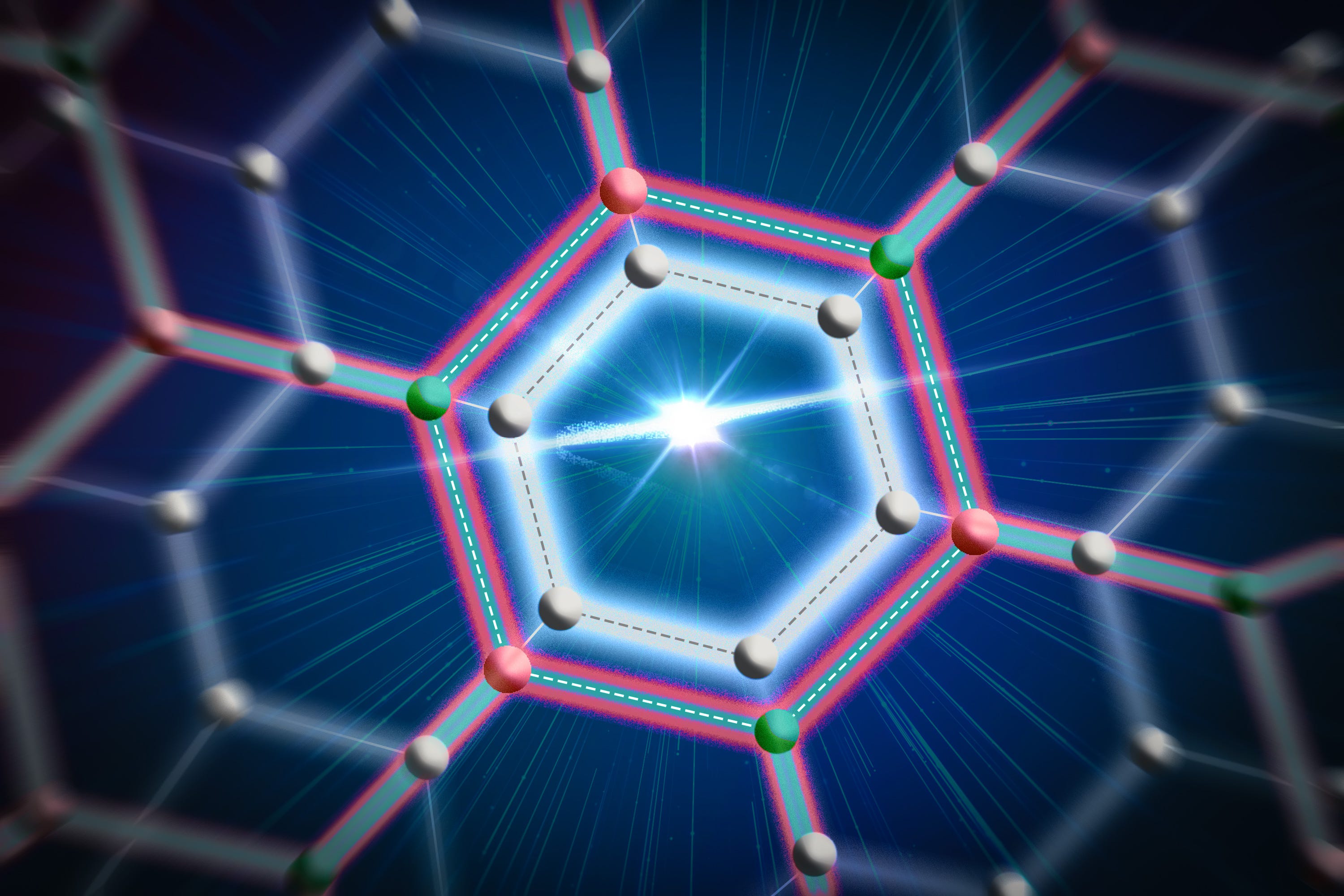
Researchers at MIT and collaborating institutions have developed a method to produce air-stable, ultrathin superconducting films by growing niobium diselenide beneath a protective graphene layer.
Eaton has secured a $7 million, 24-month contract from the US Air Force Research Laboratory to develop quantum computing applications aimed at bolstering electric grid resilience and security. Eaton will collaborate with Infleqtion, contributing specialized quantum hardware, and Pennsylvania State University, supporting machine learning and artificial intelligence elements. The project’s focus includes optimizing new quantum algorithms and circuits, running experiments on diverse quantum hardware, and demonstrating how these advances can help address complex contingency planning challenges in grid management.
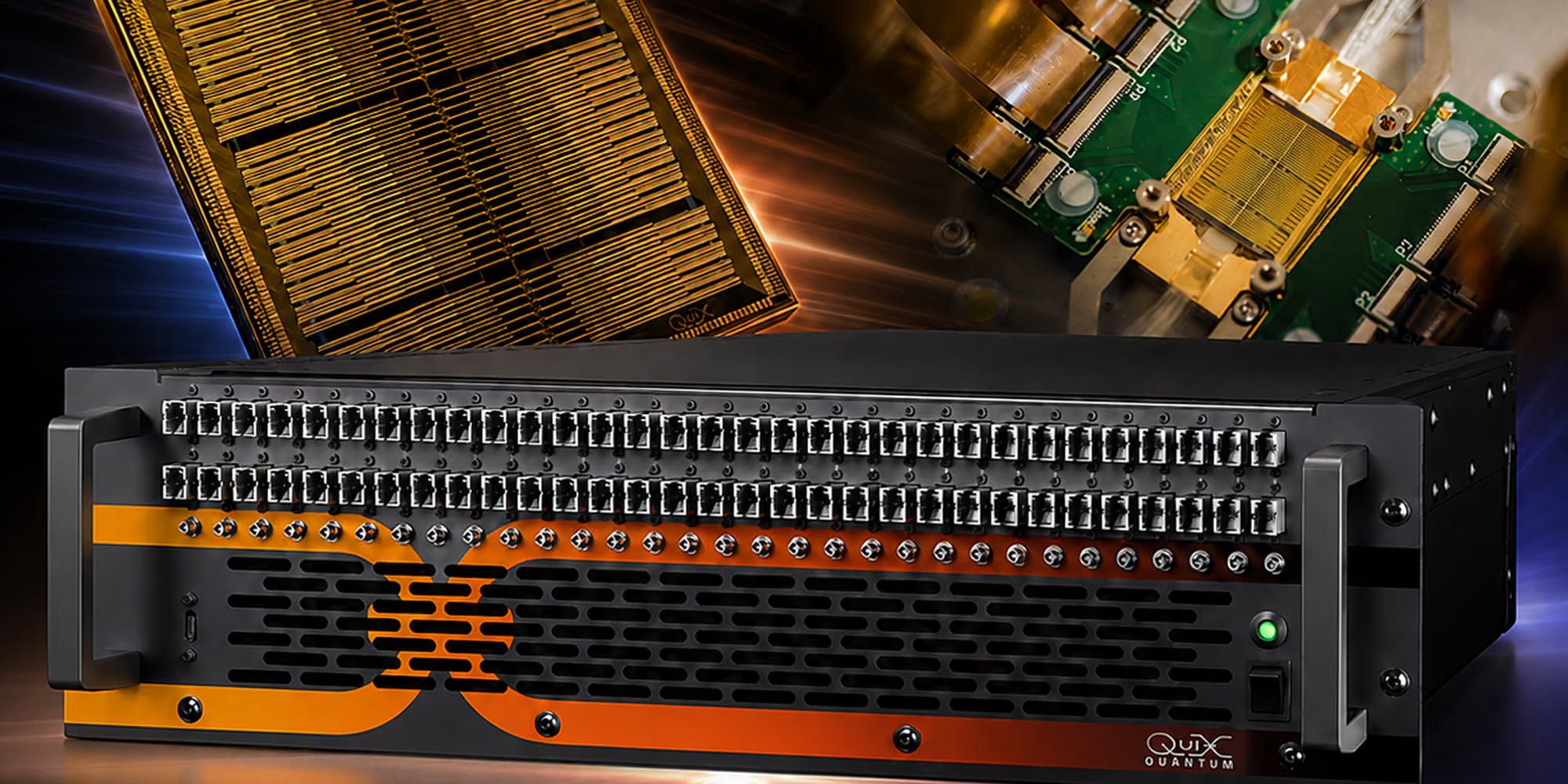
QuiX Quantum has launched Alquor 2.0, its updated, rack-mountable quantum photonic processor platform, aimed at streamlining photonic quantum research by moving away from complex optical table setups. Research teams can now conduct experiments with reduced operational burden through a programmable, reproducible processor that is compatible with automated workflows and high-performance computing environments. Alquor processors have already been validated in numerous research papers and adopted worldwide, supporting a range of quantum optics, communication, and computing studies.
Simon, noted for Simon’s algorithm, has released a preliminary draft asserting the existence of a polynomial-time quantum algorithm for the Dihedral Coset Problem (DCP), a breakthrough that could challenge the theoretical foundation of lattice-based post-quantum cryptography. The DCP is directly linked through a series of well-established reductions to hard problems like approximate Shortest Vector Problem (SVP) and Learning With Errors (LWE), which underpin modern cryptographic standards such as ML-KEM and ML-DSA. While Simon’s paper has not yet undergone peer review and lacks some full proofs, a concurrent peer-reviewed result bridges the gap between Module-LWE and DCP, lending new plausibility to the cryptanalytic threat.
TuringQ, based in Shanghai, has initiated the IPO tutoring process with the China Securities Regulatory Commission and sponsor Guotai Haitong Securities, aiming to become one of China’s first publicly listed quantum computing companies.
The United States is intensifying efforts to build the world’s first fault-tolerant quantum computer by 2028, as outlined during the recent White House Quantum Summit. This target, set by the Trump administration, is notably ahead of the Defense Department’s Quantum Benchmarking Initiative, which has a 2033 goal for a similar achievement. Officials and industry leaders agreed that, while the 2028 deadline is highly ambitious, the accelerated timeline is expected to spur significant advancements in quantum computing, even if the exact target date is not met.
No posts
Comments
Nothing yet. Say the first thing.
Sign in to join the conversation.