
“We are all light deficient and this deficiency may be the source of our physical and emotional problems.” - Dr John Ott, Health & Light (Published 1973)
Most people are familiar with the term malnourishment.
It describes the circumstances affecting people who don’t get proper nutrition.
Malnutrition can come from not having enough to eat or not eating enough of the right things.
Over time, it leads to an increased risk of disease and illness.
As it concerns our daily light exposure, we’re now experiencing a comparable issue.
“Mal-illumination is to light as malnutrition is to food” - Dr John Ott, Health & Light (Published 1973)
The term “mal-illumination” was coined by Dr. John Ott, a legendary pioneer in light research.
Dr. Ott used this phrase to refer to the harmful effects of inadequate, imbalanced and disruptive light exposure.
It describes how insufficient light and the wrong kinds of light contribute to poor sleep and ill health.
Think back to how it would have been when our ancestors were alive.
They didn’t have access to artificial light, window glass, sunglasses or sun-protective lotions - yet they lived healthily surrounded by natural light at all times.
Spending their lives outdoors living under natural full spectrum light meant that they were gathering different types of energy from the sun for many hours, every single day.
And then, after sunset, the only light available would have been from the stars, the moon, and firelight.
In less than two hundred years since the Industrial Revolution, all of that has changed.
Research suggests that on average, we now spend as much as 90% of our day living and working indoors.

Whilst this might have become ‘the norm’ in our society, it is extremely unnatural when compared with our evolutionary history.
Living life indoors flattens our circadian rhythms and the production of important bodily hormones.
This is because the type of light that we’re exposed to influences every metabolic process.
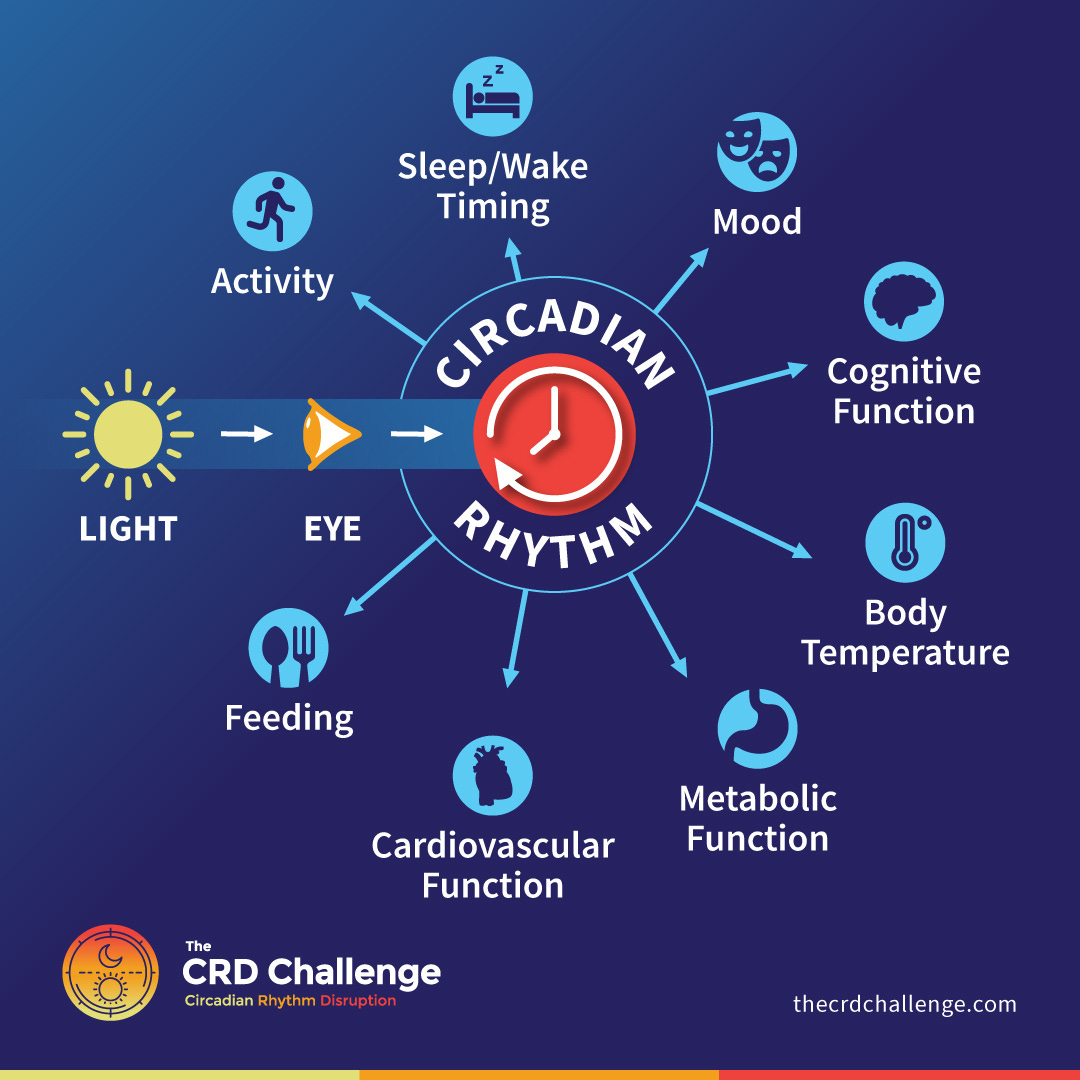
This includes positive effects from natural sunlight and negative effects from artificial lighting.
The type of light we’re surrounded by is constantly influencing our digestion, fat storage and the production of hormones and neurotransmitters.
The human body also converts energy from sunlight in a similar way to how plants photosynthesise.
But instead of leaves, we collect full spectrum light through our eyes, hair and skin.
A lack of connection to the sun’s natural full-spectrum light means a lack of energy for every cell, organ and system within the body.
When we live our lives mal-illuminated, there isn’t a single area of our health that goes unimpacted.
Sadly, the symptoms of mal-illumination are widespread within our society today.
Rather than living outdoors under the sun’s light, many of us are confined to indoor spaces for work, school and even recreation.
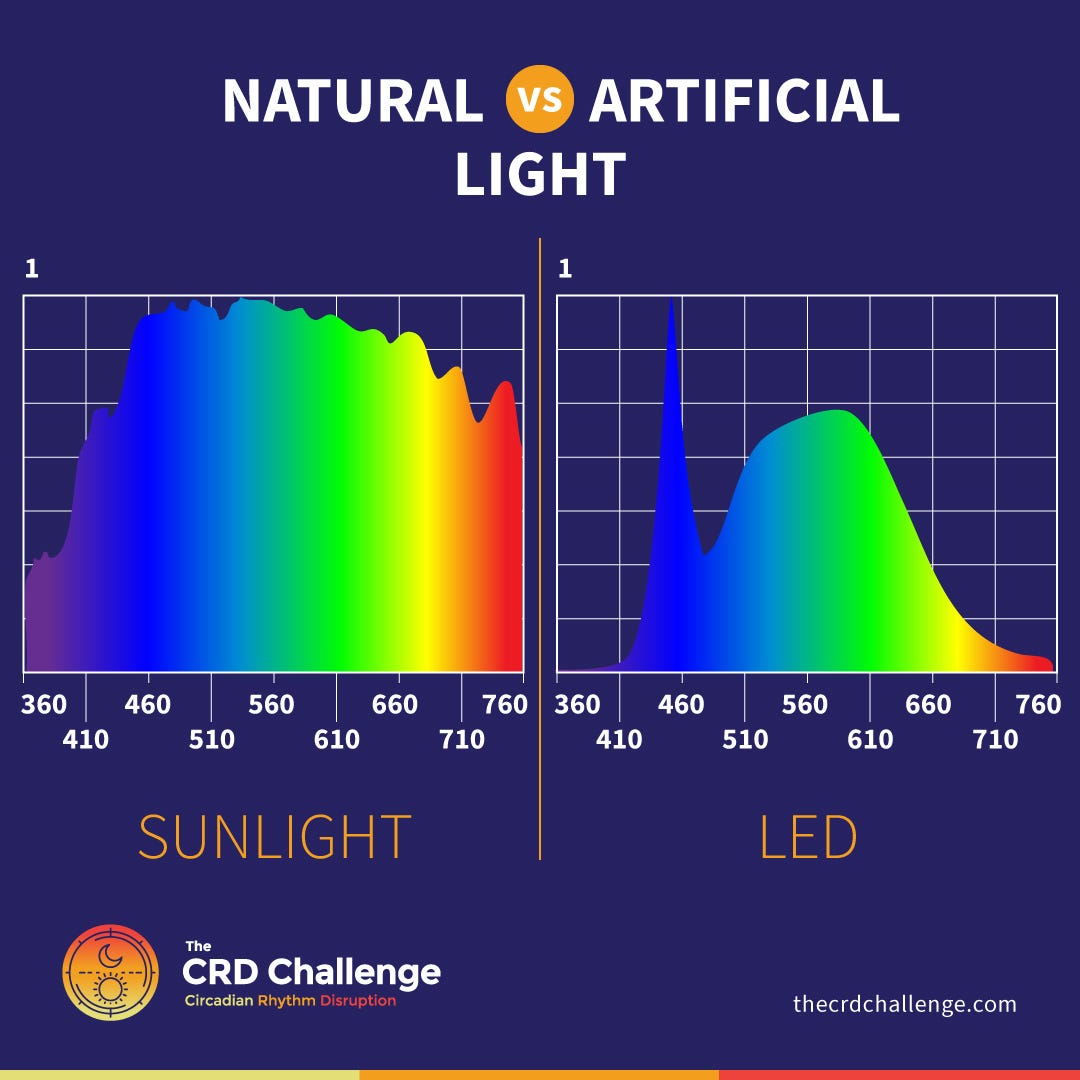
This means not only are we exposed to excessive artificial light at night, but we’re also lacking the natural light frequencies our bodies expect during the day.
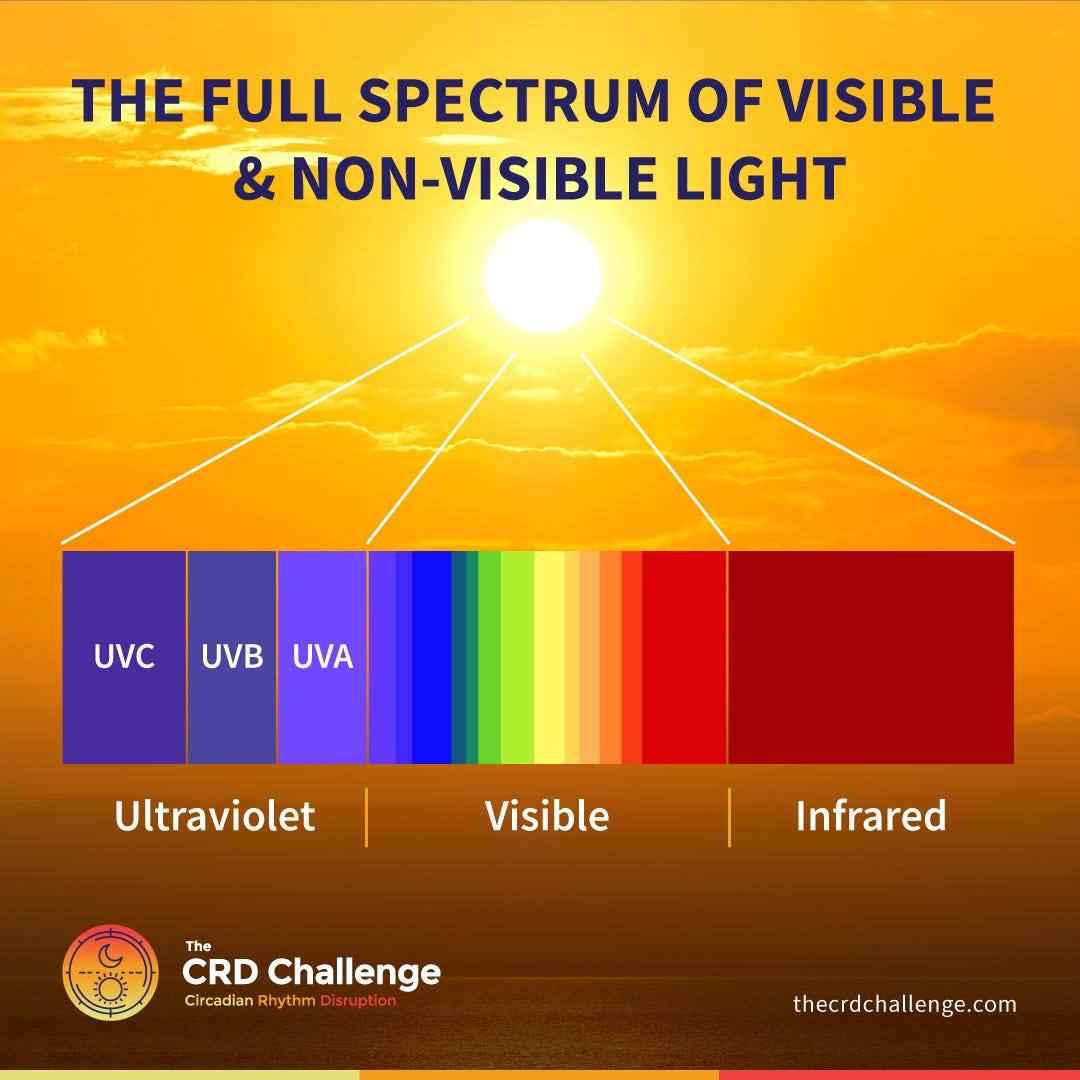
Indoor lighting is not only dimmer than sunlight, but it also doesn’t contain certain invisible light frequencies that we need for health.
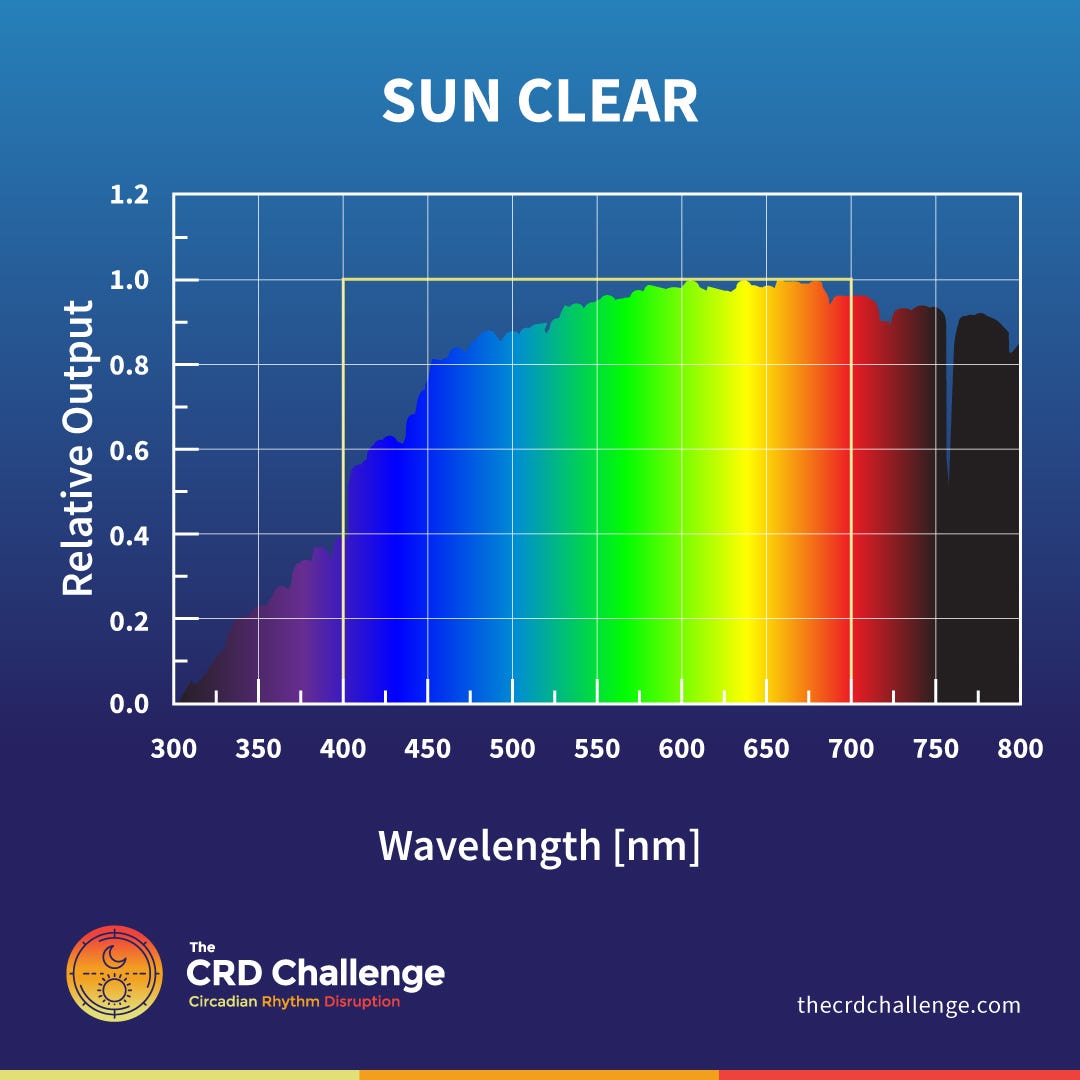
These frequencies include infrared, which you learned about last week, and ultraviolet, which you will learn about today.
Daily exposure to sunlight is so vital that research has demonstrated a lack of it to be associated with a wide range of health conditions.
Anxiety, depression, obesity, type-2 diabetes, autoimmune diseases, cancer and many more have all been linked to a lack of sunlight exposure.
Sleep, mood, cognition, appetite, libido, our immune system and other aspects of daily life can also suffer, even without a doctor’s diagnosis.
The good news is that you’ve already started addressing the mal-illumination in your life through the initial light environment changes you began over the last week.
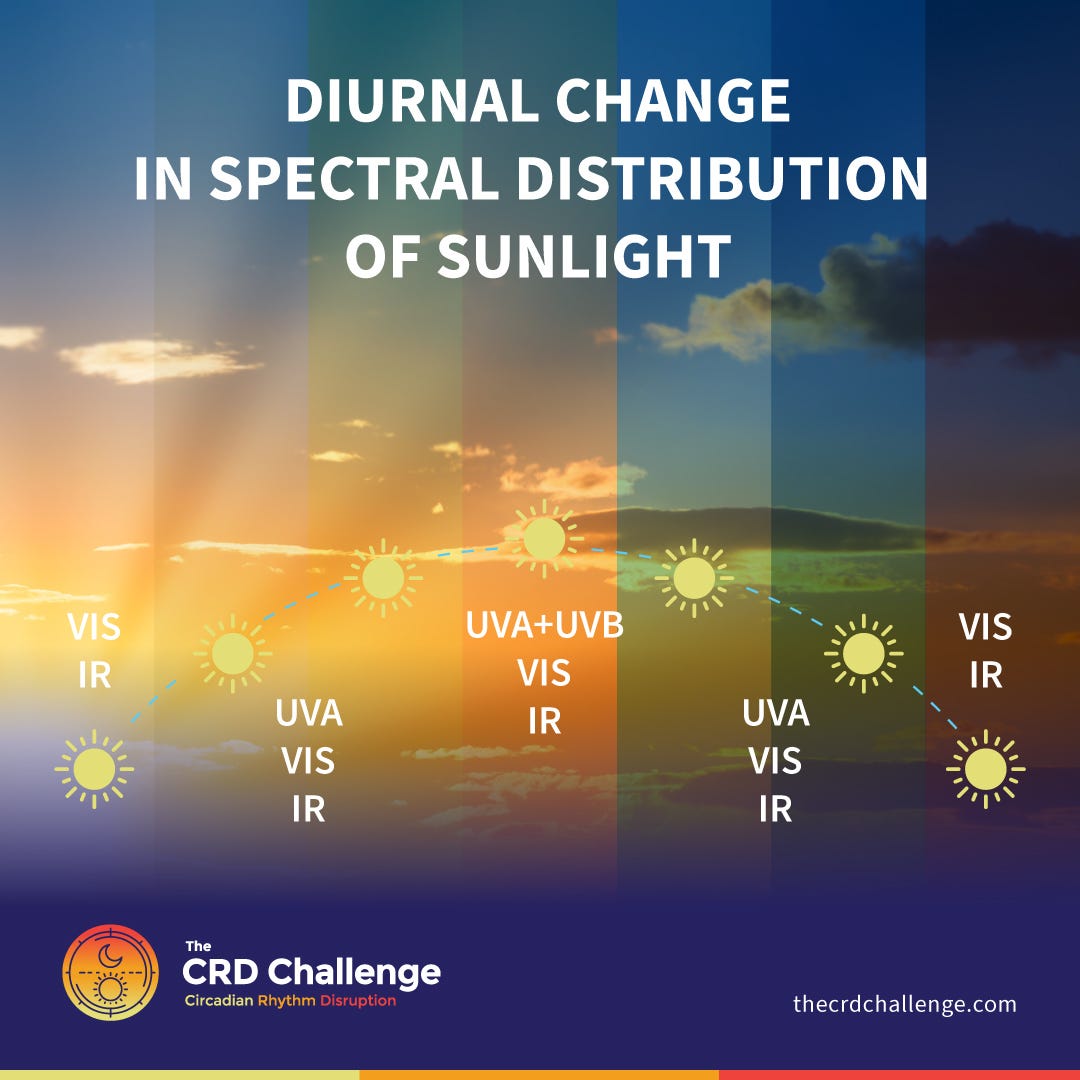
Sunrise and sunset are rich in infrared light, one of the key invisible frequencies of full-spectrum sunlight.
Not only does that light entrain your circadian rhythm, but it also has intrinsic healing properties in its own right.
Now, you get to add another important solar frequency: Ultraviolet A or UV-A light.
UV-A rise is the time of day that morning light intensifies, which can vary depending on your location.
At UV-A rise, when sunlight reaches your naked eye, special photoreceptors in your eyes and skin called neuropsin register the UV-A light.
Neuropsin sends electrical signals that regulate the production of cortisol, serotonin and melatonin.
The same UV-A light signal also supports the production of nitric oxide, thyroid hormones, dopamine and adrenaline.
These are all crucial chemicals influencing our mood and physical health.
By safely integrating more consistent time in outdoor morning UV-A light, you can experience many benefits for your circadian and overall health.
That’s why, during week two of the challenge, we’re challenging you to create the new habit of taking a daily ‘UV-A Walk’.
The walking part itself can be a great part of your circadian wake-up, as movement is another zeitgeber or time cue, although its impact is dwarfed in comparison to light exposure.
If you’re unable to walk, that’s not a problem as you can also gather the UV-A light while seated outdoors or through an open window.
The simplest way to ensure more UV-A light exposure is to go for a short walk or spend some time outside between mid-morning and midday.
This can be as short as 10 minutes.
Going without sunglasses will allow you to gather the full unfiltered benefits.
If your eyes feel sensitive, you can wear a hat or sit in the shade where your eyes can still pick up and register these UV-A frequencies.
Always remember that getting light to your eyes doesn’t mean staring directly into the sun, which can cause damage.
Just being outside surrounded by natural light is enough without looking directly towards the sun.
By making UV-A exposure a consistent part of your daily routine, even for as little as 10 minutes, you’re taking another crucial step toward strengthening the health of your circadian rhythms.
This will also improve your hormonal balance and boost your mood every day.
If you’d like to be more precise, you could use the “Circadian” App or “MyCircadianApp” to help you identify and set reminders for the time of ‘UV-A Rise’ at your location.
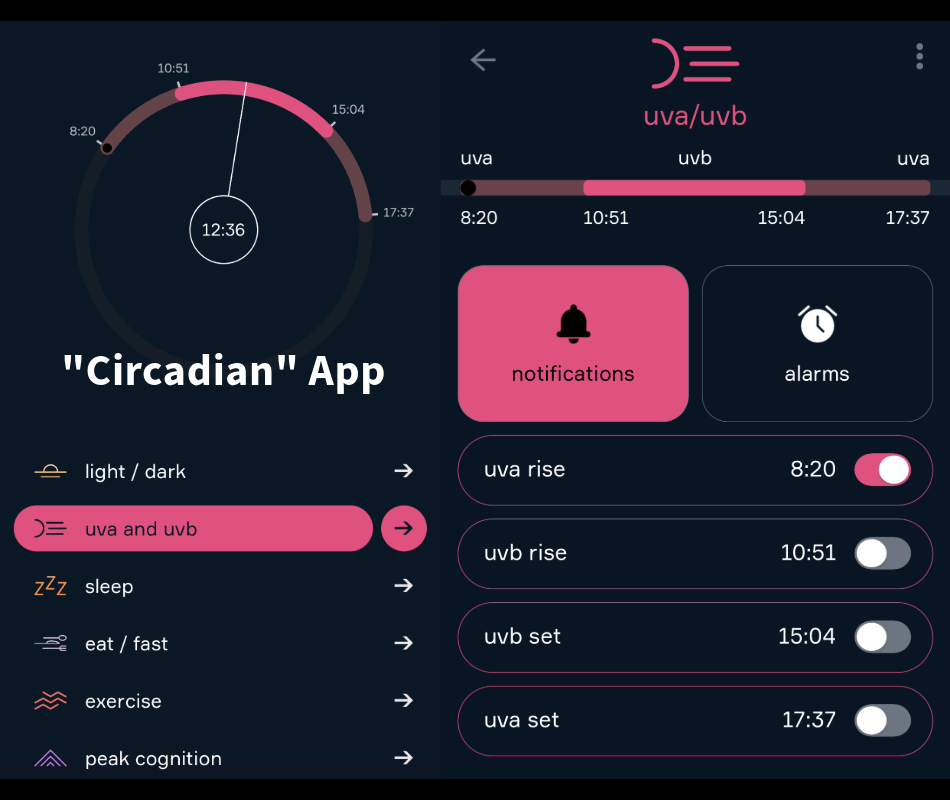
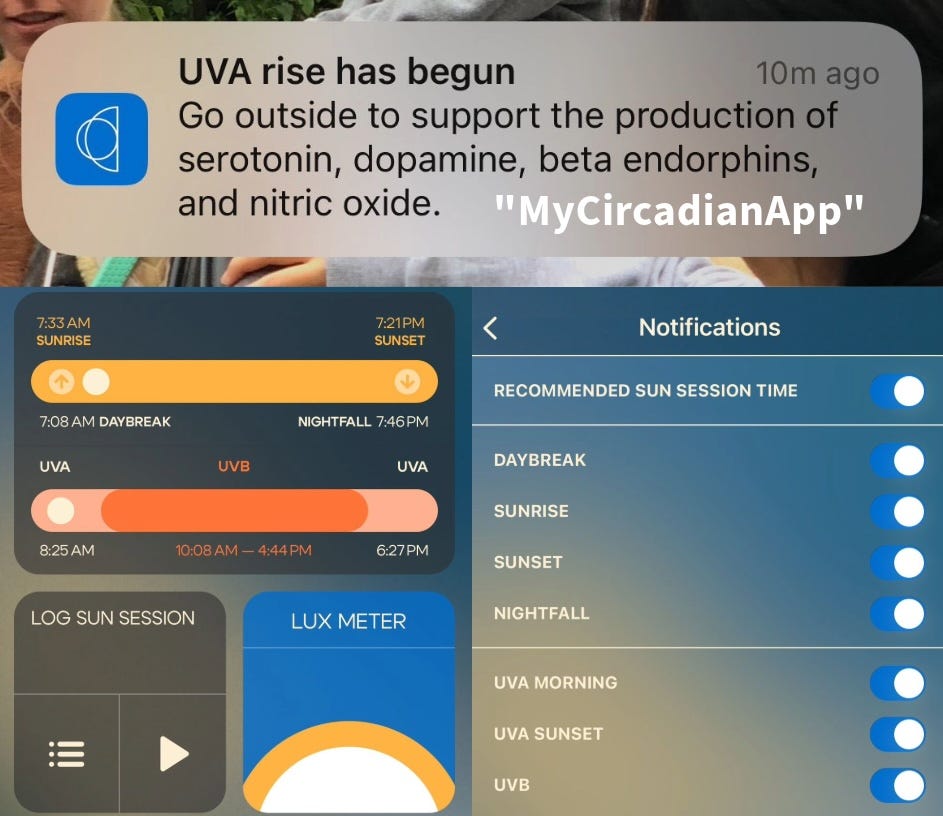
You’ll find the link to this in the bonus resources section for Week 2 of the challenge.
Next up, you’re going to learn about how your eating habits affect your circadian rhythm.
0:00
-6:44
Comments
Nothing yet. Say the first thing.
Sign in to join the conversation.