

Before the first contest of 2025, Ron Koenig WV4P and the NJ4P team wrote down a goal that most stations would hesitate to say out loud: sweep the five major RTTY contests in the Multi-Two category. Not from the East Coast. Not from a Caribbean superstation. From West Tennessee.
By the end of the season, they had done exactly that.
CQ WPX RTTY. CQ WW RTTY. ARRL RTTY Roundup. NAQP RTTY in February and July. Five majors, five World #1 finishes in Multi-Two. Along the way came new World and North America records, and in CQ WW RTTY, a single hour that reset expectations for what sustained performance looks like. 257 QSOs in sixty minutes. Not momentary luck, but a rate they could repeat when everything was working.
To understand how that happens, you have to start with the hill.
Ron WV4P calls it a pitcher’s mound. The phrase sounds casual until you see the terrain. The NJ4P station sits on 10.5 acres in Hookers Bend, Tennessee, overlooking the Tennessee River, with the land falling away in all directions. There is nothing symmetrical about it. Tower bases do not sit on friendly grids. Feedlines do not follow easy paths. Every decision is shaped by slope, drop, and angle. It is the kind of property most builders would walk away from after an hour with a topo map.
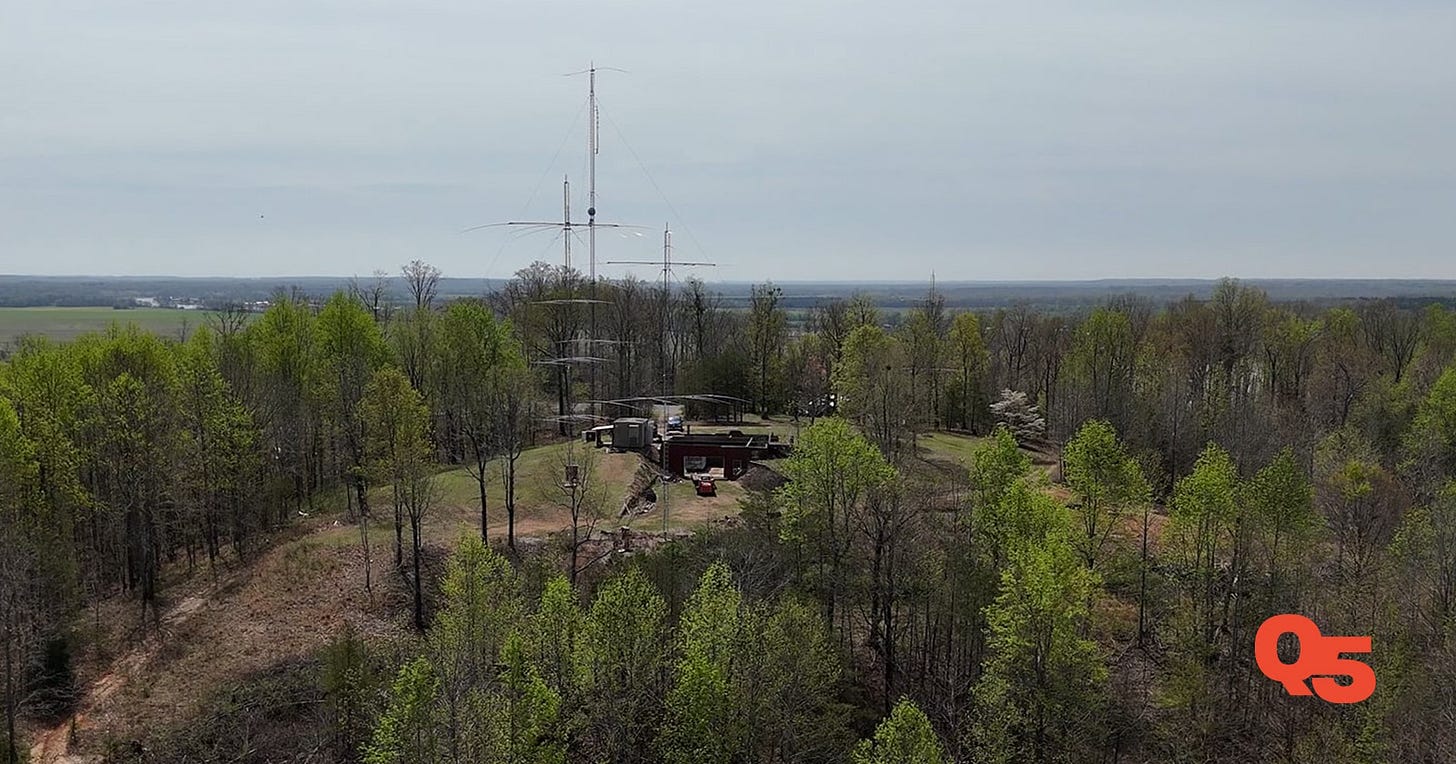
Ron spent months studying land before buying it. Nearly a hundred properties evaluated, looking for something that would give him an RF advantage rather than just acreage. When he found this one, it was beyond his budget, but it offered something that flat ground could not. Elevation in every direction. Clean takeoff. Separation that could be engineered rather than forced.
The complexity did not go away. It became the work.
One of the few aerial photos of the site shows exactly what Ron means. Towers scattered across uneven ground, each one placed where the terrain allows and the modeling demands. It is not a textbook layout. It is a solution built on constraint. “Very complex angles making everything a challenge,” he said. “But worth the effort.”
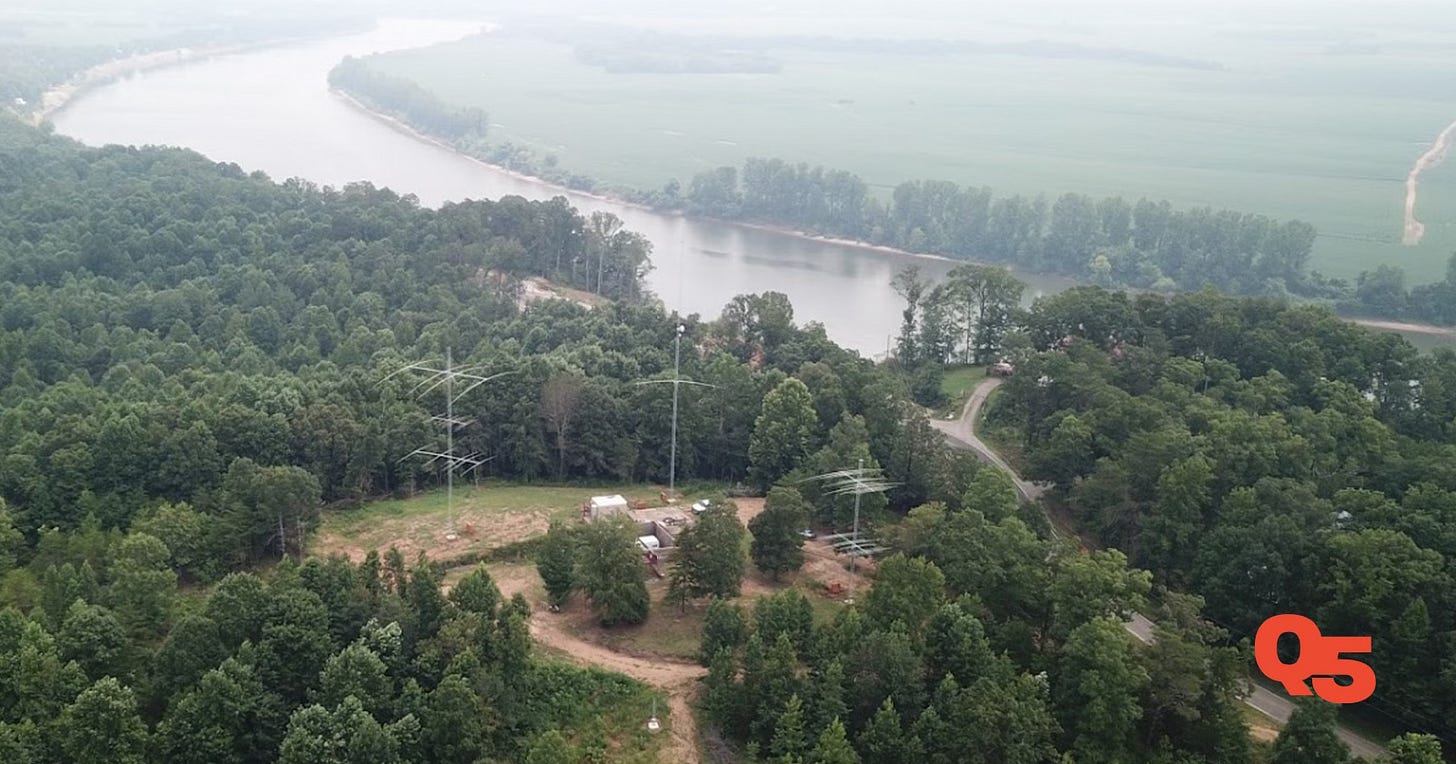
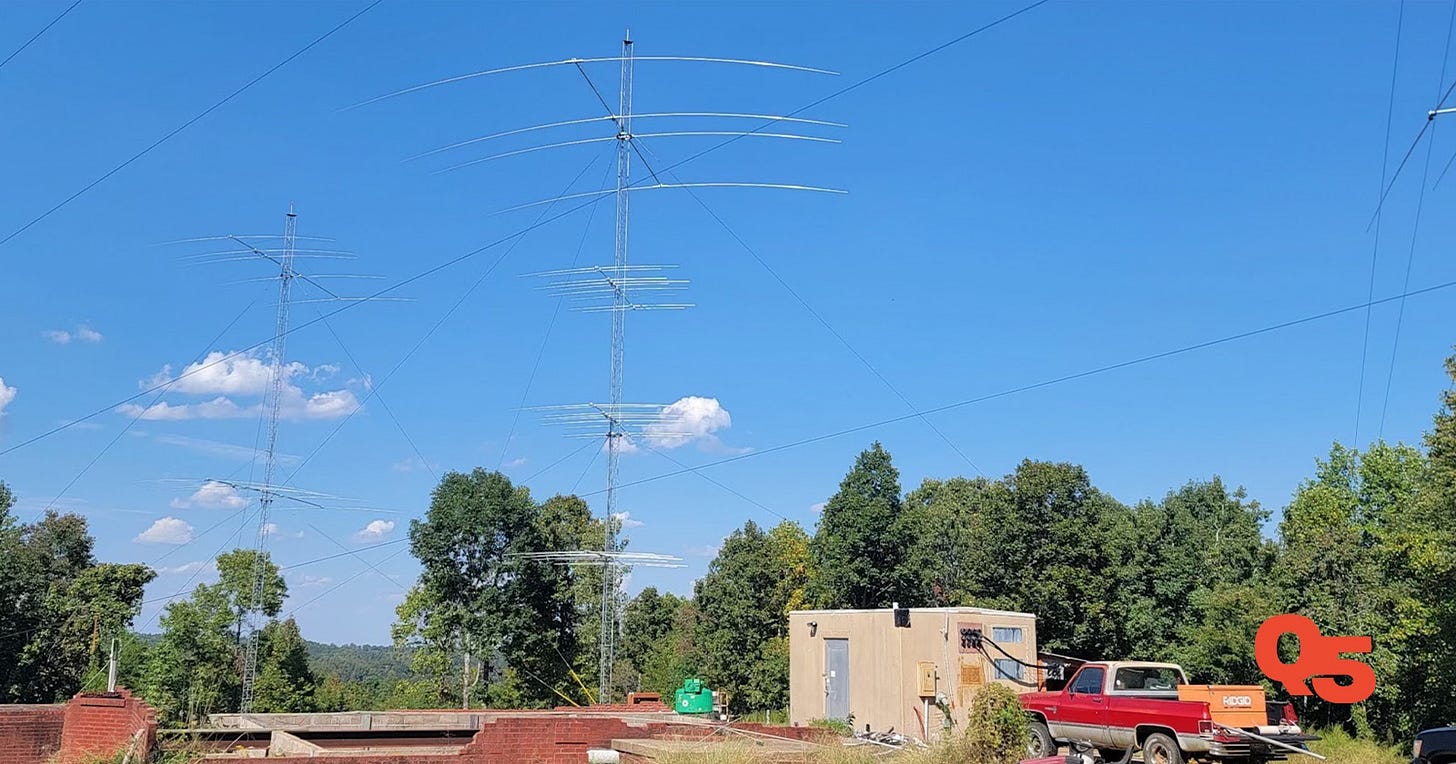
From a distance, the station looks almost unfinished. Visitors expect a forest of aluminum. What they find instead is space. Seven rotating and fixed towers, one waiting to be populated, carrying a carefully chosen set of JK antennas. JK Mid-Tri and Mid-Tri 40 arrays, C-31s, 404 Grande-class antennas, and dedicated low-band systems, hardware chosen not just for performance but for survival when storms roll in from the flatlands and stall against the first rise of Tennessee hills.
The emptiness is intentional. Ron came to believe early that every piece of metal interacts. Every stray element distorts a pattern. If you want control over where your signal goes, you remove what you do not need. “These towers look empty,” Levi K6JO remarked when he stepped out of the truck on his first visit to NJ4P. That was the point.
The station is modern in every sense. Flex radios, PGXL amplifiers, networked control, bandpass filtering pushed as close to the antennas as possible. Reliability is engineered, not hoped for. This is not a place where something is allowed to fail quietly. It either works under full contest load or it gets redesigned.
And then there is the part that surprises almost everyone.
There is no operating position on site.
No desk. No chair. “Not even a lawn chair,” Ron says. Every QSO ever logged by NJ4P has been made remotely. The radios live in an old AT&T telecommunications building, the kind used at cell sites and now repurposed for the station. Some operators sit eleven miles away, connected by a microwave link that brings latency down to something close to local. It feels like being there without actually being there. Others remote in from the comfort of their home QTH.
This was not the original plan. A full on-site station was supposed to follow the tower build. Then COVID hit, material costs spiked, and the economics collapsed. Eight-dollar two-by-fours have a way of changing design decisions. Remote operation started as a necessity. It stayed because it worked.
It also changed who could be part of the team.
A traditional multi-op station depends on who can travel. NJ4P depends on who can perform. Operators log in from wherever they are, provided they can meet the demands. Stable internet. Low latency. The ability to work inside a tightly coordinated system where timing matters as much as rate.
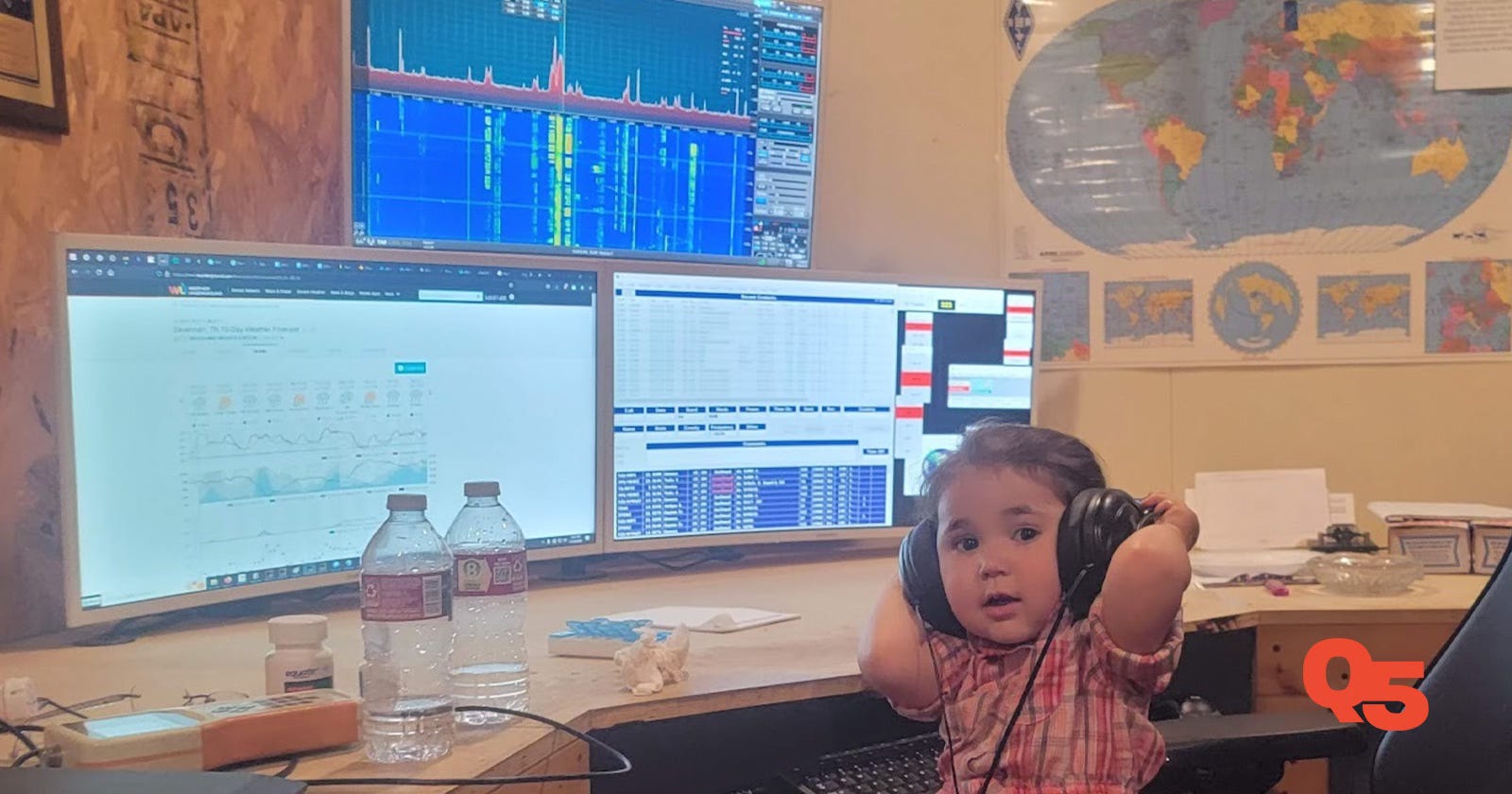
Two positions. Run and in-band. Always in motion, always interacting. One building rate, the other hunting multipliers on the same band, threading QSOs between transmissions, working inside a narrow slice of seconds where one operator’s rhythm cannot interfere with the other. Done well, it is seamless. Done poorly, it collapses into frustration.
Ron builds the team around that reality. Operators are paired and kept together for entire contests whenever possible. They learn each other’s timing. They anticipate. They adjust. Change one person midstream and the balance can fall apart. The wrong cadence, a slight mismatch in pacing, and suddenly both positions are fighting each other as much as the band.
Scheduling becomes strategy. EU runs in the morning go to operators who can hold high rates. Night shifts go to those who understand propagation into Asia and the Pacific, like Ron WV4P, who knows the station’s capabilities better than anyone. Sleep is not optional. Ron demands it. An operator who skips rest is not just tired, but a liability. Error rates climb, frustration creeps in, and the station loses the edge it spent a year building.
All of this feeds into a single idea. Remove friction.
Ron talks about it in practical terms. Not working harder. Working cleaner. Every hesitation, every miscue, every technical glitch is friction. It costs points. It breaks momentum. The station is designed to eliminate as much of it as possible so the operators can stay aggressive even when conditions get chaotic.

That philosophy shows up most clearly in the results. NJ4P does not just win. It sustains pressure. Late in a contest, when many stations begin to slow, the rate at NJ4P holds. The system does not degrade. The operators do not lose rhythm. The signal stays where it needs to be, and the log keeps filling.
It is the difference between a strong weekend and a season.
And 2025 was a season.
The five-contest sweep was not built on a single breakthrough. It was built on repeatability. Each event tested the same core ideas under different conditions. Band changes under load. Inter-station isolation when the bands get crowded. Operator coordination across long shifts. Network stability when the outside world intrudes, which it inevitably does. In CQ WW, even the Super Bowl had an impact, dragging down internet performance just enough to force operator changes in real time. Remote operation adds variables. NJ4P learned how to manage them.
There is also the matter of geography, which in contesting is never neutral.
West Tennessee is not supposed to dominate world-class events. It lacks the built-in advantages of the coasts. Europe is farther. Asia is not a given. For years, conventional wisdom suggested that no amount of engineering could fully compensate for location.
Ron heard all of it. Some of it came as advice. Some of it came as dismissal. Even equipment manufacturers questioned whether certain aspects of the station design would work in practice. Ideas about shared feedlines, simultaneous multi-band operation, interference that could not be tamed. Theoretical limits presented as practical barriers.
He built anyway.
Modeling replaced assumption. Testing replaced opinion. And over time, something interesting happened. The disadvantage did not disappear, but it shifted. Japan became a factor. JA participation, when it was there, provided a counterweight. Enough contacts, combined with disciplined runs into Europe, and the gap narrowed. Add a new Asia-focused tower, built specifically to improve performance in that direction, and the equation changes again.
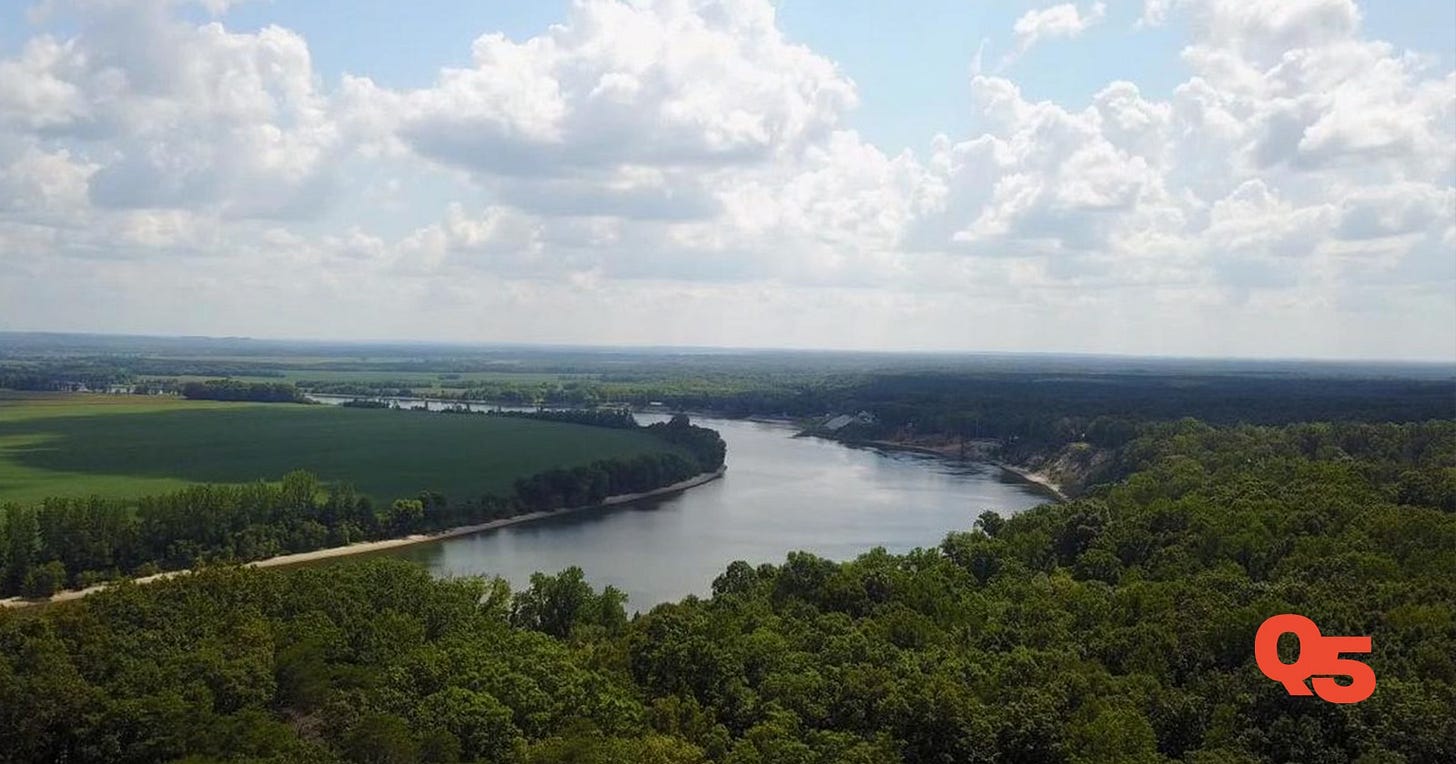
It is not about eliminating geography. It is about managing it.
The station continues to evolve. New receive antennas. More filtering at the antenna level. Adjustments to preamp placement. Small changes that add up to cleaner in-band performance, where the real battles happen. In a multi-radio environment, your partner can be your biggest source of interference. NJ4P has reduced everything else to the point where that internal interaction is the last frontier.
It is not quiet. It is controlled chaos.
Spend time listening to NJ4P during a major RTTY contest and you hear it. The signal is strong, but strength alone is not the story. It is the consistency. The lack of hesitation. The sense that the station is always exactly where it needs to be. There is a phrase Ron uses, half joking and half not, to describe it. Sofa King Loud. It lands differently once you have heard it on the air.
Behind it all is a timeline that still surprises people.
Ron was licensed in 2017. He went from a piece of speaker wire and casual contacts to a world-leading contest station in less than a decade. The learning curve was steep and largely self-directed. Books, manuals, conversations with other operators, and a willingness to question widely accepted ideas.
Today, he is also deeply embedded in the contesting community. Ron Koenig WV4P serves as President of the Tennessee Contest Group and is an active presenter, including talks on the NJ4P superstation. He is a regular presence at Dayton Hamvention, sharing what he has built and how he built it.
The station that exists today is not the product of a single plan executed perfectly. It is the accumulation of decisions, corrections, and refinements, many of them made under pressure. It is also the product of a community. Ron uses “we” deliberately. Operators, local hams who helped build the infrastructure, remote contributors who provided feedback after contests. The system improved because people engaged with it and pushed it forward.
That matters, because no station wins alone. It performs through people.
By the time the 2025 season ended, the original goal had become something else. Not just a checklist completed, but a benchmark established. Five majors, five wins, new records, and a rate number that will sit in logs and conversations for years.
And it all came from a hill that most people would have dismissed as too complicated to bother with, in a part of the country few would pick for a world-class contest station.
But NJ4P is not just a station story. It is a Ron story.
Licensed in 2017, he built this from scratch, often working against conventional wisdom, sometimes in direct opposition to it. Where others saw geographic disadvantage, he saw something to engineer around. Where others saw complexity, he saw angles. Where others hesitated, he moved.

People notice.
“Ron is a force in the hobby,” Max N4ML wrote. “He’s always sofa king loud.” Others point to the energy behind it. “People with the dedication and passion Ron brings are exactly what we need in our hobby,” Manu LU9ESD said. And there are those who saw it coming early. “I remember getting an email from Ron years ago asking for details regarding rotatable towers,” Mike SJ2W recalled. “What he has been able to build is impressive.”
The station matters, and the results prove it. But the through line is the person who pushed it there, decision by decision, contest by contest, refusing to accept the limits he was handed.
On that hill in West Tennessee, the signal is “Sofa King Loud.” Ron WV4P made sure of it.
Watch the full video interview with Ron WV4P here:
Q5 Worldwide Ham Radio is Sponsored by DX Engineering:

Comments
Nothing yet. Say the first thing.
Sign in to join the conversation.