
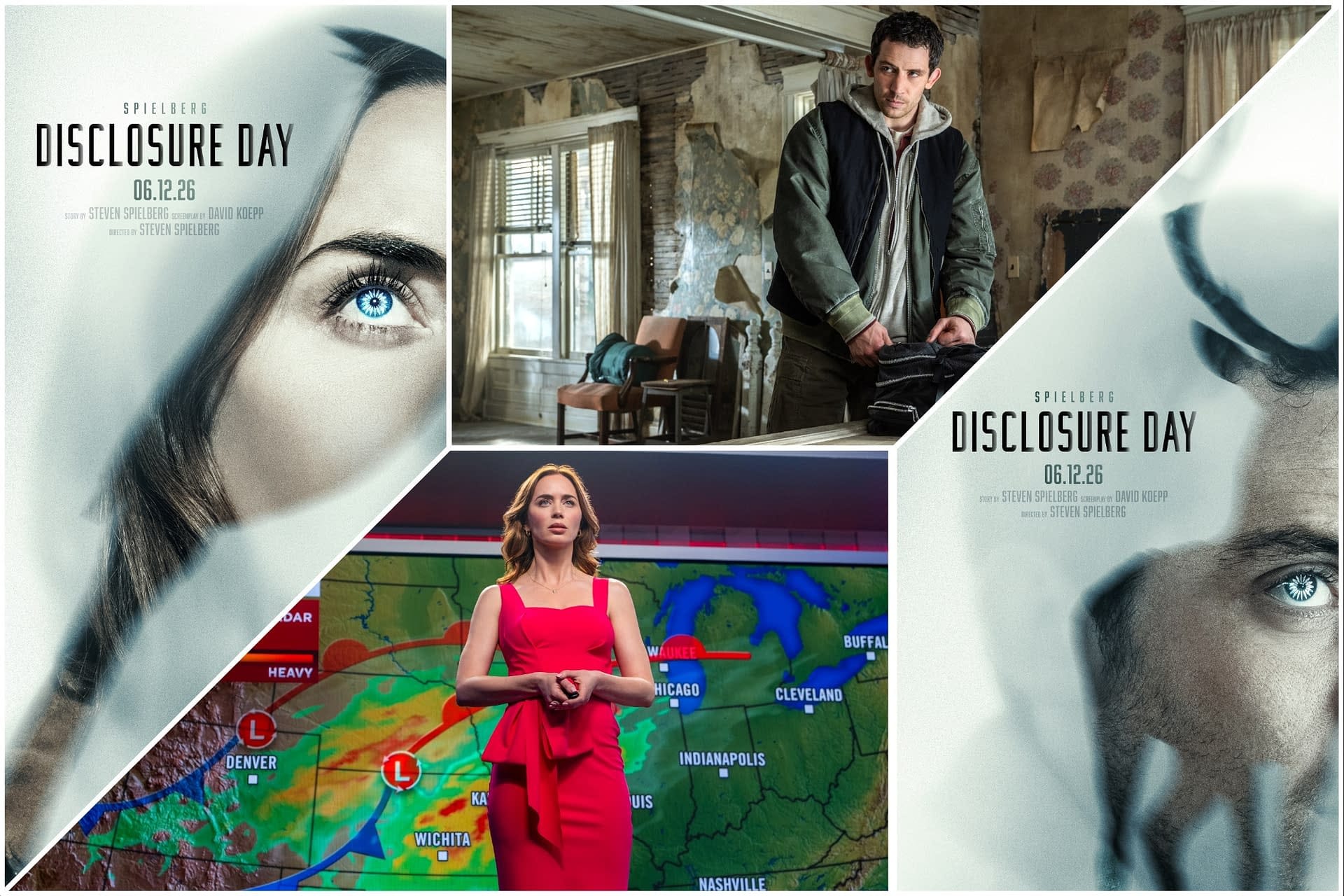
I’m not going to claim Steven Spielberg is a bad director. I think that’s cheap rage bait. But I would like to talk about how culture is stuck, and I’m not the first person to that party. Arguably I’m pretty late to the party, and I think this movie is an example of our social stickiness.
The film focuses on two leads who are late thirties, childless and trying to hit the reset button on life. Right from the jump, that’s an interesting point, and sets the movie apart from its clearest analogue, Close Encounters of the Third Kind.
Spielberg has made 4 major films in which humans meet aliens. The first one, Close Encounters of the Third Kind, closely resembles Disclosure Day in subject matter and tone, but showcases an entirely different American culture. It came out in ‘77, directed by Spielberg, and the script was written by Spielberg as well. The screenplay for Disclosure Day is by David Koepp, who is known for such classics as Jurassic Park, and War of the Worlds (which I’ll be speaking about shortly). He’s written treatments for a variety of well known properties.
In Close Encounters, Roy Neary, the lead, is married with three children, and his status as a husband and father is actually a crucial plot point. The three children are taken away by Roy’s wife Ronnie because Roy becomes obsessed with UFOs and begins building a scale replica of the mountain he sees as a result of his alien encounter. He exhibits a manic energy and singular of purpose on reaching back to the extraterrestrials that brushed against him. He’s touched by aliens (as opposed to by an angel), becomes obsessed with it, and his wife and kids leave. Then Roy becomes enmeshed with a woman, Jillian, who is a mother herself, and the two of them are this “dyad” of alien encounter survivors. The aliens take Roy to join their travels, as a sort of home-grown astronaut who is chosen for bigger things. The adult whose potential is wasted in their current life, who needs and deserves a divine upgrade to their true calling as a chosen one, is on display here, but in a compelling way that showcases how adult responsibilities matter.
If you compare the story beats and actor appearances, I can’t help but imagine the characters in Close Encounters are supposed to be the same age as the leads in Disclosure Day. What you see in Close Encounters is a society in the seventies of relationship, marriage, duty, obligation to family. They’re very “everyday” people in that movie. Same topic: alien abduction, finding out the aliens are good. But a different world.
Here’s what I find interesting: I thought Spielberg’s War of the Worlds in 2005 was a much better movie than this. I can defend my opinion: War of the Worlds is an action movie wherein Tom Cruise stars as a divorced father trying to deliver his teenage son and young daughter to safety. It’s a tale of him having to fight both an external human threat and an external alien threat. It’s very much in that theme of The Walking Dead, where you have dual antagonists of human nature and an alien force. In this case, not zombies but aliens.
War of the Worlds sports a pantheon of compelling, well-executed story beats. It has a tale of growing up, of Cruise’s son, who goes off to fight the aliens and feels compelled to do that, and Cruise has to see his son as a young man, not a boy. Cruise has to help his daughter, who already has an anxiety disorder, survive certain death from megalomaniacal aliens who cannot be reasoned with or cajoled. In 2005, an anxiety disorder was a big deal. Now it’s every day, everywhere, always discussed. It was overall a well done movie with plenty of suspense, and the aliens were disturbing. They made their bad intent known. It was really a tale of what to do in life when there is no reasoning with the opponent and the outside force, like many great metaphors for tackling life’s faceless crises and circumstances. It’s grim, but there are many highlights and moments of triumphs for the human spirit, in War of the Worlds. That is more than I can say for Disclosure Day, which features two leads who are already successful in life, but feel something is simply “missing,” a common refrain in the 30-something, 40-something demographic.
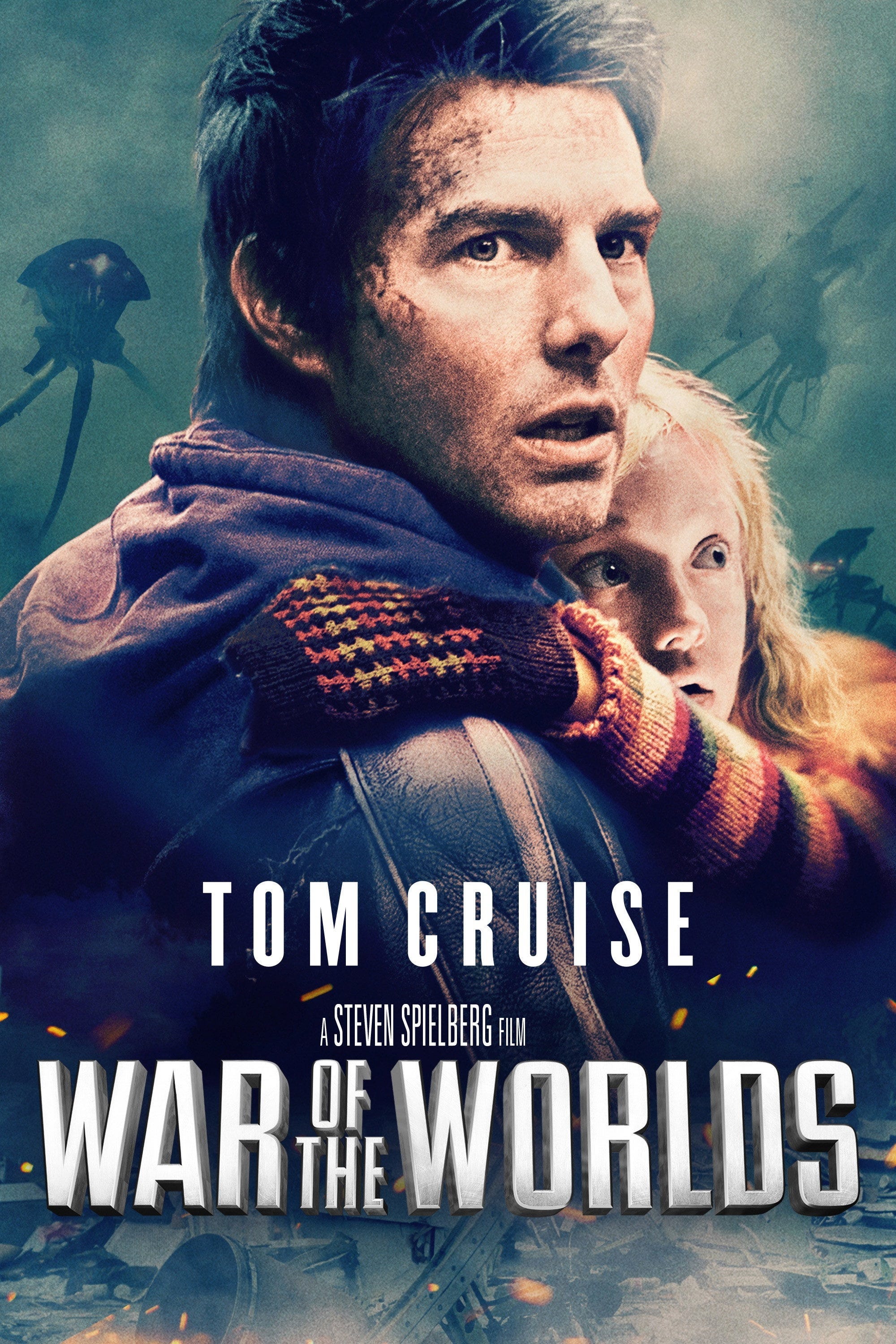
Seriously, go watch this movie. ^
Disclosure Day opens to immediate action, as one of our main leads, Dr. Daniel Kellner, swaps a backpack full of alien video footage and an alien weapon in exchange for his girlfriend Jane, with a paramilitary group you find out is named Wardex. Wardex stands for Waived Reporting, Development, Extraction. They keep all the government’s alien secrets so the presidents don’t see this stuff anymore, because in the movie they become civilians after eight years. This is a massive cover-up agency. Noah Scanlon, played by Colin Firth, is the head of it.
The scene starts with Daniel handing off his bag during a wrestling match to someone who has a gun in his back. He proceeds outside the venue and quickly double-crosses Wardex. He takes the alien weapon, a cylindrical object that looks like a really cool video game controller, an expensive joystick, and threatens the group with it. The corporation says let him go, because they know that device can do something. He escapes with Jane.
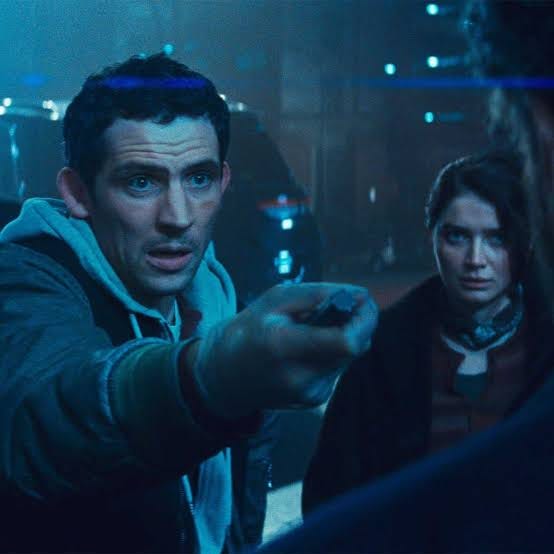
Daniel and Jane at the standoff with Wardex
Daniel was a former employee at Wardex. He had a felony for hacking before joining, and then he decided to use his skills for good. He’s trying to embark on a second chapter in life. He’s mid-thirties, a PhD in some information science stuff, and he was working as a gatekeeper for Wardex, but he’s recruited to defect. He’s recruited by Hugo Wakefield, played by Colman Domingo, who also worked for Wardex but defected, and is now ring-leading a band of ex-government contracters who want to disclose the truth about extraterrestrials to the world. Their whole drive is to get this footage to the public in the right way. Not to just upload it online, but to get it to someone with authority. Daniel takes Jane and escapes to a convent, where Jane had sincerely considered becoming a nun, but didn’t go through with it because she lost her faith. We’ll come back to that.
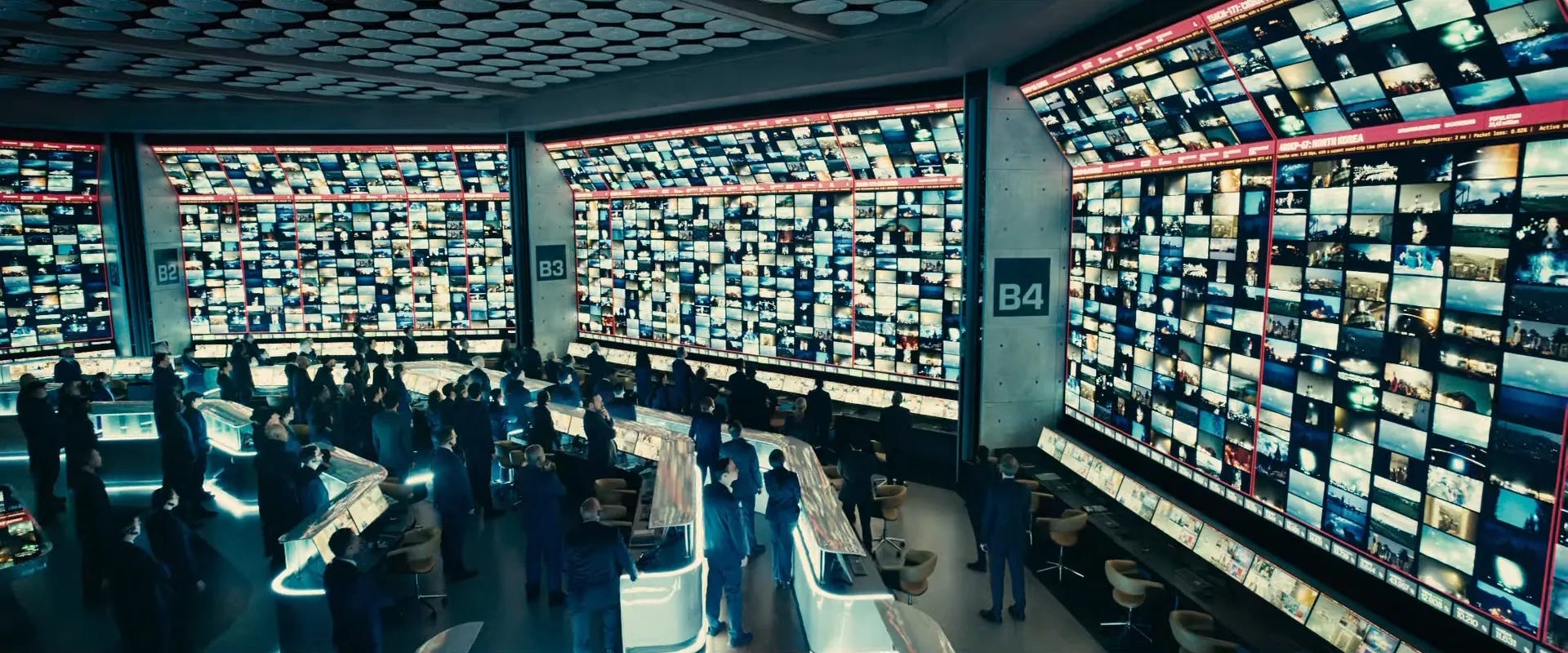
Here’s Wardex surveillance headquarters, not creepy at all
Now we pull away from Daniel and Jane and pan to Margaret Fairchild, played masterfully by Emily Blunt. We join her in her kitchen as she talks about going to work in Kansas City, Missouri, as a weather woman, and that she wants to do more anchoring. She wants to do serious stories. She’s there with her boyfriend Jackson, played by Wyatt Russell, Kurt Russell’s son. He’s played as a stoner, an easygoing type-B guy sitting around eating breakfast while Margaret, the important news anchor, is rushing about the kitchen. It’s Spielberg. It’s done great. You can see she’s this type-A person.
We find out their ages from Wardex, which is very helpful. Instead of saying “as you know” and sharing the information that way, we get it through them spying creepily on the people. No children, not married, she has a boyfriend. Why did it point that out? I don’t believe anything in a movie is coincidental. I’m building up the case for millennial nostalgia, and you see it here: both leads are late thirties, both not married, both without kids. That’s a purposeful narrative choice. Recall my comparison of the adult characters in Close Encounters of the Third Kind and this film.
Margaret wants to tell more serious stories. She talks about wanting to move again. Apparently they’ve moved often and it’s been a sore subject. Jackson doesn’t really want to do that. She’s the engine of wanting to move, continually chasing the next thing. As they’re talking, a cardinal, a red bird, flies right through their open window, stares directly at Margaret, and the two share a peaceful moment. Jackson shoos the bird out of the window in an unintentionally hilarious manner, almost as if a cardinal is a mosquito, a common nuisance you’ve got to quickly escort out of your home. It was such a beautiful moment, and it was played for laughs. It didn’t really land for me.
So now we have our two leads set up: Daniel has his girlfriend Jane. Margaret has her boyfriend, Jackson. The two of them are co-leads joined together because they both just know “something’s off” in their lives.
When the red bird gazes into Margaret’s eyes, she begins to telepathically understand others’ thoughts. She develops a super empathy where she’ll give people the best advice possible, almost blurting it out like pressured speech, like she can’t help herself. It plays for comic effect when she gets pulled over for a speeding ticket, and when she comes across a coworker and says, you “need to leave this man, he’s abusive, do it for your daughter.” She reads minds and blurts out advice. That is what Margaret does after looking at a bird. Of course the bird is an alien in disguise.
She’s at the news studio, supposed to simply read the weather, already late from dodging a speeding ticket by telling a cop about his home life while he just stands there. Then it’s the well-known scene from the trailer where Margaret begins to make clicking sounds. It’s bewildering and odd, because it truly does sound alien, as intended. Margaret then faints and goes to the hospital because she thinks something is wrong with her brain. And there, Wardex catches up. Now they’re on the trail of both Daniel and Margaret.

This is where the road movie begins. Margaret, now telepathic, starts to think of the name “Daniel.” “Who is he? He’ll make sense of this.” Daniel, for his part, has the power to understand what she said when he saw Margaret’s bout of clicking, on the news. To him it doesn’t sound like clicking; he hears her in English say “don’t be afraid of what you don’t know.” It’s wild, because it took her a long set of clicking sentences to say those few words.
How does Noah Scanlon track them? Through the alien device. It looks like a titanium joystick, and when you grip it and focus on a picture of the intended person, you can see through their eyes and even control their body. The item lets him remote-view other people and see what they’re saying. It’s the perfect spying-creeper Instagram-stalker device. Why would aliens invent that? Also, why can’t you just imagine what the other person looks like, or remember them, and pop inside their head? If you had a 3D model of them, could you control them even more, instead of just a picture? Close Encounters focused on the human elements and not weird tech stuff that leaves questions, which was a better decison, in my opinion. That’s the burden now: CGI and computer graphics in general have given people license to make weirdo-looking stuff.
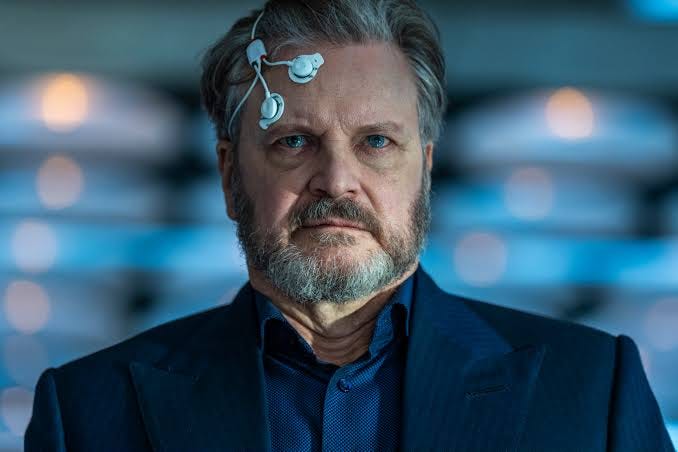
Scanlon as he looks at a picture of a person in order to hold an alien machine rod and hack their brain.
Scanlon finds out who Daniel is dating (Jane), looks at Jane’s picture, and systematically gets inside her mind. She fights back valiantly, but ultimately Noah breaks down her mind and controls her like a puppet. Daniel then has to avoid being harmed by his actual girlfriend. He has to tie her up to the other bed when they’re on the run, sleeping in a hotel, and that doesn’t even work. They get caught, because Noah can see through Jane’s eyes and see where they are, and then send his team of paramilitary commandos to break into the hotel.
The nostalgia sets in when Daniel and Margaret finally meet each other, after Margaret figures out how to get to him. Margaret asks, “do you remember anything about when you were a child?” I think that line works on two levels. We’ve got two people nearing forty who don’t have what they want in life, who want to think about their childhoods, because their childhoods in this movie unlock everything, including quite literally the key to world peace and human prosperity. Just like with millennial nostalgia, there’s this idea that if you relive the past, if you cling to it enough, things will make sense. Go to the past, go to your comfort spot, go to your safe place.
When Daniel leads Margaret to Hugo, you find out that all along Hugo was building a replica of Margaret’s house, to get her into her childhood memories even more. Throughout the movie, you see Daniel on calls with Hugo, and behind Hugo a house is being built. It’s a very retro 90s suburban house. “Go to your childhood. That’s where the answers are.” Margaret and Daniel both have amnesia for anything before ten years old.
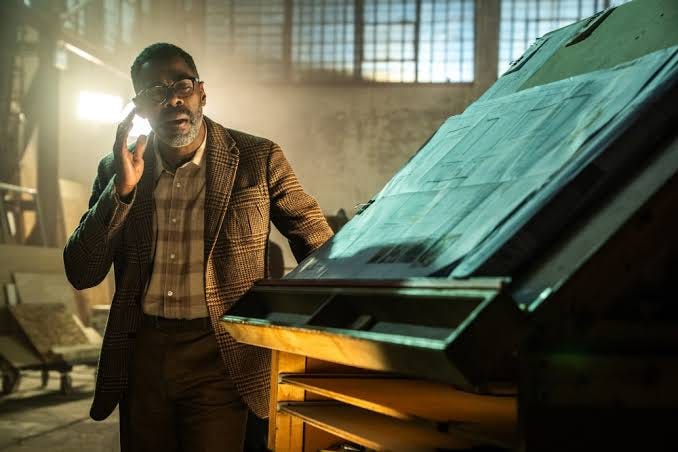
Hugo Wakefield, coordinating the alien disclosure squad
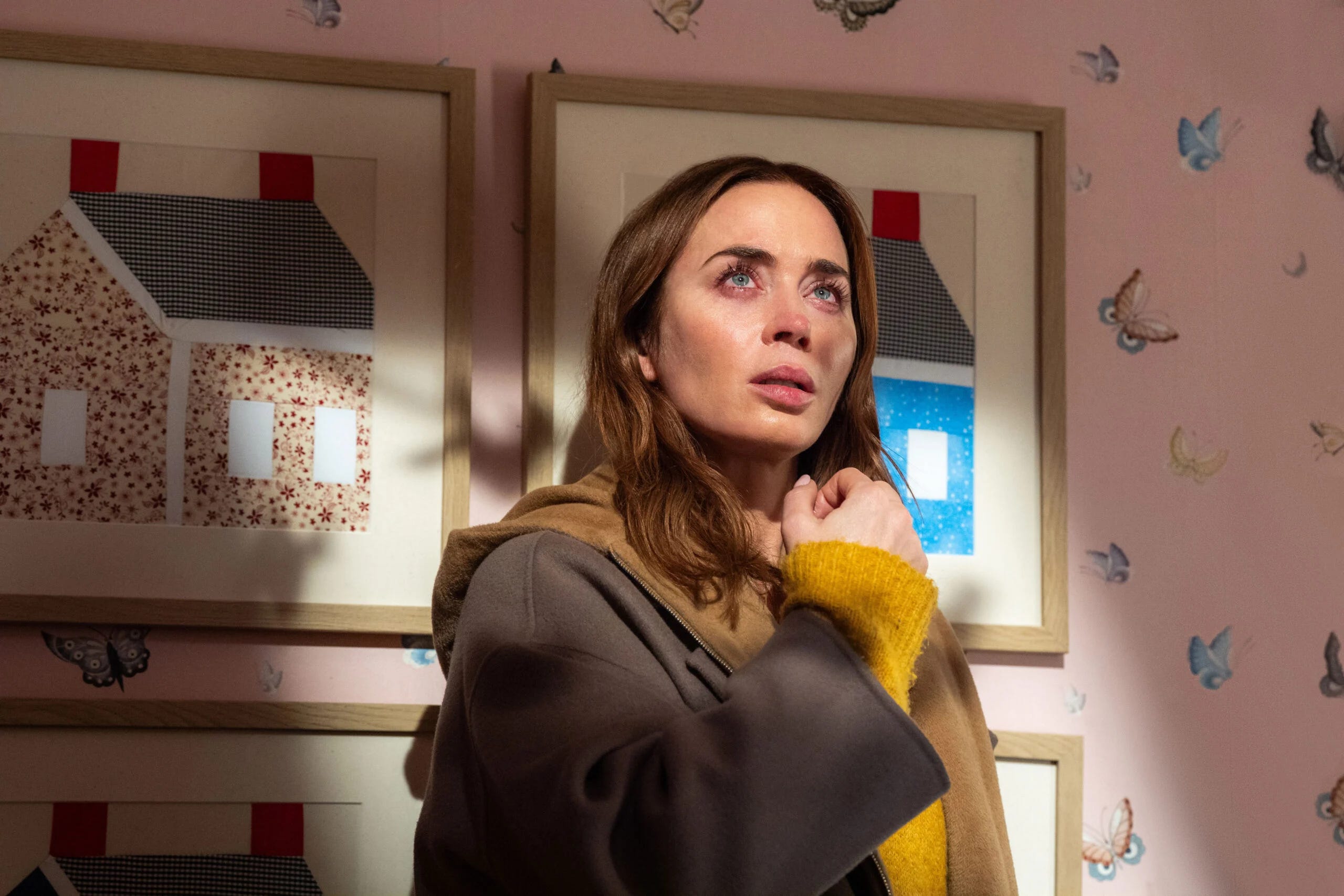
Margaret in her childhood home replica
Margaret and Daniel both have to explore what’s in their minds, what the key is to the puzzle of the aliens, and what Margaret saw at 10, because she has repetitive nightmares. Together they’re given the alien mind device (yes, there’s another one, stolen by Hugo) to enter into each other’s memories. It turns out Margaret was visited by aliens that came in the form of Thomas Kinkade-looking woodland creatures. A stag, a raccoon, and a cardinal. They walked her outside, convinced her to leave her room, and boarded a UFO that looked like a Thomas Kinkade house painting. Nice deception, gray aliens.
She now relives this memory, and we as the audience can see what happened to her. She was sweetly lured away by seemingly kind woodland animals from her home to a house she called “the Hansel and Gretel house.” It was a cloaked alien ship, or she was mind-controlled to not see it as a ship. Inside is a white room and a table. Beside her is Daniel, who’s scared. They’re both abduction survivors, on separate tables. Margaret reaches out her hand and tries to soothe Daniel. It’s a touching moment. It’s also uncanny and unsettling, because we center on the stag’s face, we look in its eyes, as it peers deeply at Margaret, and it begins to show that it’s a gray alien.
The two of them discover they were abducted. They see the alien devices, a kind of necklace of round versions, and the devices imprint on them, taking the consciousness and genetics of Margaret and Daniel as children, somehow. It’s very oblique and opaque. It doesn’t really make a lot of sense. Then they join with Hugo and the others who helped Margaret relive her past, and they set off to the news studio to release the alien data: hard drives of crashes, body retrievals, interrogations.
Why does that have to happen? What are these entities learning? Also, why do they need to abduct children, and why don’t Margaret and Daniel remember this event? I know it’s because the film is taking cues from actual abduction accounts, which often entail amnesia, but the aliens are portrayed as so ingenious, yet they gave children PTSD and a puzzle to unlock with regressive self-styled psychotherapy. This is not stuff that’s approved by the American Counseling Association; I’ll tell you that much.
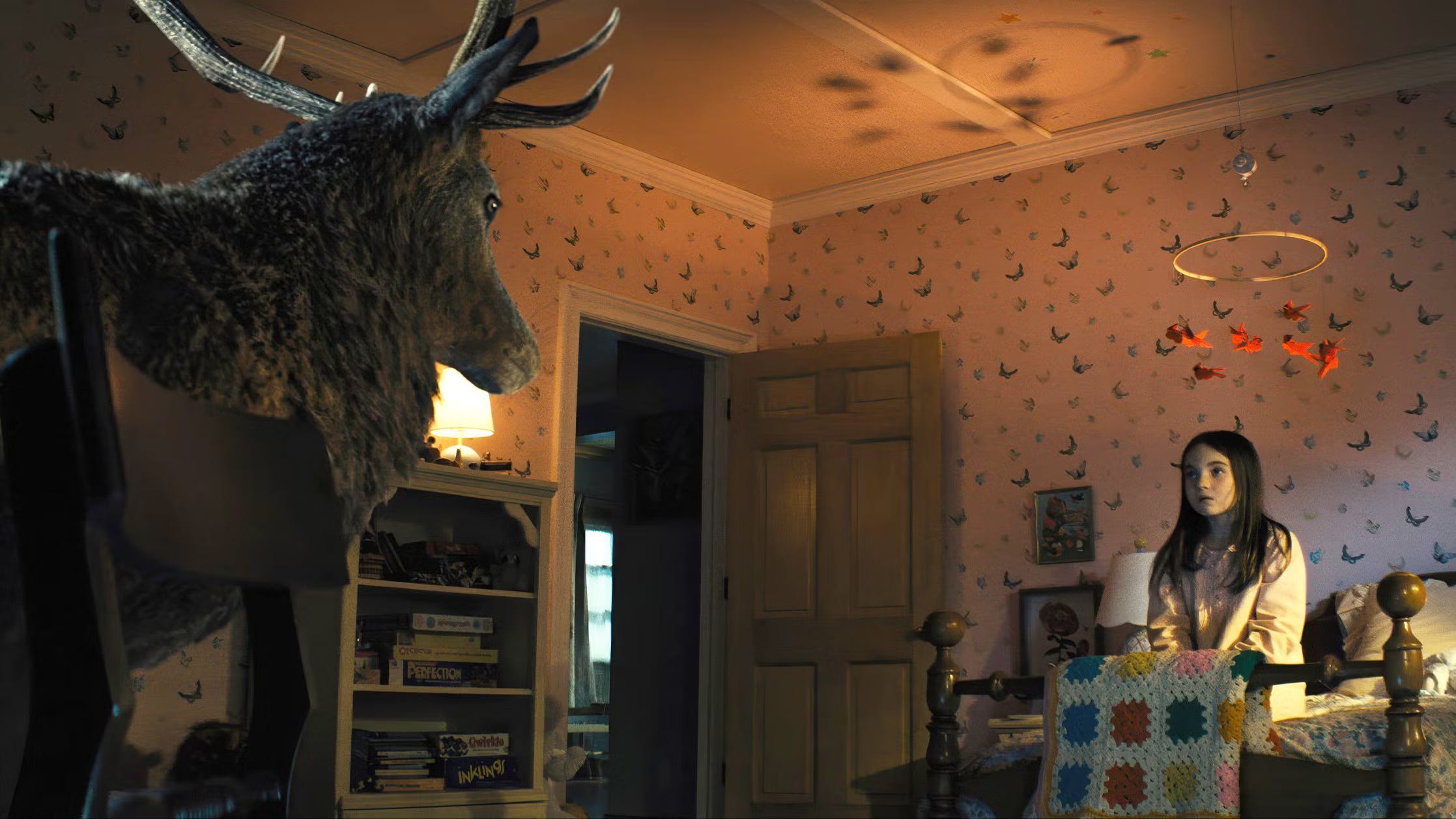
An alien as a stag approaches Margaret in her childhood memory
Here’s some fascinating analysis of the nostalgia in which Disclosure Day bathes us. In the replica home that’s made so Margaret can access her memories and hypnotically regress, we zoom in on a TV set with an NES (a Nintendo Entertainment System). For those of you who are nineties nerds, you’ll immediately clock the fact that in 1996, the popular video game console was not the Nintendo Entertainment System. That system would have been eleven years old as that point That system came out in ‘85. So we’ve got nostalgia inception: nostalgia in the nineties for the ‘80s, eleven years prior. That got my gears turning.
If you want to go one step further, baby boomers would have been old enough to buy the NES in the eighties. Millennials wouldn’t have. A lot of us weren’t even born yet in the mid-eighties. So the movie is millennial nostalgia fodder shot through baby-boomer sensibilities.
The culmination of the movie is rebuilding your childhood, which is also a metaphor for therapy. Rebuild your childhood and you can figure out what went wrong. Live in your childhood. Get the answers from your child self. Honestly, that may or may not help. If you had an abusive parent, you need to desensitize that past. The past does not hold your future. It does not hold your answers for life. You should not dwell in it. That’s coming from a therapist, by the way.
What I find interesting is that it’s a very childless movie. It’s a very childish but childless movie, and I think that’s exactly by design for where we are culturally. In the movie, Margaret reads Jackson’s mind and knows he doesn’t believe her and is going to sabotage her car drive to get to Daniel. So she pays a child, gives them a treat, to tell Jackson, “I love you, but I gotta go” That’s the role of children in this movie: Biological children, child children. The role is messenger, the cute moment of comic relief, not a three-dimensional role.
If you want to read it deeply, a child is being tasked to fulfill a serious request for an adult. The adults in the movie are trying to regress to children. The children are asked to do adult tasks. “I’m not breaking up with you, but I’m leaving now” is a very adult thing to make a child say. Things are inverted, which is in line with cultural stagnation and a refusal to grow up. The only child in the film serves as a messenger, a wedge between a couple. Is this symbolism for divorce? Symbolism for a child between two adults who’ve broken up? You could read into it in a Jungian way. Maybe Spielberg and the screenwriter didn’t mean it that way, but it’s serious that this is a child’s only role in the movie: to tell another adult that his girlfriend is leaving.
This film is really set for adults in a world without children. It comes off very much like Children of Men, a much better movie, where the adults are in a world that is woefully boring, without mirth and without children, economically destroyed as well. This is Children of Men lite. The countries of the world are at each other’s throats, there’s a run on the gas station to get supplies, it’s pre-apocalyptic stuff, and we never really explore it more, because that’s not the point of the movie. That angle could have made for an interesting film.
The entire movie is set against mounting global tensions of a World War III event. It’s all alluded. There are news stories before Margaret goes on to deliver the weather, about tensions rising in other countries, something about North Korea. It’s implied, especially by the characters’ dialogue, that releasing what we know about aliens now will prevent World War III. How? We’re not alone in the universe, the aliens have answers, and they have great technology (because we all know technology certainly has solved all of earth’s interpersonal problems). Apart from tech, one of the things that led to Hugo’s whistleblowing was his belief that aliens saw empathy as the path to evolution, a higher evolved tendency. Their viewing sticks are supposed to be about empathizing with one another, even though Noah Scanlon uses his to be voyeuristic and keep people in line. It would have been much more interesting to explore that pre-apocalyptic world and how it’s averted, but we don’t get to it. That’s just the background, the window dressing.
If you played this movie for someone in the seventies, during the time of Close Encounters, people would ask, “why aren’t Jackson and Margaret married? Why aren’t they happy where they are in life? What more do they want? Why is it always time to move and get another job? And why are Daniel and Jane not married? What is going on there?”
Back to Jane. She lost her faith, and she talks to a former nun mentor at the convent. When she and Daniel are on the run, the nun says, “you didn’t lose your faith in God, you lost it in humanity.” That’s a great point. The nun softens the idea that announcing aliens would shake people’s faith, because she says human beings are God’s prime creation on Earth, which there’s no Bible verse that says. The through line for Jane is that she first consciously objects to Daniel disclosing about aliens, and then she unconsciously objects, because she’s being controlled by Noah Scanlon and manipulated by the alien control stick to literally harm Daniel and stop his mission.
A news weather anchor is a nice job, but it’s portrayed as a dead-end career that leaves Margaret wanting so much more. Her quest for wanting more is fulfilled by having an amazing purpose that’s unlocked, by being an alien-human emissary, an ambassador for the aliens. Was Close Encounters a bit like that? Sure. Roy was considered ill for being so obsessed with aliens, and he’s the one who gets to ride in the ship. He was the chosen one. But that movie has a different tone. It has the tone of a hero’s journey. The through line is not “I don’t care about my family or kids or job.” In this movie, Margaret really doesn’t like her life or her job. I think she loves Jackson, that’s not played for laughs. But the movie plays her position as something she truly does not enjoy and must transcend.
Why is restlessness such a huge plot point in so many millennial movies? I should make a list of millennial, wistful, restless films, because it’s a massive theme, along with the “we are young” slop songs. There’s something crucial in the fact that this movie focuses on someone being unhappy with their career for a good portion of it. It’s not a throwaway line. The movie is about a second act starting at forty. It’s an early midlife crisis movie. Daniel fears his past because he’s a felon. Margaret fears for her future. It’s a depression and anxiety movie. This might be the first millennial midlife nostalgia movie.
Disclosure day is really millennial flight of fancy through Boomer eyes. It is a religious experience, meant to show that there is a great power out there, that will make itself understandable, if only we will stop being so darn skeptical and pessimistic.
The ending standoff is at the news studio, which is a good stand-in for the public square. If you want to embody the metaphor, millennial nostalgia is represented by the alien force, a force of imagination flowing through two forty-year-olds, and the older generation, represented by Wardex, is trying to stop that creativity and hopefulness for the future.
Daniel and Margaret make it to the news studio and deploy the hard drives full of alien crash footage and interrogation footage. They broadcast across the world, because the superpowered Margaret uses her persuasive empathy to get the station runner to run the footage across their affiliate news stations. Here’s a thought: if super empathy entails super manipulation, isn’t that a bad thing? Throughout the movie, Margaret uses her hyper empathy to get her way and get out of things. That kind of power should not be handed to humans en masse. But the movie passes it off wholesale, because Margaret is the chosen one and would never do anything selfish. What about everyone else, the people more like Noah Scanlon? The end of original sin is not alien disclosure.
The content plays for the world. What’s bizarre is that another anchor, from a CNN-like channel, starts to narrate what’s being seen and begins to cry. I wonder why? It’s pretty disturbing material. The thought was that she’s supposed to be an audience stand-in, the surprised professional aghast that this stuff exists, because Margaret is obviously not surprised, at least not anymore. She now knows the truth. Then we get five minutes of news-montage footage of other stations picking up the alien videos. Margaret has her moment of fulfillment as a serious news anchor, because she’s the one to break the biggest story in the world, which the aliens manipulated her into sharing by driving her toward becoming a reporter. Daniel was given the power to read math as a language, so he could unlock what Margaret said, and then he gets to a high position in the intelligence world and defects. How much did these aliens coordinate and manipulate? That’s deception. Deception is their power here, even though we’re not supposed to think of it that way.
Five minutes of grainy black-and-white alien footage and people reacting to it doesn’t really do it for me, ya’ll. It’s the opposite of found footage. In found footage, you’re there, watching, and it’s weird. It seems candid and real. Here it’s manicured footage, perfectly put together, manufactured. That’s a very boomer thing, because the logic is “you watch TV because it’s on,” you trust that effort was put in, anything manufactured is trustworthy. The Cronkite era. The problem is, we’re not in the Cronkite era.
Here’s where the movie ends. The world sees aliens, people watch the news on their phones, it’s amazing. But it’s not done. Hugo is there. Daniel is there. Margaret is there. Jane is there too, her faith intact and not shaken, and Noah has commanded Wardex to stand down, having been given some vision or spiritual peace by Margaret. It’s the power of love. This is the corniest ending to a movie I think I have ever seen. A giant wheelchair dolly is rolled into the studio with a translucent crystal top on it that looks like one of those old-school salon hair-perm machines, but in frosted glass, because it’s dramatic and it’s blocking who’s inside. The head covering opens up slowly, and of course a tall giant gray alien comes out, who looks like absolute CGI junk from 1998.
The alien looks fondly at our movie’s major players, Daniel, Margaret, and Hugo, who’ve all been the chess pieces put in place to herald the triumphant existence of the grays. I don’t know why he’s giant; the other aliens in the film were short. Do they keep growing past adulthood? Humans quit growing. That’s a good question that could have been answered, instead of countless scenes of people being brain-hacked by a titanium rod. The alien whispers something in Daniel’s ear, because Daniel understands the clicking language, and Daniel tells it to Margaret, who looks at the camera, still rolling at the news studio, and says, “listen.” The movie cuts to black and credits roll. We’re left to surmise that Margaret is going to exposition-dump a giant essay’s worth of content about aliens and why human beings need to not go to war. The movie tries to be cheeky. It gives us the Sopranos “cut-to-black” ending in a movie that’s like a documentary on exposing the Roswell incident, shot through millennial nostalgia.
I would call Disclosure Day an “I’d like to buy the world a Coke” film for the Super Nintendo generation and older. It’s a giant group-therapy session set in a much more interesting movie universe that had more to say, but we followed the patients we were assigned to follow as viewers. We didn’t follow the more fascinating plot elements we might have been intrigued to investigate. The movie is metaphorically like a 1990s linear side-scroller game, when it would have been better as a sandbox, an open world game.
The movie is really about the trauma of growing up and losing childhood magic, and the idea that the magic can only be rekindled through a collective “‘member this, ‘member berries” group nostalgia activity. Remembrance ceremonies. That’s too easy a read, but that’s really what it is: collective remembrance of childhood past as the key to unlock a stagnant near-forty-year-old existence. It’s communal therapy. The movie a millennial flight of fancy through boomer eyes. It’s a religious experience meant to show there is a great power out there that will make itself understandable if only we stop being so darn skeptical and pessimistic.
It’s a timely movie, but not for the reasons it thinks it is. It’s timely because it shows where society is. The Barney era is the definitive last word on childhood as a concept, before the iPad baby became a vulgar but common archetype. And iPad babies have got nothing on millennials. We were taught that we deserve participation trophies. We are ground zero for that. The millennial is a “forever child,” and the film leads need all that room for their own childhood ego states to take center stage. Why would there be children in this film? The leads have to be the children, after all.
The through line is two people not happy with where they are, returning to the past to get the answers, then announcing those answers to the rest of the world. Symbolically, in the case of nostalgia, saying, “this is who I am, world, I’m broadcasting it.” It’s like a news broadcast: “Breaking news: my past has given me the answer to my future. I’m going to be an artist, or I’m going to be blank, whatever.” We’ve got millennial leads who want a literal news report on their new identities as the chosen ones.
It’s almost like the male and female character in a video game you’re playing as. You didn’t have to choose; there’s one there for each. It’s almost the first user-generated movie where you can insert yourself as female or male. I can’t stop talking about it. Once you see the nostalgia in this one, you can’t unsee it.
No posts
Comments
Nothing yet. Say the first thing.
Sign in to join the conversation.