
I remember the first time I saw it.
Not on a screen, but on a page. Nothing unusual about that, I spent a lot of my youth hanging around in newsagents. And somewhere between a review I’d already read twice and an advert for some random PC game, there it was.
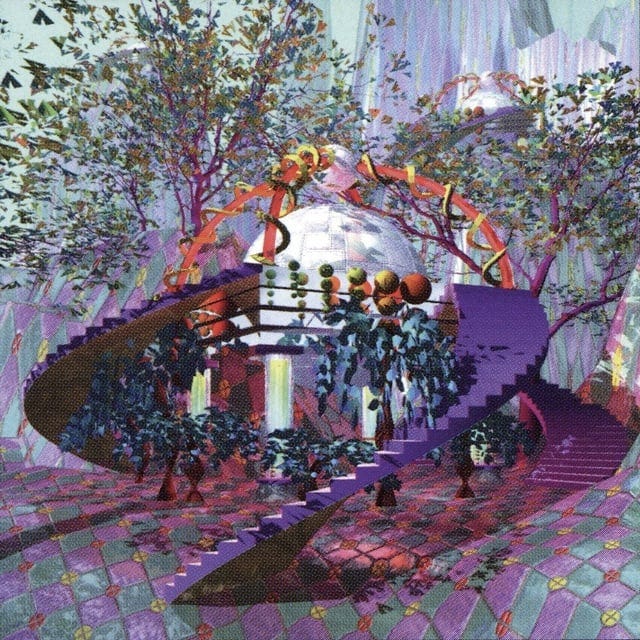
A screenshot. Except it didn’t look like any screenshot I’d ever seen. It looked like a photograph of somewhere familiar that didn’t really exist, a liminal space of sorts before I even knew what a liminal space was.
The image was small, maybe 6 centimeters wide, slightly blurry from the print quality, and it showed some kind of marble temple surrounded by impossible geometry and a sky that gradated from deep blue to something almost purple.
Just this relatively smooth, clean, eerie little world sitting there between the pages of a magazine.
I stared at it for a long time.
Then I read the caption, then I stared at it again. This was a video game? Not quite. In reality, someone had made this on a computer. I imagine it took a long time to render. I’m not even sure if you could explore or do anything meaningful in that rendered world, but the idea felt genuinely strange and slightly overwhelming.
The world was, for the most part, still two-dimensional. Certainly in my house, and in the houses of my friends. The PlayStation, Saturn, and N64 were all on the way. But we hadn't hit fever pitch yet, the conversation taking up only a few small column inches.
I never found out what it was called, and I’m pretty sure it never released as anything meaningful.
Instead, it likely ended up as nothing more than a tech demo. But still, it sparked something in my young mind. This was a gateway into something entirely new. Computer generated imagery, pre-rendered specfically, the kind that would soon fill PlayStation games with painted-looking backdrops and cutscenes that looked like nothing the hardware could actually render in motion.
If you enjoy my work and want to support it, consider buying me a coffee. It helps keep the words flowing and the ideas brewing!
I set the magazine back down on the newsstand, paid for my sweets, and walked home turning that image over in my mind, thinking about what it represented.
Then, in a blink of an eye, years passed.
We were no longer looking at flat sprites and side-on scrolling, we were flinging ourselves headlong through fully realized 3D worlds, ducking around corners and pushing deeper into spaces that opened up around us. The transition that had felt distant only a short while ago was now simply how games worked.
And nowhere was that change felt more intensely than on the original PlayStation. The console itself could push a respectable number of textured polygons per second, but there was always a gap (a chasm, really) between what the hardware could render in real time and what a studio could produce given enough time and a decent Silicon Graphics workstation.
And so pre-rendered cutscenes and backgrounds existed to bridge that gap.
For a few years in the mid-to-late nineties, they were an appreciated bonus, something that made you stop and bask in their shiny glory, not because of what they let you do, but because of what they let you see.
They carried an atmosphere the in-game engine (sometimes) couldn't summon, filling in the blanks where low polygon counts fell short, conjuring weight and mood and texture that the real-time visuals could only gesture at.
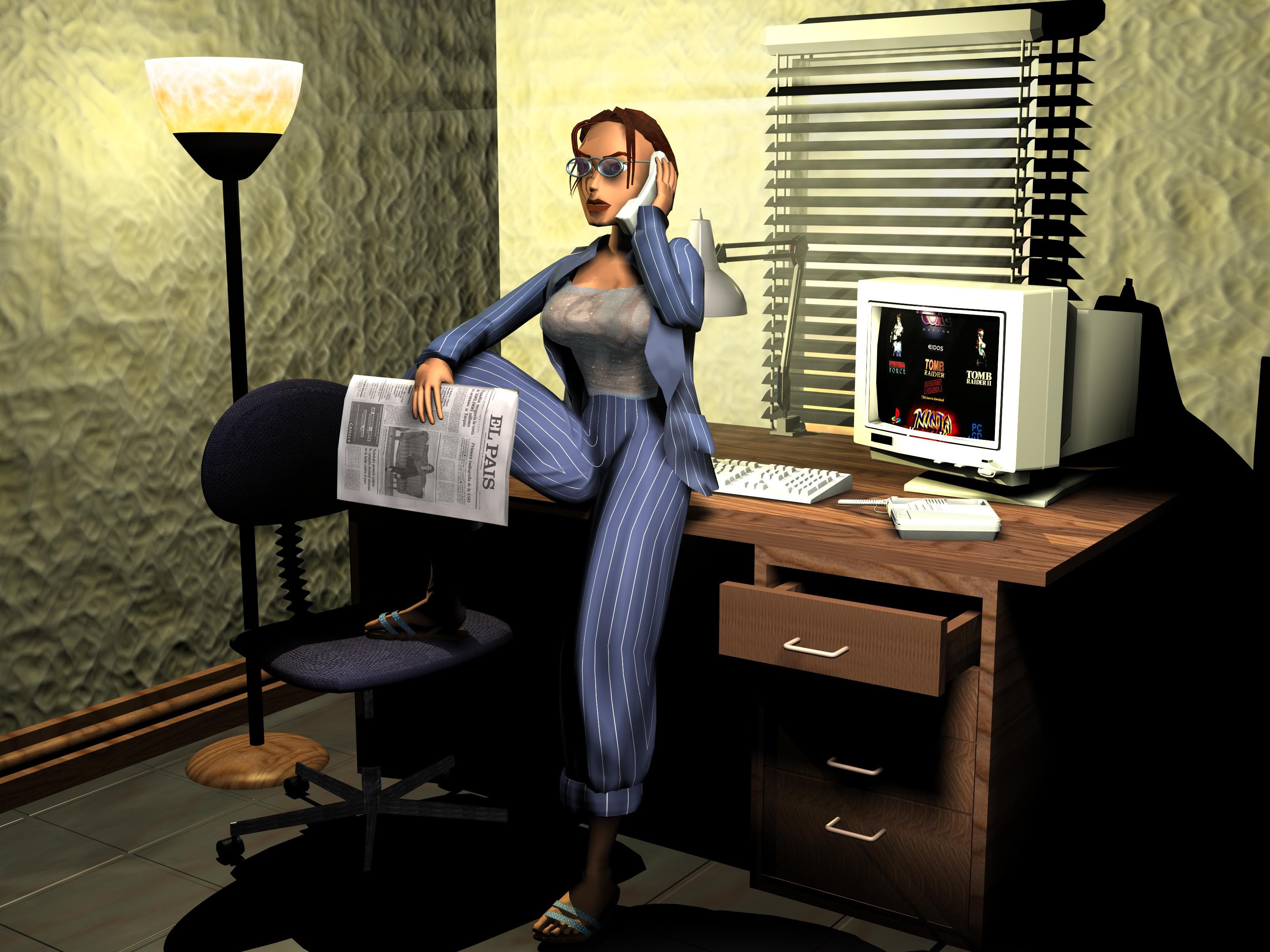
But still, there was a particular and even peculiar look to them. They were not everyone’s cup of tea, shall we say.
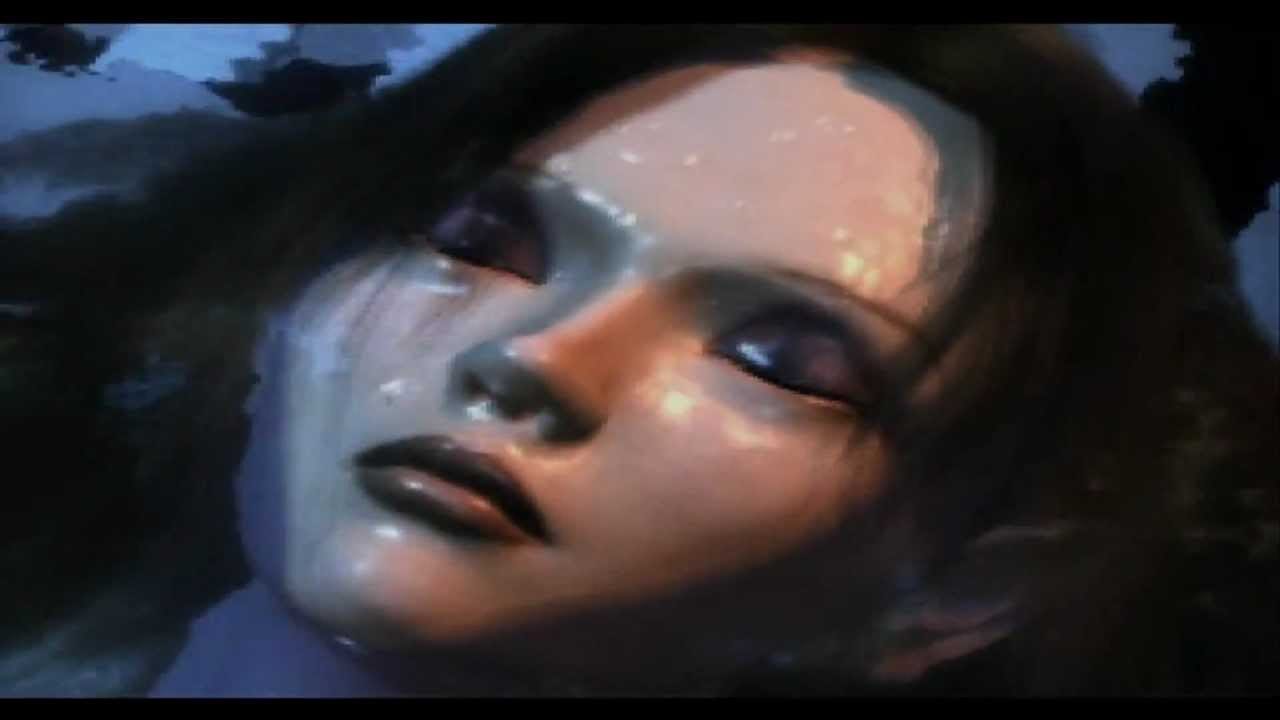
Everything had this waxy, slightly too-perfect sheen. Skin that looked like it had been buffed, hair that moved in solid clumps and eyes that caught the light a little too cleanly. Surfaces that gleamed as though the entire world had just been wiped down.
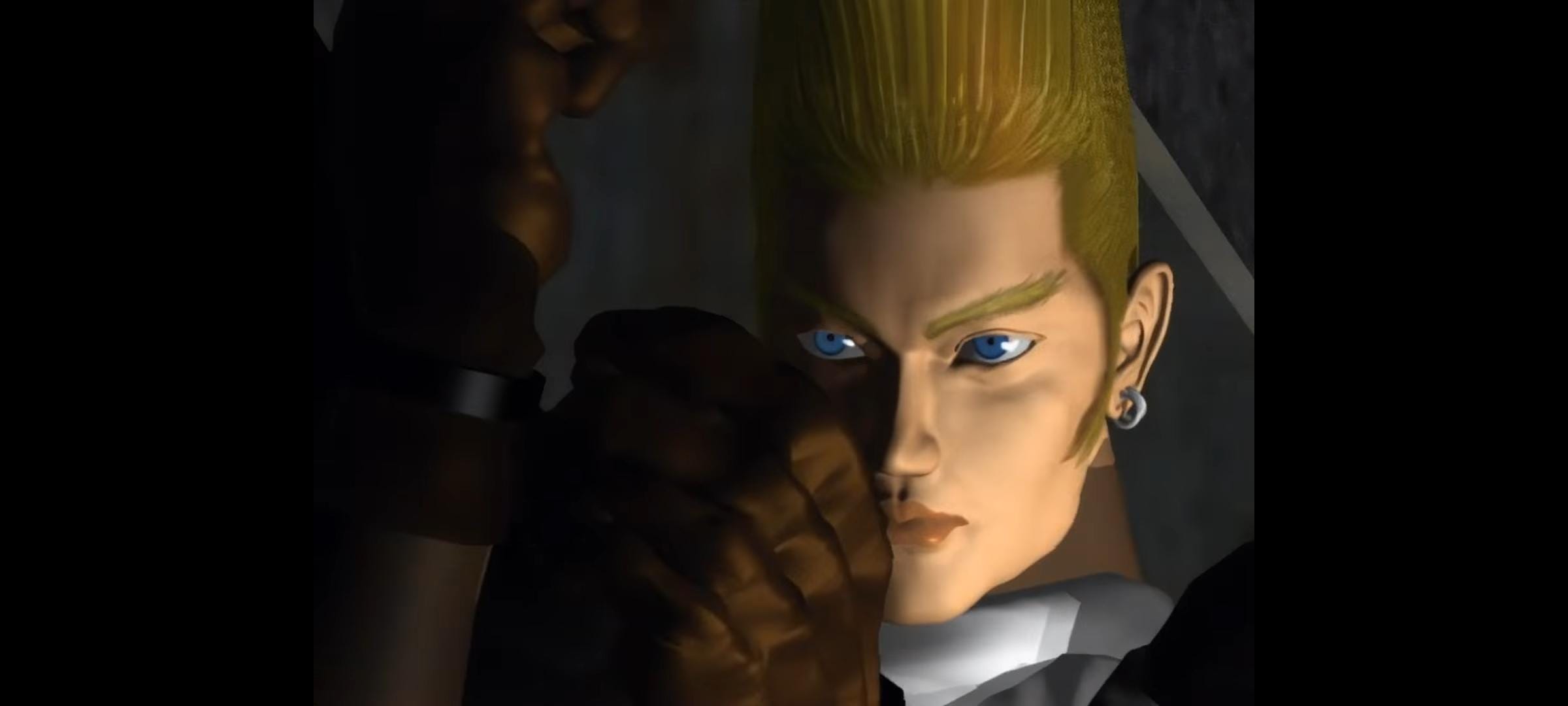
It wasn't photo-realism, and it wasn't trying to be. It couldn’t be. But it was a hyper-clean aesthetic that felt at once futuristic and artificial, like peering into a world molded from lacquered plastic.
I personally loved it. I still do, after all this time, though now it reads as a vision not of the future but of the past. Quaint little clips, most of which were obviously nowhere near the Toy Story level they once seemed to promise.
Until later in the PlayStation’s lifecycle, of course, as the tech became more powerful and more accessible.
So let’s jump into a few examples.
Let's look at five PlayStation games that leaned hard into pre-rendered cinematics, where those cutscenes were often central to creating a layered experience, and where that distinctive nineties CGI look was on full, glossy display.
You can’t talk about pre-rendered cutscenes on the PlayStation without starting here.
Not because it was the first game to use them, but because it was the game that made an entire generation understand what they were for. Square had been experimenting with CGI for a while before Final Fantasy VII.
The studio’s 1995 tech demo for the SGI Onyx is practically its own piece of folklore, but VII was where all of that ambition crystallized into something that millions of people played.
The game opens with a slow pull-back from a star field that resolves into Aerith’s face, lit by the glow of Mako energy, and then the camera keeps pulling back and back and back until you’re looking at the entirety of Midgar, this impossible layered city belching smoke into the sky.
It was a statement of intent. Look at what we can do, look at why this game is on PlayStation not the N64.
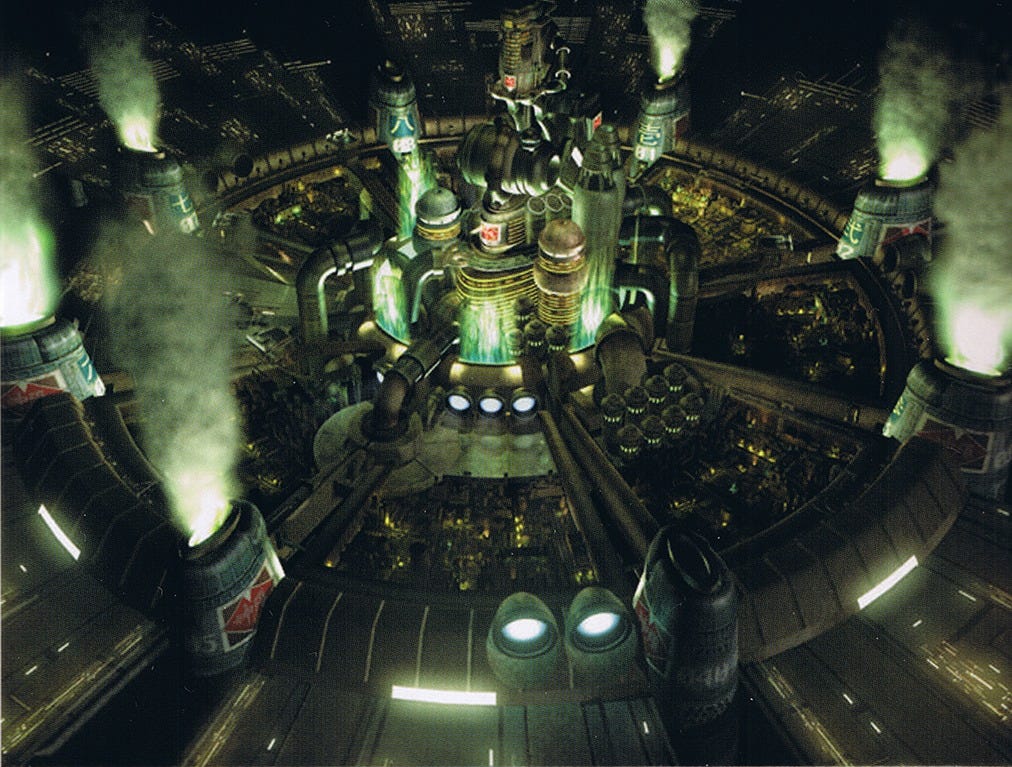
While Squaresoft sat at the pinnacle of this technology, I still think VII's cutscenes had a distinct liminal look. The characters' skin carried the quality of polished clay, while Cloud's eyes were these bright, almost luminous pools set into a face that looked carved and then shellacked.
The Buster Sword caught the light like chrome. When Sephiroth walked through fire in the Nibelheim flashback, the flames reflected off his leather coat with a smoothness that no real flame would ever produce.
It really was beautiful and uncanny in equal measure. It still felt early, but it was impressive none-the-less.
What I think made VII’s cutscenes so mesmerizing wasn’t just the technical quality but the contrast within them too. You’d spend hours navigating blocky, big-handed characters across pre-rendered backgrounds, and then a cutscene would trigger and suddenly those same characters had faces.
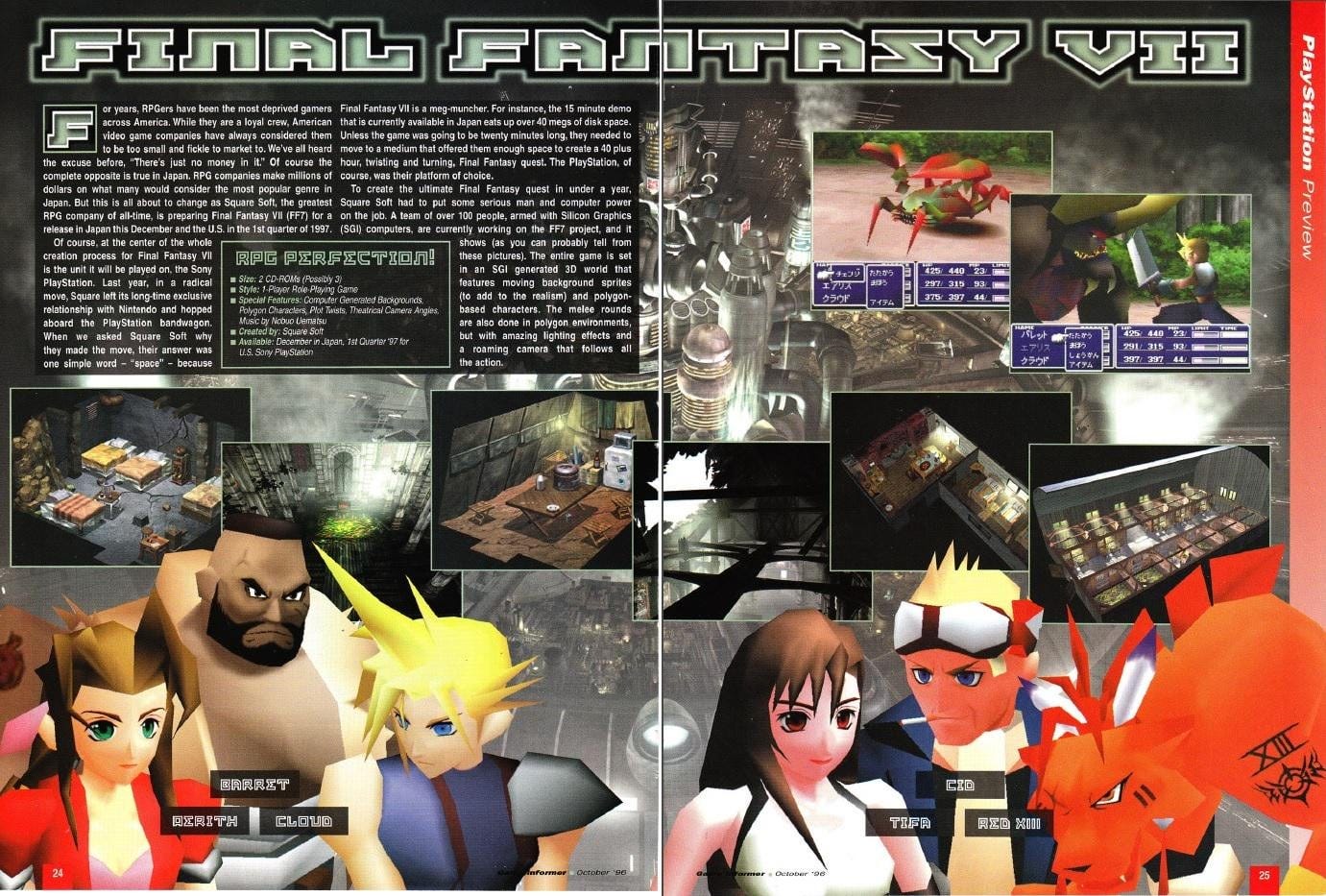
They existed in a world with actual atmospheric perspective and volumetric light. Though the jump felt so extreme that it was like being yanked into a different medium entirely, as though the game was briefly becoming a film before handing you back the controller.
Square definitively understood the emotional power of that shift, something they would increment and continue to improve. To perhaps their own detriment with the release of Final Fantasy: The Spirits Within.
The Weapon attack on Junon, the Highwind launch and, of course, the scene at the Forgotten Capital (probably the single most famous cutscene in PlayStation history) where the gap between gameplay and cinema was used for genuine emotional devastation.
Final Fantasy VII was everything I could have hoped for, and then some.
Capcom’s approach to pre-rendered CGI was different from Square’s.
Where Final Fantasy VII used its cutscenes for grandeur and emotional crescendo, Resident Evil 2 used them to set the tone and mood in a real homage to Hollywood.
The opening cutscene is the best example of this.
Leon Kennedy pulls into a seemingly deserted Raccoon City, stops at a diner, and within about ninety seconds everything goes sideways. The CGI here has that unmistakable mid-nineties texture. Leon’s clothing is this stiff, almost rubbery-looking thing, and the zombies have skin with the color and consistency of grey candle wax.
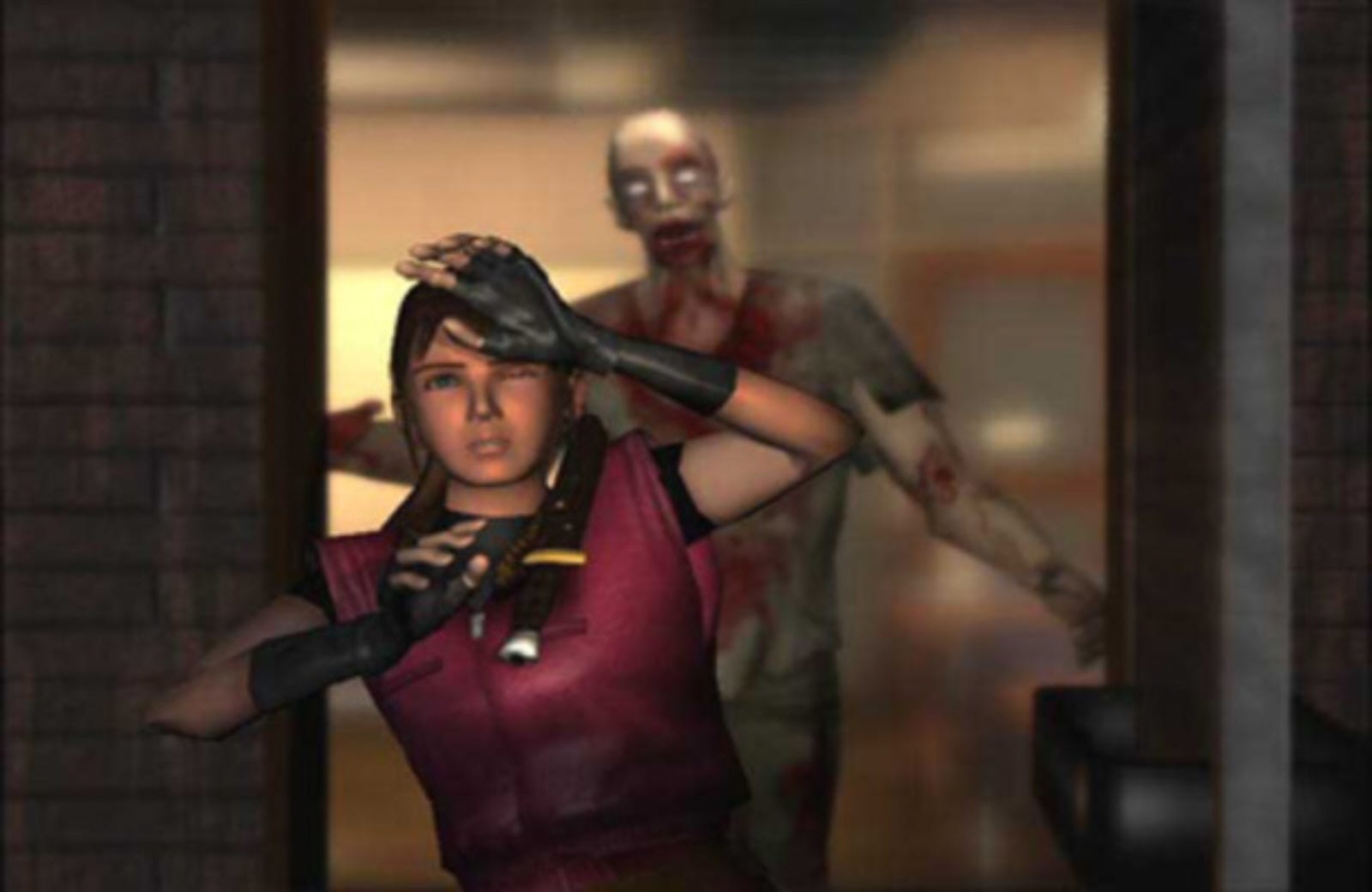
Blood pools on linoleum with a surface tension that looks almost gelatinous. Maybe that was intentional? Maybe, but everything does feel too smooth, too shiny. Yet it works perfectly for the material because it makes the whole scene feel feverish and grotesque, but still like a nightmare rendered in porcelain.
What Capcom understood, possibly better than anyone else at the time, was that the uncanny valley wasn’t a problem to be solved but a resource to be exploited. The slight deadness in the characters’ eyes, the way their mouths moved a fraction of a second out of sync, the plastic quality of their skin
All of this fed directly into the horror.
You were already on edge from the gameplay, and then a cutscene would play and you’d see these almost-human figures moving through spaces that were almost-real, and the cumulative effect was profoundly unsettling in a way that rendered in real-time graphics might never have achieved.
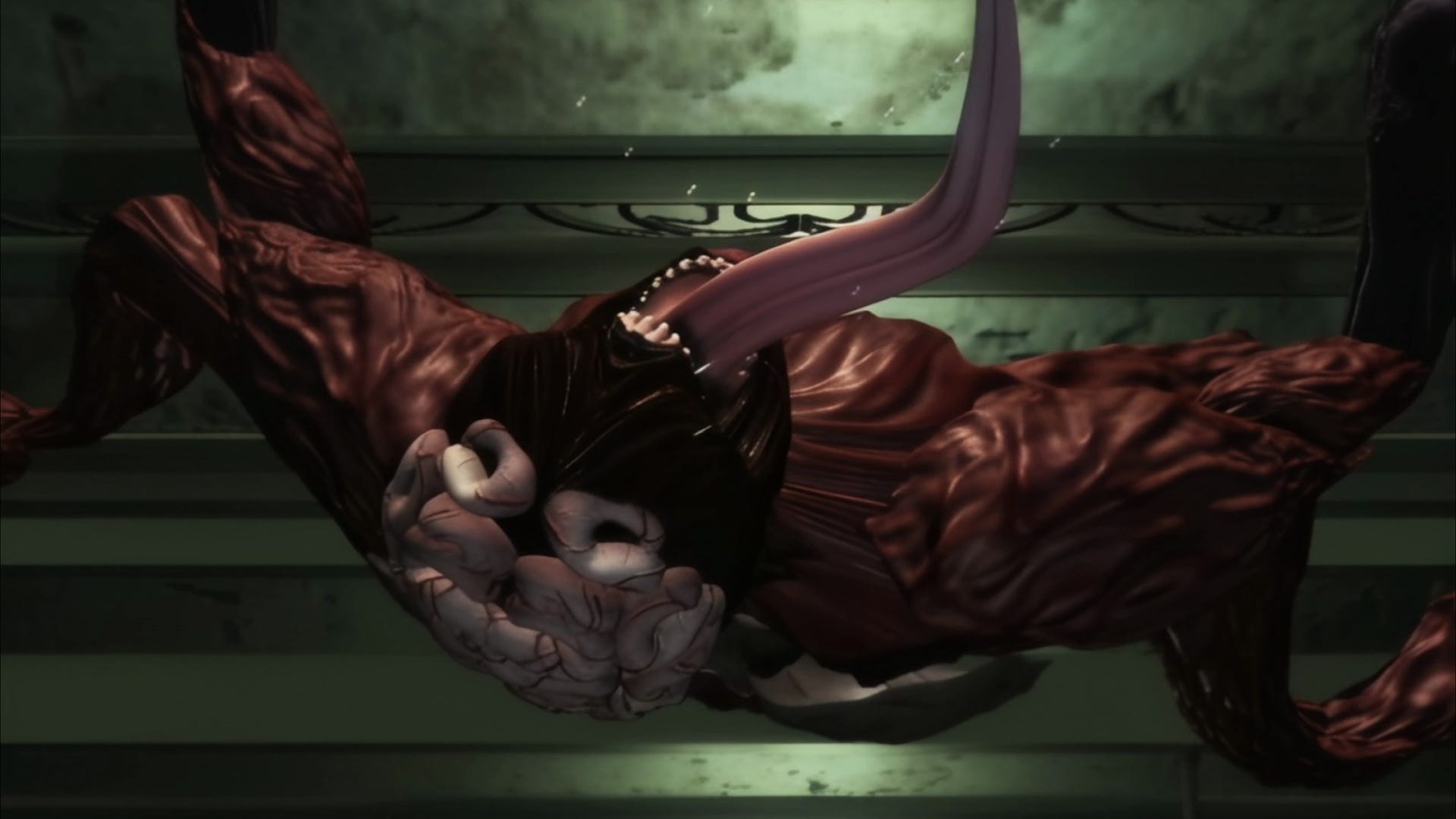
RE2 also used its cutscenes sparingly and strategically.
They bookended the experience and punctuated key story beats like the first encounter with William Birkin’s mutated form or the helicopter crash. The train escape too, but they never outstayed their welcome.
Capcom seemed to grasp intuitively that the power of pre-rendered CGI was partly in its scarcity. If you showed it to the player all the time, the spell broke.
Oddworld Inhabitants was a studio that seemed to arrive fully formed, with a complete vision for a world that looked like nothing else in gaming.
And the pre-rendered cutscenes in Abe’s Oddysee were where that vision was communicated most powerfully. These strange, darkly comic little films that played out between levels and told you everything you needed to know about Oddworld.
The opening cinematic has stayed with me, right up there with my most cherished PlayStation memories.
Abe, this scrawny, stitched-lipped “Mudokon” slave, mopping floors in RuptureFarms. A meat processing plant rendered in nauseating industrial detail. Grime on every surface, fluorescent lighting that makes everything look sickly and pipes dripping with something you’d rather not identify.
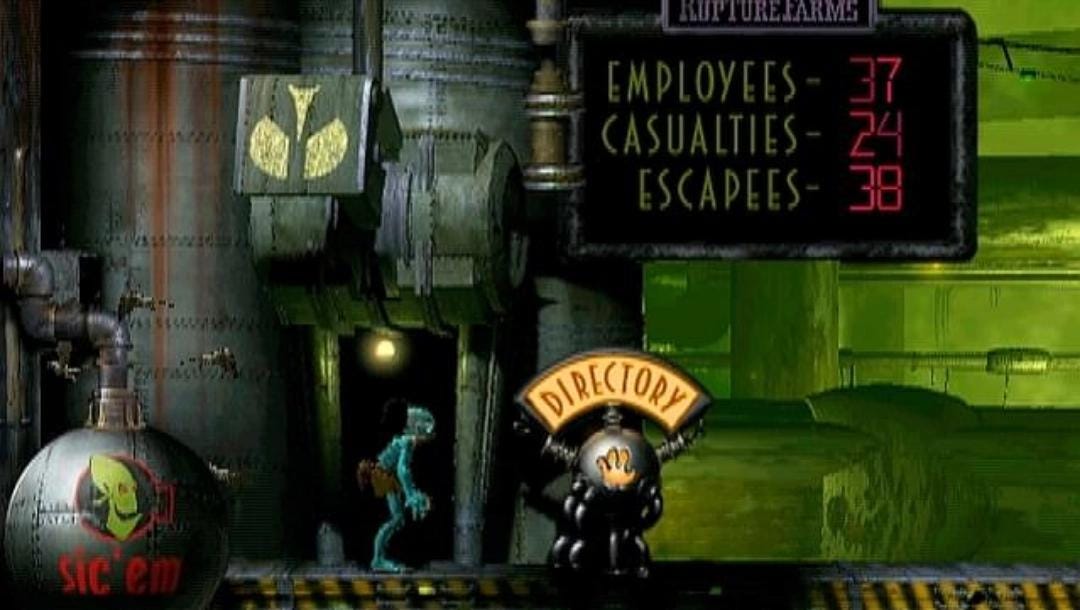
And Abe himself, with his huge, sad eyes and glistening green-grey skin, looking like a creature sculpted from wet clay and then left slightly too close to a heat lamp. The CGI had that trademark nineties sheen, but Oddworld Inhabitants used it in a way that made the world grimy.
Where other studios were chasing beauty and spectacle, Lorne Lanning’s team definitely leaned into the uncanny texture of the medium and produced something that looked, well, alien and faintly repulsive but completely captivating.
Take the character animations for example.
Abe didn’t move like a typical hero. He shuffled and he flinched, his expressions were simultaneously exaggerated and weirdly subtle. Like the way his eyes would widen in panic, or the defeated little slump of his shoulders when something went wrong.
It was a wonderful example of creativity squeezed out of the hardware limitations of the time.
Abe’s Oddysee managed to be funny, sad, and horrifying in the space of a single cutscene. The moment where Abe discovers that RuptureFarms’ next product line is going to be made from his own species, the camera lingering on the “New N’ Tasty” poster, then cutting to Abe’s face as the realization sets in…
It's a moment I'm glad I got to see.
Fighting games might not be the first genre you associate with lavish pre-rendered cinematics, but Tekken 3 deserves its place here because Namco poured an extraordinary amount of care and personality into its character endings.
Every character in Tekken 3 had a unique ending sequence, rendered in that distinctive Namco house style: clean, bright, sharp lighting, and an almost toy-like quality to the character models. Skin looked like molded vinyl and hair was sculpted in solid, glossy masses.
Sure, clothing still had the texture of something you'd find on an action figure. Stiff creases, uniform color, no imperfections.
But the wider imagery looked like someone had painstakingly assembled a diorama of incredibly detailed figurines and then animated them with a smoothness that, for the first time, felt like the tech was finally competing with Hollywood CGI.
Jin Kazama’s ending was brooding and dramatic, all rain and clenched fists. Yoshimitsu’s was surreal and comedic. Paul Phoenix rode a motorcycle into the sunset with a completely straight face.
Lei Wulong got a mini action-movie. The variety was part of the charm, and the pre-rendered format made it possible. I loved each ending with my heart and soul. So much was packed into what was essentially a tiny short film, self-contained and purpose-built, free from the constraints of the in-game engine.
What makes Tekken 3’s cutscenes stick in the memory, though, is how rewarding they felt. You’d battle your way through the arcade mode, probably losing to Ogre at least twice, and your prize for persevering was this little jewel box of CGI.
It would be easy to include another franchise here entirely, but the truth is that Final Fantasy VIII represents such a dramatic leap forward from VII (released just two years earlier) that it almost feels like a different studio made it.
And in terms of pre-rendered cutscenes, it is the high watermark of the original PlayStation era.
The opening sequence alone is staggering. A beach, waves, two figures locked in a sword fight that careens across rooftops and through gardens, cut through with fleeting glimpses of a woman in white and fields of flowers, all of it set to Liberi Fatali, an enormous orchestral-choral piece that sounds like it's scoring the end of the world.

The CGI is significantly more detailed than anything in VII.
Squall’s face has texture. Pores, the faintest suggestion of stubble. Seifer’s coat billows in a way that looks almost physically correct. When their gunblades clash, sparks scatter with weight and trajectory that feel considered rather than decorative.
But the real showcase for me, and the moment that made people put down their controllers and just watch, is the ballroom scene. Squall and Rinoa meeting at the SeeD graduation party, the awkward dance that becomes graceful, the camera circling them as the room opens up around them.
The cloth simulation on Rinoa’s dress, the reflections on the marble floor, the way the warm light from the chandeliers catches in her hair. But what makes it transcendent is the direction.
Somebody at Square choreographed an actual dance sequence, animated two CGI characters performing it, and imbued it with genuine tenderness and humour. Rinoa’s playful insistence, Squall’s reluctant compliance, the moment where he finally lets himself enjoy it.
It’s all there in the animation, communicated without a single line of dialogue.
The plastic sheen was still there (it was inescapable given the technology of the time) but it had been refined to the point where it almost didn’t matter. You weren’t looking at the waxy skin or the slightly too-perfect hair. You were watching two people fall in love in a ballroom.
That era is gone now.
Real-time rendering caught up, then overtook, and eventually left pre-rendered cutscenes behind for all but a handful of cases. The way modern games look would have seemed impossible to anyone hunched over those early CGI movies on a fourteen-inch CRT.
That particular jolt of seeing something impossibly beautiful cut into the game you were playing, the sense that you were being handed a gift, a glimpse of what the future might look like, all rendered in plastic and light.
It was a product of its time as much as a Tamagotchi clipped to your schoolbag.
I still think about that magazine screenshot now and then, the marble temple and the purple sky. Whoever made it was probably working on a machine that cost more than a car, painstakingly ray-tracing a scene that might never have made it into a finished game at all.
But for a few seconds, on a printed page in a newsagent I can barely picture anymore, it showed me a world that felt more real than anything I’d seen in a game before.
No posts
Comments
Nothing yet. Say the first thing.
Sign in to join the conversation.