
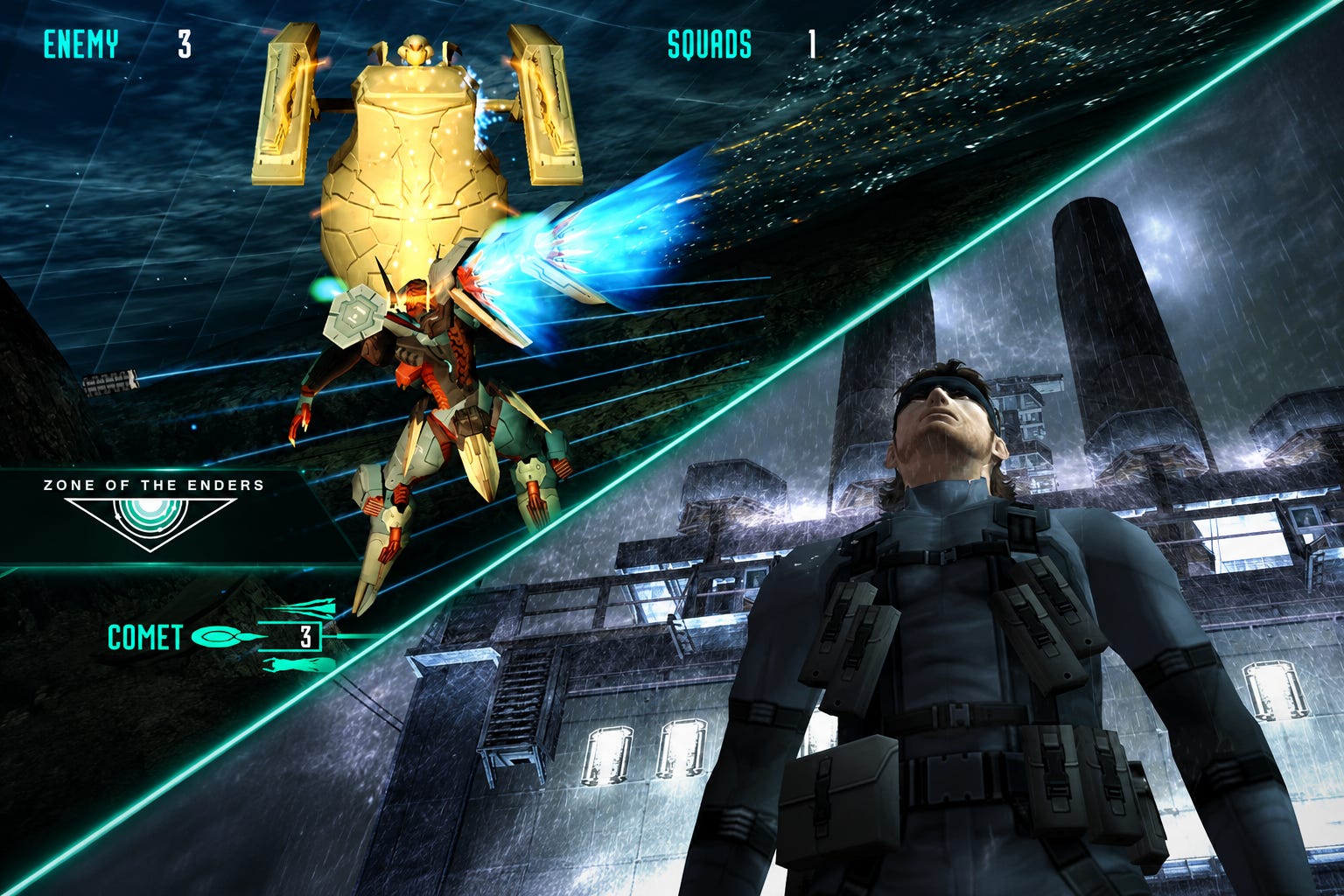
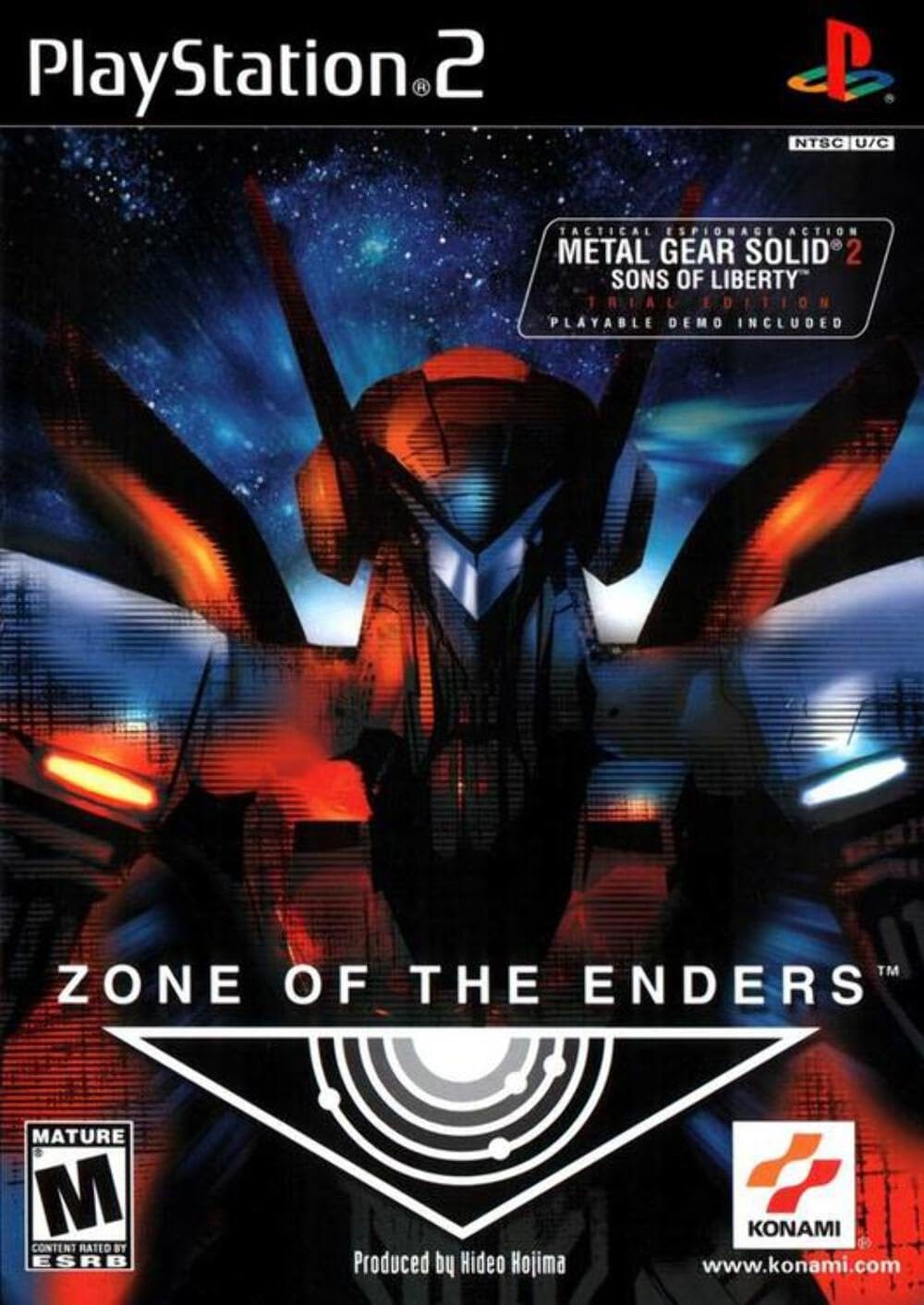
In March 2001, Konami put out a mech action game called Zone of the Enders. It was produced by my beloved, Hideo Kojima, and had mechs designed by Yoji Shinkawa straight off the back of Metal Gear Solid.
That’s some proper pedigree for a game that almost nobody bought for itself, erm, including me.
C’mon. Maybe someone will surprise me in the comment section, but we all bought ZOE because the box contained a playable demo of Metal Gear Solid 2: Sons of Liberty, a game not due out until that autumn.
Pardon my French, but this was a pretty big flipping deal.
And because of this pairing, sales figures for Zone of the Enders were always slightly misleading, since a large number of buyers just wanted early hands on the sequel everyone was waiting for.
Even Penny Arcade clocked it at the time, noting drily that the MGS2 demo was coming to shops soon and it happened to come with “some other game”, which Konami were being awfully generous about.
It’s a strange thing to build a launch strategy around, isn’t it?
But it tells you something true about the PS2’s first couple of years, which is that publishers were willing to gamble a full-price release as a delivery mechanism for hype, and trust that the game itself might find its footing along the way.
Zone of the Enders mostly didn’t.
Played today it’s a game of pure contradiction, gorgeous mech combat wrapped around fetch quests with no map markers, a script that swings between genuinely interesting and full anime whinge.
Leo Stenbuck, your accidental pilot, refuses to kill anyone even when the plot repeatedly hands him good reason to, and the game doesn’t hide the fact this makes him insufferable, it just never really finds a way to use that against him.
The AI onboard the mech, ADA, built with an explicit expiry date, is the one part I do think works, because it doesn’t try so hard. But what redeems the whole exercise, in hindsight, is the sequel, and has made me a fan.
The 2nd Runner, out in 2003 with a new director in Shuyo Murata, kept Jehuty and ditched almost everything else that didn't work. Faster, meaner, better controls, and an opening theme called Beyond the Bounds that remains timeless in its beauty.
It was composed by Maki Kirioka and sung by Maki Kimura, with non-English lyrics built on the sound of Finnish. But as for the game, critics called it, more or less, what the original should have been, and I agree.
But let’s zoom out, because I think there’s an interesting pattern here that shows up across the PS2's back catalog if you go looking. Publishers in that window backed things with no obvious commercial shape and let them exist anyway.
A mech game riding shotgun to the most anticipated sequel in the industry? Sure, why not. A minimalist puzzle game about a boy and a girl that Sony genuinely didn't know how to market? A found-footage horror game so strange it never even made it to American shores?
Zone of the Enders is the clumsy first draft of that instinct. It got made because somebody at Konami believed a demo disc could carry a full game to market, and against the odds, it more or less worked, just not for the reasons anyone selling it expected.
Nowadays, you’d almost certainly struggle to greenlight that pitch. Which is why I wanted to share this today.
A few years back, this era inspired me to make a concept album of my own—808s and Polygon Breaks. Track four, Orbital Frame, is a direct nod to Jehuty and everything above.
No posts
Comments
Nothing yet. Say the first thing.
Sign in to join the conversation.