
A few weeks ago we published footage from inside a pheasant hatchery, showing workers ‘sorting’ very young chicks and dropping them onto a moving conveyor belt - treated, as we put it, as “just one more item to be sorted, moved, processed.”
Readers probably hoped that was the worst of it. It wasn’t. What follows is an account of what happens to chicks once they are ‘sold on’ to another farm, and it’s just as heartbreaking…
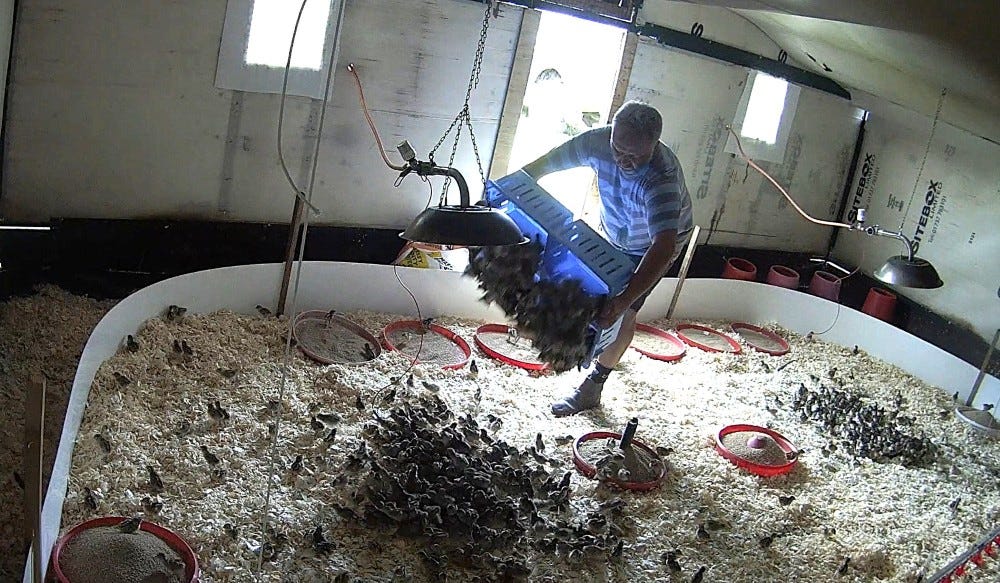
The investigations team placed a camera inside a rearing facility on a different farm and left it for two days. It was pointed at what amounted to a ‘ring’ of sawdust and heat lamps inside a dark shed, and it clearly captured the moment when chicks are ‘introduced’ to their new home…
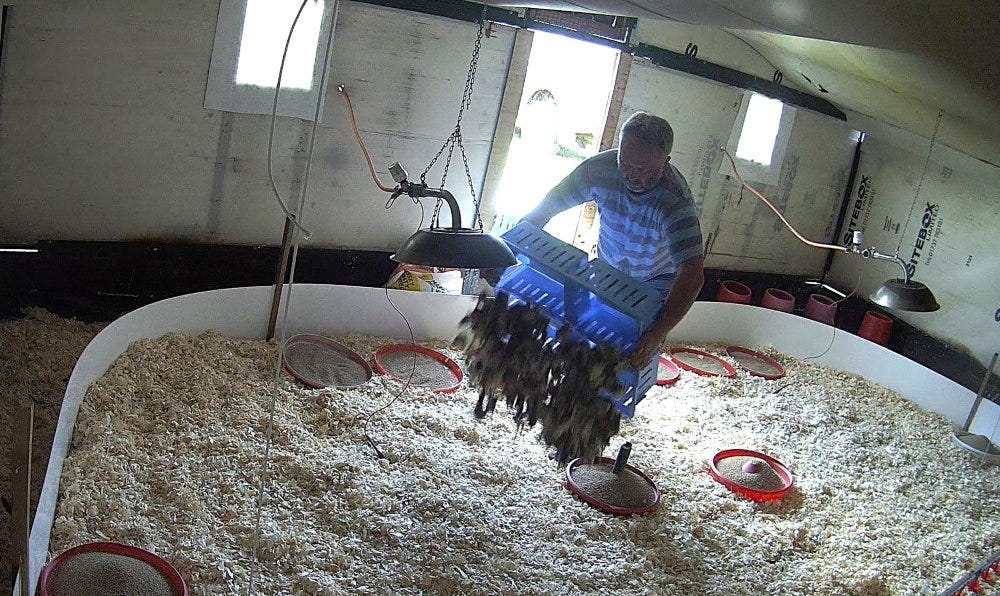
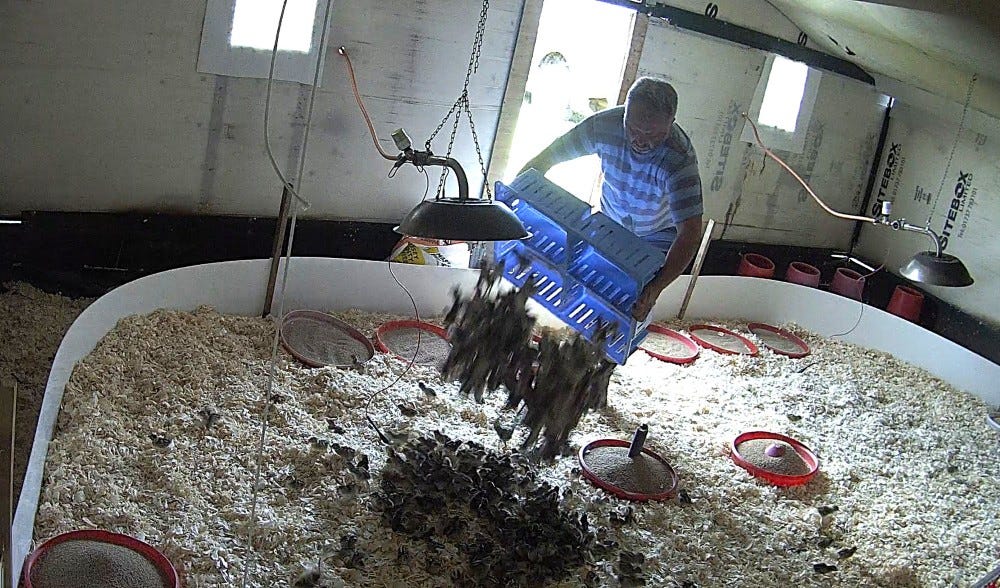
A worker carries plastic rearing trays into the shed, walks into the centre of the ‘ring’, and simply tips the tray, upside down, letting dozens of chicks fall from a height onto the sawdust below. They land in a pile, scrambling over one another, wings flapping uselessly, before slowly finding their feet and scattering across the floor in search of somewhere - anywhere - safe.
He repeats this several times. After a few minutes, presumably because the floor of the shed is now so littered with chicks frantically running around and he wants to avoid squashing the ‘profits’ with his metaphorical size twelve boots, the worker simply stands by the door and scoops up handfuls of chicks from a tray which he tosses away like he’s bailing water from a boat.
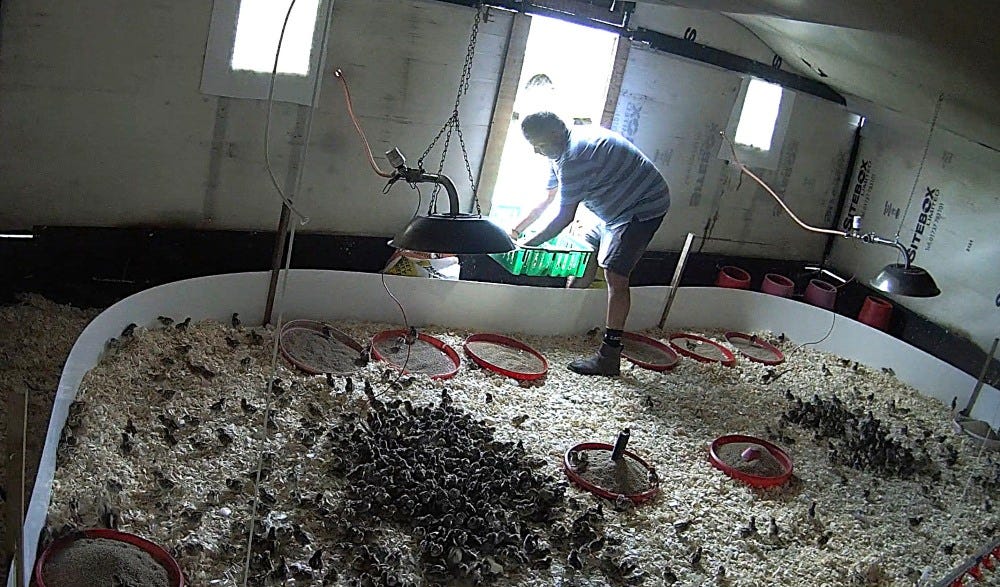
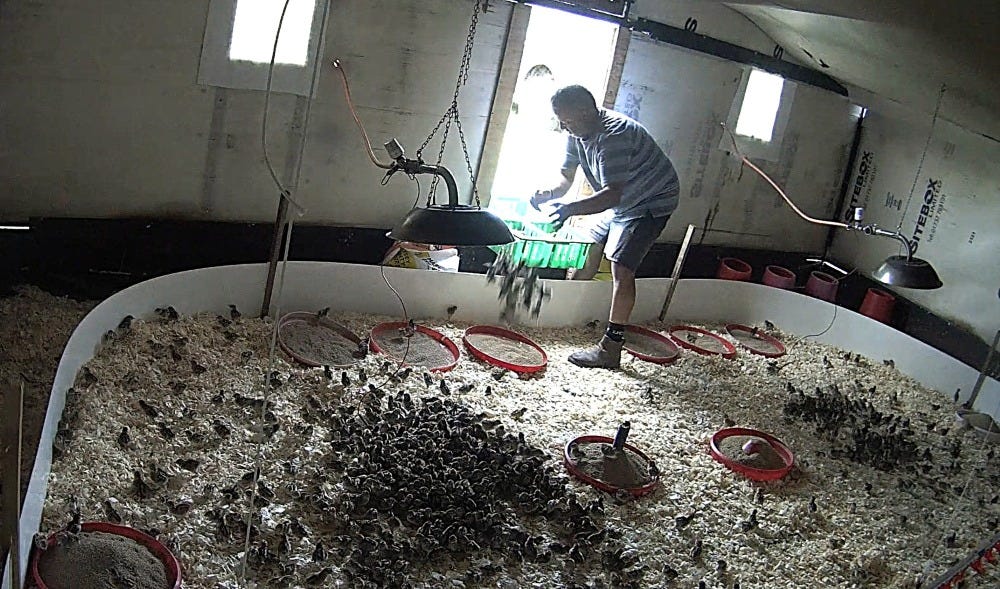
This is, to use a metaphor the industry might recognise, decanting ‘stock’ from a delivery crate as quickly as possible. Everything happens (as it always seems to happen on farms like these) at speed, almost casually, the way you might tip a crate of potatoes onto a shop floor.
In a later clip, the camera filmed the same worker picking up the corpses of chicks that hadn’t survived the fall or the impact of bodies landing on them…
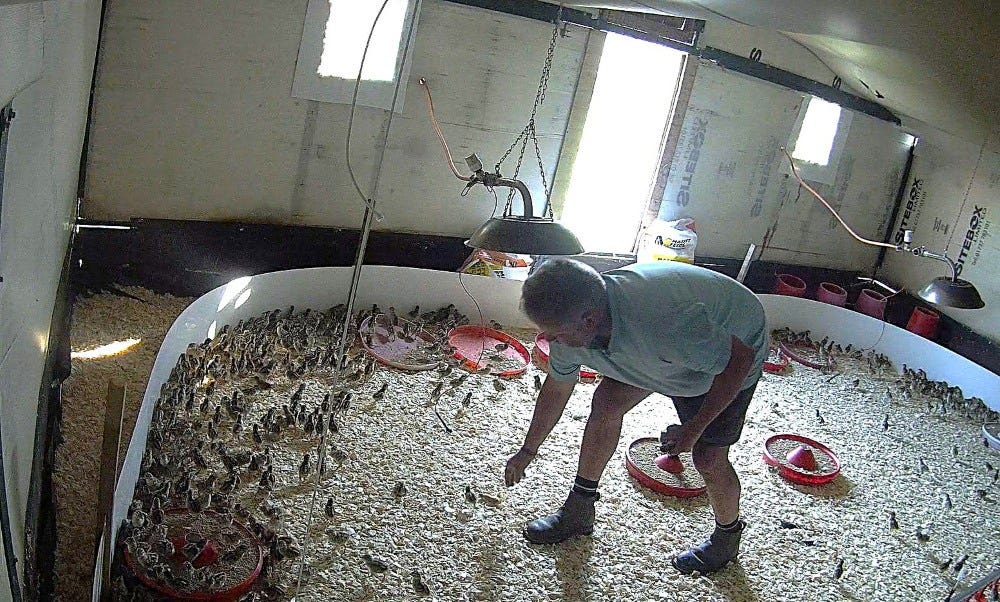
It might be fine to handle vegetables like this. It’s not okay to handle fragile, very young sentient chicks like this under any circumstances…
We’re deliberately publishing this just after the hatchery footage. Different farms, different workers, separate visits - but the same underlying story.
The shooting industry will dismiss a single clip as one bad moment, caught on one bad day, by one careless individual. The ‘rotten apple’ defence gets harder to sustain when the mishandling appears to be routine, recorded across farm after farm.
As a reminder, let us state once again what the industry’s own rulebook actually requires.
The rearing of birds for the gun in England is governed by the Code of Practice for the Welfare of Gamebirds Reared for Sporting Purposes, issued by Defra under the Animal Welfare Act 2006. It applies to every bird bred and reared for release to be shot, from the moment they hatch until they leave the release pen. It covers exactly the kind of handling shown in this clip.
Clause 3.1 of the Code states plainly that birds “should not be handled more than is strictly necessary,” because as non-domesticated species they “may be more prone to stress than domesticated farmed poultry,” and that “where handling proves necessary this should be done in an appropriate manner.”
These aren’t throwaway lines. They exist because Defra, in consultation with the shooting industry itself, recognised that rearing happens at a pace where corners get cut and animals get hurt - and wrote a rule specifically to stop that happening.
A day-old pheasant chick, weighing perhaps 30 to 40 grams, with bones that haven’t hardened and legs not yet reliably load-bearing, is about as vulnerable to a fall as an animal gets. Tipping dozens of them out of a tray from height on top of each other is not “handling in an appropriate manner” by any reading of that phrase. It’s the opposite of what the Code says should happen - and it’s happening here on camera, not as a rumour or an allegation, but as recorded fact.
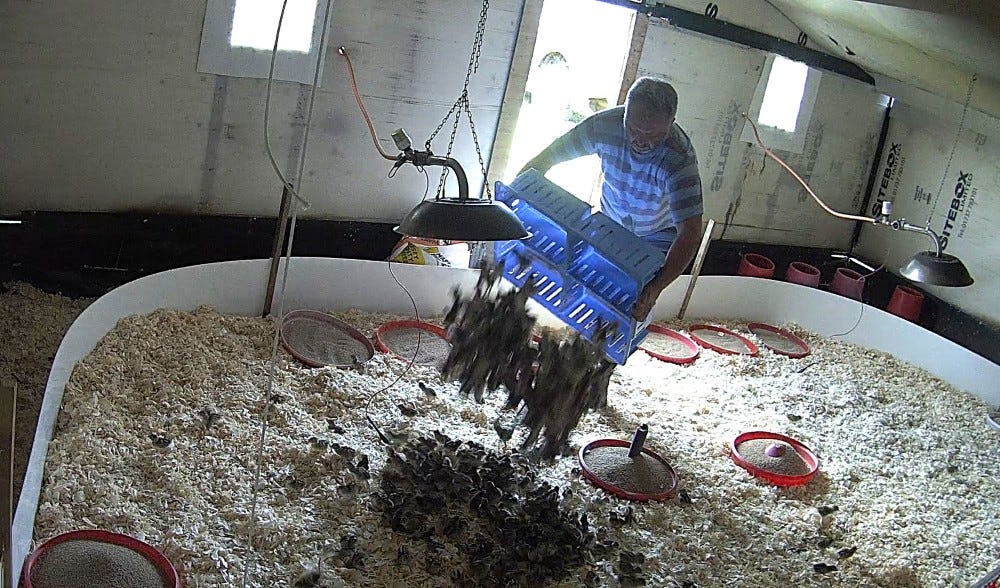
As we say above, the industry’s response to this will be the same as always: this is one bad worker, at one farm, on one day - not representative, not systemic, nothing to see here.
But look at what we’ve actually published so far. Adult breeding birds mishandled and chicks manhandled along a mechanical sorting line on one farm. Eggs harvested at industrial scale and dumped unlawfully on another. And now chicks tipped bodily out of trays on a third farm entirely, filmed on a completely separate visit.
Our investigative team are highly skilled, but they didn’t know in advance what they might film. Nobody handed them a shortlist of “bad farms.” If potential breaches of the industry’s own Code were rare, freak events - isolated to a handful of careless individuals - then finding them again and again, at farm after farm, on ordinary working days, would be a statistical near-impossibility.
Recording this footage isn’t down to chance - and we have plenty more to reveal yet…
This footage, this casual lack of care, isn’t being captured because our cameras have been extraordinarily lucky in where they ended up. It’s because this is what the system produces, routinely, when nobody expects to be watched.
That’s the point we keep coming back to, because it’s the one that actually matters: this investigation is not about ‘catching’ individual workers. It’s about a system. It’s what an industry does to the animals passing through it when those animals exist, from day one, only as ‘stock’ - units to be hatched, sorted, tipped, released and ultimately shot for entertainment.
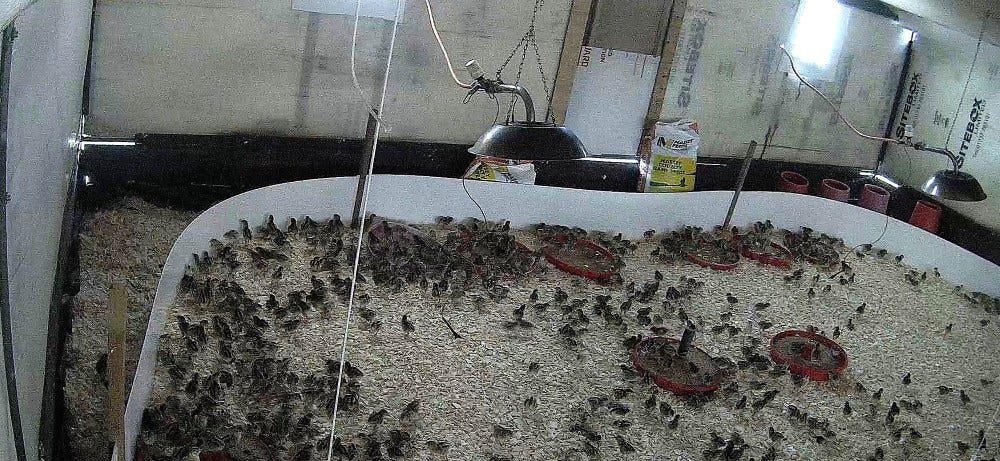
Millions of pheasant chicks go through hatcheries and rearing sheds like these every year. This will be how a great many of them start their short lives. The industry might insist that footage like this is unrepresentative, but it’s worth asking how the system it represents keeps generating more of it, farm after farm, whenever anyone happens to be filming.
As a final thought, just imagine for a moment what the reaction would be if a rescue centre or a member of the public were filmed treating just one vulnerable chick like this. All hell would break loose. Social media would demand action. But birds bred for the gun? Outside of a few of us trying to raise awareness, there will be deflection, denial, dismissal. A collective shrug. ‘Yeah, well, it’s pheasants; that’s just what happens…’
Even MPs from all sides of the House seem willing to stand alongside this appalling industry, listening to its economic arguments while apparently trusting it to stick to ‘guidelines’ that are tossed aside - like day-old chicks - whenever it thinks no one is watching.
We have said it many times, but this is an industry that can’t simply be nudged into caring with a few polite conversations and ‘gentlemen’s agreements’. It is far too big, far too arrogant, and its practices run far too deep. If we genuinely care about animals then the only response is that it must be shut down. For good.
Video and images recorded by our undercover investigator in 2025.
We are working to END BIRD SHOOTING. This suffering has to stop. Please share this article. Share our socials. Follow us for updates.
Over the coming months our campaign will look at the shooting industry at every level. We will highlight the suppliers — the farms, hatcheries, importers and breeders producing tens of millions of birds under conditions that would provoke public outcry if applied to any other animal. We will expose the providers — the estates and syndicates that take those factory-farmed birds and sell the experience of killing them as leisure. And we will look at the clients — the paying guns who are fully aware of the wildlife crime, the trapping of native predators, and the mass suffering involved, and who have decided that none of it is reason enough to stay away.
This industry survives because suppliers supply, providers provide, and clients pay. We intend to examine them all.
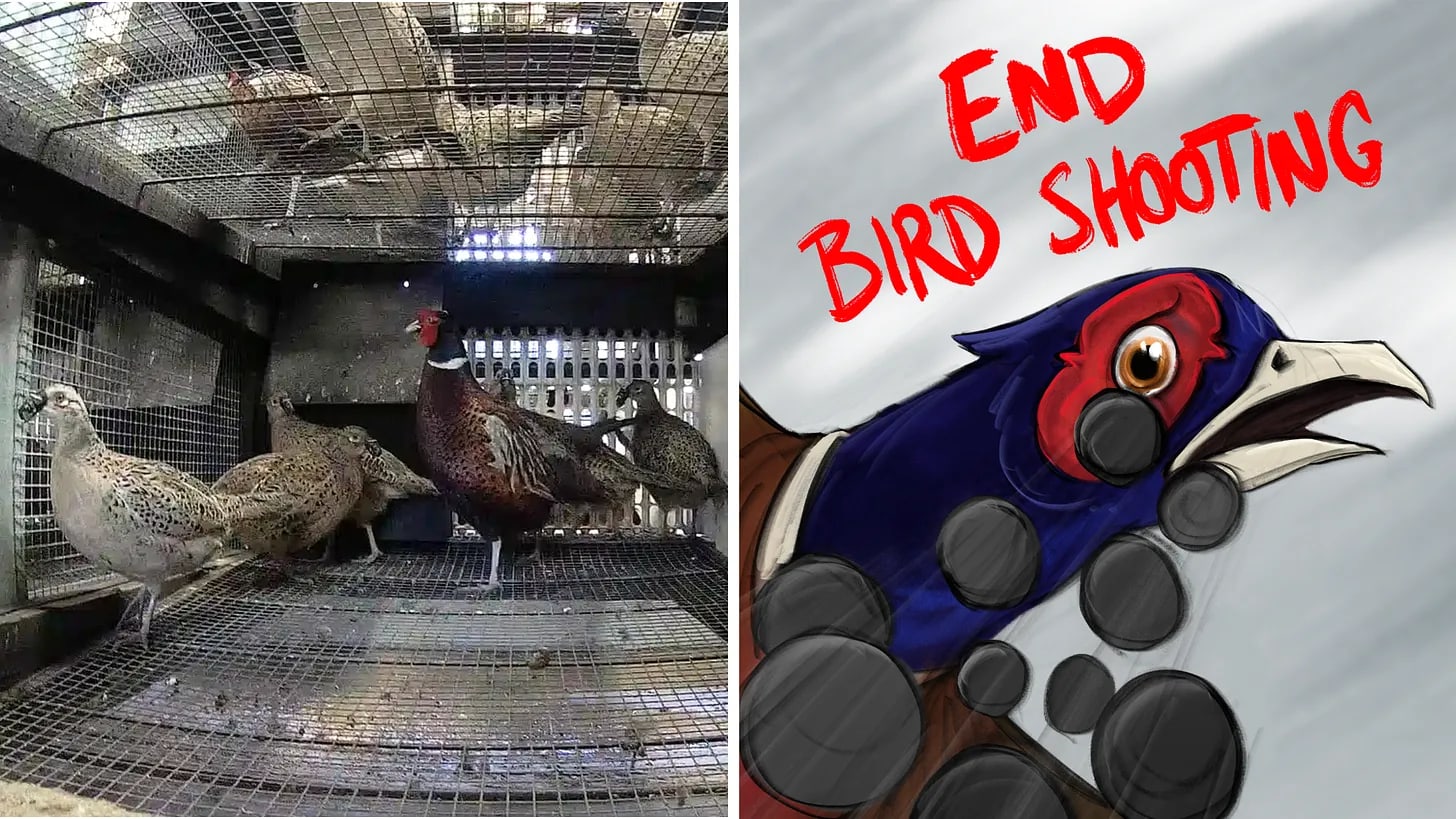
We are at the beginning of something. Months of undercover work. Hundreds of hours of footage. Farms across the UK exposed. But we are only just getting started.
Many of you have already become a Game Changer, standing with us as we take this fight forward, week by week, piece by piece, until the public, the media and the politicians can no longer look away. We are extremely grateful
We are reaching a larger audience all the time, though, many of whom won’t know that Game Changers help us fund investigations, take on staff, and make us more effective. So we are going to repeat the call here - this is just the beginning, please be a part of it.
Comments
Nothing yet. Say the first thing.
Sign in to join the conversation.