
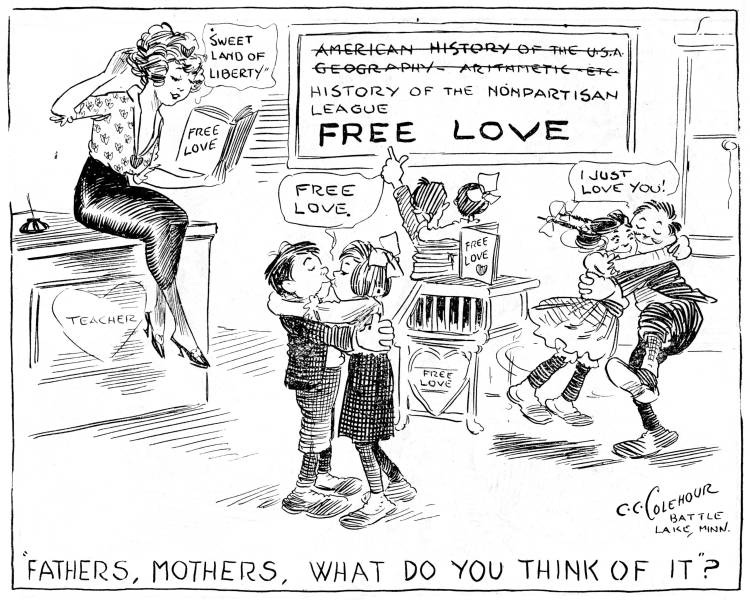
Are our public libraries indoctrinating children in socialism and sexual depravity?! This question might sound at home at a Florida school board meeting today, but it was also in the air in North Dakota in 1919.
At issue were a handful of books that a disgruntled state legislator cherry-picked and misrepresented in the statehouse. The scandal and its aftermath ultimately weakened the pro-farmer Nonpartisan League, which controlled state government at the time, and tarnished its image among voters.
The trouble began when the NPL-backed governor, Lynn Frazier, called for creating a new board to oversee state institutions, including libraries, schools and prisons. The NPL had recently taken control of both the state House and Senate. It was working aggressively to enact its platform and to expel remnants of the machine politics that it had replaced. As the indispensable exhibit from the North Dakota State Library explains:
To some, like the NPL, the creation of the board was viewed as a way for the state to increase efficiency and save money by consolidation. However, others, like the NPL's opposition, viewed the board as a political power grab.
An outside consultant brought in to review the library’s collections recommended some additions to diversify its holdings. These included National Geographic and The Wall Street Journal as well as books on the International Workers of the World (The Wobblies), anarchy, socialism and “various nonconformist groups.” (The list of books is here. Among the most controversial was Love and Marriage by Ellen Key, which includes a critique of traditional marriage as a patriarchal institution.)
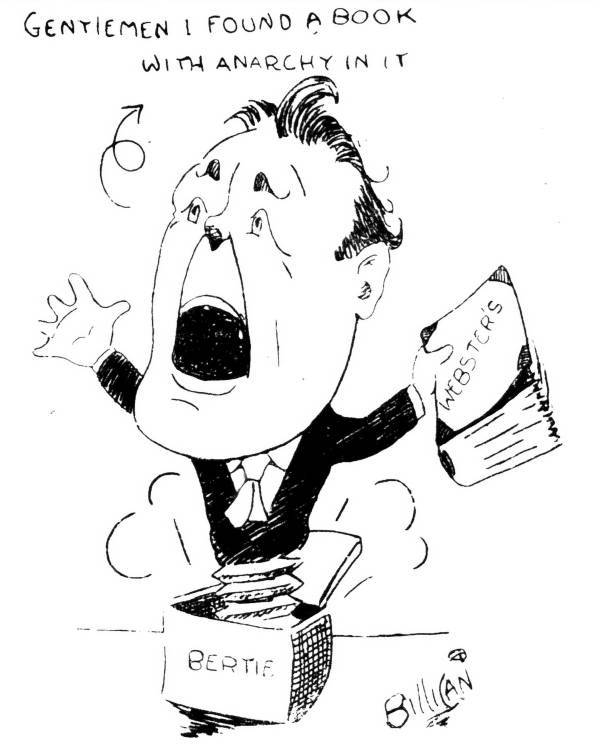
An anti-NPL legislator, Olger Burtness, got wind of the books and decided to investigate. He went to the library, checked out a few books, and used them in an inflammatory speech before the House. He accused the books of being anti-marriage and pro-anarchy, among other things, and said they were being put into schools, leading to fun headlines like this one.
Whipped up by the media, concerned citizens reacted with outrage! “We gave our boys to save Christian civilization and will not sit idly by and have our own state government assassinate what they died to save,” wrote a group of American War Mothers in a telegram. (“Gave our boys” refers to soldiers who served in World War I.)
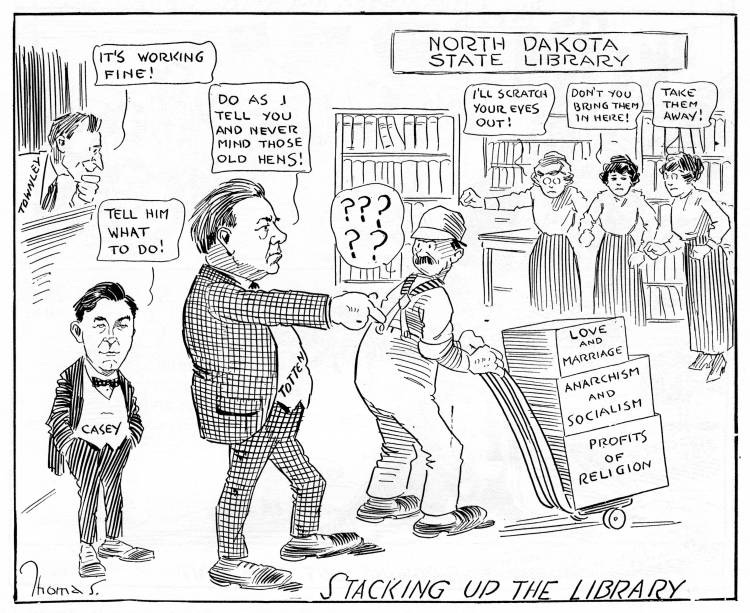
The House formed a committee to investigate, and its proceedings sound like a small-time version of the Army-McCarthy showdown.1 However, the state librarian testified that some of the books Burtness chose had been in the library for years, while others, like Ellen Key’s, were marked for adults only and not for circulation. As one NPL official asked rhetorically, “Do you fear the injury that books may do to intelligent people who read them?"
The committee’s final report, drafted by its NPL majority, exonerated the library, but the PR damage had been done. And the hearings did expose some NPL improprieties. Its politicians had bent or broken rules in their haste to consolidate authority. Burtness, meanwhile, went right back to the House floor and read from the books again as if the facts that countered his claims were never presented. (Sound familiar?) Within a year, he would be elected to Congress, defeating the NPL candidate.
With hindsight, Walter Quigley saw this episode as evidence of the corruption brewing in the NPL. “In politics, power creates ambition for more power,” he said.
Writing in 1940, Quigley had turned against a younger version of himself, which had wholeheartedly supported the populist aims of the NPL. In his 1940 account, he alleged that the library officials were Socialists and said that the books were circulated to schools — claims that were made but discredited in 1919.
But he saw the NPL’s changes to state government as no better than the regime that it displaced. “The cumulative effect of this new [NPL] legislation was to create one of the most arrogant and powerful political state machines in the nation's history,” he wrote. “… [T]he cause of the League’s demise was the growing lust for political and economic power which overcame these Socialist leaders, after they secured control in North Dakota.”2
Liked this post? Why not:
State Rep. J.F.T. “Jefty” O’Connor was one of the key figures working against the Nonpartisan League’s power grab in the library system and across state government. He went on to larger roles in Democratic politics. In 1933, as Comptroller of the U.S. Currency, he helped restore the banking system and established the FDIC. In 1940, Franklin Roosevelt appointed him a federal judge. Curiously, Walter Quigley knew O’Connor well from the University of North Dakota law school. In 1910, O’Connor organized the Phi Alpha Delta law fraternity at the university, and Quigley was its first secretary. Somehow, a scrapbook of telegrams congratulating O’Connor on his appointment as comptroller came into Quigley’s possession, and it has now come into mine. O’Connor apparently did not marry and left no family behind.
Later, North Dakota made national book-ban headlines in 1973, when a local school board in Drake not only banned but burned copies of Kurt Vonnegut’s Slaugherhouse-Five. Vonnegut’s response is worth reading.
Coincidentally, just today I learned that North Dakota was a site of Japanese-American and German-American internment during World War II. I grew up in Minnesota, but I don’t think that internment was ever a part of my history curriculum.
Comments
Nothing yet. Say the first thing.
Sign in to join the conversation.