
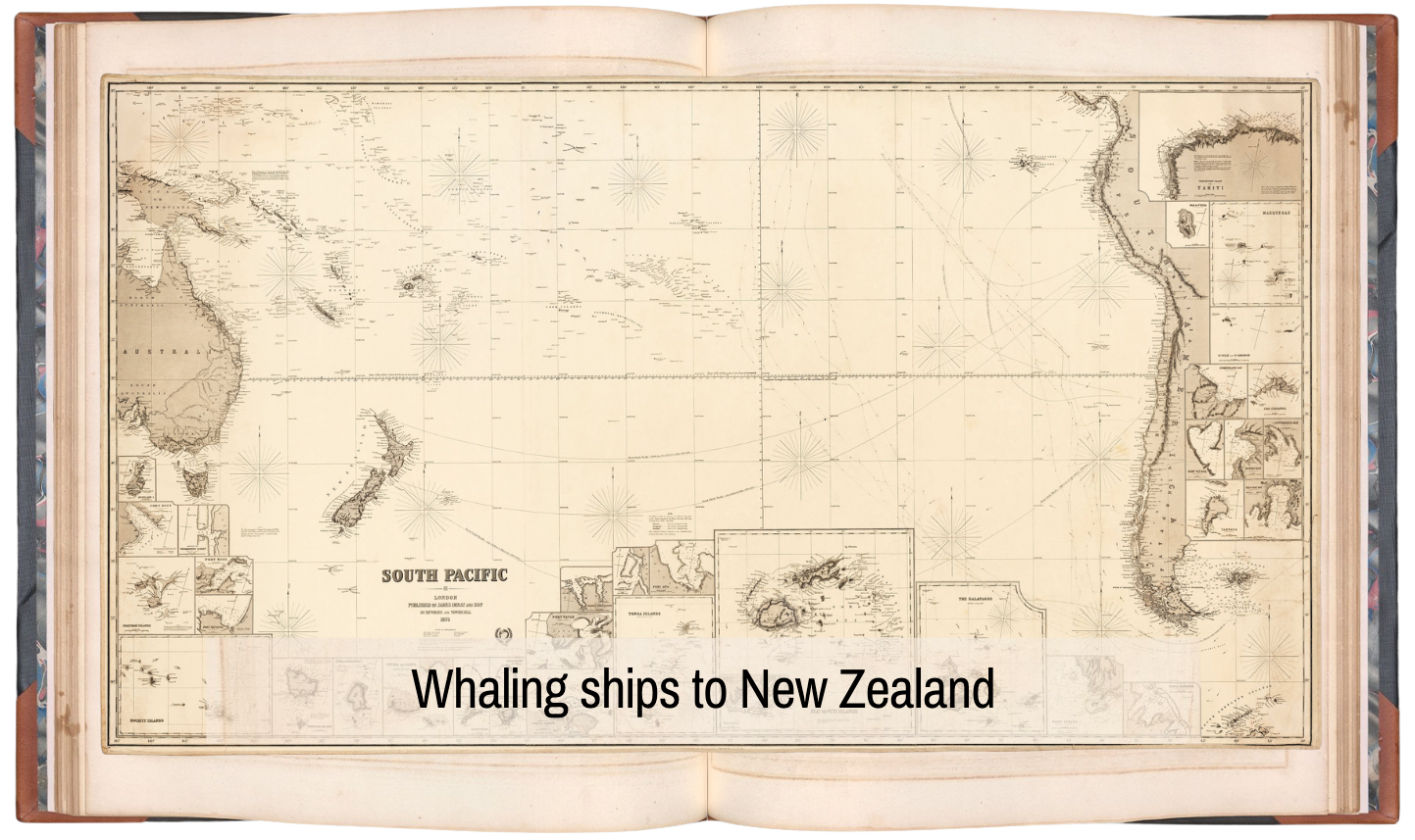
I have ancestors who travelled to New Zealand on whaling ships and either ‘spontaneously jumped ship’ or planned to remain with family members. But firstly, let us start at the beginning…
The history of whaling
Once upon a time, whales were abundant in the seas around New Zealand as they had migration patterns that ‘flow’ around these islands. Whaling ships would target:
1. Sperm whales for high-quality oil to light city lamps and ambergris as an ingredient in perfume
2. Baleen whales for the flexible bony plates from their mouths to make stiffeners for corsets and umbrellas
3. Whale carcasses for pet food produced in England
Whaling became illegal in New Zealand in 1978 but we must recognise that it is part of our history. Whaling ships came from England via Australia, France, and the Americas. Sydney was a shipping hub for this area of the Pacific and ships transporting prisoners would take back a cargo of products from this industry.
The first whaling ship from America came to the New Zealand seas in 1791 and I have also found a reference to French whaling ships becoming involved with the trade. There was ship and shore-based whaling that created different living conditions for the individual.
What would I like to explore/learn more about?
The ports that the ships came from – England, Americas, Australia, France or elsewhere
Life on board the ships
Life on the shore-based communities
Any stories about our ancestors who migrated on these ships
How can you become involved?
Post, post and post. Any ideas, links, recommended books, ancestral stories! Some of you may live in the ports that have whaling ship history and have some local museums that you can recommend we contact.
What will I do?
I will continue to research my ancestors that emigrated to New Zealand along this path
Source books that I can read to add social context to their lives
Read and digest your ideas
Post about my findings
I am excited to see what you can add and hope you can join me on this … migration!.
Stay tuned

Comments
Nothing yet. Say the first thing.
Sign in to join the conversation.