
Hello everyone! Today I want to talk about something important. I want to explain how big countries like the United States try to stay powerful. This is called geopolitics. It sounds like a big word, but it’s really about how countries interact with each other.
Think of it like this: imagine your school playground. Some kids are bigger and stronger. They try to control the games. They make rules that help them stay in charge. Countries do the same thing, but on a much bigger scale.
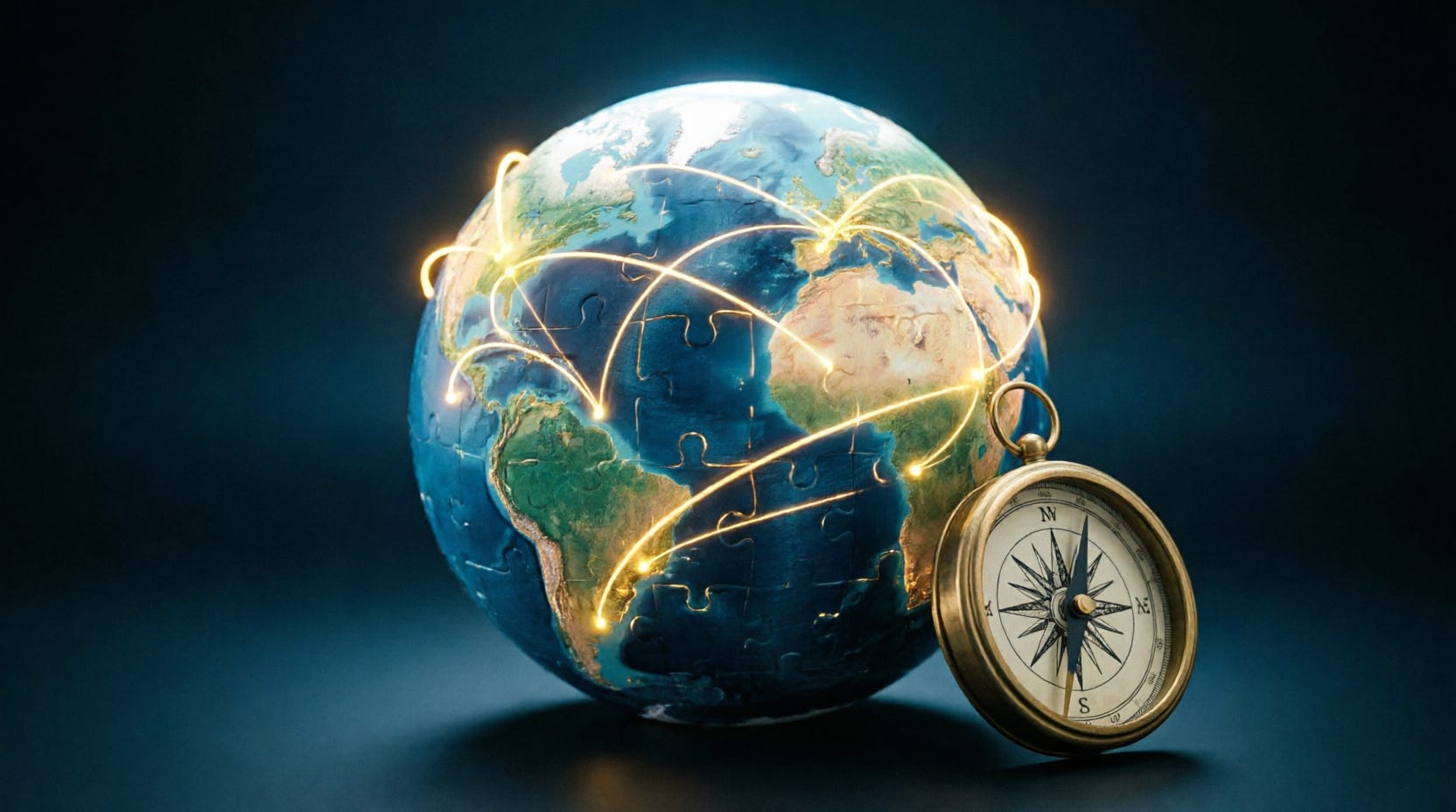
To understand today, we need to look at the past. About 3,200 years ago, something terrible happened. We call it the “Bronze Age Collapse.” Back then, many civilizations were connected through trade. They depended on each other.
Then, everything fell apart. When one civilization collapsed, it pulled down the others. It was like dominoes falling.
Today, we face a similar situation. The United States is connected to every part of the world. If America falls, the whole world feels it. This is different from World War II. Back then, Europe and Asia were destroyed, but America was safe. America could help rebuild the world.
Now, if something bad happens to America, everyone suffers. For example, there’s a narrow water passage called the Strait of Hormuz. It’s in the Middle East. If this passage closes, many countries cannot get oil. Africa would face food shortages. East Asia would have to shut down factories. America would see prices go up. Poor countries would not be able to feed their people.
This shows how connected we all are.
The United States has a strategy to stay powerful. It has three main parts. Let me explain each one.
The first part is called the Monroe Doctrine. It’s an old idea, but America still uses it. The rule is simple: America wants to be the boss of North and South America. No other big country should have power here.
America wants to keep Russia and China away from the Americas. If China wants to trade with Brazil or Argentina, America makes it difficult and expensive. China needs food and energy from these places, so China has to play by America’s rules.
Right now, America is putting pressure on countries like Venezuela and Cuba. America might also try to control Mexico and Colombia. They use the excuse of fighting drug cartels, but the real goal is to take control.
This will make people in Latin America very angry. They will fight back. America didn’t do this in the past because it was too difficult. But now, America’s economy is struggling. So America is trying to take resources from its neighbors.
The second part is about controlling the world’s oceans. America has the strongest navy in the world. America uses this power to control important water passages.
These passages include:
The Strait of Malacca (near Asia)
The Strait of Gibraltar (near Europe)
The Panama Canal (in Central America)
The Arctic Circle
The Cape of Good Hope (near Africa)
The Strait of Hormuz (in the Middle East)
Even though Iran seems to control the Strait of Hormuz, America really decides who can pass through. America controls trade around the world.
The third part is surprising. America doesn’t want to win wars quickly. America wants wars to continue for a long time.
America wants conflicts in three places:
Between NATO and Russia in Ukraine
Between Japan and China over Taiwan
Between Israel and Iran in the Middle East
Why would America want this? Because when there are wars, America can sell weapons, food, and energy to all sides. America can also lend money. This helps America deal with its huge debt, over $40 trillion!
America doesn’t need to win these wars. America just needs them to continue. That’s how America stays powerful and makes money.
Recently, America told Ukraine it can make Patriot missiles. But this isn’t really about Ukraine. It’s about Europe making these missiles. If Russia attacks factories in Germany or Poland, it would start a huge war with NATO. Russia doesn’t want that. So Russia is preparing for a long war.
Europe is making a big mistake. The leaders in Brussels (where the European Union is based) live in a bubble. They don’t listen to regular people. They only care about what their friends think.
These leaders believe:
Russia will lose the war in Ukraine very soon
Putin will be overthrown by his own army
Russia’s economy will collapse any day
They think that once Russia loses, Europe will be rich. Europe will take Ukraine’s resources and make Russia pay $10 trillion. Then Europe can fix its pension problems and help poor people.
This is wishful thinking. It’s not real.
What’s actually happening is Europe is preparing for total war. This means:
Young men will be forced to join the army
All money will go to making weapons
Europe will borrow huge amounts of money
People will be told to hate Russia
This is how empires fall. They keep digging a deeper hole. First, they send weapons. Then special forces. Then mercenaries. Then volunteers. Then they force young men to fight.
This is what happened in World War I. It will happen again.
When you send young men to die in war, eventually they will refuse. They will rebel. There will be civil war in Europe. That’s how this ends.
America wants to attack Iran. But before that can happen, America needs to deal with Iran’s allies. These are called proxy groups. The main ones are:
Hezbollah in Lebanon
Shia militias in Iraq
Houthis in Yemen
America is working to weaken all three groups. Here’s how:
In Lebanon: America is trying to create problems between Iran and Hezbollah. America is being nice to Syria. Syria might attack Hezbollah from the north while Israel attacks from the south. The Lebanese government might also turn against Hezbollah. Hezbollah is in big trouble.
In Iraq: The prime minister recently cracked down on corrupt leaders. Many people think he’s removing Shia militia leaders. America wants to use Iraq as a base to attack Iran. America is arming Kurdish fighters to cross into northwestern Iran.
In Yemen: Saudi Arabia is arming tribal groups to fight the Houthis. Yemen has many different ethnic groups. Saudi Arabia wants to start a civil war. They’ve been fighting in Yemen for ten years already.
Once these three groups are weak, America will attack Iran directly. Iran has limited options because:
Syria used to help supply Hezbollah, but now Syria is controlled by America and Israel
The Houthis are too far away
The Shia militias are too weak
This is a very dangerous time for Iran.
Here are the most important lessons:
Everything is connected. When one part of the world has problems, it affects everyone.
Wars are often about money, not winning. Powerful people make money from wars. They don’t always want wars to end.
Empires follow patterns. They rise, they exploit weaker countries, they overextend themselves, and they fall.
Don’t believe everything you hear. Different countries tell different stories. You need to check multiple sources. Ask: Who benefits from this story?
Real people suffer. Behind all these strategies are regular people, children, families, workers, who just want to live peaceful lives.
Think for yourself. Don’t just accept what authority figures tell you. Ask questions. Look for evidence. Form your own opinions.
Think long-term. These strategies unfold over decades, not days or weeks. Be patient. Watch for patterns.
Here are some questions to think about:
How is today’s world similar to the Bronze Age collapse? What can we learn from history?
Is America’s three-part strategy smart or dangerous? Why?
Is it right for countries to start wars to make money? What are the moral problems with this?
How do wars affect ordinary people in places like Ukraine, Iran, or Venezuela?
What would a better world look like? How can countries work together instead of fighting?
Research Project: Compare the old Monroe Doctrine (from 1823) with how America acts today. How has it changed?
Economic Analysis: What would happen if the Strait of Hormuz closed for 30 days? Research which countries would be affected and how.
Media Literacy: Find the same news story from Western, Chinese, Russian, and Iranian sources. How are they different? Which one seems most fair?
History Project: Research other empires that used wars to manage debt (like Rome or Britain). What happened to them?
If you want to learn more, here are some good books:
“History of the Peloponnesian War” by Thucydides - This is the best book on strategy ever written. It’s about a war between Athens and Sparta 2,500 years ago. But it’s still relevant today.
News from different countries - Don’t just read one source. Read news from America, China, Russia, and Iran. Compare them.
Books on game theory - This helps you understand how countries make decisions.
Understanding the world is not easy. But it’s important. We need to:
Look at history to understand patterns
Understand how money and resources drive decisions
Learn about different strategies countries use
Remember that real people suffer from these conflicts
Listen to different perspectives from around the world
As future leaders, thinkers, and citizens, you need to:
Analyze complex situations
Question what you’re told
Understand how the world is connected
Work for peace and justice
The goal of education is not just to understand the world as it is, but to imagine how it could be better.
No posts
Comments
Nothing yet. Say the first thing.
Sign in to join the conversation.