
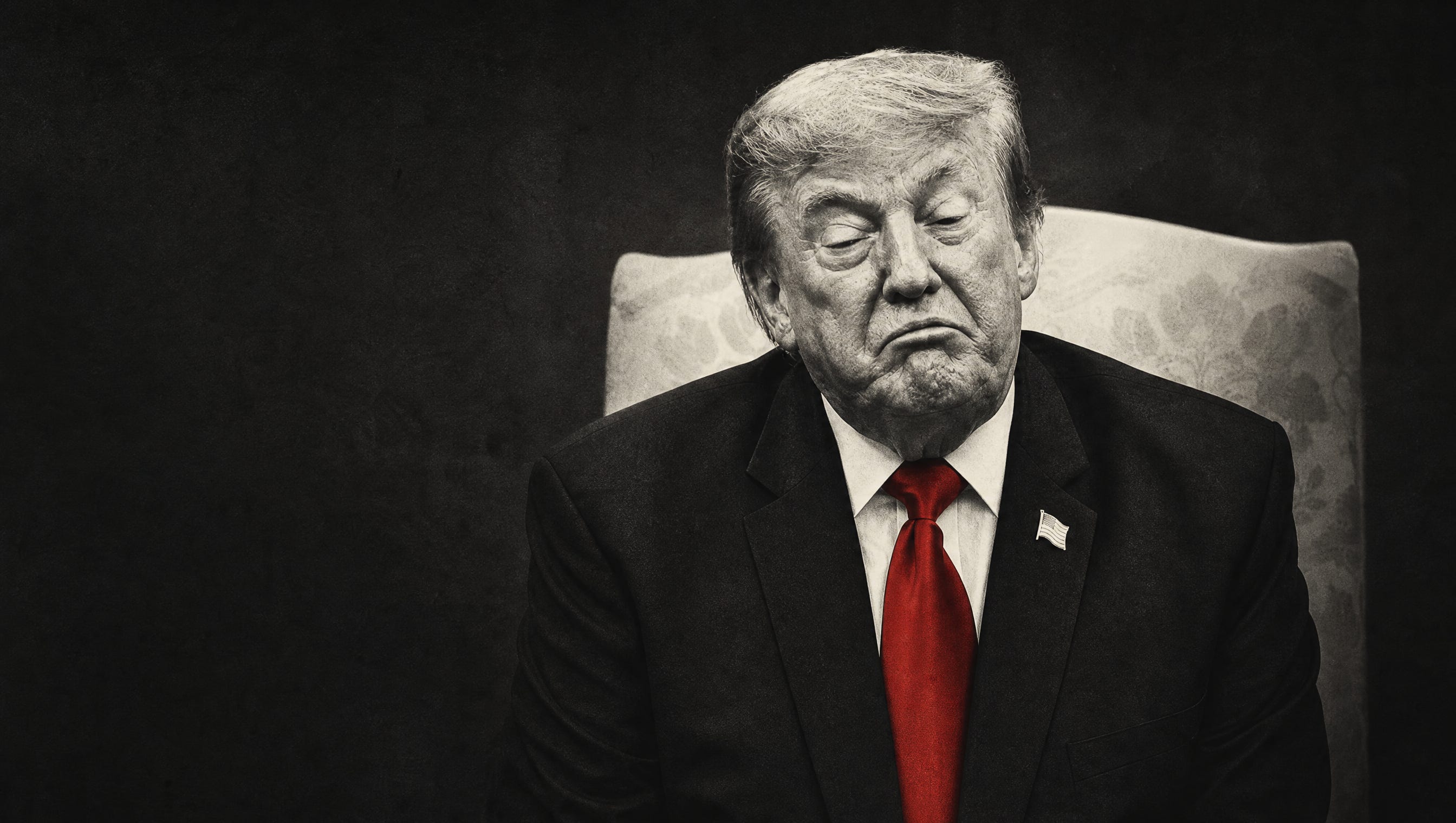
Washington extended its strike radius to the Caspian coast this week while simultaneously confirming back-channel talks with Tehran for the first time in two weeks. Those two facts are not in tension. They are the same sentence, read in two directions. The first pause after two weeks of nightly strikes arrived not because the pressure worked, but because something in the architecture of the campaign had quietly broken. It broke on July 22. It was not a battlefield event.
There is a concept in game theory called the commitment problem: the condition in which an actor cannot credibly promise future restraint — not because they are dishonest, but because the structure of the game makes the promise unverifiable, and both sides know it. When a commitment problem is in play, escalation and negotiation stop alternating in sequence. They run simultaneously, each undermining the other, until the system freezes at a contested equilibrium that satisfies no one.
Washington walked into one of the cleanest commitment traps in recent strategic history this week — and it built the trap itself.
On July 22, the administration approved a 123 Agreement with Saudi Arabia. A 123 Agreement — named for the section of the US Atomic Energy Act — is the legal frame for any American civilian nuclear cooperation abroad. Its strictest form, the “gold standard,” requires the partner to forswear domestic enrichment and reprocessing; the UAE accepted exactly that in 2009. It is the standard Washington chose not to impose on Riyadh — approving cooperation that leaves the enrichment question open, granting Riyadh the door without specifying what is behind it.
The consequence is immediate and structural. The United States has now established, in writing, that it will extend nuclear partnership to a Gulf state without requiring zero enrichment as a precondition. Whatever Washington says to Tehran from this point forward about enrichment thresholds, breakout timelines, and IAEA access — Tehran’s negotiators read that text too. The demand that Iran halt all enrichment, already the hardest point in any conceivable framework, has been rendered formally asymmetric. Washington is now asking Iran to accept a constraint it just declined to impose on Iran’s primary regional rival.
This is not a diplomatic blunder. It is a commitment trap of Washington’s own construction. The promise that zero enrichment is the non-negotiable price of sanctions relief — the foundational claim of maximum pressure — can no longer be made credibly. The Riyadh deal proves it is negotiable. And once the foundational claim is gone, the strikes have nothing left to convert into.
That is the crack. What follows from it — why the campaign hit its ceiling instead of its floor, why the board freezes rather than resolves, and the two ways it breaks — is the rest of this note.
Comments
Nothing yet. Say the first thing.
Sign in to join the conversation.