
Everything I share here comes directly from proequinegrooms.com. Thanks for being here — your curiosity and care for horses help raise the bar for all of us in the equine community. At ProEquineGrooms.com, I believe every horse owner deserves access to accurate, trustworthy, and practical information about equine care.
Hives, officially called urticaria, are raised bumps on your horse. They typically appear on the head and neck, but some spread over the entire body. These alarming bumps are a sign you need to investigate the cause of urticaria and treat your horse to squash this allergic reaction. Hives can range from mild and non-itchy to severe, super-itchy, or even life-threatening. There is a level of discomfort experienced with urticaria, even in the mildest cases. Some horses may suffer from recurrent urticaria, which means a near-constant barrage of hives.
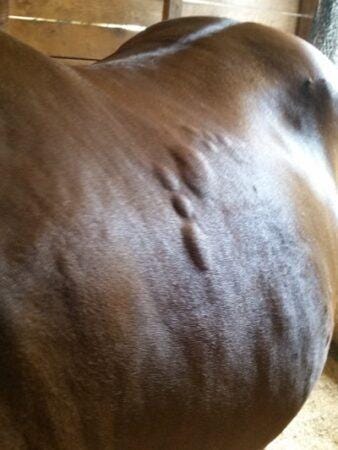
Your horse’s immune system protects your horse from disease invaders, but sometimes the messaging gets confused. Horses may have an overreaction by the immune system to something non-infectious, which creates an allergic reaction. The range of reactions varies from mild itching to anaphylaxis, a dangerous systemic response that inflames the entire body, making breathing difficult, among other things. Anything that triggers a reaction is called an allergen.
The characteristics of hives are a specific cutaneous reaction pattern that can help your vet determine what’s happening in the skin and how to treat it moving forward.
Urticaria can happen anywhere on a horse, from the nose, eyelids, shoulders, withers, flanks, and even under the tail.
Antigens are any substance that the body’s immune system recognizes as a foreign protein, virus, bacteria, toxin, or any other invader.
An allergen is a type of antigen that triggers an allergic response. All allergens are antigens, but not all antigens are allergens.
The first exposure usually doesn’t happen when your horse first encounters an allergen. It could be days, weeks, or years for a reaction to occur. For urticaria, symptoms start in the bloodstream and may occur within 15 minutes or longer, sometimes a day later.
The reaction begins when mast cells in the skin and tissues are triggered. During mast cell degranulation, the mast cells release histamine and other inflammatory mediators like cytokines and leukotrienes. This release of histamine and inflammatory mediators then signal the blood vessels to widen.
As the blood vessels dilate (called angioedema), the blood vessel walls become leaky. As fluid moves from these small vessels, it collects under the skin, and hives are born. The raised areas that you see are called wheals.
Hives are usually not itchy, but that’s not always the case, especially with plant or insect stings. Your horse may be itchy without urticaria, and you may notice excessive scratching or mystery inflammation in the skin that doesn’t look like a hive.
The annoying bumps may have varying diameters, with some looking like dimples. These skin lesions may even open up with scratching, creating sores.
In some cases of urticaria, the hives in horses you see may not be the only ones. Angioedema can also create problems in the digestive tract.
Horses can also have an eczema-like skin condition called atopic dermatitis. This condition is an allergic reaction that includes itching and hives, and may also include hair loss and angry red skin. Sometimes, the area will start to ooze.
Most horses quickly recover from hives, although in rare cases, they can interfere with breathing.
Once a hive starts to appear, it grows for approximately 30 minutes before disappearing after an hour. You may find your horse has waves of urticaria bumps, which appear and disappear all over their body.
The severity of urticaria indicates how extreme the reaction is. Of course, this varies from horse to horse.
If your horse is continuously exposed to the allergen, it could develop hives until the allergen is discovered and removed.
For isolated incidences, most horses recover fully by the next day. More severe cases may continue longer, and any case involving the airway or digestive system needs swift medical attention.
It’s always a good idea to involve your veterinarian if your horse shows up with hives.
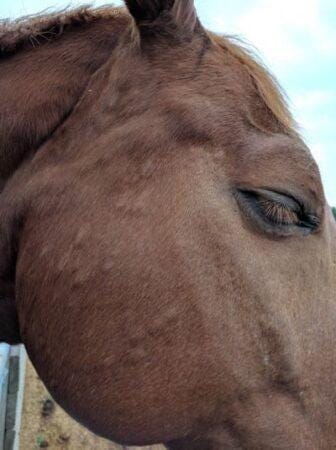
This urticaria is minor and somewhat bothersome for this horse.
Horse hives will return if your horse is continuously exposed to the underlying cause. There are dozens of causes of urticaria, so you’ll spend time ruling out everything your horse eats, touches, rolls in, or is otherwise exposed to. Discovering the cause of hives often involves a process of elimination, where you remove things from your horse’s environment and work to uncover a food allergy. Hives in horses are caused by an allergic reaction, perhaps from one of these potential causes:
Pasture grasses
Hay
Weeds
Supplements
Commercial feeds
Or anything else they get their little mouths on
Dust mites
Mold and mildew
Hay dust
Pollen
Grass pollens
Insects
Sunlight
Different or new bedding
Fly sprays
Grooming products like shampoo and sheen products
Tack soap or leather conditioner
Laundry detergents
New tack
Medications – oral, IV, IM, any delivery, really
Stressors and autoimmune conditions weaken the immune system, making a horse more susceptible to developing an immune response.
Vaccinations
Bacterial or viral infections
Topical ointments and sprays
Bugs can cause insect hypersensitivity, which occurs when an insect’s bite triggers a reaction, including the appearance of hives. This reaction is usually in response to the saliva or venom from bugs. Reactions can be mild to life-threatening. Even healthy horses can one day develop a hypersensitivity reaction.
Allergy testing is questionable, and some veterinarians prefer skin tests to identify possible allergens. A blood draw is a starting point for identifying possible triggers.
Intradermal skin testing is another option, involving the individual injection of many allergens into the skin to observe any reactions.
You can also uncover causes of hives by identifying and eliminating possible sources of irritation through elimination testing.
For elimination testing, strip your horse’s diet down to hay only. Then, wait 4-8 weeks for any allergies to subside. Slowly add one ingredient to the diet, looking for any clinical signs of a reaction to narrow down the allergen. You may have to add one ingredient per month. Making dietary changes one ingredient at a time helps identify the cause.
Do elimination testing on everything touching your horse, from saddle pads (check the detergents), fly sprays, grooming potions, and topical medications.
Some allergic reactions develop over time, so a seemingly routine part of your horse’s life may have reached the tipping point, and now they’re a hot mess of hives.
You may never discover the exact trigger, which is termed idiopathic urticaria. False positive results may also cloud the situation.
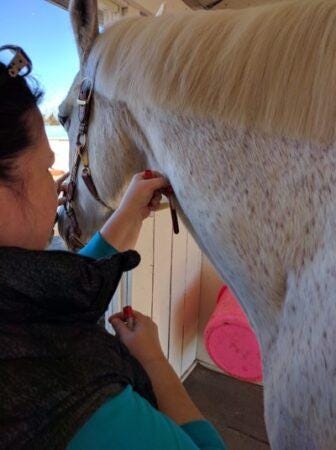
Bloodwork may help your vet determine the source of your horse’s hives.
Your veterinarian can ultimately give you a treatment plan, which starts with identifying possible allergens and minimizing exposure to them. This is easy for a fly spray ingredient and more difficult for grass or pollen allergies.
Steroids like oral prednisolone or dexamethasone can provide immediate relief but are not suitable for all horses.
Antihistamines like hydroxyzine help soothe urticaria, too.
It is possible to use allergy shots to hyposensitize your horse if specific allergens are found.
There is also allergen-specific immunotherapy.
Topical itch relief medications or sprays can help, too.
A cool shower soothes some of the hives in horses, or perhaps your horse wants a little scratch. Horse owners should avoid riding a horse with urticaria. They already feel bad, and tack may irritate the bumps even more.
Don’t ignore these possibly itchy bumps! Give your horse some relief with the help of your vet and work toward finding possible allergens your horse is eating or living around.
There’s more to explore at proequinegrooms.com, where every article is written (by a human!) to make quality horse care accessible to all.
I will never gate keep content behind a paywall, and I encourage you to visit the companies that support this educational endeavor.
Wahl Clipper - Code LIV for savings
HandOn Gloves and Grooming Tools - Code PEG for savings
GG-Equine Health Care Products - Code 15PROEQUINE
No posts
Comments
Nothing yet. Say the first thing.
Sign in to join the conversation.