
Solvent selection is a key decision in chemical process design, directly impacting safety, cost, and operability. To support a more systematic and transparent approach, Prosyn.ai now includes a dedicated solvent selection tool based on the Hansen methodology that helps engineers discover and evaluate solvents early in process design.
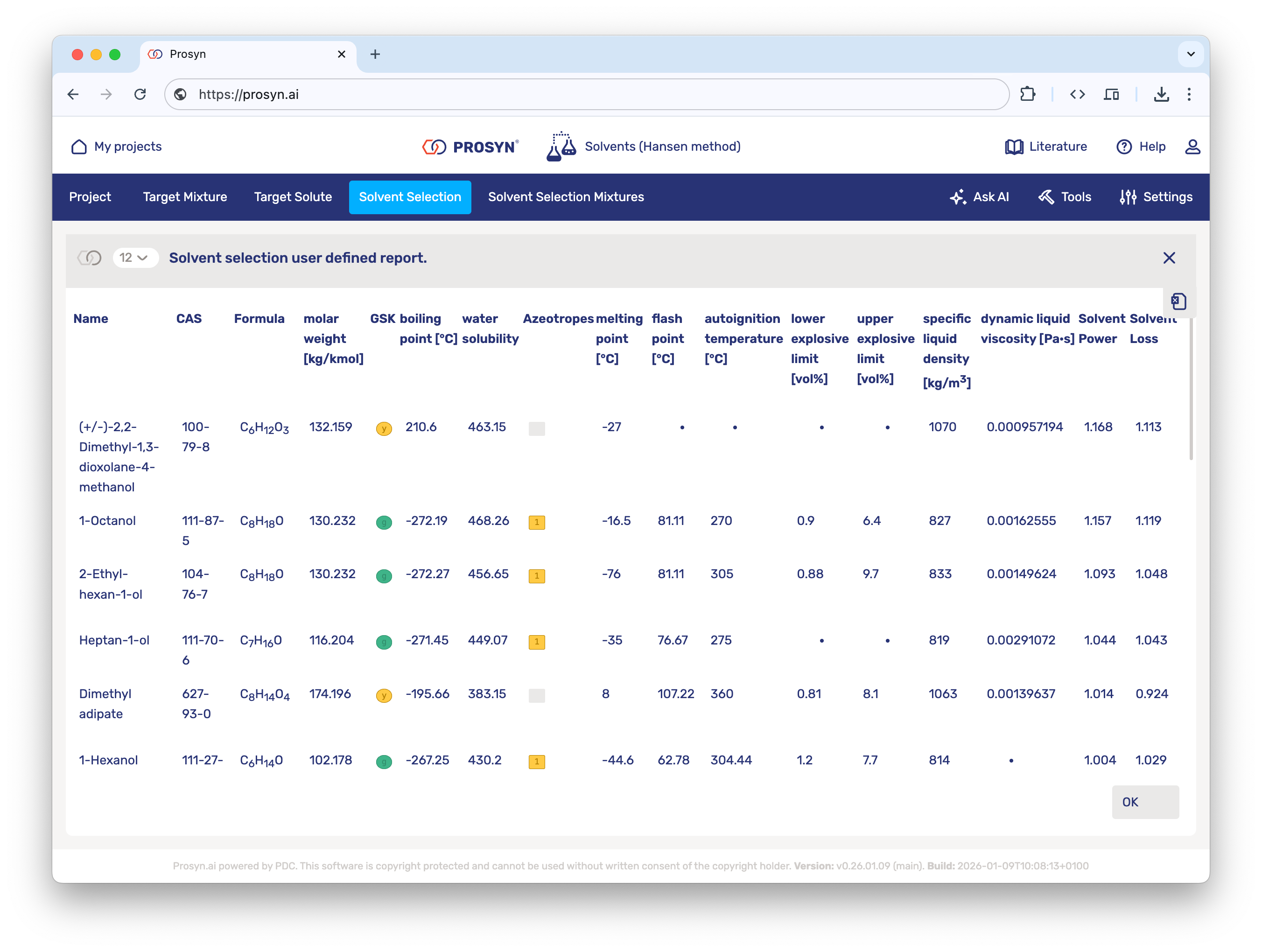
The tool considers health, safety, and environment (HSE) criteria, including GSK solvent classification, alongside availability, and process applicability. It also flags the presence of critical functional groups (e.g. halogens, nitrogen-, sulfur-, or phosphorus-containing solvents) and allows users to define whether azeotrope-forming solvents are acceptable for their separation strategy.
We currently have close to 2000 solvents in our database. By combining HSE, economic, and technical constraints in one workflow, Prosyn enables faster, better-informed solvent choices—supporting safer and more robust process designs.
The BIOSAFIRE project develops new biobased flame retardants using raw materials of renewable origin, which will be applied in different sectors: marine, railway, household appliances and coatings for wood (construction).
PDC contributes to this European research project with process design, integration, and optimization in a safe-and-sustainable-by-design (SSbD) framework and performs the techno-economic assessment and we are contributing to all three working groups within the project. We play a crucial role in scaling up and optimising the processing routes that turn natural materials like lignins and tannins into viable, high-performance biobased flame retardants. Our expertise helps ensure these new solutions are not only sustainable, but also industry-ready.
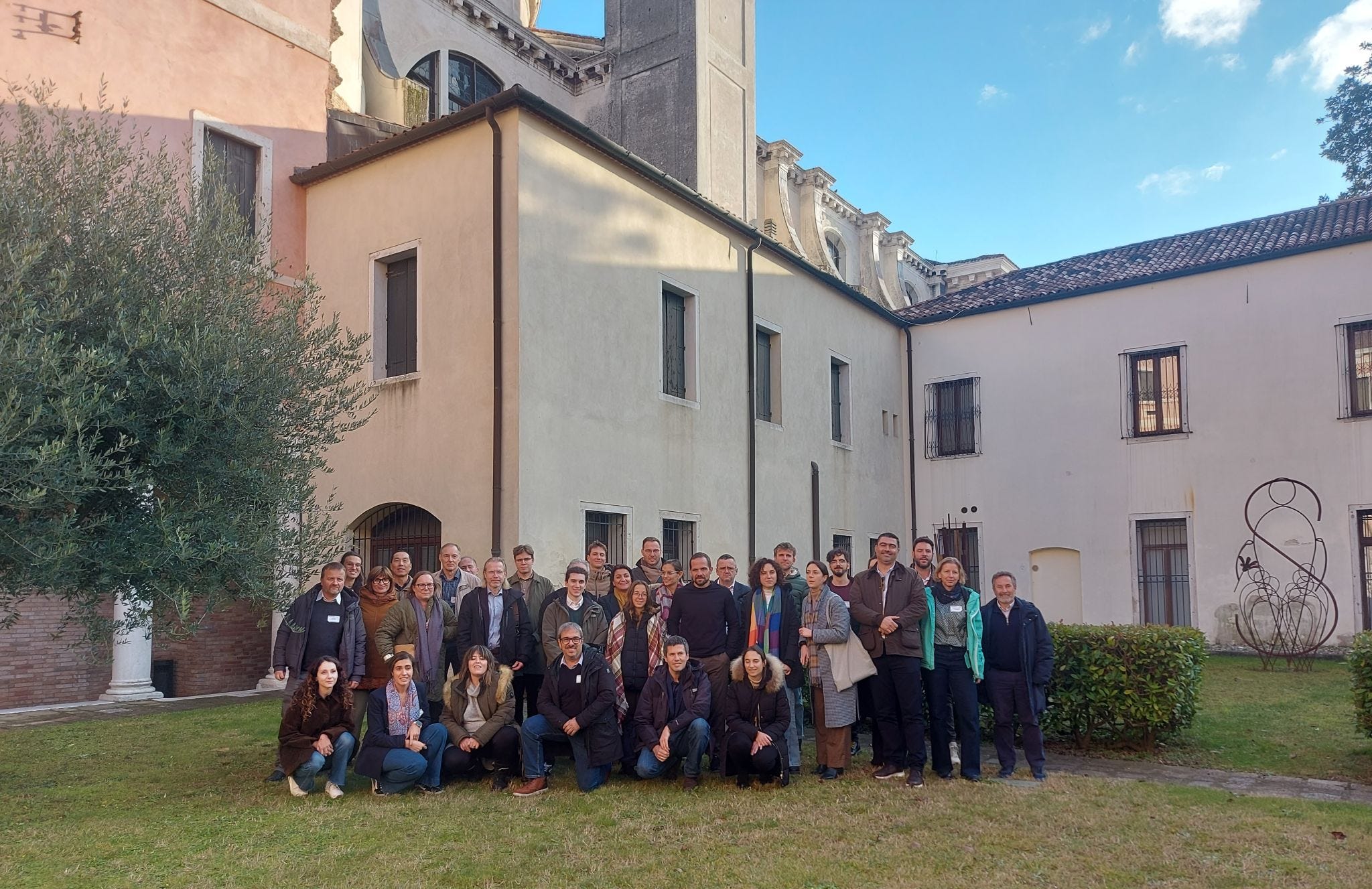
Last December, the BIOSAFIRE consortium came together in Venice for our in-person General Meeting. This two-day event unites all project partners for strategic discussions, technical updates, and collaborative planning for the next phases of BIOSAFIRE. The meeting underlined the importance of collaboration, knowledge sharing, and collective commitment in driving the success of BIOSAFIRE. Partner contributions are essential to the progress and impact of the project.
At the core of HYPER project is the electrification of hydrogen peroxide production, and in turn its modular on-site and on-demand production potentially applicable to multiple industries, like pulp and paper, textile, electronics, chemicals/coatings, sanitisation, and water treatment.
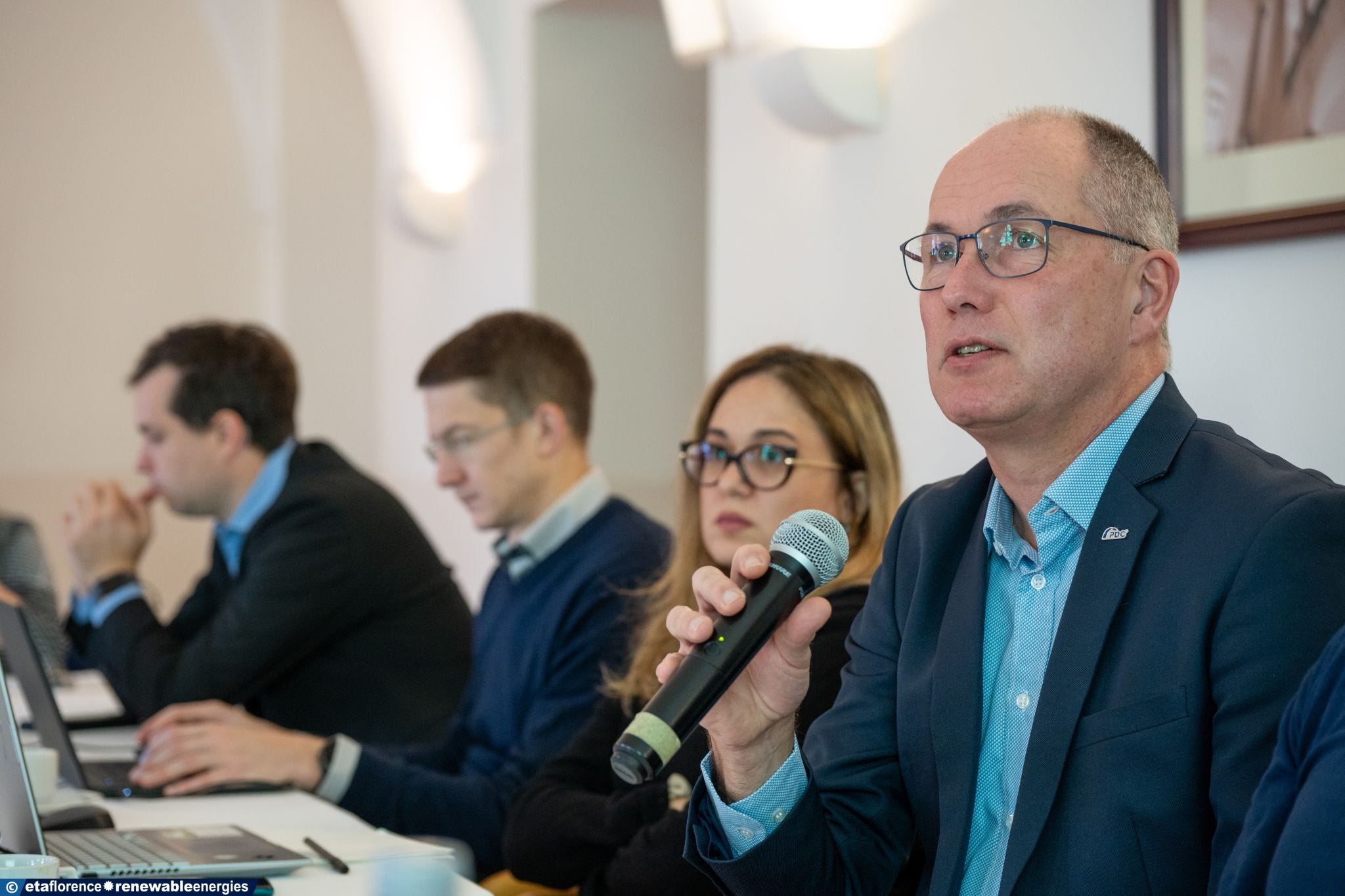
A HYPER Horizon Europe consortium meeting took place in Hradec Králové, Czech Republic back in november, where all partners gathered to discuss the latest progress across the different work packages. Together the consortium aims to transform hydrogen peroxide production from a large-scale, energy intensive chemical process to a smaller-scale, robust, modular, sustainable, electrochemical process, providing substantial economic and environmental benefits.
PDC performs the conceptual process design of the HYPER process and considers the integration with downstream applications in the pulp and paper, textiles, and coatings/chemicals industry. Furthermore, we take the dynamics of renewable energy source availability into consideration and investigate the techno-economic feasibility.
After a first day of presenting project results and discussions, the second day was dedicated to an exciting visit to the INOTEX industrial plant. Partners had the opportunity to gain first-hand insight into the industrial processes there and, most importantly, to see the HYPER pilot plant for electrochemical hydrogen peroxide production in full operation. We witnessed the successful bleaching performance of electrochemically produced hydrogen peroxide on textiles in front of our eyes. The project plant has now successfully reached Technology Readiness Level (TRL) 4-5.
We are PDC. We are an international team of conceptual process design experts with a strong reputation in the industry. Our mission is to help create a lower carbon footprint and a more sustainable process industry.
As a process design innovator with close to 40 years of experience, PDC understands how to support and lead teams through the uncertainties of the conceptual process design flow to reach innovative solutions. The methods we share have, over the years, helped us quickly and effectively design solutions to a wide range of challenges.
No posts
Comments
Nothing yet. Say the first thing.
Sign in to join the conversation.