
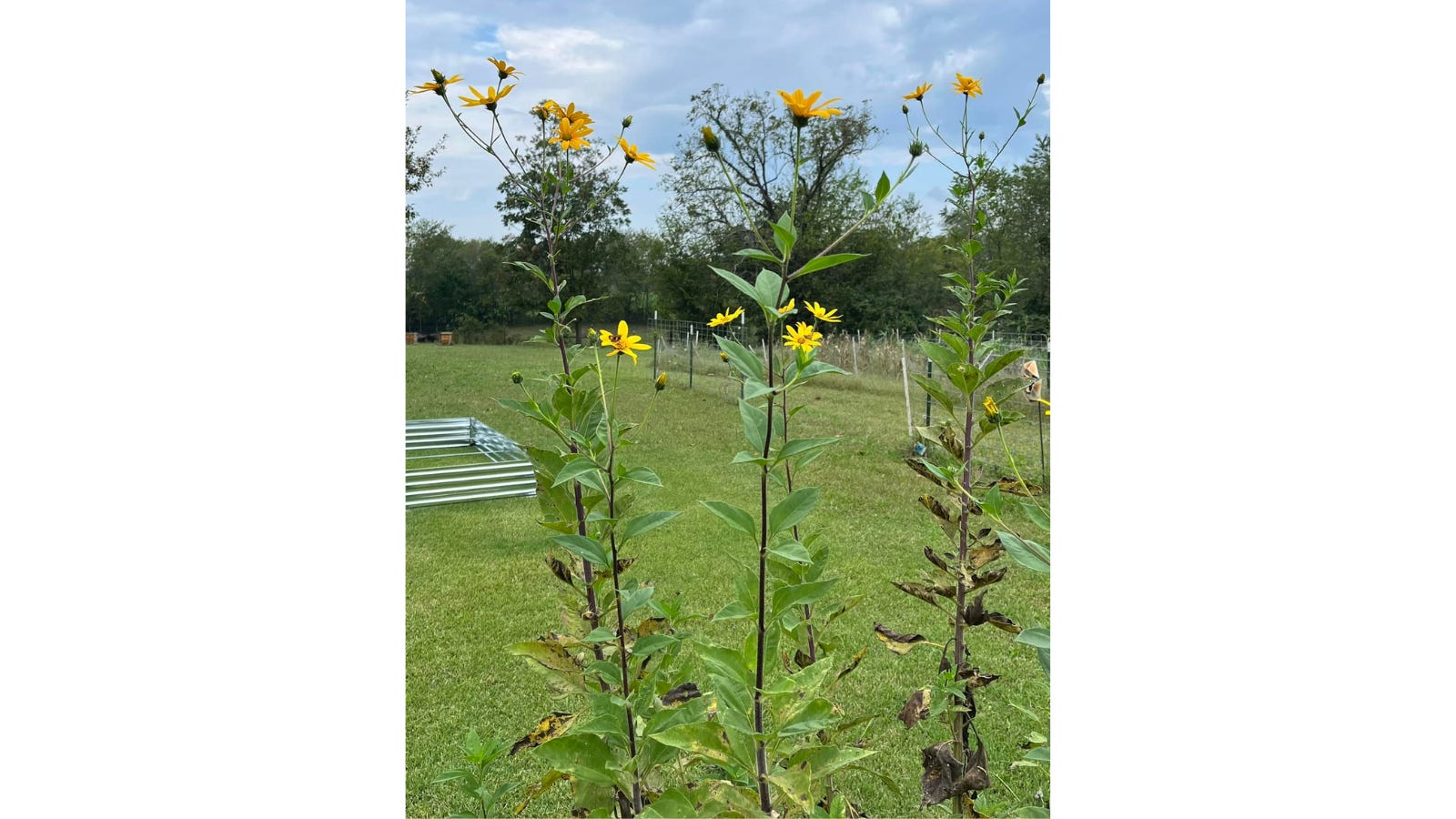
What if you could plant something one time and keep harvesting it for years without ever replanting? That’s what you get with Jerusalem artichokes (sunchokes). They are one of the most low-maintenance food crops you can grow. Plant a few tubers once, and they’ll come back year after year.
Once they’re established they spread so well that most people end up trying to contain them rather than keep them alive. They grow tall, sometimes 8–10 feet, and by late summer, they’re covered in small, sunflower-like blooms. Even if they didn’t feed you, they’d still be worth growing just for how beautiful they are.
If you’ve been trying to make your space both practical and beautiful, you need Jerusalem Artichokes. The bright yellow flowers attract pollinators, add height and texture to your garden, and can even be cut and brought inside like wildflowers. You’re not choosing between useful and pretty. You get both.
The edible part grows underground, little tubers that look a little like ginger root. They’re not quite like potatoes. They’re a little nutty, a little sweet, and depending on how you cook them, they can be crisp or soft. Once you learn how to use them, they become one of those foods you’re really glad you have on hand.
Just think simple, real food:
Slice them thin and roast them like potatoes (delicious)
Sauté them in butter with a little garlic (also delicious)
Add them to soups for extra body and flavor
Eat them raw, thinly sliced, for a crisp, slightly sweet crunch
Make a slaw with them
They’re flexible, and they stretch meals.
Wash and slice tubers (no need to peel unless you want to)
Toss with olive oil, salt, and garlic
Roast at 400°F until golden and tender
They come out slightly crispy on the outside and soft inside, simple and filling. They taste a lot like potatoes when they are cooked this way.
Sauté onion and garlic in butter
Add chopped Jerusalem artichokes
Cover with broth and simmer until soft
Blend until smooth
Add salt and a splash of cream if you have it
It’s rich and comforting.
Thinly slice raw Jerusalem artichokes
Toss with olive oil, lemon juice, and salt
Add a little shaved cheese if you want
It’s crisp and fresh.
Jerusalem artichokes are incredibly nutritious, but they can be a little hard on digestion if you’re not used to them. Start small. Cooking them helps, and your body adjusts over time. Just something to be aware of so you don’t overdo it the first time.
When you eat Jerusalem artichokes, you’re not just eating something filling, you’re feeding your body because they’re Packed with Inulin. They are one of the richest natural sources of inulin (a type of fiber your body doesn’t digest like normal food). It feeds the good bacteria in your gut.
If your gut is off, everything feels off. Energy, digestion, even how your body handles food. Inulin acts as a prebiotic. It feeds the beneficial bacteria already living in your digestive system. Over time, that can help improve digestion, support more regular bowel movements, and help your body better absorb nutrients.
Because inulin isn’t broken down like regular carbs, Jerusalem artichokes don’t spike blood sugar the same way potatoes or processed foods do. That makes them helpful for keeping energy more stable, avoiding those big spikes and crashes, and supporting people trying to be more mindful of sugar intake. It’s food that works with your body instead of against it.
When your gut bacteria are healthier, it doesn’t just stay in your stomach. It can influence how your body processes nutrients, inflammation levels, and even immune function over time. Because of that same inulin, they can cause gas or bloating if you eat too much too fast. That doesn’t mean they’re bad. It just means your body isn’t used to them yet. Start small. Cook them first (roasting or boiling helps). Let your body adjust. Most people find that over time, this becomes less of an issue.
This is the kind of plant that changes how you think about food. Once it’s in your ground, it’s a reliable food source that you don’t have to plant every year, a way to fill in meals without spending more money, and a beautiful addition to your space. It’s not just a vegetable. It’s security, simplicity, and one less thing you have to depend on the store for.
If you’ve been wanting to grow something that actually makes a difference in your kitchen, not just your garden start with Jerusalem artichokes. Plant them once and learn how to use them.
Growing one crop can lead to a whole new way of thinking about your food supply. Jerusalem artichokes are just one example of how traditional plants can help us create more resilient gardens, preserve food, and become more connected to the work of feeding our families.
Inside the Members Library, you’ll find practical resources to help you take what you learn here and apply it throughout your own home and garden.
Members receive access to:
Seasonal garden planning tools to help you organize planting, harvesting, and garden projects
Printable homestead notebooks for tracking crops, harvests, and household systems
Step-by-step guides for food preservation, pantry building, and traditional skills
Practical resources designed to help beginners grow their confidence and create a more productive home
A self-sufficient lifestyle is not built from one big project. It is built from small skills practiced season after season.
If you’re ready to keep learning, planning, and building a home that works with the seasons, the Members Library is here to help you along the way.
Until next time,
Melissa
Comments
Nothing yet. Say the first thing.
Sign in to join the conversation.