
The Minions Save Cinema
Anthony Fallow argues that 2022’s Minions: The Rise of Gru is the most consequential film of the 2020s. It’s not as crazy as it sounds. Let him convince you.
Close Up, Vol. 4
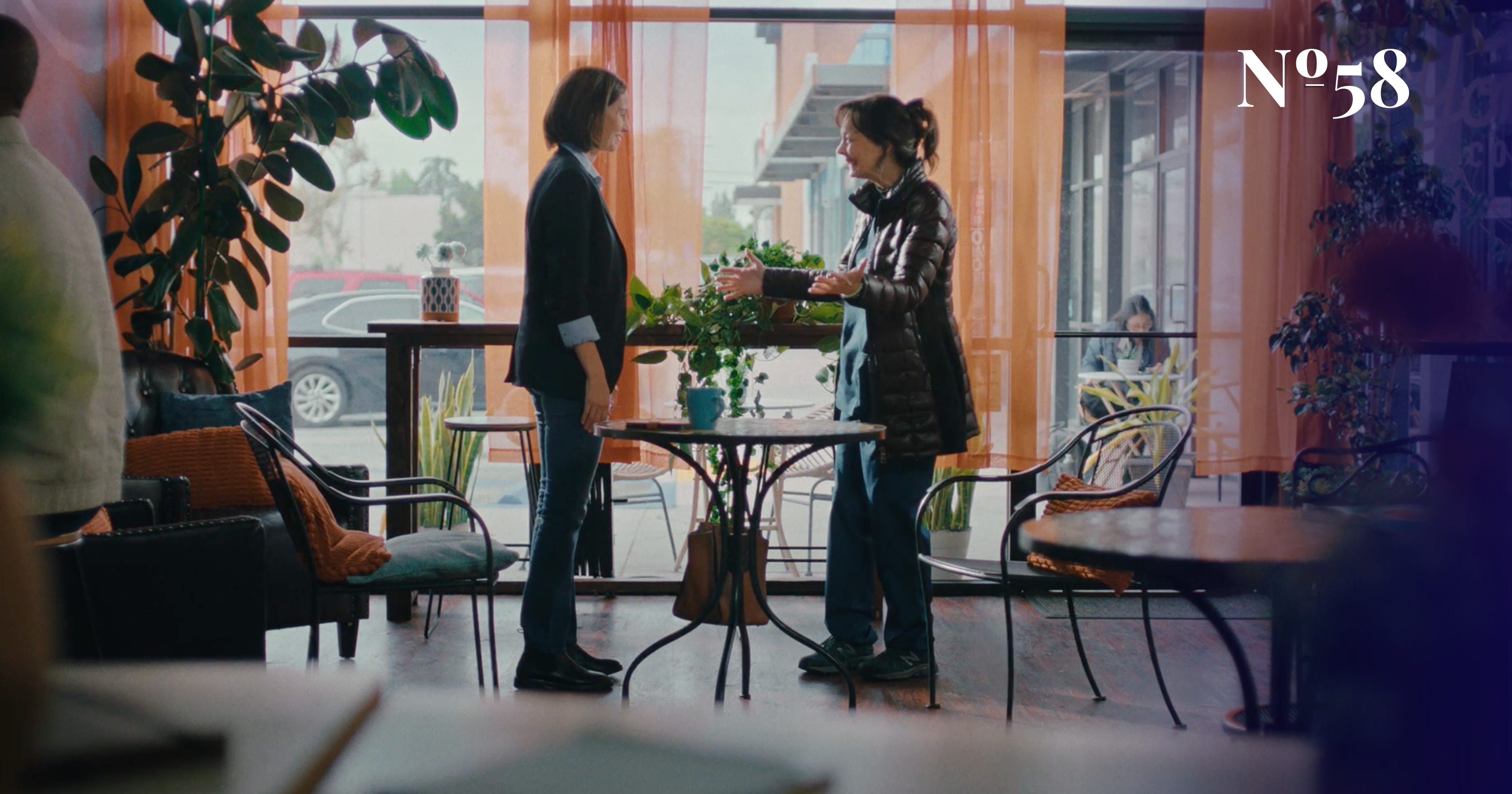
Short films about conversations between two characters are extremely difficult to make interesting. But that’s exactly what John Liang’s Maryjane Is One Word pulls off. Anna Jaller’s and Kathryn Kelley’s performances carry every second. Their secret weapon? Their inboxes.
Read Receipts, Vol. 5: Supergirl Opens Below Morbius Somehow
This is the best late-June the box office has had since 2022 – the summer of the Gentleminions. That doesn’t mean everyone’s winning, though. James Gunn, in particular, must be having a rough weekend.
By Ryder McNeal
Do you remember a few summers ago when teenagers were dressing up in suits and ties and going to the Minions movie? If not, you might want to search up #gentleminions and do some watching and scrolling to refresh your memory before proceeding with this issue.
In his first piece since Issue No. 52’s excellent History of the Backrooms, Anthony Fallow returns to analyze how one TikTok back in the summer of 2022 sparked a global trend that has since snowballed into what he now calls “the future of moviegoing”. Even if you’re not a fan of the Despicable Me movies, his argument that the Minions saved cinema, ludicrous as it may sound at first, is compelling and is likely to leave you reevaluating whether a theater full of teenagers cheering and throwing popcorn during a movie is really such a bad thing.
Close Up also returns this week, digging into the story behind a recent PREVO premiere, Maryjane Is One Word, and the two performances that carry it. I recently sat down with the film’s director, John Liang, for a Behind the Scenesconversation, so read the Close Up first, then keep an eye out for that episode later this week.
And closing out the issue is the fifth volume of Read Receipts, our series dedicated to analyzing each week’s box office returns. DC was riding high after last summer’s Superman was a hit at the box office; now, DC and its still-new-ish head, James Gunn, have just suffered an embarrassing, borderline-unimaginable defeat. More details below.
That’s all for now.
By Anthony Fallow
Four years ago, before Barbenheimer dominated the box office, and before A Minecraft Movie had audiences shouting “chicken jockey” while throwing popcorn across theaters, there were the Gentleminions.
For those who don’t remember: in the summer of 2022, Illumination’s Minions: The Rise of Gru released. It was always going to be a hit – just as next week’s Minions and Monsters is sure to be a hit – but The Rise of Gru will be remembered as far more than the fifth installment in the animated franchise about the yellow, goggle-wearing minion. No, instead of being remembered for its very respectable post-COVID Fourth of July opening weekend of $125 million, I’d argue that Rise of Gru will go down in the cinematic history books as one of the most consequential films of the 21st century. Yes, you read that right.
You see, in the wake of COVID, movie theaters were – and, to a lesser degree, still are – struggling mightily. After months and months of sitting at home and becoming accustomed to viewing anything on demand on their living room TVs from the comfort of their couches, audiences had fallen out of the moviegoing habit.
Why go to a theater when I can sit here and watch anything I want?
For a long time, no theater nor studio could think of a good answer. Then came the Minions.
On a Zoom call in early 2022, Minion-maker Illumination approached Lyrical Lemonade, the Chicago-based music-video company known primarily for launching rappers from obscurity and accruing billions of views across their online accounts, to make a trailer for their forthcoming Minions movie, The Rise of Gru. Lyrical Lemonade founder Cole Bennett pitched including Portland-bred rapper Yeat in the project. Yeat, who until that point had been known for rapping primarily about drugs and money, was not a clear fit, and Illumination initially balked. Bennett, though, eventually talked them into it. And Yeat agreed, too.
By his own account – delivered in song – the going rate was a million dollars:
“I made a song for the Minions. How much they paid me? A million.”
(He raps a different figure – two million – later in the same track, so don’t read it as an exact invoice.)
“Rich Minion” dropped on June 28, 2022. The Rise of Gru had already opened in Australia a week ahead of its July 1 US release – and it was there that the whole thing started.
A Sydney teenager named Bill Hirst recruited about fifteen of his high school friends to dress up in suits and ties and head to their local theater. Recording the night on his phone, Hirst and co. arrived impeccably dressed, steepled their fingers throughout the film, and otherwise behaved like perfect gentlemen. Hirst edited the clip, set it to the just-released “Rich Minion,” and uploaded it to TikTok.
The video went ultra-viral immediately (and sits at over nine million likes at the time of writing), and the trend began. Across the world, teenagers arrived at their local theaters dressed in suits and ties, bought tickets, filmed themselves before, during, and after, cheered, and posted the videos to TikTok, set to “Rich Minion.” Accessories included the occasional cigar for maximum sophistication and bananas as a nod to Minion cuisine.
Universal did virtually nothing to engineer the trend. Its only real contribution was to bless it: Universal (parent company of Illumination) tweeted, “To everyone showing up to Minions in suits: we see you and we love you.” The official Minions account replied, simply, “The Gentleminions.”
Interviewed by NPR about his participation, one Gentleminion remarked, “I didn’t like the movie. I thought it was mediocre at best. But I liked the atmosphere… I think we’re just bored.”
The film brought in over $125 million in its opening weekend – a big hit, especially in the post-COVID era.
Meanwhile, over at Sony, they had just released the Jared Leto-led superhero box-office abomination Morbius a few months earlier, in April. Morbius had become a viral joke immediately; everyone made fun of it for being a bafflingly terrible movie. The memes mostly consisted of ironic praise: fake five-star reviews, photoshopped Rotten Tomatoes scores of 203%, fabricated critic blurbs, and the catchphrase “It’s Morbin’ Time,” which is never actually said in the film.
In the months following Morbius‘ release, Sony, seeing the virality of the memes poking fun at the film, misread the joke entirely and decided to try re-releasing Morbius in about 1,000 U.S. theaters in June – where it flopped again, making only about $85,000 on its first night back.
The entire point of the Morbius memes was to not see the movie. The joke went over Sony’s heads, while the Gentleminions still flocked to theaters, padded out Universal’s box-office returns, and provided millions of dollars’ worth of free marketing.
Illumination’s bet on Yeat had paid off big-time.
Despite the Gentleminions’ not-always-glowing reviews of Rise of Gru, the Minions had something going for them that Leto’s Morbius certainly did not: nostalgia. A nineteen-year-old in 2022 was around seven years old when the first Despicable Me hit theaters in 2010. The Gentleminions who now flooded theaters had grown up with the Minions. The film didn’t exactly need to be The Godfather to elicit enthusiastic feelings.
Some of the feelings, perhaps, were too enthusiastic. In the UK especially, the trend curdled a bit. According to one cinema manager in Worcester, “I had to refund all of the tickets in that theatre because of kids shouting and mimicking the Minions while the film was playing.”
One UK theater put up a sign reading, “Due to recent disturbances following the #gentleminions trend, any group of guests in formal attire will be refused entry for showings of Minions: The Rise of Gru.” Another said it wouldn’t admit any “unaccompanied children wearing suits.” Some showings included “stunningly bad behavior,” such as persistent standing and cheering during the movie and throwing objects at the screen.
The most dedicated Gentleminions showed up in disguise and revealed their suits only once safely inside the theater.
In retrospect, it was one of the first post-COVID mass assertions that going out together, collectively, was something Gen Z still wanted to do – they hadn’t been psychologically damaged too badly! – and the cinema was the venue they chose. Now, in 2026, we’ve seen several viral moviegoing trends since: Barbenheimer, Minecraft, Dune 2, and yes, Obsession. The audience behind all of these smash hits has been Gen Z, which is now, shockingly, the most active moviegoing demographic, averaging 6.1 visits per year, according to Cinema United.
Minions kicked off the “eventization” era of moviegoing, and, I’d argue, the future of it.
In the years since, just about every major studio has tried to engineer what the Gentleminions did by accident. Mostly, it doesn’t take. But when it does, the box office results are undeniable.
Next week, Minions and Monsters arrives in theaters – and Yeat is back with it, contributing a sequel single called “Million Dollar Minion.” Whether lightning strikes the same yellow goggles twice, we’ll know soon enough.
As we’ve said over and over again, the best short films are usually those with a very limited, laser-focused premise. Take In Our Own Way, for example, a five-minute short that premiered last year on PREVO and was directed by Jason Headley, one of the writers on Pixar’s Lightyear. The premise: a dying man wakes back up from death so he can say goodbye to his brother, in their own endearing way. In its very short runtime, it is funny, sad, heartwarming, and memorable. And most impressively, its success rests entirely on the shoulders of two actors: Matt Jones and Michael Mosley.
But for anyone who has seen two of the most popular television shows of the 21st century, Breaking Bad and Ozark, it should come as no surprise that Jones and Mosley can pull it off. In Breaking Bad, Jones played the fan-favorite friend of Jesse Pinkman, Badger, and has since had roles in a slew of other shows and films. Mosley, meanwhile, had a prominent role in Ozark as Pastor Mason Young and has built out a similarly impressive acting resume.
An audience member pressing play on In Our Own Way can comfortably assume that the two very well-known leads can pull it off. (It also helps that the premise itself has a bit of whimsy: the dying brother reviving.)
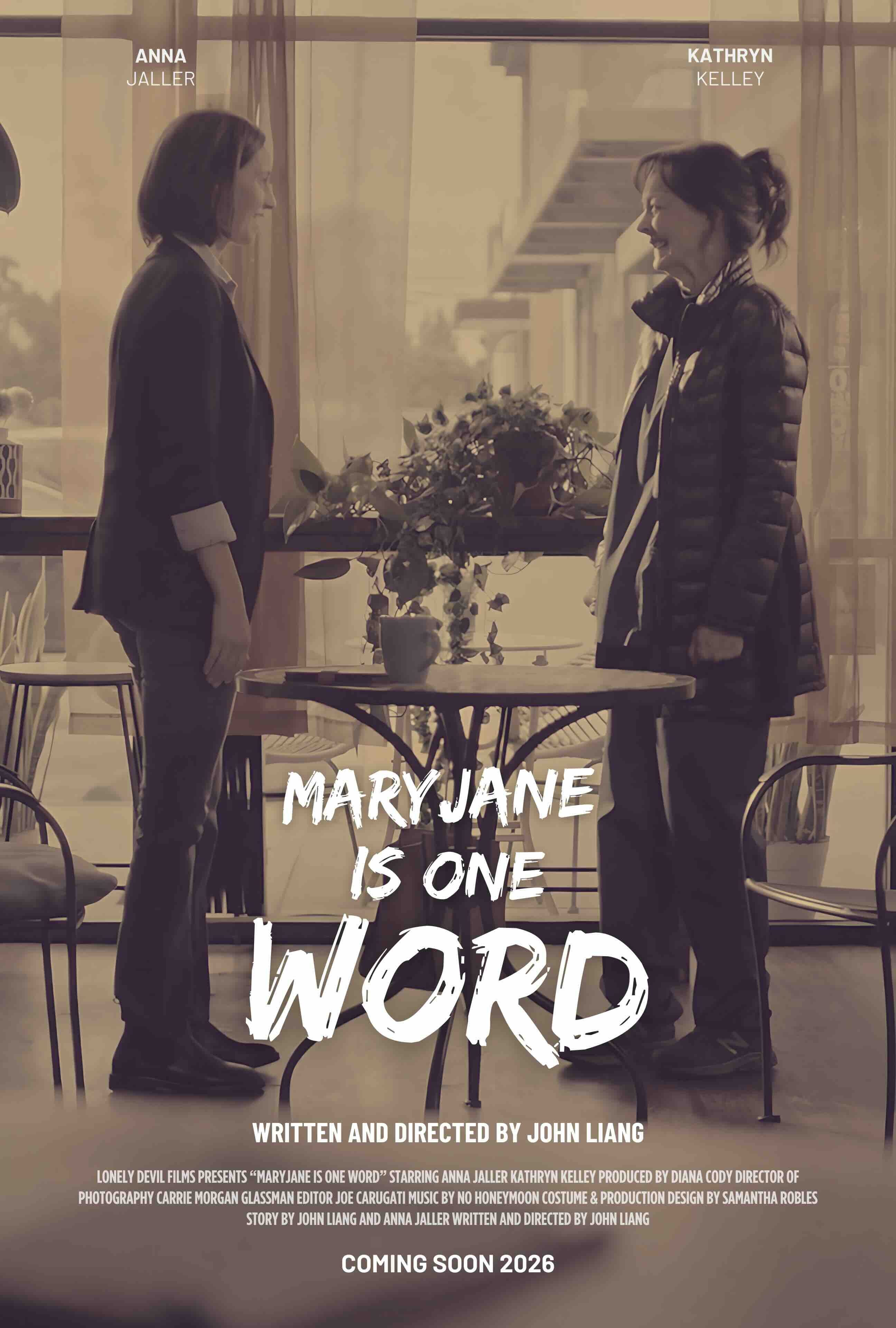
What’s far more dangerous for a short-film director is casting two actors who aren’tknown – yet, at least – for major roles in huge film and TV productions and trusting them to carry an entire film on their shoulders. Yet, that is exactly what John Liang, director of MARYJANE IS ONE WORD, trusted Anna Jaller and Kathryn Kelley to do – and it works brilliantly.
Maryjane’s premise is simple, simpler even than In Our Own Way, though they share some similarities: a young adopted woman meets her biological mother for the first time in a coffee shop. During the recording of a forthcoming Behind the Scenes on PREVO interview, Liang revealed that the premise of the film came from personal experience. His mother, who has since passed, had never met her biological mother, and he felt that it had been a mistake not to do so. So, he wrote Maryjane with his mother in mind, basing the story on how he envisioned – and perhaps hoped – their meeting might have gone.
Moving as the premise may be, this kind of films, the kind entirely centered on a single conversation, is incredibly difficult to pull off effectively. Rarer still than the effective single-conversation film are the films based on personal stories that remain punchy and potent, rather than becoming bogged down in the writer’s personal exploration of the subject matter.
Maryjane, thankfully, falls victim to neither one of these pitfalls and is propelled to excellence, not just through its writing – which never gets sappy – but through the strengths of its leads, Jaller and Kelley, who play the interaction with the awkwardness you’d expect from two strangers, and an eventual warmth.
It’s a tricky balance to maintain, and it’s one that required much preparation from both Jaller and Kelley. Liang, in the interview, said that he eventually discovered prior to shooting that Jaller and Kelley had been emailing each other back-and-forth in character, so that, on the day of the shoot, the meeting would feel as natural and as lived-in as possible.
If Maryjane inspires you to write a short script that rests entirely on a conversation between two characters, we’d encourage it, with one big caveat: make sure to cast two actors who will be as dedicated to their roles as Jaller and Kelley were. It won’t work any other way.
Liang’s full Behind the Scenes interview will be available later this week. Maryjane is One Word is streaming on PREVO now.
#1: Toy Story 5 barely flinched. Pixar’s sequel held to an estimated $70 million in its second weekend – a slim 56% drop that matches Incredibles 2, the only animated film with a bigger opening. It’s now at roughly $297 million domestic in ten days (it crosses $300 million by Monday) and $585 million worldwide, and midweek it posted a $23.7 million Tuesday, the single best day of any kind in 2026.
#2: Supergirl couldn’t get off the ground. Warner Bros. and DC’s $186-million tentpole opened to an estimated $38 million – below the debuts of both The Marvels and Morbius, two of the genre’s recent punchlines, and well short of its $50-million-plus tracking. A B– CinemaScore and 57% on Rotten Tomatoes tell the rest of the story. It’s the third straight comic-book or franchise tentpole to land with a thud this summer.
#4: Jackass: Best and Last bombed. Paramount’s send-off opened to an estimated $8.5 million, the lowest in franchise history (Jackass Forever did $23 million in 2022; Jackass 3D did $50 million in 2010), yet earned an A– CinemaScore, the best grade the series has gotten since the original in 2002. At a roughly $10-million budget, it profits regardless.
The holdovers. Obsession still refuses to die; in its seventh weekend, another ~$9.5 million, now ~$234 million domestic and ~$370 million worldwide. And Disclosure Day is creeping toward $100 million; when it gets there, Spielberg becomes one of only four filmmakers ever to direct a $100-million grosser after the age of 75. As great as that is, though, against a $115-million budget and ~$80 million in marketing, it still finishes in the red.
The macro: the weekend totaled an estimated $158 million – down 32% from Toy Story 5‘s monster debut a week ago, but still the second-strongest post-COVID showing for this late-June period, behind only 2022’s $190 million (the Gentleminions summer). The year now stands at $4.7 billion through June 28, up 15% on 2025 and within 9% of 2019.
What it means for filmmakers: The lesson the 2026 box office keeps repeating, across every budget tier: audiences will pay for a reason to be there, and a logo is not a reason. Give them the reason.
No posts
Comments
Nothing yet. Say the first thing.
Sign in to join the conversation.