
Thank you for reading Present Forever. If you’d like to support this ongoing exploration of the best offbeat and independent, please consider subscribing or upgrading:
I like to think I’m someone who wears hats and caps. In reality, I never do. I put the blame for that distorted self-image on a storage basket in our hallway closet, filled with hats and caps that belong to me — their only hypothetical wearer. None of them are ever worn, though. Not even hypothetically.
Maybe it’s the narrow shape of my head. Or maybe it’s what headwear becomes in your thirties, when you realize you’re literally covering up. Whatever it is, something is holding me back. It’s not for lack of trying. That basket contains everything from an overdyed Casey Casey hat and MAN-TLE’s six-panel black-linen “R20C3” to corduroy caps from Evan Kinori, Norse Projects and Danton, as well as vintage pieces by labels as disparate as Agnès B. and Wigens.
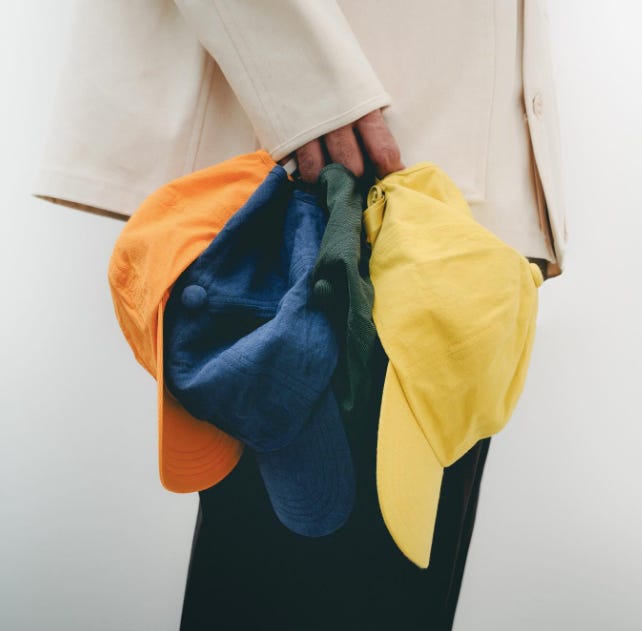
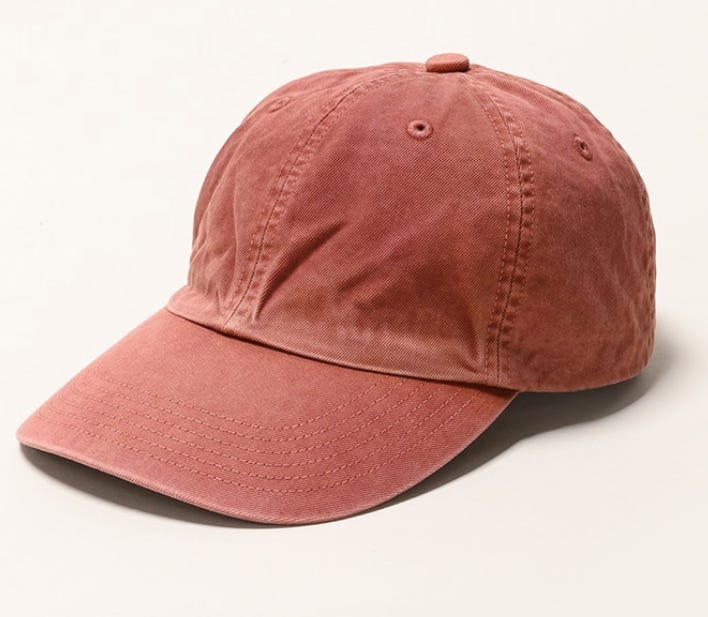
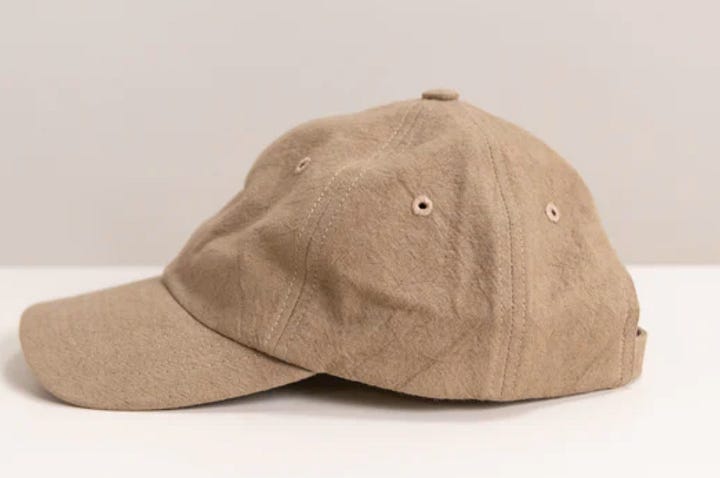
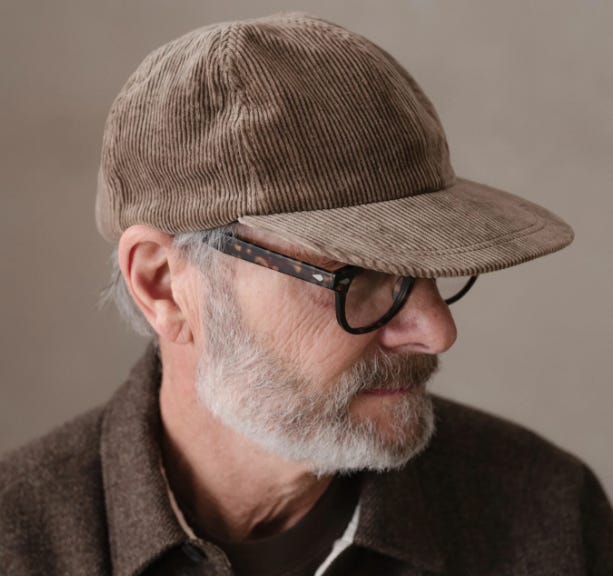
All of them are nice. None of them are exactly right. That’s why headwear is up there with bottoms as wardrobe’s most difficult category. I mean, perfect jackets, shirts, and coats — they’re easy. With perfect caps and pants, however, you know they must exist somewhere, but you also know you’ve never put them on your own head and sighed in relief.
It’s a negative way of expressing a hopeful conclusion: the perfect headwear is yet to be made, somewhere, sometime. Besides, there are real-life approximations — hats and caps that come close, that are almost exactly right, that only just fall short of fully materializing their Idea. Every now and then you hit upon one. (William Frederick and Archie, I’m looking at you.) Most of the time, you have to conclude after a few weeks or month that this isn’t the one either. And so you go on. And on, living your mostly cap-less life.
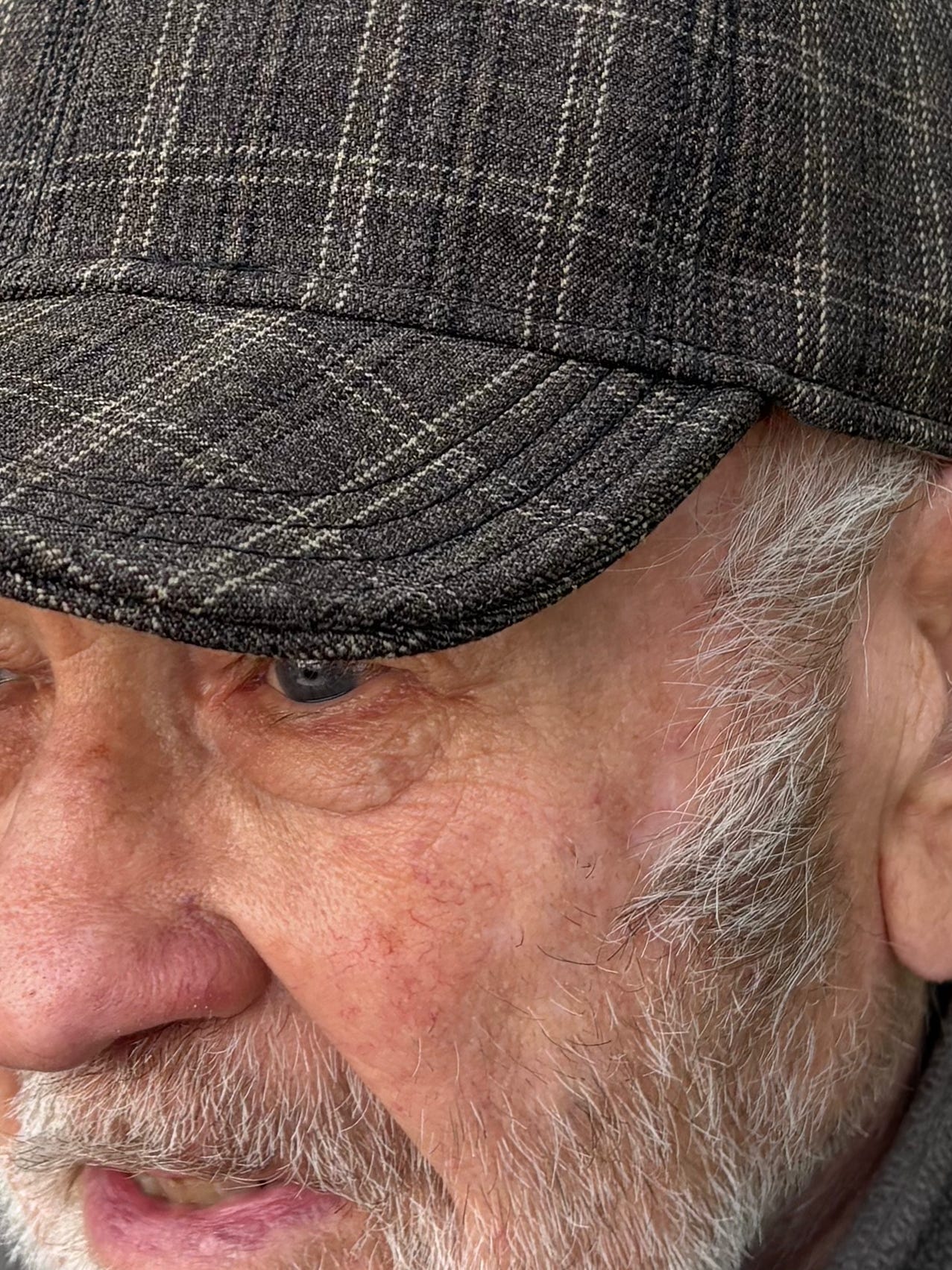
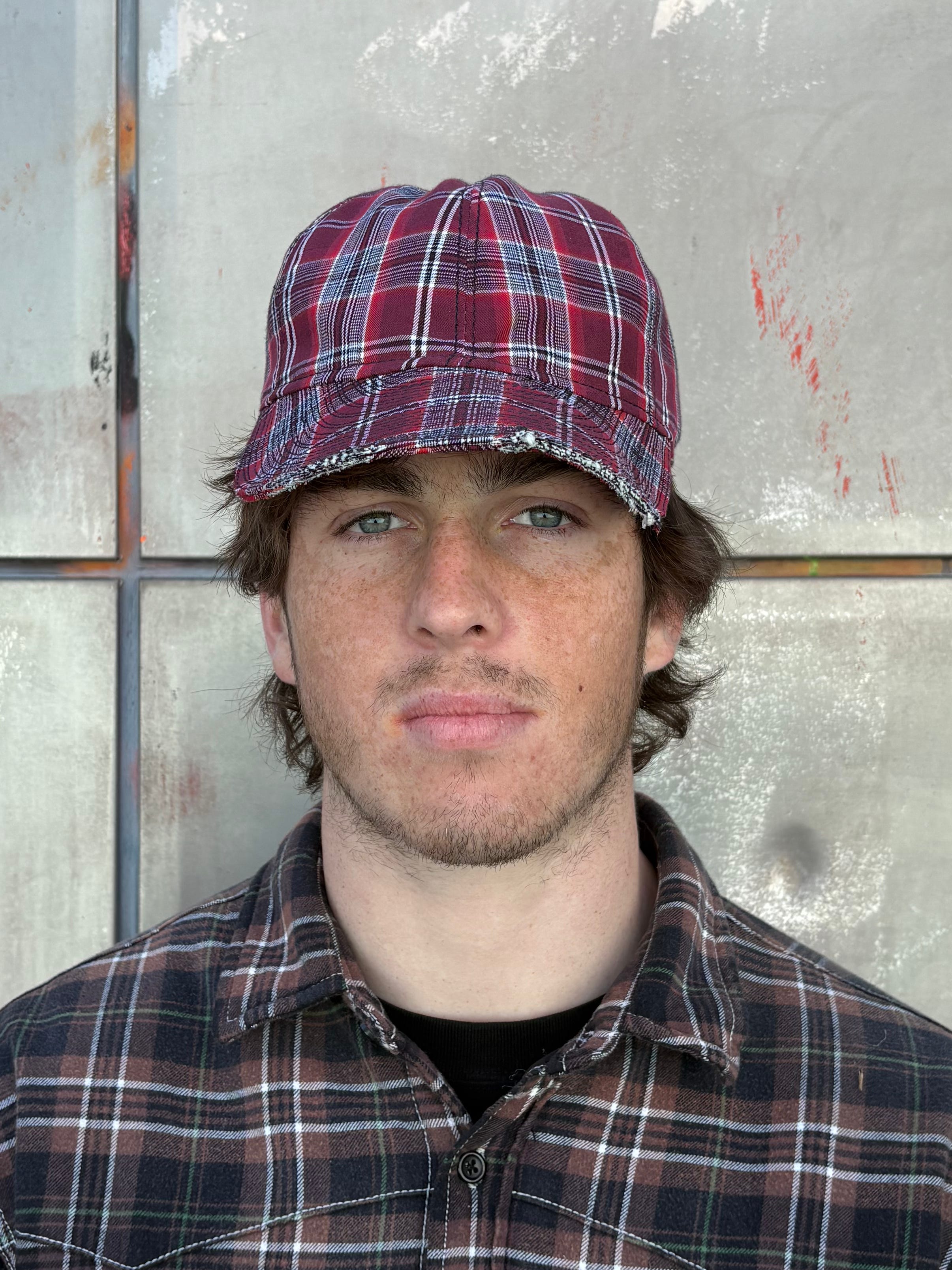
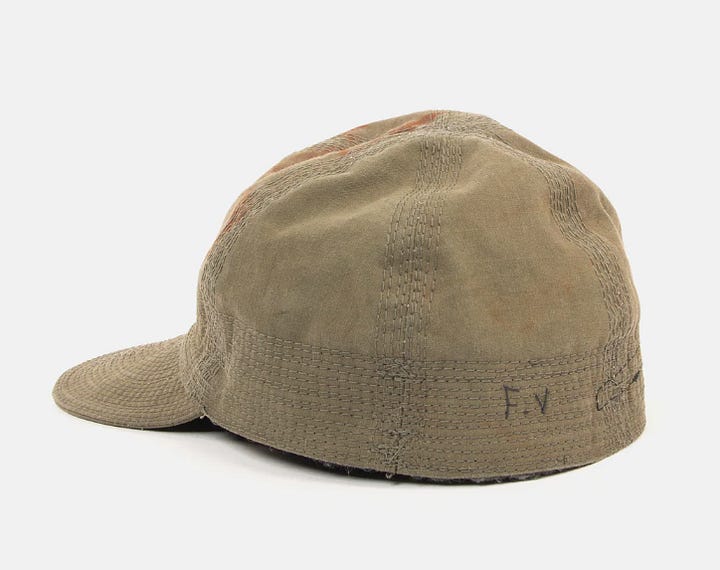
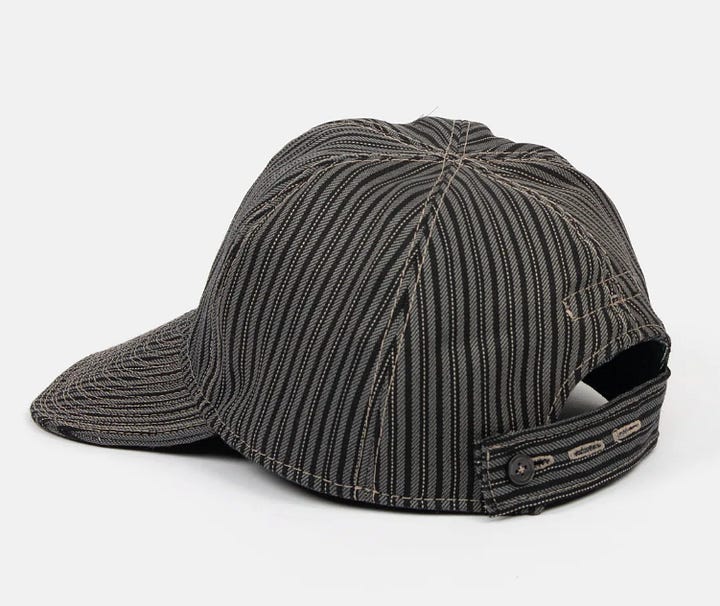
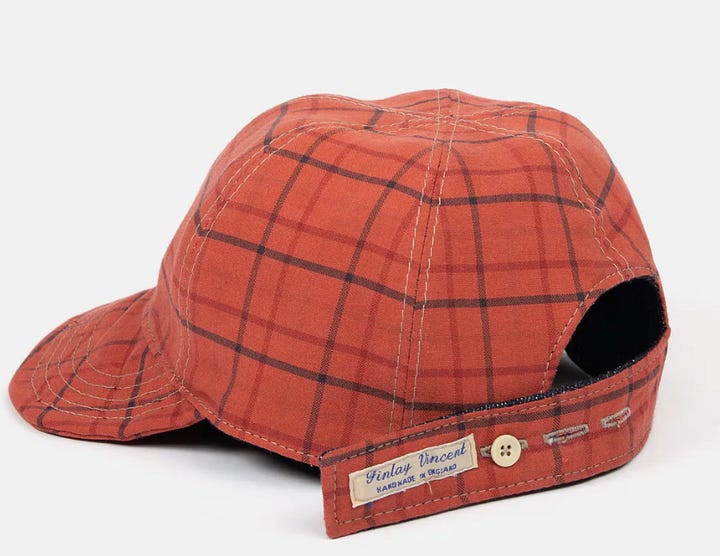
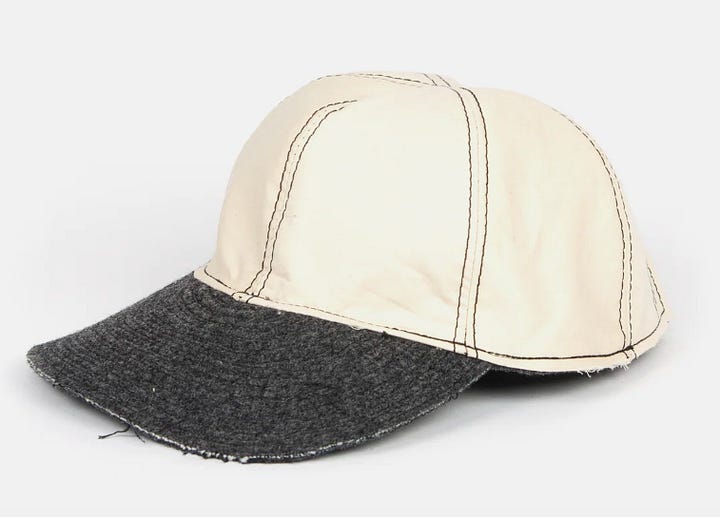
A few weeks ago, I stumbled upon the page of Finlay Vincent, the young London-based designer behind the eponymous label. A Central Saint Martins graduate, he makes fully reversible, short-brimmed six-panel caps from reworked shirts, military tents and discarded wool. Only four get made of each one, no two are the same, there are no restocks, and they’re around 60 euros. Not bad. The story behind them — his story — is even better. Here it is.
Lukas Mauve: Where are you now and what have you been up this week?
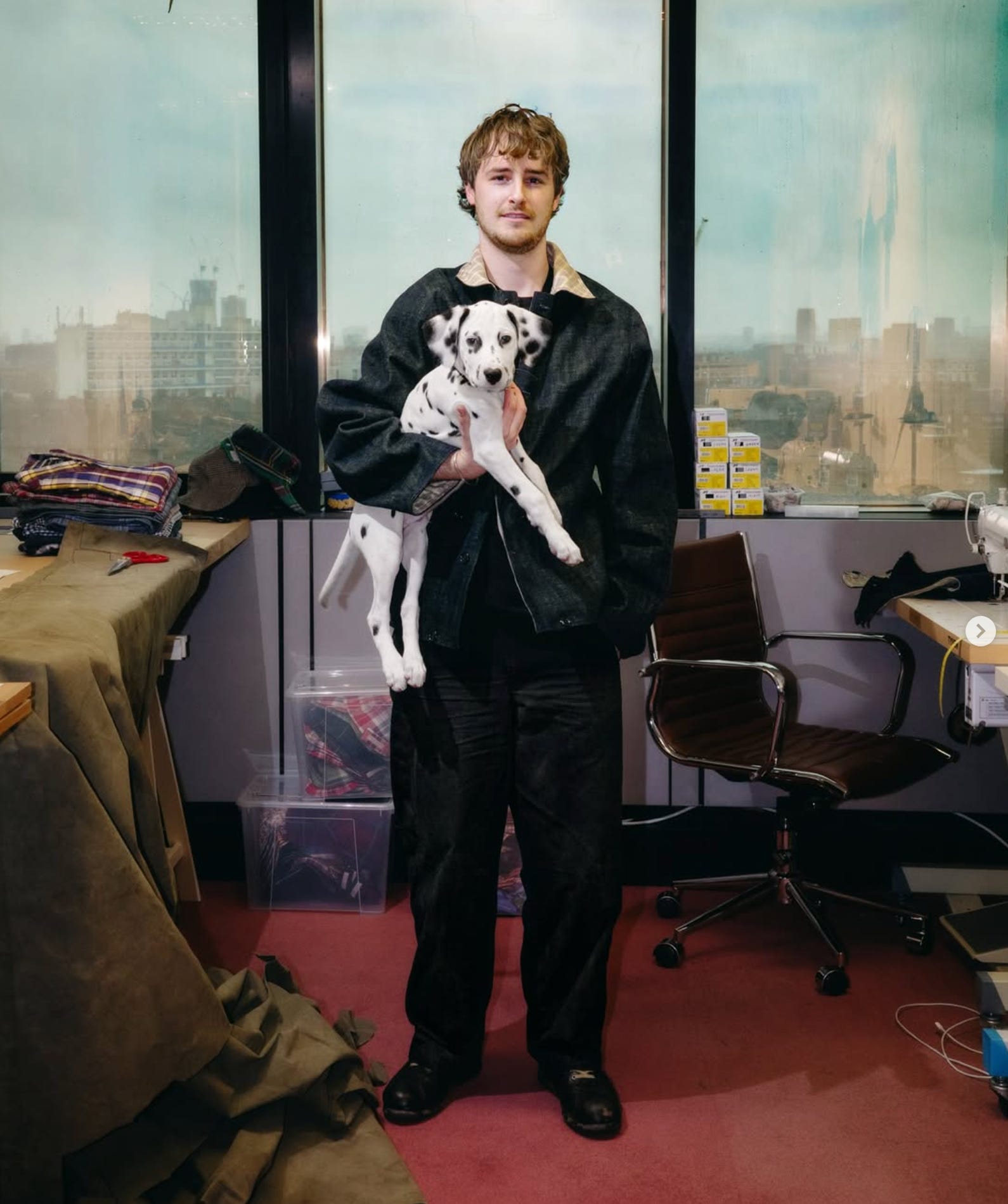
Finlay Vincent: I’m sitting in my South London studio, looking out over layers of buildings. This week it’s been a lot at the machine, sewing a new batch of upcycled caps. I was given a bit of wool by my mum’s neighbour, so I’ve been experimenting with ways to use it.
I have to walk my new Dalmatian a lot, he’s helping me slow down. My partner came in a couple of days this week to work on the brand’s photography. Also, I saw the incredible guitarist Mansur Brown this Tuesday, which was phenomenal.
Lukas Mauve: You grew up in Kenya. What was that like?
Finlay Vincent: I was born in the UK and moved to Nanyuki, Kenya when I was 5 because of my dad’s work. The culture is very different to the UK. There’s more appreciation and reusing what was around; objects would take on new purpose, like bricks becoming table legs. I spent a lot of time in the clothes markets, which I loved. But you could also see how much of it had come from countries like the UK, which was strange to see.
Lukas Mauve: Have you been back there after your return?
Finlay Vincent: I haven’t been back yet, which feels weird considering how much of me is tied to it. I lived there for 10 years, between 2005 and 2015. My brother goes quite often, and every time he does it makes me think I should just go. I will soon.
Lukas Mauve: How do you feel your time in Kenya shaped your design practice?
Finlay Vincent: I’ve been thinking about that more often recently. It shows up more in the way I think. In Kenya clothing felt quite functional, almost like a uniform, something bought to be used and lived in over time. Just caring for what you own and reusing things or creating new purposes entirely. That’s definitely stayed with me. Things should have a clear reason to exist, and not just be made for the sake of it.
Lukas Mauve: Do you remember what it is was like to return to the UK?
Finlay Vincent: When I moved back to the UK, the amount of consumption struck me. I went on to study fashion at Falmouth University, who push sustainability and more importantly, time to actually make. I wasn’t pushed to work fast, but to slow down and focus on craft, which looking back felt quite radical.
Lukas Mauve: Your next move was to do an MA Fashion at Central Saint Martins, which you finished in 2024. What was that like?
Finlay Vincent: I went there to experience the other side, so to speak. It was fast, loud and mostly about trying things quickly. Instead of following that pace, however, I pushed in the opposite direction, spending two years developing a single jacket instead of 6 looks. I didn’t get into the degree show — shock horror. But I learnt the importance of being stubborn.
Lukas Mauve: Do you look back positively or with some regret?
Finlay Vincent: I’ve no regrets. That said, the MA at CSM felt a little like a vacuum, a bubble, though many in my class really cared deeply about what they were doing, which was a big positive. I did walk out of the show, with two fingers up to the industry. I suppose I was a little angry at the time. [See 1:17:20!]
Lukas Mauve: What made you decide to launch your own label anyway?
Finlay Vincent: After graduating I was working in a shop in London, and when it was quiet I’d be there cutting things up and hand sewing. It wasn’t even with the idea of starting something, it just made the day go quicker and I liked doing it.
Then one day someone came in and saw what I was making and bought three unfinished caps off me. It made me think there was something in it. After that I started cutting down my shifts a bit and just making more. I never had money to invest or anything like that, so it was always just using whatever materials I had around me and selling things as I went.
Lukas Mauve: Do you still combine the label with a day job?
Finlay Vincent: Not at the moment. I’ve been trying to give this my full attention while I can. Saying that, I’ve been thinking quite a lot about teaching. Making all day is great, but it can get quite insular. I’d like something alongside the work that forces me to step back a bit, to articulate what I’m doing and why.
Lukas Mauve: From afar, London’s fashion scene seems to be quite wide ranging, and hard to pin down. How do you experience it?
Finlay Vincent: Honestly I don’t think I really feel part of a scene. But I’m not sure I’ve properly tried to be either. I don’t go to many of the events or anything like that; I tend to meet people more randomly and that sort of becomes my version of it.
What I like about London is more the people you pass every day. That feels more like my scene than anything organized. The characters. Maybe someone you’ll never meet but you can kind of piece together a whole life for them in your head.
There’s this lady called Janet. She’s 65 and works at Gatwick Airport during the day, goes home in the evening and is completely obsessed with some Polish artisan she found in an old book once. That feels closer to the world I’m interested in — I just don’t always know where to find her.
Lukas Mauve: What are your favorite places to visit in London?
Finlay Vincent: Bertha DocHouse in Bloomsbury for niche documentaries; Ronnie Scott’s Jazz Lates on a Friday, when you don’t really know who’s playing; the Rotherhithe Picture Research Library, which is full of old photos of clothing from every era. And my guilty pleasure at the moment is Heytea for boba tea.
For clothing, Blue Mountain School is probably the one I check in on most, alongside Jake’s on Vyner Street. I’ve also just started a small shop to sell some of my stuff above the studio in an abandoned industrial kitchen. I’ve called it “The Shop.” It has caps and bags on a sheet, with tea and biscuits.
Lukas Mauve: Could you give me a sense of what your design process looks like on a weekly basis?
Finlay Vincent: I begin by going out and sourcing materials locally, just around secondhand shops and fabric places. Then it shifts into making. By the middle of the week I’m at the machine most of the time, working through whatever I’ve picked up. At the moment I’m trying to keep it to around five caps a week, and a few bags alongside that. I like having that loose target because it gives me something to return to each day.
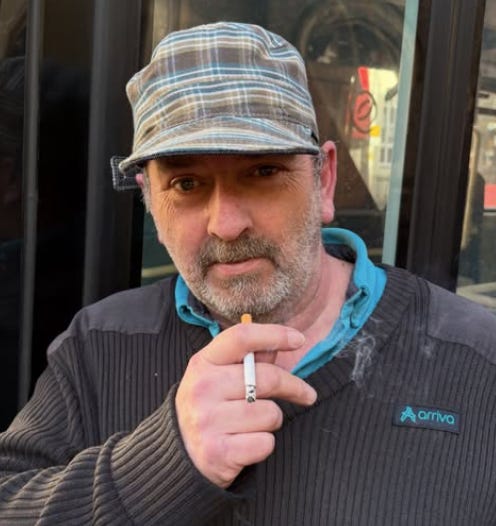
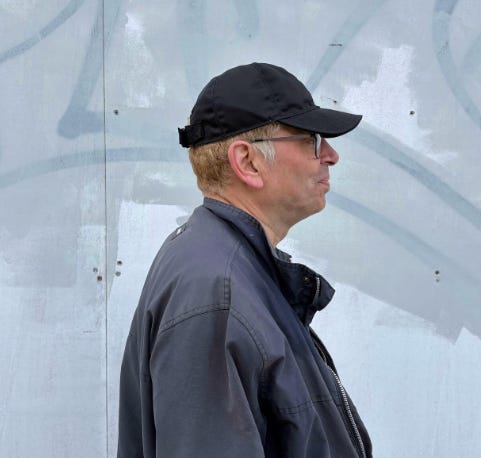
Fridays I try to step away from making a bit and shoot everything. That’s usually for the website, but also just out on the street taking photos of the caps on whoever I come across. I like finding characters that way, it feels more natural than setting something up and it’s also much cheaper…
Lukas Mauve: You mentioned earlier that sometimes you’re also giving some fabric to work with?
Finlay Vincent: Yes, quite a bit comes through people I know. Friends will drop things off, or I’ll be given a random piece of clothing that I wouldn’t have thought to look for. That’s usually where the more interesting pieces come from. A lot comes from charity shops, though — just seeing what I can find, and picking up things if I like the pattern. There are a few fabric shops near me in Shepherds’ Bush I go to that have scrap bins which I’ll dig through as they refill on Mondays. Also eBay sometimes if I’m looking for something specific, like old military fabrics.

Lukas Mauve: What’s the significance of upcycling, creatively speaking?
Finlay Vincent: It just removed a bit of control from me, which I like. You’re not starting from nothing, you’re responding to what’s already there. Most of the time that makes things better, because you end up with an object you couldn’t have planned. But it also means you have to be quite honest about whether something actually feels good or not. If it doesn’t work as an object and isn’t valued by someone, it doesn’t matter how “sustainable” it is, it will get thrown away like the fabric itself had been! I like that tension though. It keeps the practice from becoming too clean or too predictable.
Lukas Mauve: And how did you hit upon the design for your reversible six-panel caps?
Finlay Vincent: It started quite indirectly. During my MA the jacket I designed had a cap built into it, so the main shape sort of came from that. Then there’s probably something more basic underneath it, in that I wore six panel caps all through school.
The reversible aspect came a bit later. I liked the idea that something could shift depending on how you feel that day, whether you want to stand out or disappear slightly, and how it makes you think more about the difference in materials.
Since then it’s just been small adjustments, slowly moving towards something I myself want to wear every day.
Lukas Mauve: Last question. Where can people find your caps and bags?
Finlay Vincent: At the moment it’s mainly online, through me directly and at the shop, which I run over the weekends. I’ve tried a few stockists and stalls, including Goodhood here in London, and they’ve sold well, so I’m definitely open to that side of things. It’s just not something I’m rushing into. I’d like to be quite considered about where it ends up.
Comments
Nothing yet. Say the first thing.
Sign in to join the conversation.