
There is a remarkable new film in China that has become a blockbuster. “Once Upon a Time in the Middle East” is a tragi-comedy that follows the travails of a Chinese chef sent to the Middle East to pay off family debts. The country he finds himself in – which is Iraq, although it is not named – is invaded by the Americans, and the chef finds himself trying to navigate imperial thuggery and religious extremism.
His restaurant is destroyed in the invasion, and when his boss turns insurgent the Americans sweep up the chef in a raid. He cooks in prison for his fellow prisoners, and the Americans exonerate him. But then insurgents pull a prison break, and he finds himself cooking for them. He witnesses children being indoctrinated to become suicide bombers, and after befriending them he concocts a crazy scheme to free them. The protagonist wants no part in a war he can never understand, but he refuses to abandon innocent children.
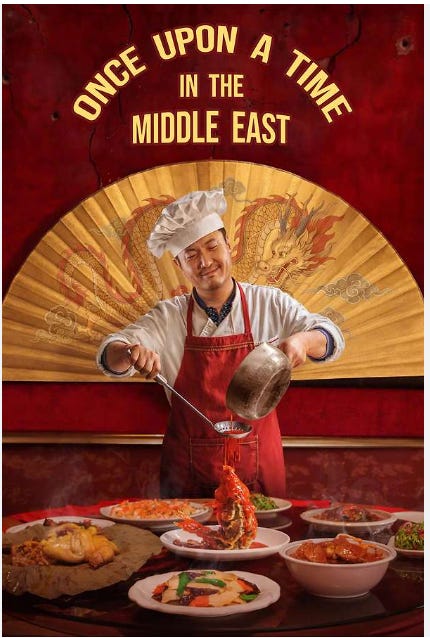
It took two years for the Chinese censors to approve the film for release, and the timing has proven to be perfect. Covid has collapsed the Chinese economy, and ordinary Chinese are struggling to make ends meet while trying to make sense of the chaos in the Middle East, which threatens to destroy the global economy. There is a sense of dread and hopelessness in China, and Chinese all ask, “Why can’t we just get along, and enjoy a good meal together?”
This despair was compounded with the news this week of the death of Premier Zhu Rongji at age 97. In 1998, after the death of supreme leader Deng Xiaoping, he partnered with President Jiang Zemin to bring China into the World Trade Organization. In moving from Shanghai to Beijing, Zhu correctly understood that China needed a Singapore-like meritocratic bureaucracy if it were to transition successfully, and he promised a hundred coffins, 99 for the most corrupt officials and one for himself. Rumors were that the entrenched elite (who controlled the military as well as the state-owned enterprises) sent him their response when they assassinated dozens of his closest allies and relatives. Faced with such thuggery and terror, Zhu did what all Chinese leaders tend to do, and he compromised. The largest state-owned enterprises continued to be parasites on the Chinese state, and the rest were allowed to be asset-stripped by local elites.
Comments
Nothing yet. Say the first thing.
Sign in to join the conversation.