
So I’ve been teasing this for a while….but I delayed publication of this issue in the hope that Amazon’s publication process would be reasonably smooth. This morning this book officially went live in the Kindle store:
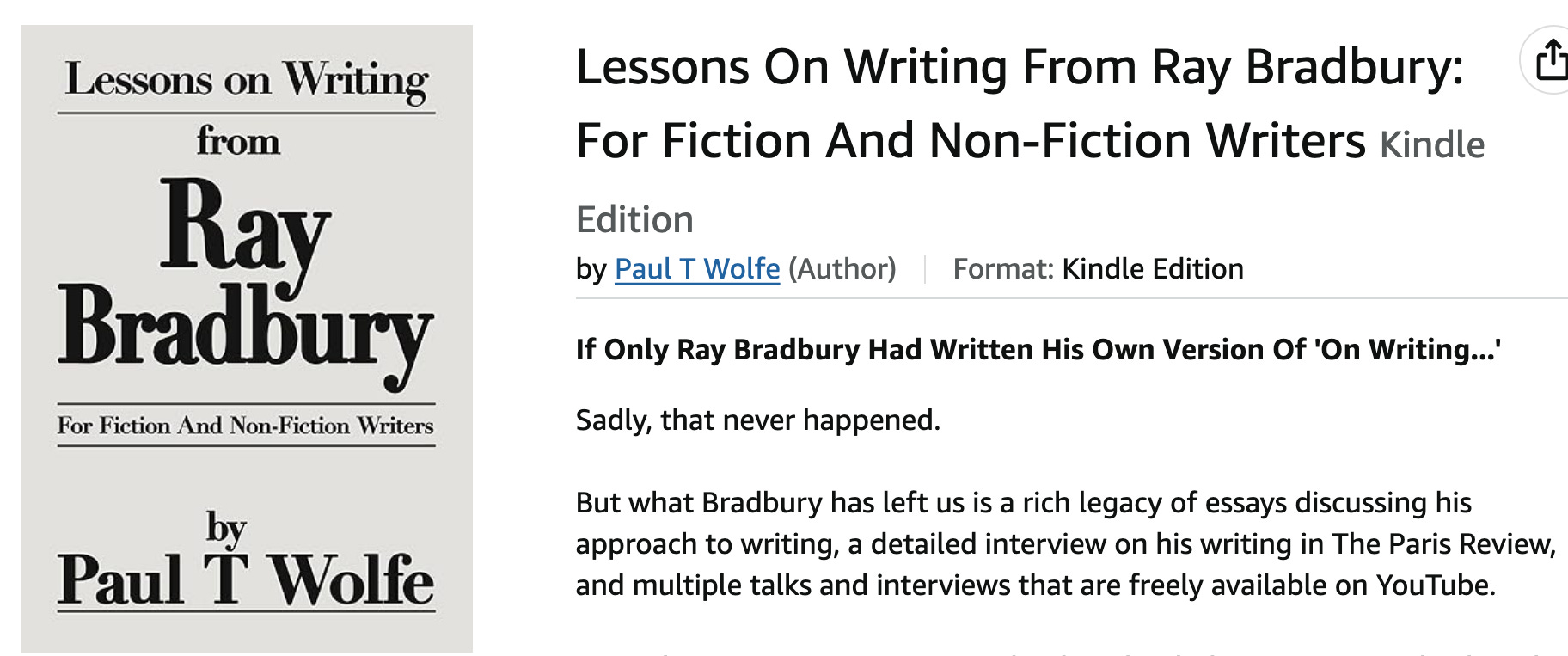
If you’ve got a Kindle Unlimited account….this is free to read. If not, it’s $3.99….similar to the price of a fancy cup of coffee. I guarantee you’ll get way more ROI from spending 60 minutes with this book than paying for a fancy cup of coffee. There is a print book coming….that’s snagged up in Amazon’s publication process. And it will weigh in at around 125 pages….not sure how much I’ll price it at. (You should be able to read the entire book in 90 minutes….it’s just shy of 20K words. Short. Easy to consume.)
This is the first in a planned series of short books. Later today I’m going to film a 30 minute video lesson on the strategy behind doing this and building an audience. If you grab yourself a copy this week, and send me a copy of the invoice, I’ll send you the link to download that video lesson that lays out the strategy of writing short books.
NOTE: if you’re a writer and doing lost of social media style content marketing - the trajectory of the effectiveness of which is inexorably downwards - to build your audience, then this lesson will give you food for thought. And I won’t ever teach this again, or sell this. It’s only available for a week…and then it’s gone.
But that’s totally your call.
The rest of this issue goes more into THIS book.
Hey ho. On we go.
….then check out this video:
This was taken towards the end of Bradbury’s life….I think I was in early 80s at this point…but I find him an inspiring and intriguing speaker.
This was one of the primary resources I used to distil three important writing lessons - for fiction and non-fiction writers - from. The other two resources were a 2010 interview published in The Paris Review and Ray’s collection of essays: Zen In The Art Of Writing.
A back issue of the Paris Review will require an investment of $30. Zen In The Art Of Writing is around $5 to $10 depending on what format you want.
All are recommended.
There are three primary lessons I’ve taken from Ray’s teachings. All are valid for fiction and non-fiction writers. They are:
Lesson 1 - Write a short story (fiction) or long form piece of non-fiction every week. (If you buy the book and get a copy of the lesson I’m going film…you’ll hear me talk about the strategic ‘reframe’ of this that I’m using.)
Lesson 2 - Feeding The Muse (and Filling The Well). Curate a reading habit that’s purposefully designed to support your writing habit.
Lesson 3 - Write In Flow.
There are three bonus lessons too, which are left for YOU to expand on and implement. But only IF these lessons align with your writing goals.
While the bullet pointed lessons above might seem straight forwards….there’s a deal of nuance to each of them. As you’ll see in the next sub-section….
Here are some of the bullets I wrote for the book description:
Why All Writers Should Learn From Ray Bradbury (Section 1)
What You Should Read For The Next 1000 (or 10,000) Nights (Section 16)
The Four Components Of Bradbury's "Write In Flow" Process (Lesson 3)
Ten Benefits Of Following Bradbury's "Story A Work" Program (Section 9)
The (Hidden) Brilliance Of Bradbury's Reading Program (Sections 18 and 19)
Filling The Tank (Filling The Well) (Section 22)
Bradbury's Caveat To The "One Story A Week" Program - That Most Writing Teachers Miss
The Reframe For Non-Fiction Writers To Make Bradbury's "Story A Week" Program Work For Them
Using Visual Media To Complement Bradbury's Reading Program (Sections 24 and 25)
The 10 to 50X/One Level Up Approach (Section 21)
The Theatre Of The Morning - And How To Have Two Every Day! (Section 29)
How To Use The "One Story A Week" Program To Improve Your Writing (Section 12)
How Bradbury Used Lists To Trigger Story Ideas - And What Was In Those Lists (Lesson 4/Section 32)
Bradbury's Ten Commandments of Writing With Zest And Gusto (Section 4)
How To Outsprint Your Conscious Mind (Section 27)
There’s an almost mythological significance in the power of threes. E.g. Goldilock’s Three Bears, Three Wise Men, Three Witches with One Eye (myth of Perseus) etc.
And I write primarily for myself - here are my three biggest learnings from writing this book:
Writing 1500 Words Every Morning. I’ve switched my writing to the morning, and my music teaching to the afternoon. That way…if something crops up at 1PM…and I can’t do any more work…the day is already won. Plus compound interest. Plus the psychological benefits of writing in flow. (that’s actually three lessons rolled in to one.)
The One Level Up Approach. This is part of advice from Stephen Barnes - himself heavily influenced by Ray Bradbury. His advice: read 10 to 50X the amount you write daily. And one level up. If you apply the one level up approach to either genre or specific techniques….your reading will be in the Learning Zone.
Work At Writing Authentically. In the age of AI this is one of the best ways to differentiate yourself. Readers are people, and writing is a form of telepathy that - in the moment - connects two people together (author and reader). The more you write from your authentic self (by writing in flow, writing from the subconscious mind, writing so fast you outsprint the conscious editor part of your brain)….the more you’ll connect with readers who share the values that are imprinted into what you write. Forget the bland, personality less type of writing that the Interwebz is already swamped with - AI does that better than you, and 100X faster - and focus on writing authentically. Swear if you need to (Fuck Yes!), use made up words or use off beat typography. Forget grammar (without obscuring the clarity of what you’re trying to say). Make your own rules. Don’t try and write like someone else….write like YOU! That’s the only competitive advantage you have….so ride that sucker into the ground.
For an example of writing authentically - in a non-fiction setting - check out Stephen King’s 31 page ebook Guns. He wrote this in response to a school shooting (and one of his books). It’s an important read. But despite the gravity of the subject, it’s 100% King. His voice drips out of every page. Will set you back a dollar. Well worth the time and money.
I tried to shoe horn the Bradbury description below into the book.
Couldn’t.
So I’m going to close out by quoting it here. This is from a Bradbury short story called The Fog Horn. And it’s a piece of quoted dialogue from an unnamed character who decided there needed to be a fog horn to warn ships away. This is how said unnamed character visualized what his fog horn should sound like:
“I'll make a voice that is like an empty bed beside you all night long, and like an empty house when you open the door, and like the trees in autumn with no leaves. A sound like the birds flying south, crying, and a sound like November wind and the sea on the hard, cold shore. I'll make a sound that's so alone that no one can miss it, that whoever hears it will weep in their souls, and to all who hear it in the distant towns. I'll make me a sound and an apparatus and they'll call it a Fog Horn and whoever hears it will know the sadness of eternity and the briefness of life.”
Man. That’s Bradbury. That’s a fog horn.
No posts
Comments
Nothing yet. Say the first thing.
Sign in to join the conversation.