
We went to Malaysia for the first time in December 2025 on a bit of a whim. We had originally planned to travel around Thailand for three months at the end of 2025 and into early 2026, but uncharacteristically, decided to be IMPRACTICAL travelers and change our plans at the last minute. When you get to a new place and can’t answer the question “why are we here?,” it may be time to pivot. It’s not that we don’t appreciate Thailand. But it just didn’t feel like the right fit at that time. So, we booked flights from Chiang Mai to Kuala Lumpur and then onward to George Town, Penang for just under 4 weeks. We had heard great things and decided to see it for ourselves.
We spent two and a half weeks in Kuala Lumpur (aka KL) and then eight days in Penang - both on the mainland and on the island in its capital - George Town. Kuala Lumpur is a place you should visit just to eat. (And if you can’t, run, don’t walk, to your closest Malaysian restaurant to discover this amazing cuisine). KL is a huge modern city. But it is also HOT and huge - a great city to spend time in or settle into if you want a Singapore-city-of-the-future experience but significantly less expensive… and you love malls. Lots and lots and lots of malls.

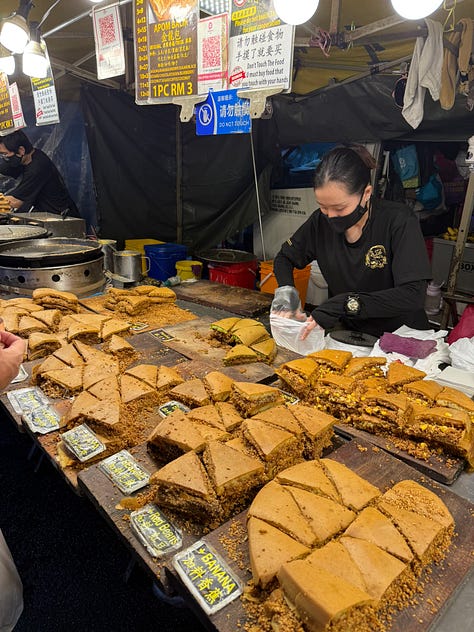
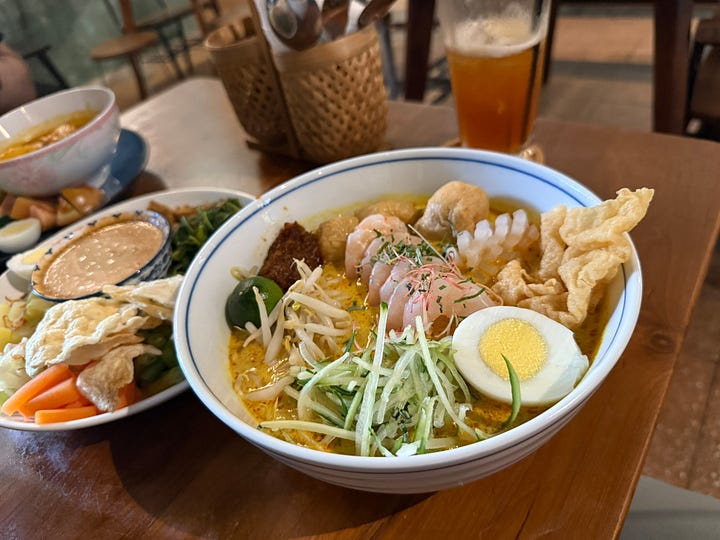
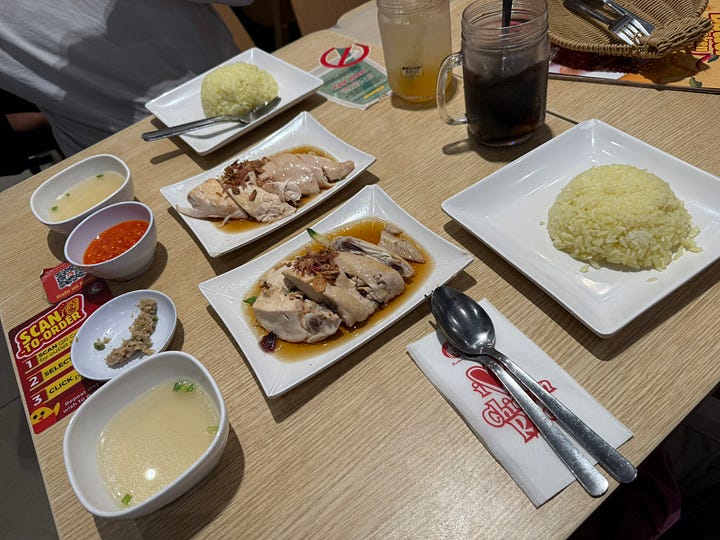
But George Town on the island or Penang stole our hearts.
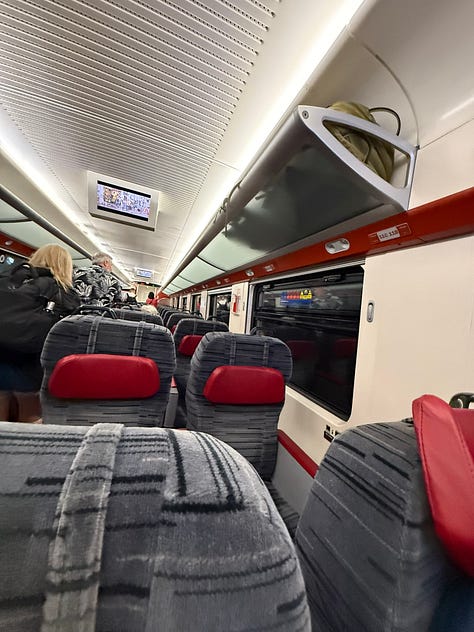
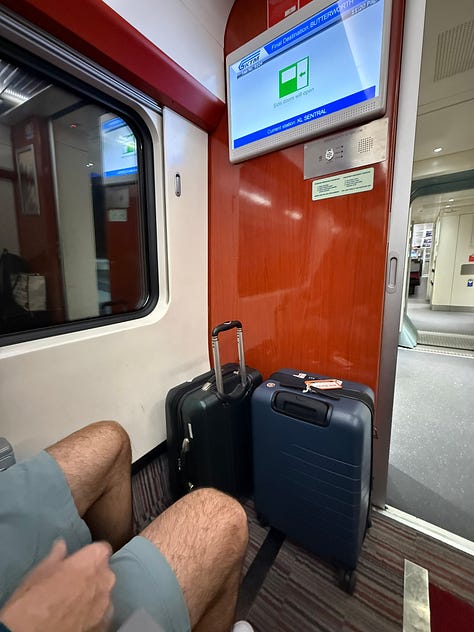
Our trip to Penang served two purposes - to get comprehensive health checks (we will share our outstanding experience at Sunway Penang in a separate post) and to explore George Town, a UNESCO world heritage site. We took the train from Kuala Lumpur to the Butterworth Station in Penang- about three hours, super comfortable and with some great views of Malaysian jungles and countryside. After staying on the Penang mainland for four days focusing on our health and wellness, we then traveled to Penang island by ferry, which felt like the right way to arrive in a historic port city.
George Town is a great place for a short stay, but if you are like us, you are going to want to make plans for a longer trip as soon as possible.
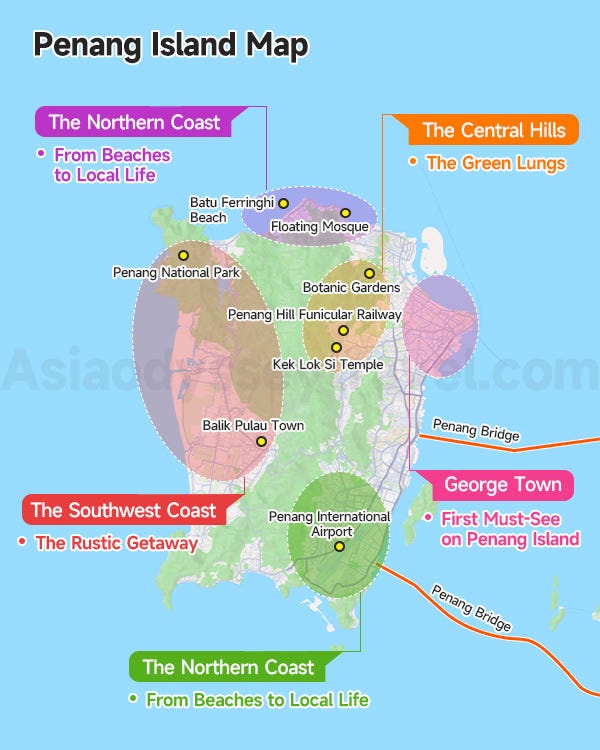
George Town began as a British colonial outpost when Captain Francis Light of the East India Company founded a free port on Penang Island in 1786, drawing trade away from Dutch‑controlled harbors and rapidly attracting Chinese, Indian, Malay, Arab, and European settlers. Over the next two centuries, Chinese clan houses, Indian temples, Malay kampungs, mosques, churches, and Anglo‑Indian mansions grew side by side, creating the distinctive multicultural streetscape that eventually earned George Town’s historic core UNESCO World Heritage status in 2008 as part of the “Historic Cities of the Straits of Melaka.” Today, it is both Penang’s modern economic hub and a living museum that still reflects its trading‑port origins.
Tourism now shapes daily life in George Town, bringing both welcome energy and real strain. Recent years have seen sharp growth in visitors to Penang, with millions of domestic and international guests drawn by food, heritage architecture, and short regional itineraries, and many locals are genuinely enthusiastic about welcoming travelers. At the same time, heritage‑driven tourism and broader gentrification have pushed up property values and rents, and local advocates estimate that the resident population in the historic core has fallen dramatically since UNESCO inscription as traditional families move out and once‑communal spaces are commercialized. For long‑stay visitors and expats who love the city, that mix of preservation, prosperity, and displacement raises a key question: how to enjoy and support George Town without accelerating the very pressures that threaten its living culture.
Arriving by train and ferry set the tone. Our hotel was a renovated merchant’s mansion in the heart of Little India and an easy walk from the ferry port, even with our rolling suit cases and backpacks (one of each, each).
Our days here quickly settled into a rhythm:
Mornings usually started early to beat the heat (out the door by 7:30 am), with an exploratory walk in different historic neighborhoods followed by breakfast at one of the many, outstanding cafes.
Late mornings and early afternoons were our siesta time to get out of the heat for a bit.
Afternoons and evenings —we headed out again for food and more exploring.
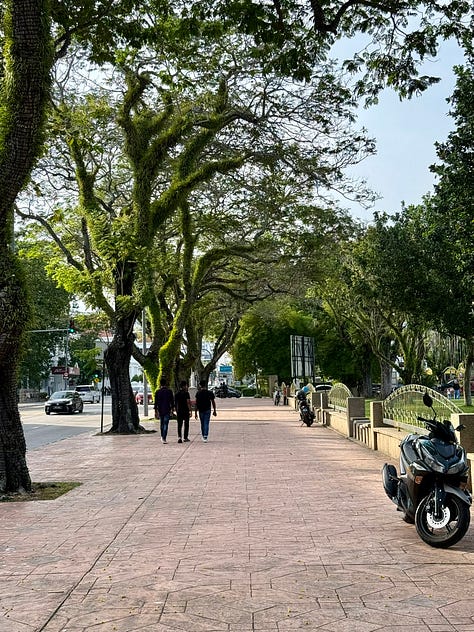
George Town is energetic but very manageable on foot. It felt busy and stimulating, and the sidewalks can disappear in the blink of an eye, but the town never felt overwhelming.
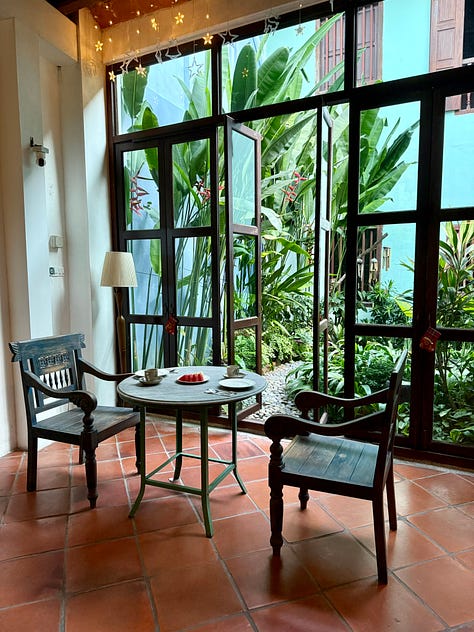
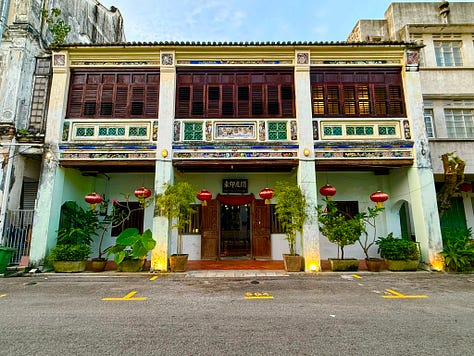
We were originally thinking about using hotel points for our stay in George Town and there are lots of good choices for that (Marriott - 4, Hilton - 2, Accor - 1). But we found a great deal paying cash through Rove Miles at the East Indies Mansion, and what a gem it turned out to be. The hotel is located in the heart of Little India - one of the most atmospheric neighborhoods in the UNESCO core: colorful saree shops, Hindu temples, and loads of delicious food that we wish we had more time to sample.
East Indies Mansion is a charming restored 18th‑century mansion tucked just off the main hustle and bustle:
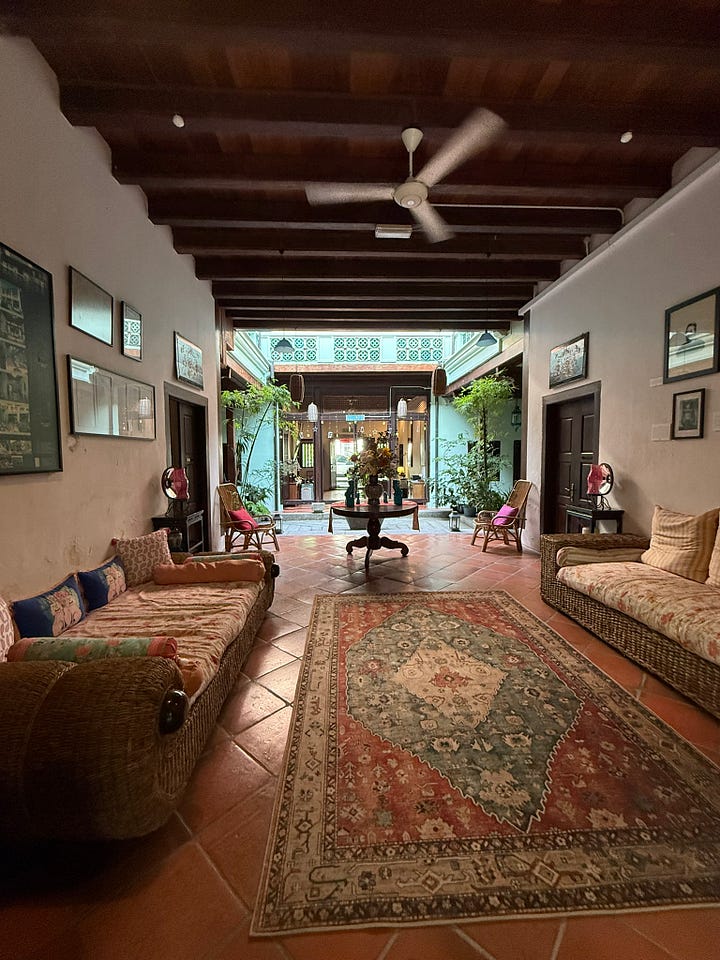
The building itself is a 240‑year‑old former merchant’s home, restored into a boutique heritage stay with courtyards, open walkways, and high‑ceilinged rooms. The rooms stayed so cool naturally that we often only needed a ceiling fan to keep things comfortable.
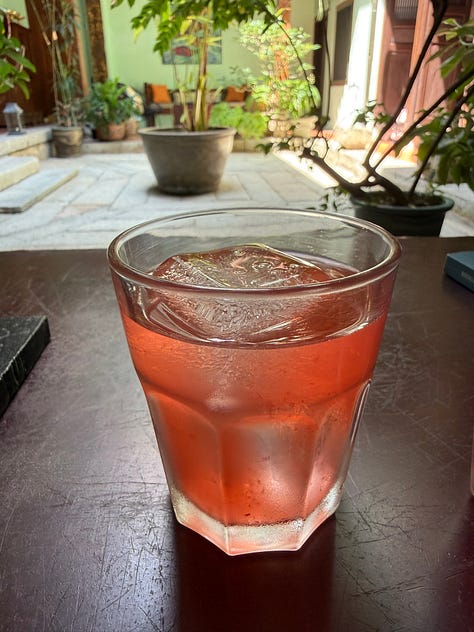
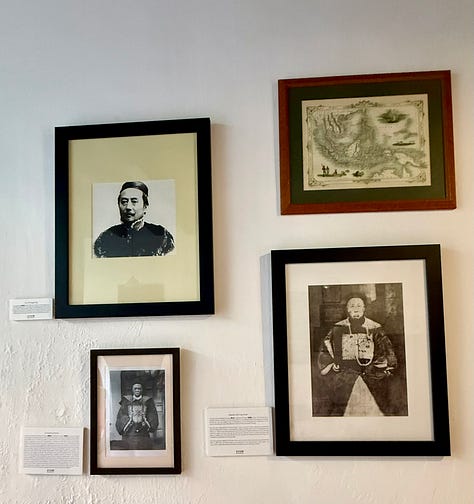
Our favorite thing about it was the contrast: you step from the noise and color of Little India into a quiet inner courtyard full of greenery, antique furniture, books, and photos of George Town’s past.
The location meant we could walk to most of George Town’s core sights within 10–15 minutes.
We only ate breakfast there one day, but it was absolutely delicious and their dining room was delightful.
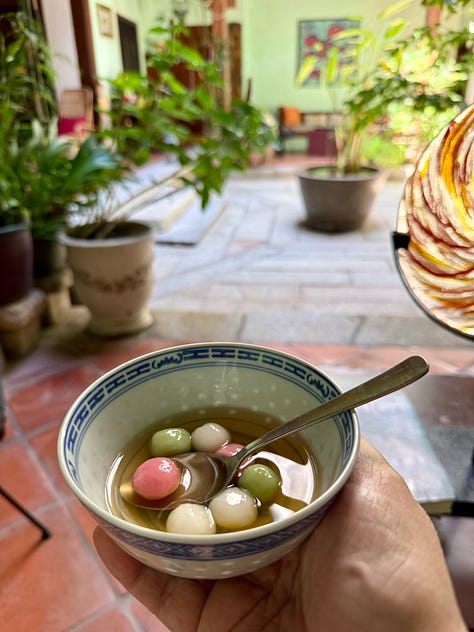
And the staff were some of the kindest and most generous we’ve encountered anywhere. Every day brought a new little gift - fresh, cold nutmeg juice made from the fruit that surrounds the nutmeg “nut”; a little hand crocheted Christmas wreath; rice balls in syrup; chocolates - every day something that made us feel incredibly welcomed and appreciated.
This little hotel convinced us that from here on out, sometimes a great little independent hotel is going to be a more interesting and enriching experience than pursuing free nights at a big brand (not all of the time, but when we find the right match).
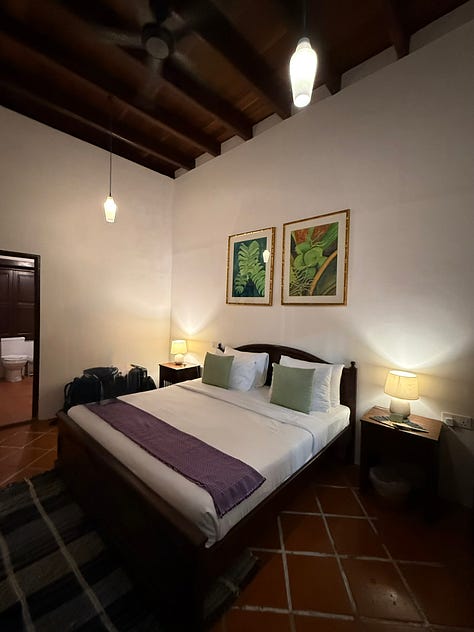
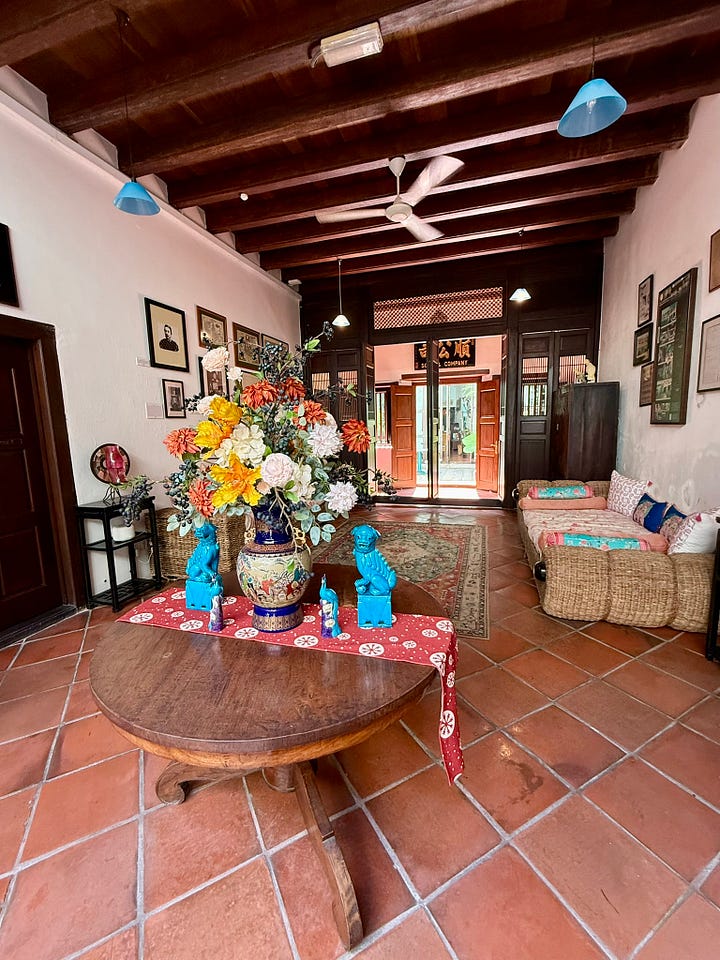
If we came back for a similar‑length stay, we’d happily base ourselves here again. For longer stays, we would look a bit farther up the coast where the temperature is generally a bit cooler and there are modern high rise apartments, great grocery stores, popular restaurants, and a vibrant international community.
We loved our overland arrival: train from Kuala Lumpur to Butterworth, then ferry across to Penang island.
The train ride up the peninsula was smooth and uncrowded, with glimpses of rural Malaysia along the way. If you want to guarantee you are on the fastest electric train with the most comfortable seats and room for luggage, book ahead at this site or on the KTMB app - seats do sell out. Cost: $88 USD for the two of us for first class seats (there are cheaper options, but this worked best for us), which included a snack and free WiFi.
*A note on the Butterworth station - there is one small elevator for arrivals and departures and long lines to access it. Otherwise, plan to hoof it up or down the rather large flight of stairs with your luggage.
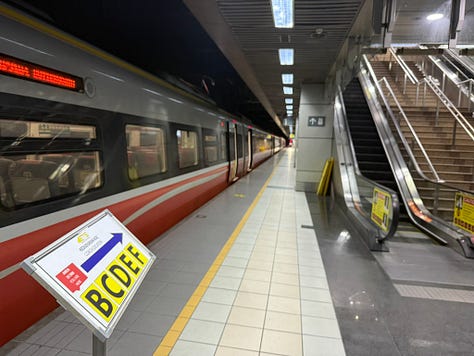
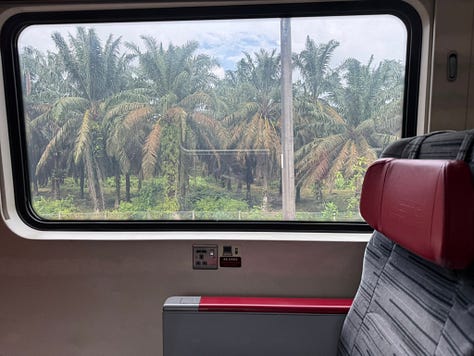
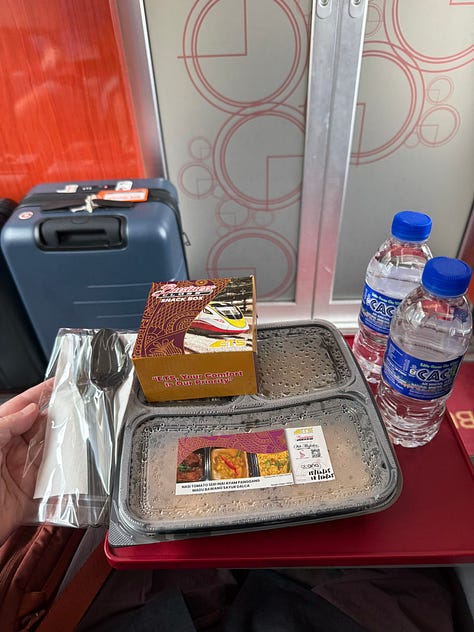
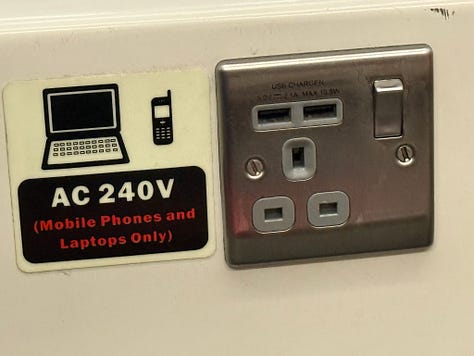
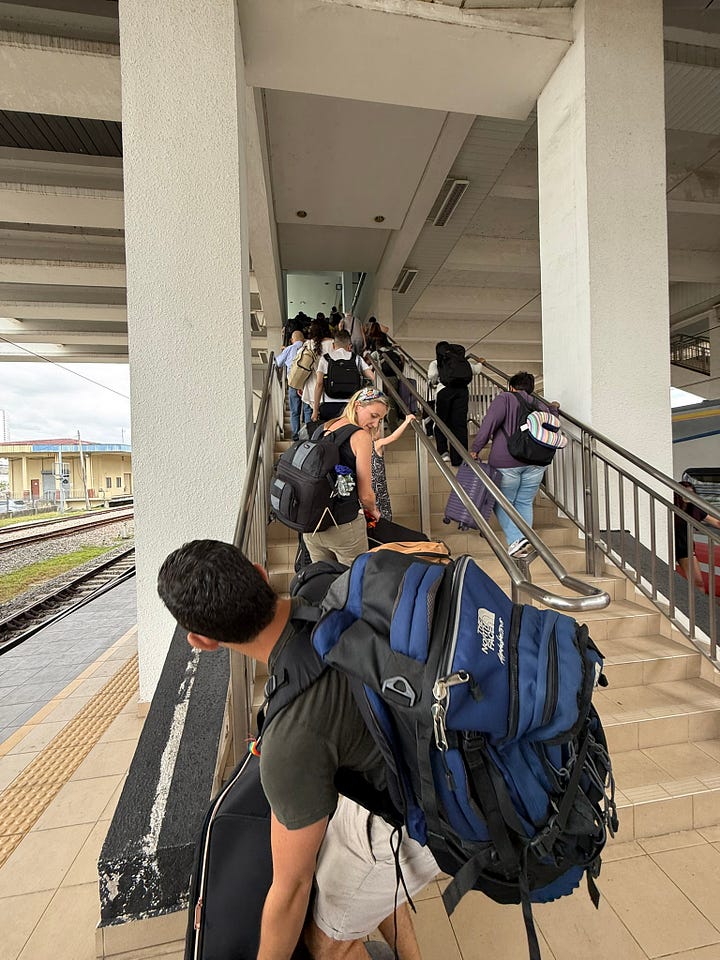

At Butterworth, it’s a short walk from the train station to the ferry terminal via covered walkways, and the ferry crossing itself is quick (so quick that we didn’t take any photos!) but scenic. There’s a tap to pay ticket machine right by the entrance to the ferry and there were people there to help when we bought our tickets and boarded the ferry. Cost: $1 USD for the two of us.
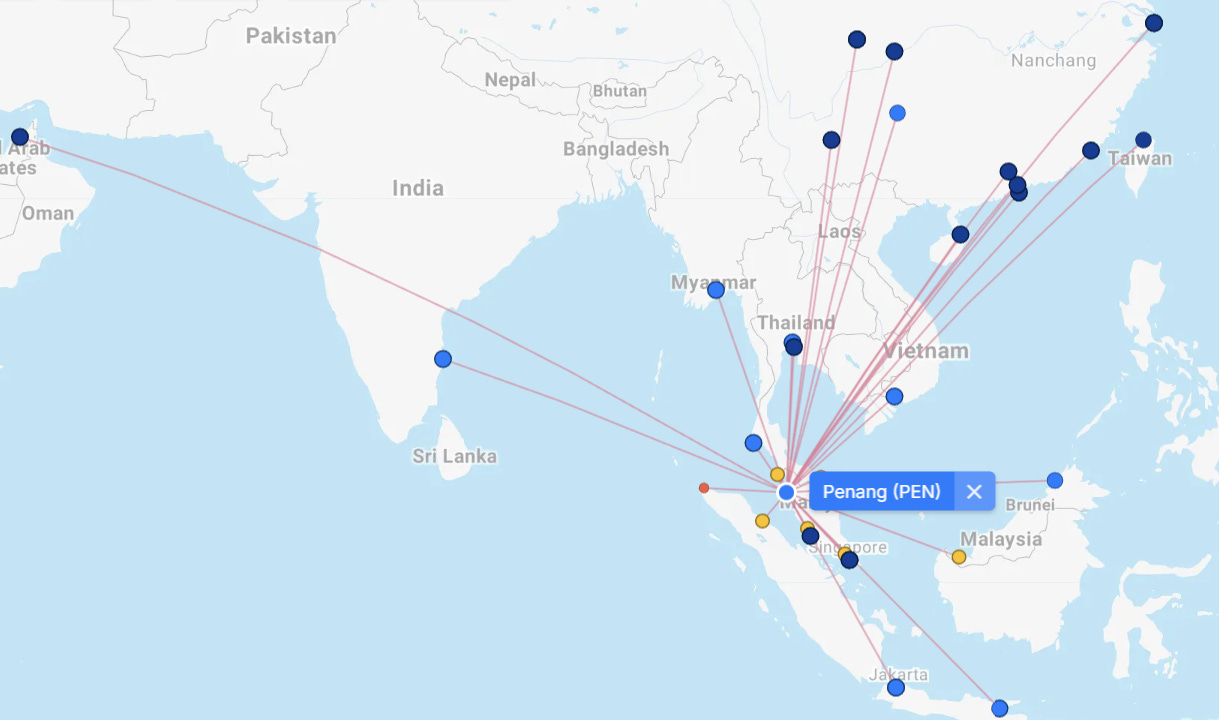
If you are arriving by plane, there are lots of direct flight or connecting airport options from throughout the region and slightly beyond. If you’re arriving by air into Penang International Airport, Grab and taxis connect you to George Town in around 30–45 minutes, depending on traffic. Our Grab from our hotel to the airport when we left cost about $17 USD and was easy to order ahead of time so it was ready to go when we were.
Once on the island, we mostly got around by:
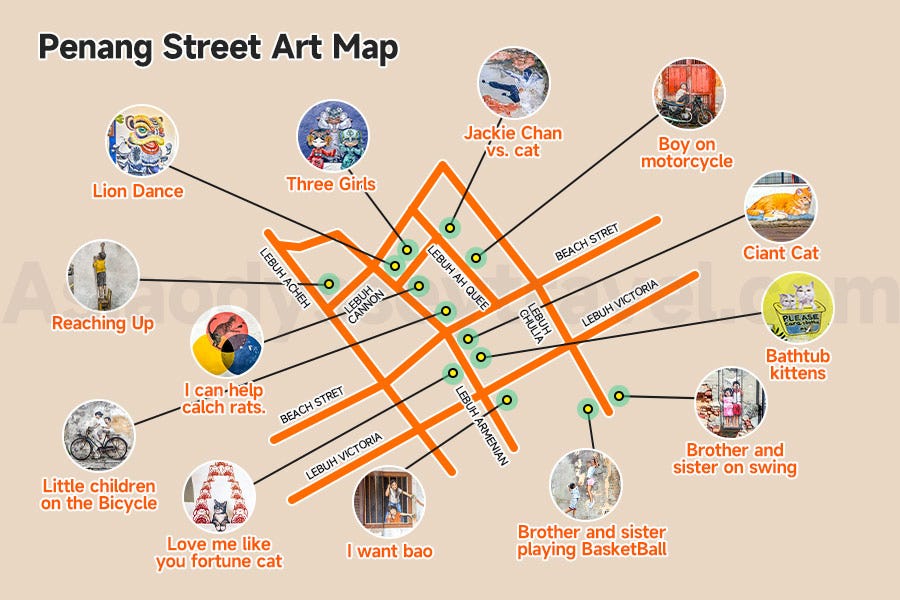
Walking: The heritage core is wonderfully walkable. A lot of the best of George Town—street art, temples, cafes, clan houses, parks—is within a couple of kilometers, and we enjoyed letting ourselves get lost on purpose in the grid of old streets.
Grab: For anything outside the core (hills, nature parks, malls, some coastal stretches), Grab rides were affordable and easy to hail in the Grab app.
Tuk Tuks/Trishaws: definitely touristy and not the most cost efficient for going longer distances around town, but they sure did look like fun (we didn’t try).
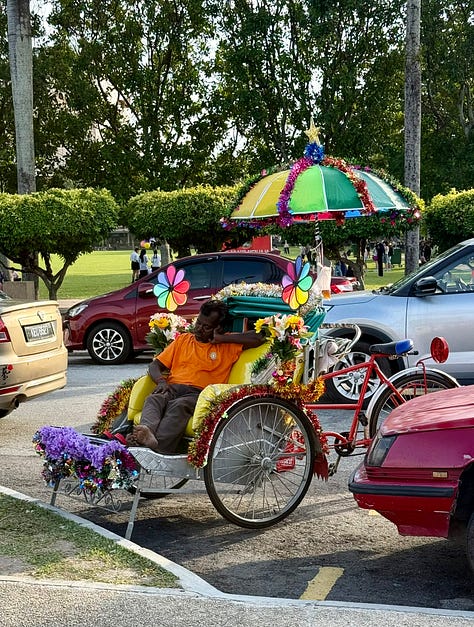
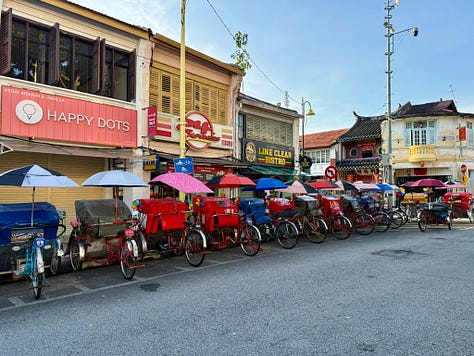
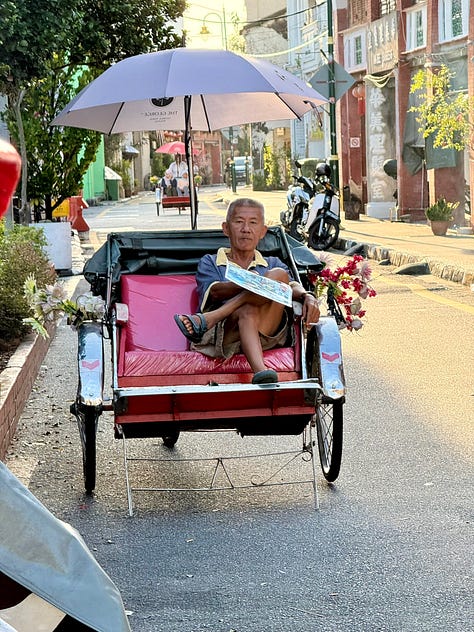
The main lesson: basing yourself in or near the core means you can do most of your exploring on foot and only use vehicles when you genuinely need them.
We didn’t try to do everything - we immediately knew that we had booked too little time here and that we wanted to come back again. So we layered core sights with wandering and food.
George Town is famous for its street art and heritage architecture—and both are best appreciated slowly.
We spent our mornings doing self‑guided walking loops through the core, roughly following well‑known routes that pass Penang Town Hall, Fort Cornwallis, the Blue Mansion, and some of the most photographed murals on and around Armenian Street.
Rather than racing to tick off every mural, we allowed ourselves time and space to discover pieces wherever we found them: around corners, behind parked cars, tucked into alleyways.
Each morning when we started our walks, we picked a new direction, thinking - “well, might as well go here since we haven’t done it yet, but it can’t be any better than we’ve already seen.” And then we were rewarded with more delightful and unexpected finds.
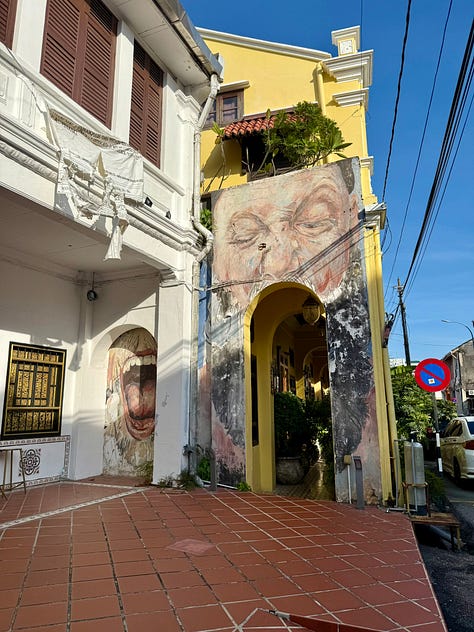
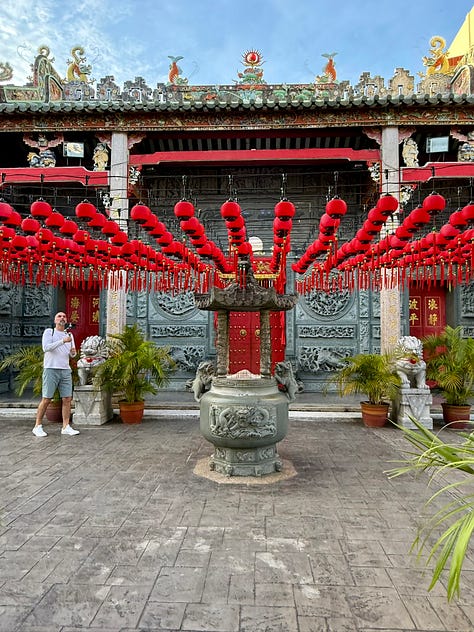
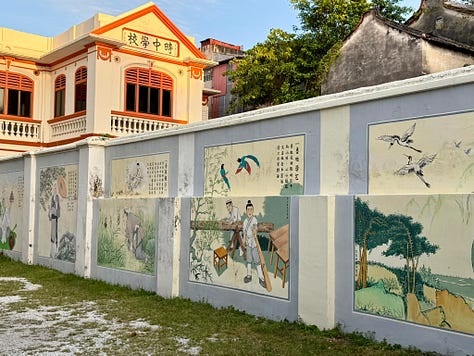
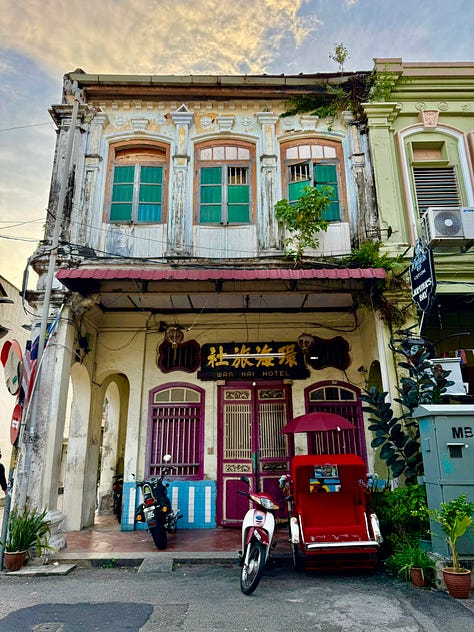
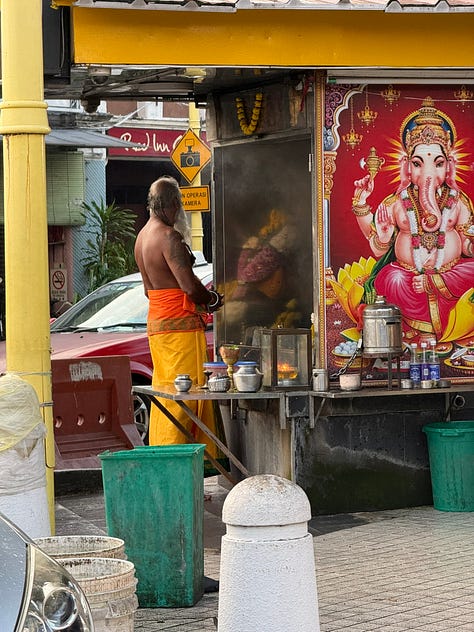
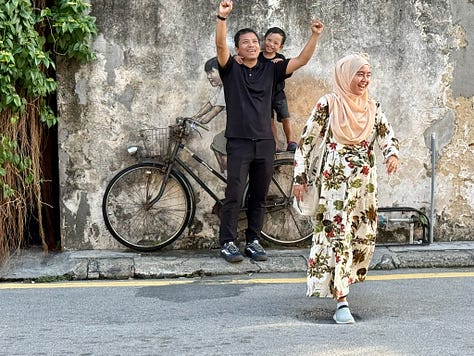
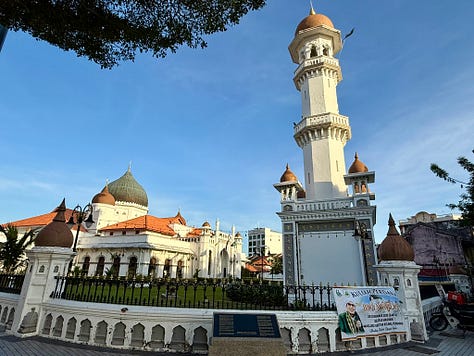
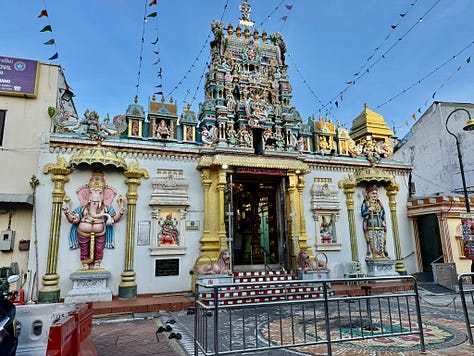
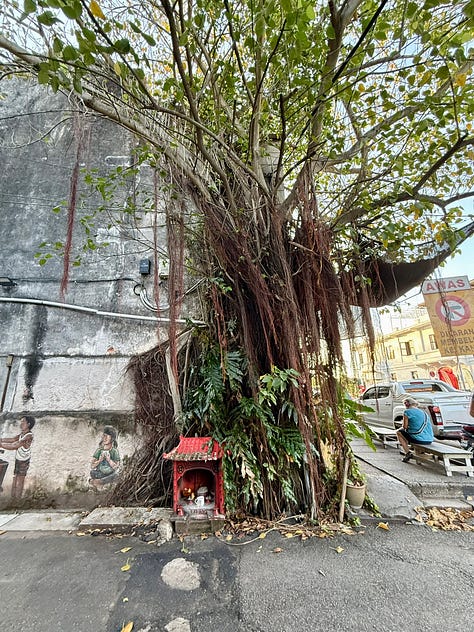
Sites around the historic downtown
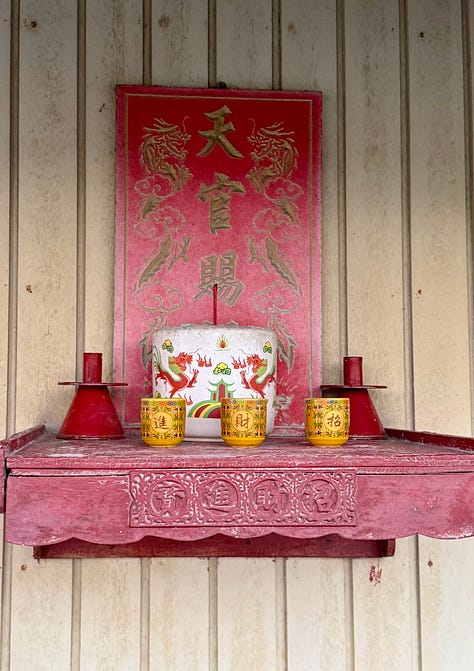
This is a great place to put down the Google map and just wander. The mix of Chinese shophouses, Indian temples, mosques, and colonial remnants makes even aimless walks feel rich.
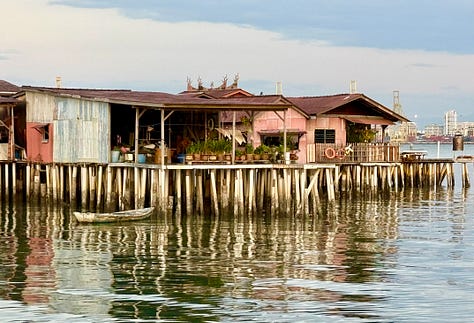
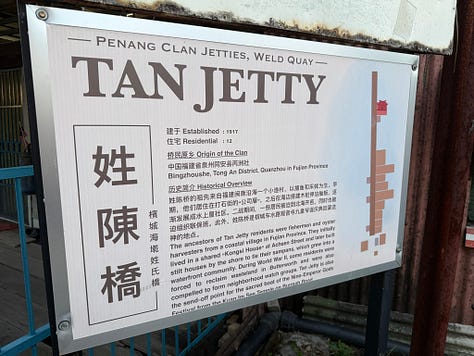
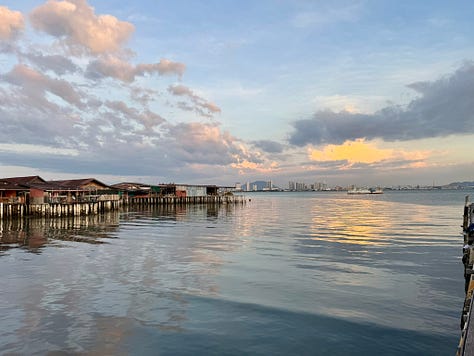
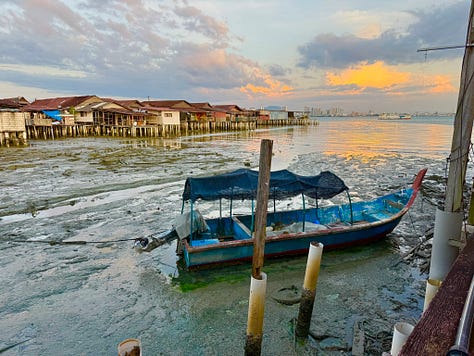
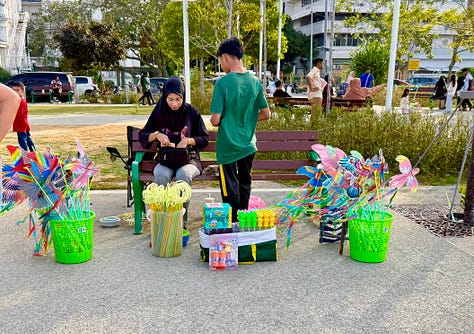
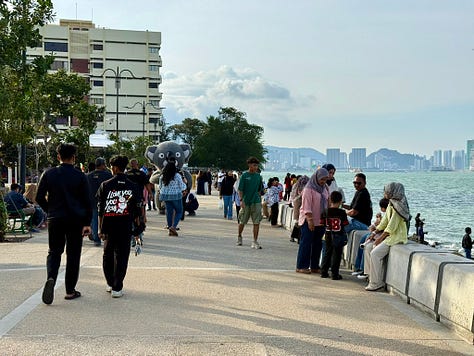
The Clan Jetties were another highlight, especially in the quieter hours around early morning and sunset. And the parks and waterfront are particularly lively on the weekends with families enjoying picnics, flirting along the waterfront promenade, flying kites, and enjoying snacks by the sea.
Chew Jetty is the most visited, with souvenir shops and food stalls; it’s still interesting but undeniably touristy. We really enjoyed watching the sunset from Tan Jetty (and its rickety pier). We tried to balance curiosity with respect, remembering that these are actual communities, not just Instagram backdrops.
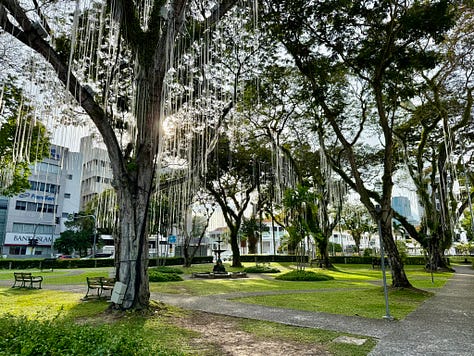
The Penang Esplanade in front of the town hall is a wonderful, cooling lush green park with great views of the mainland and up the island.
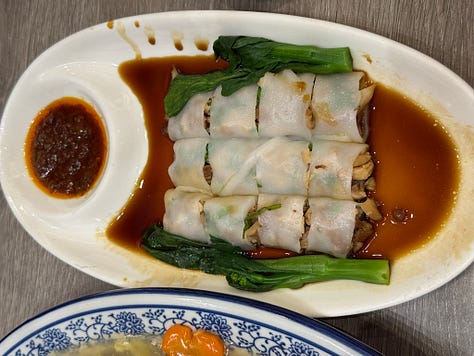
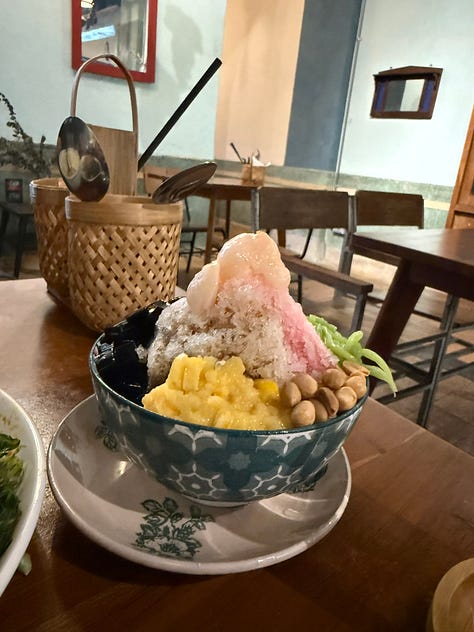
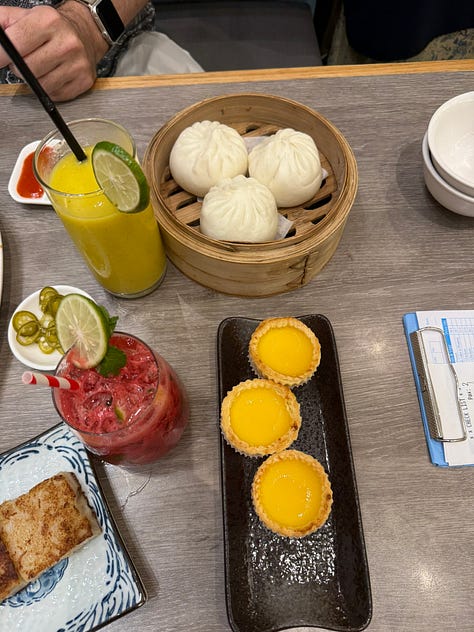
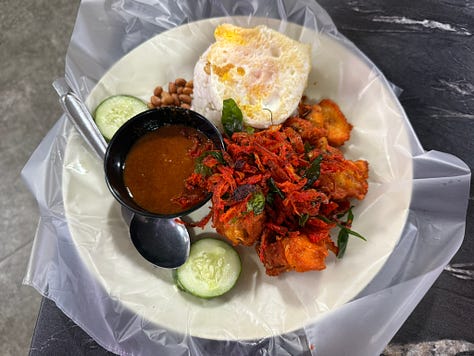
Penang is often described as one of Asia’s great food capitals, and we understand why. The Michelin Guide recommends 68 restaurants and hawker stands. Taste Atlas lists 15 regional dishes worth trying and where to find them. For vegans and vegetarians, this is an excellent guide to 17 restaurants and street food options and Happy Cow lists 277 options across the wider Penang area.
But for anyone looking for a… wait for it…. TIRAMISU BAR… they’ve got that covered too.
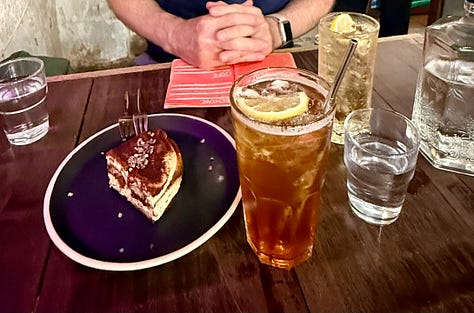
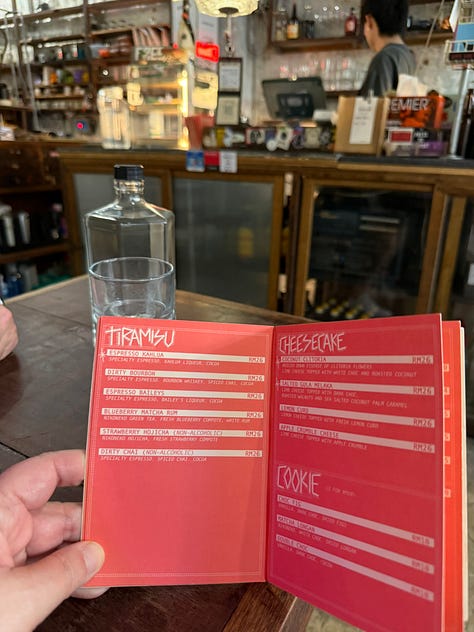
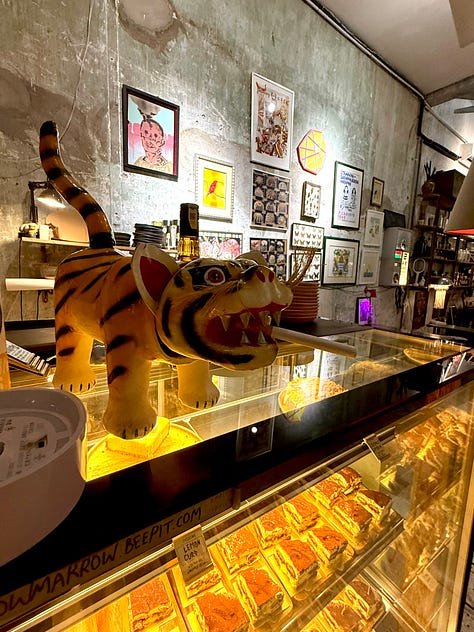
Our food rhythm looked something like this:
Breakfasts sampling various cafes and coffee shops around town.
Snacks including maybe a few too many coconut shakes, but who’s judging.
Evenings were for restaurants, night‑time street food, or a specific place we’d earmarked earlier in the day.
The joy of George Town is that you can eat very well, just about any time of day, at many price points, and just about everywhere.
George Town has a tropical climate: warm to hot year‑round, with humidity and scattered rain more than dramatic seasonal swings.
Typical temperatures hover around 23–32°C/74-90°F throughout the year, with warm nights and hot days.
There’s no cold season, but there are wetter and drier periods; generally, December–February is a bit drier and popular for visitors, while April–October sees more frequent rain showers.
When we return (because we WILL), we’ll aim again for a relatively dry month—but not necessarily peak holiday weeks.
George Town is easy to love and relatively easy to travel around, but a few practical details make a difference.
George Town is firmly in modern‑banking territory:
ATMs are plentiful.
Shops, hotels, and many restaurants accept major credit cards and most offer tap to pay. Hawker stalls, markets, and small places are still mostly cash‑only.
The apps that earned a permanent place on our home screens in George Town:
Maps: Google Maps worked well for navigation and opening hours; we downloaded offline maps in case of patchy data.
Ride‑hailing: Grab handled most journeys beyond walkable distance.
Translation: No need for English speakers. Everyone we met spoke English fluently or enough for us to easily communicate.
eSIMS: Our Airalo and Ubigi global eSIMS worked seamlessly.
If you travel more like we do:
3–4 days “highlight mode”: Good for a first taste—enough to get oriented, see key sights, and sample the food scene.
For slow travelers and nomads, we could easily see spending a month here without running out of stuff to explore (and delicious things to eat).
George Town’s UNESCO‑protected core is both lived‑in and heavily visited, which means how we move through it matters. There are some encouraging examples in George Town of tourism businesses and activities that try to keep money, skills, and attention flowing back into the community, even as visitor numbers rise. Here are a few types of places and activities to explore to maximize visiting George Town responsibly and bring home a story, not just a souvenir:
A caveat, we did not have enough time to try these places out ourselves. But we were so happy to see so many places focused on supporting the people and environment of this very special region. Several Penang cafés explicitly combine food with social impact, training, or “pay it forward” models. We plan to check these out next time and are sharing them here in case you want to make these places part of your own trip.
Lighthouse Cafe (Jalan Penang) A homestyle cafe that doubles as a social enterprise, offering vocational training and channeling part of its proceeds into charity and education funds for people in need. The same building typically houses a thrift shop, bakery, and laundry, all with a community support focus—eating here means directly supporting those programs.
WTF Studios (Lebuh Carnarvon) - currently closed, but due to reopen in 2026. A cafe‑bar‑studio that runs workshops and has a “Pay‑It‑Forward” program: with every order, they donate a hot meal to someone in need.
Kommune plant-based cafe and store a B Corp-certified purpose-driven business. Kommune supports aspiring brands and social enterprises that uplift communities, preserve nature, and advocate conscious consumerism. When you make a purchase or dine at their cafe, you are contributing to conservation efforts at The Habitat Foundation (more on that below).
Penang Heritage Trust (PHT) guided walks PHT is a long‑standing NGO founded in 1986 that promotes Penang’s cultural and built heritage and offers small, in‑depth walking tours led by knowledgeable local guides. Reviews highlight that their walks through Little India, the Chinese quarters, and waterfront not only cover history but also current community issues, and tour fees help support PHT’s broader work, including lectures and support for local artisans.
Tours by With Locals As their tag line says, always private; it’s just you and your local host; no strangers; no groups. Offers 8 tour options with local guides.
The Habitat This nature reserve on Penang Hill is a rainforest “discovery center” with 2500 species of flora and fauna, heritage trails that were built in the 1880s, a panoramic viewing platform and tree canopy bridge, and nature education. Offerings: guided walks, star light camping, and sunrise yoga, amongst others.
Have you spent time in George Town or elsewhere in Penang? What did you love most—and what surprised you? We would love to hear your stories and tips in the comments.
A note for paid subscribers, let us know if you would like our Google Map with all of our favorite places. We’re happy to share it with you (and anyone else who would like to become a paid subscriber).
Comments
Nothing yet. Say the first thing.
Sign in to join the conversation.