
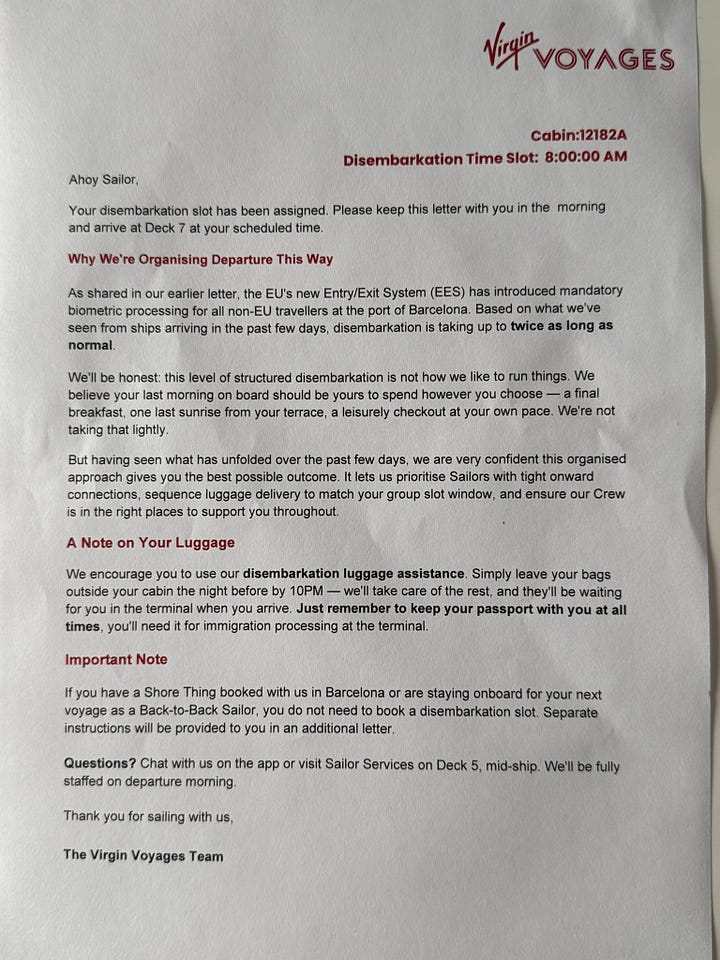
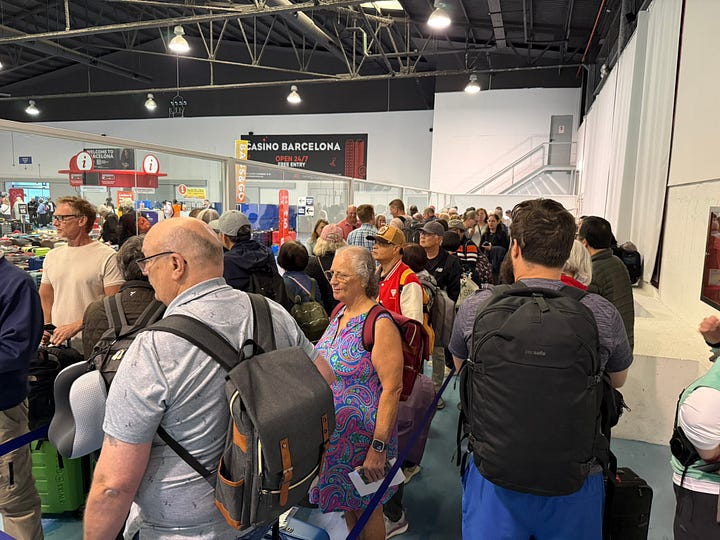
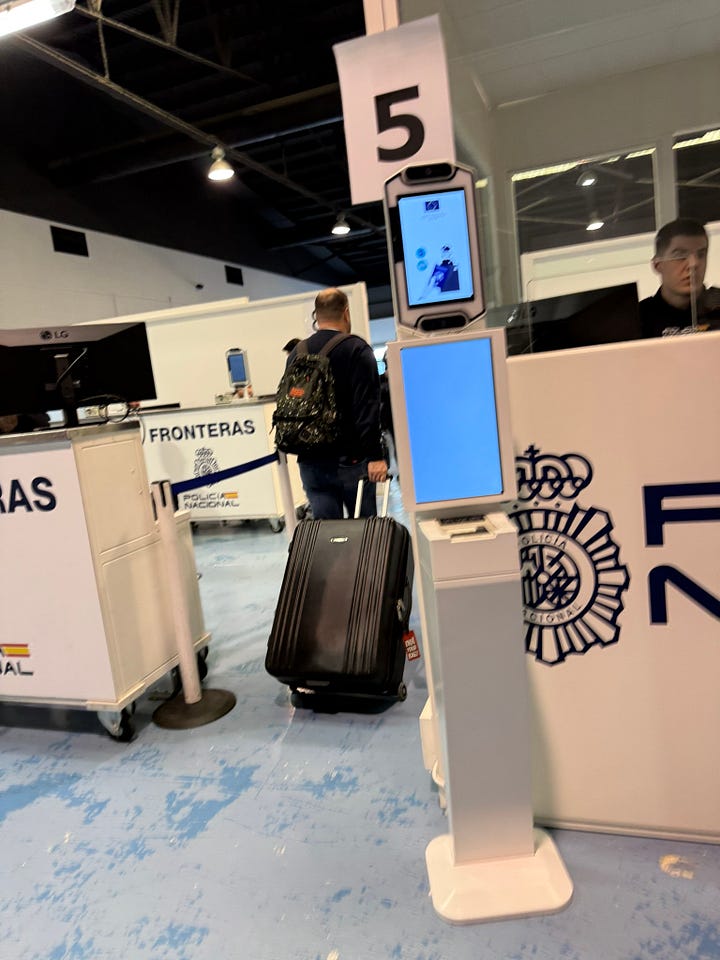
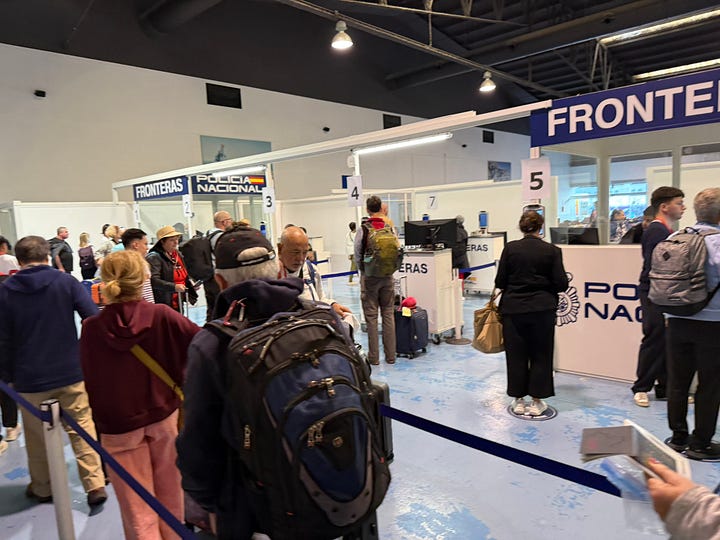
Update: It ended up taking us about an hour after getting off of our cruise ship in Barcelona to get through immigration. But, we disembarked as early as possible (8am) - behind us the lines were considerably longer. Virgin Voyages had already alerted us to there being only 5 machines in our arrival port.
We did not have the option of self-serve kiosks as I described below in the original post. We had machines for taking photos and fingerprints accompanied by immigration officers. Levon only required a photo. I (Ashley) required photo and fingerprints. We were not asked any questions about onward travel or where we planned to stay. Weirdly, most of the women on our ship reported being asked for fingerprints while the men were not. No idea why. Levon and I flew to Bordeaux, France a few days later and since we were already in the EU, we did not have to go through any immigration points.
Original Post:
If you’re heading to Europe soon like we are, expect big changes at the border. I received a few questions on this after our last post, so here’s a detailed post on what you (and we) can expect.
The European Union’s new Entry/Exit System, or EES, is now fully in place as of April 10, 2026, which means the classic passport stamp is giving way to a digital record for non-EU travelers. In its place: biometric checks, including a facial image and fingerprints, along with passport and travel data. The EES applies at all Schengen borders, so no matter how you arrive in Europe, you will run into the same new biometric checks.
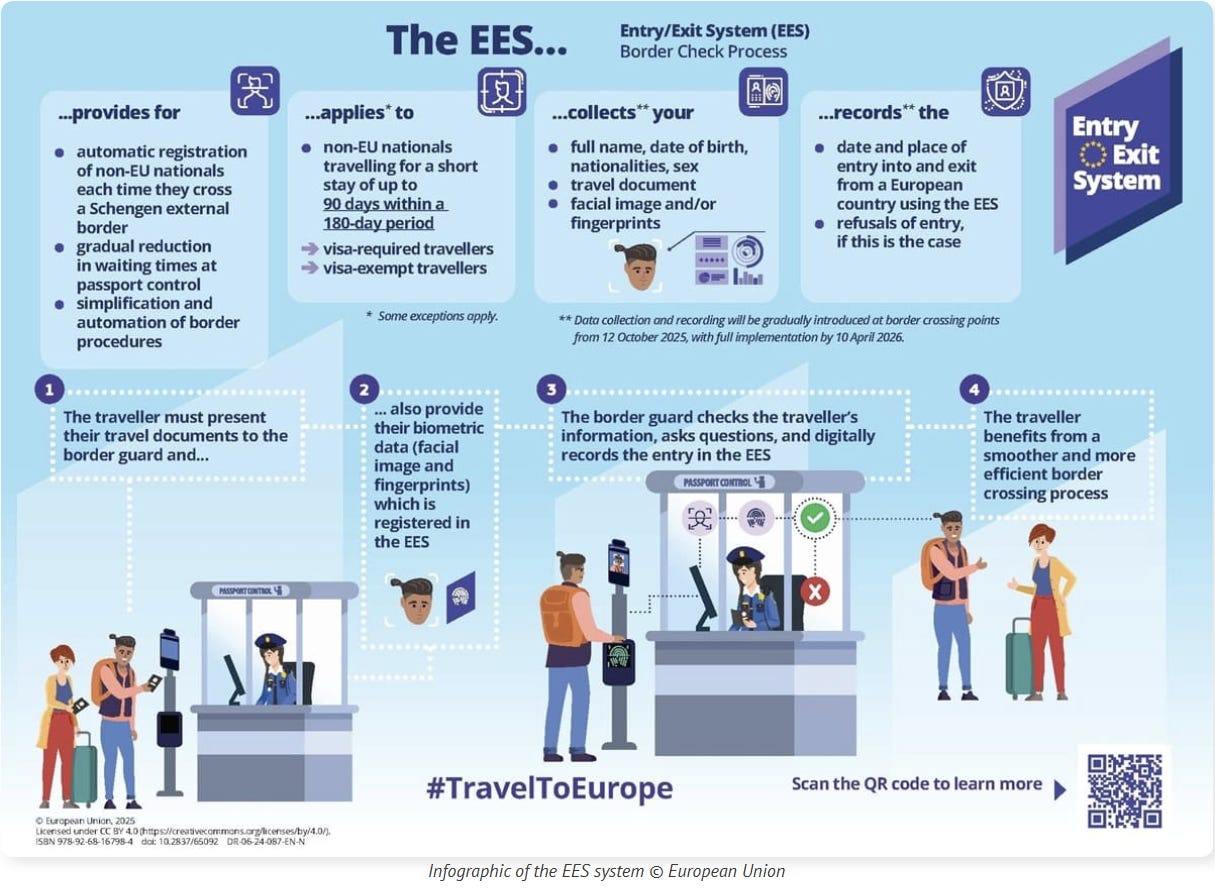
The good news is that EES is designed to make border processing more modern and more secure. The bad news is that currently, it can be pretty chaotic:
Both Ryanair and Easy Jet on flights to the UK left over 150 passengers behind in Milan last week after it took 3+ hours for passengers to make it through the new biometric sign up process (passengers with EU passports were the only ones sailing through immigration).
In Vienna and Salzburg, the system is reportedly working well and there are hardly any delays.
By rail, EES systems are set up in St. Pancras station in London for the Eurostar to Paris, but the systems are not yet working on arrival in Paris.
There are also reports that even after registering at one border, travelers are being asked to register again at other borders, even though they should be able to pass right through the biometric scanner.
That’s why I’d tell any traveler heading to Europe right now to do one thing above all else: build in extra time and make sure you have all of the required travel documents and plans organized.
Give yourself plenty of extra time and be prepared for longer lines while the system settles in.
Here’s a great video that shows you exactly what to expect:
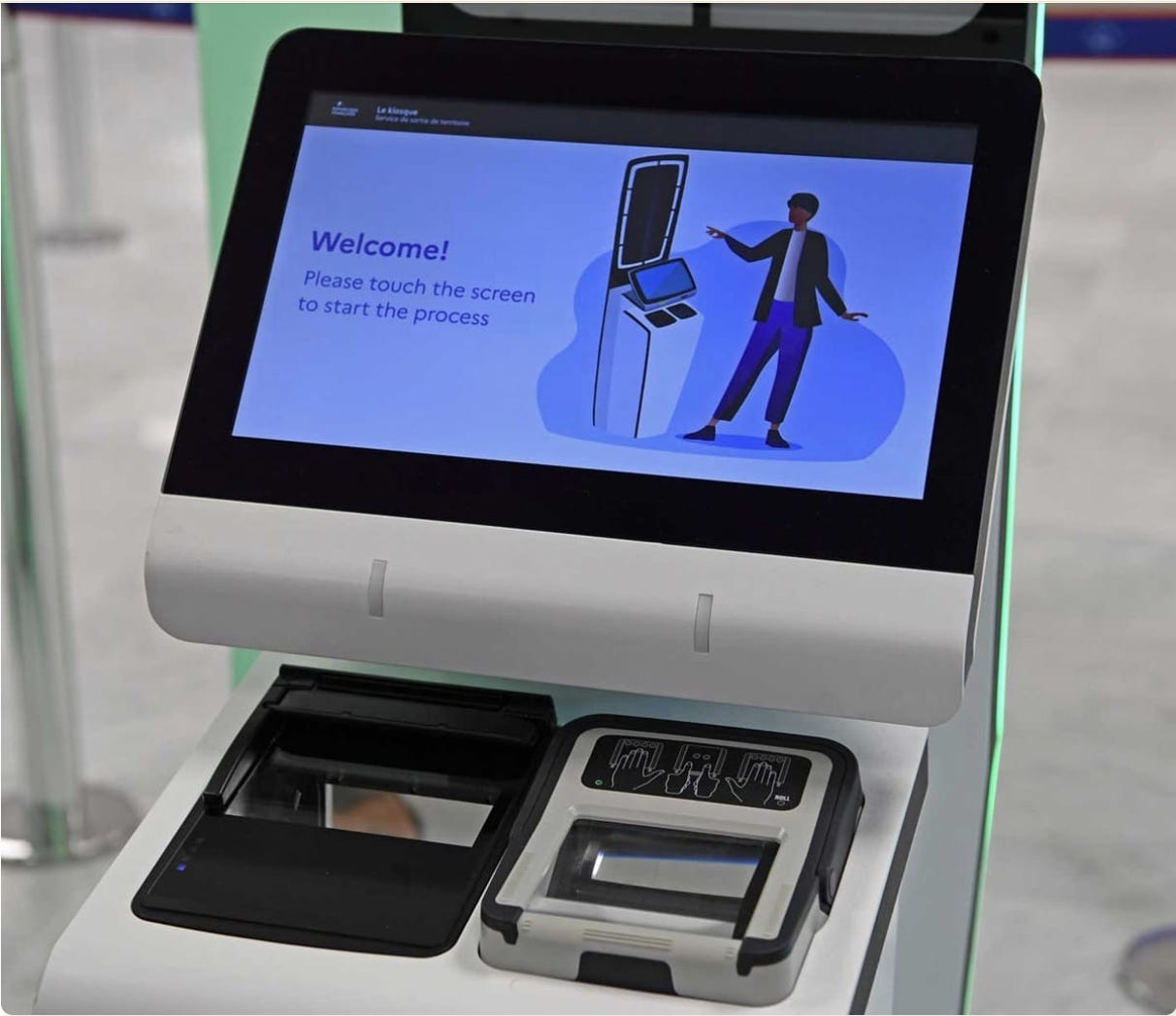
Face scan
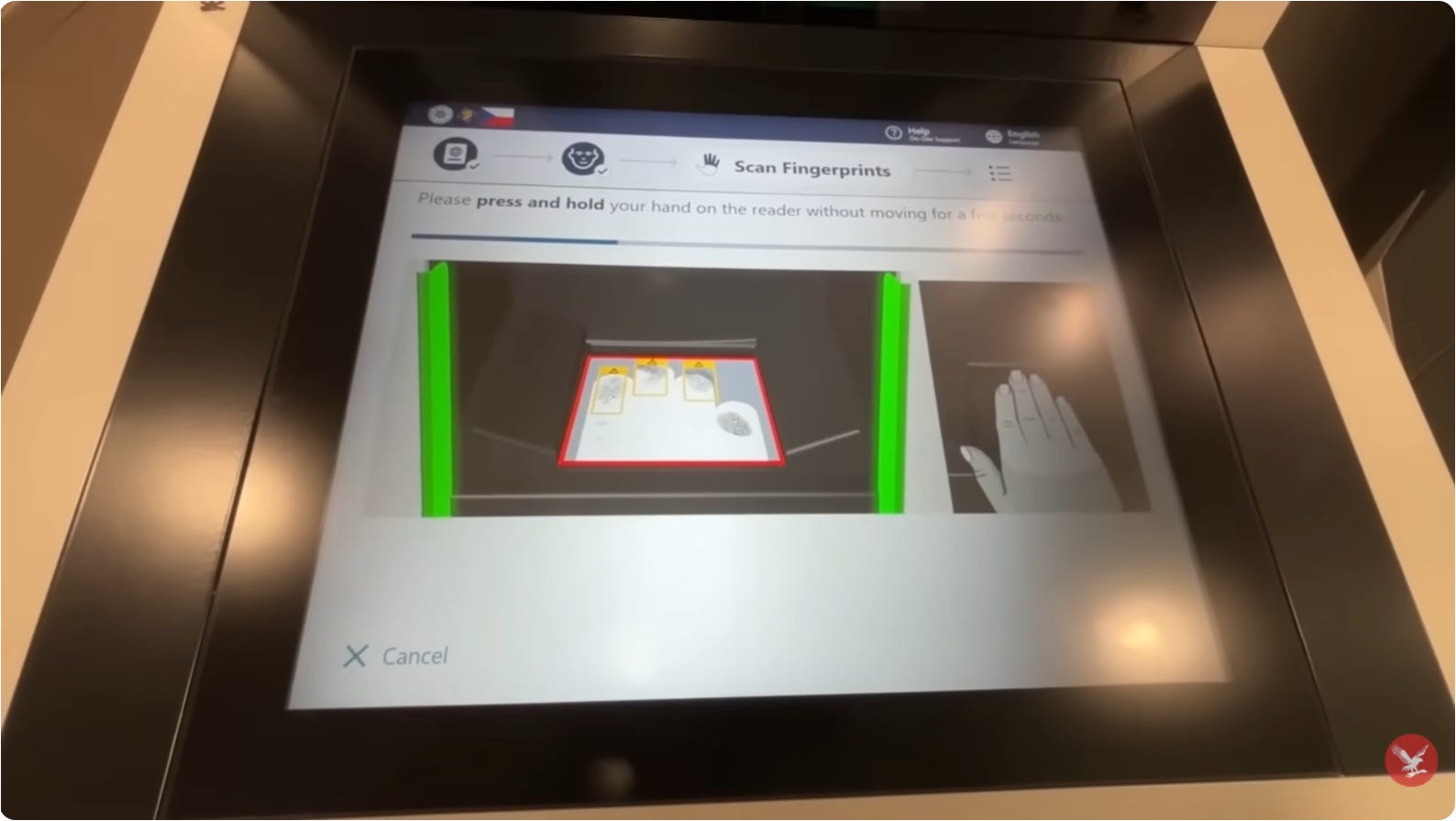
Fingerprint scan
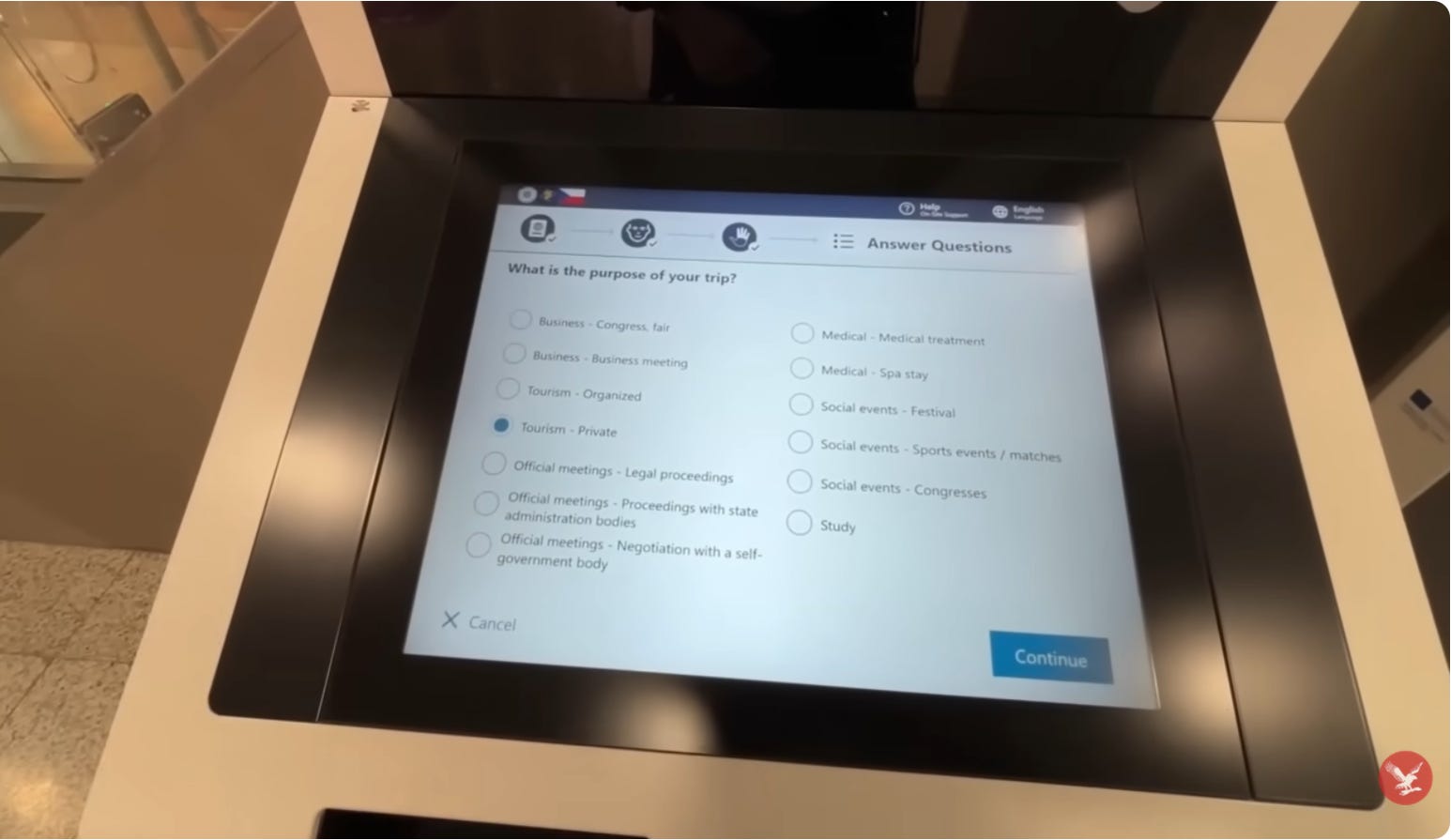
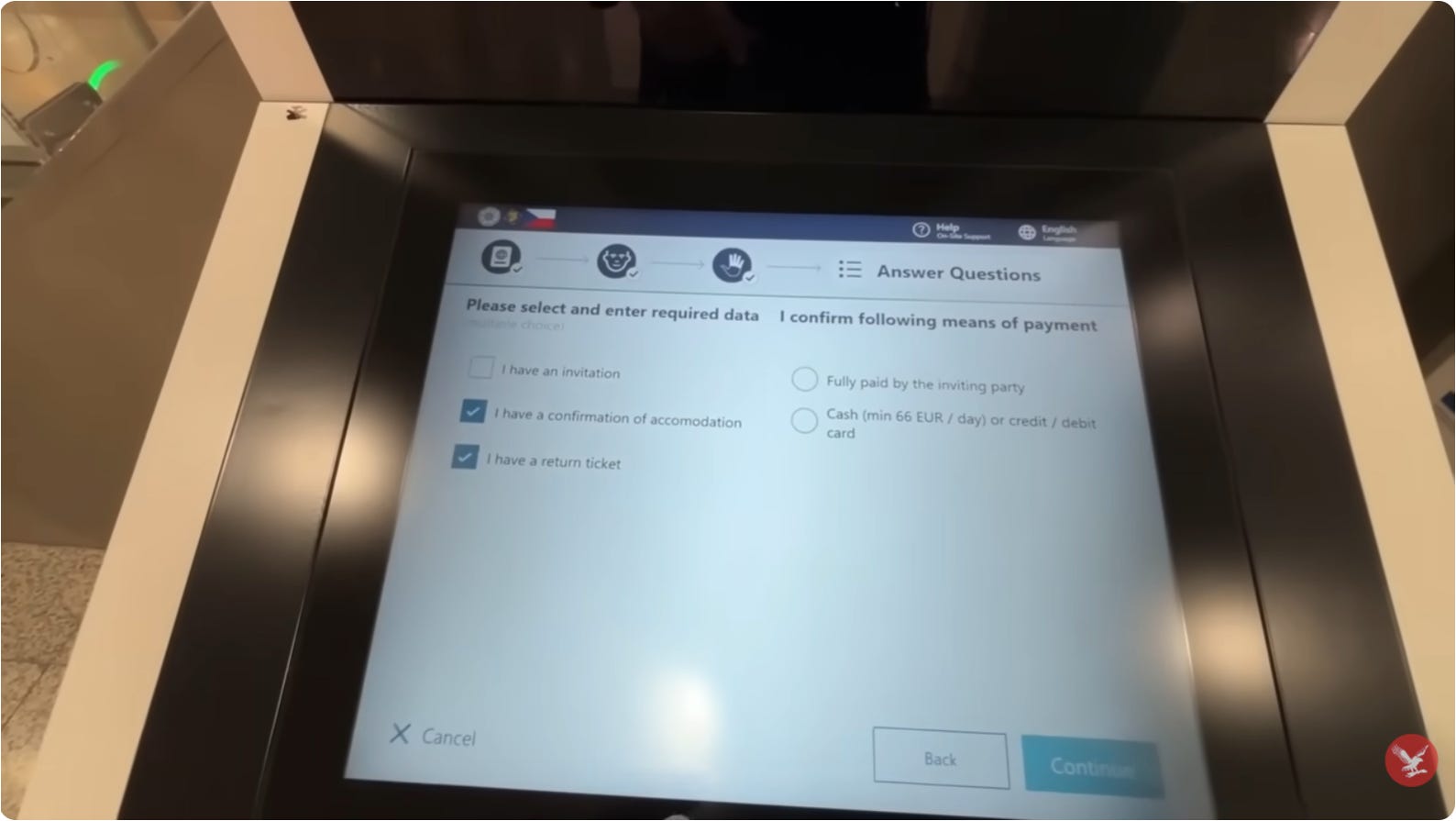
Purpose of your trip
Proof of accommodation
Proof of onward ticket
Your return/departure date
Proof of travel insurance (not required by the EES but it is one of the questions you will likely encounter)
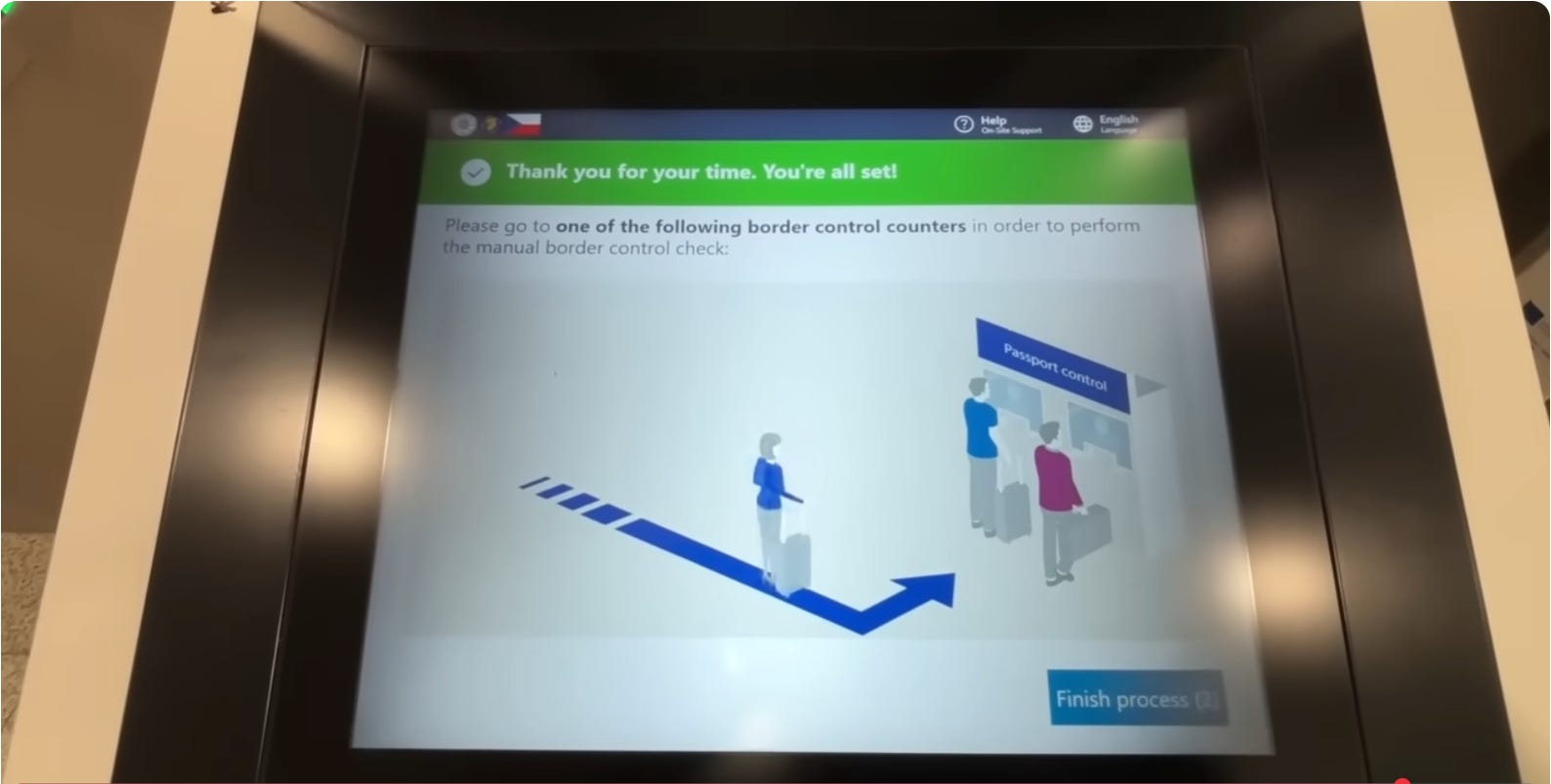
Once you are through the kiosk, you still need to go to a border control desk for a manual check
EES is being implemented in the following countries:
Austria
Belgium
Bulgaria
Croatia
Czech Republic
Denmark
Estonia
Finland
France
Germany
Greece
Hungary
Iceland
Italy
Latvia
Liechtenstein
Lithuania
Luxembourg
Malta
Netherlands
Norway
Poland
Portugal
Romania
Slovakia
Slovenia
Spain
Sweden
Switzerland
Yes. Nationals of the European countries using the EES, as well as Cyprus and Ireland, will be exempt. So, too, will non-EU nationals who hold a residence card and are immediately related to an EU national. You can find the full list of exemptions on the Travel Europe website here. All other travelers won’t have the option to opt out.
The Travel to Europe app is live and available in iTunes. Theoretically, you can use this app to prefill in some information required by the new system. As of writing this, it is only available for arrivals into Sweden and Portugal. If you are heading to either location and try the app out, please let us know what you think!
This isn’t the only change on the horizon. ETIAS, the separate travel authorization for visa-exempt visitors, is still expected later in 2026 (right now, it looks like that may be the last quarter of 2026). That means this spring and summer are really a transition period — one system is already here, and another is waiting in the wings.
We will be arriving in Spain in mid May by cruise - first in the Canary Islands as a port stop, then Alicante as a port stop, and finally Barcelona as our disembarkation port. The chatter from our fellow passengers online shows that none of us yet knows which port will be the one where we must go through the biometric process, but it seems most likely that it will be Barcelona. We have family of friends flying through Frankfurt in the next couple of days, so we will add an update to this post if we learn anything useful from that experience.
If you expect to experience your own EES registration during a border crossing in the coming days, we would love to know more about your experience.
Comments
Nothing yet. Say the first thing.
Sign in to join the conversation.