
I am a fan of the Volts podcast. A clean energy investor named Steve McBee was a guest last week to talk about clean energy losing the political fight in Washington. Dave Roberts (the host) called the industry “pathetic.” McBee just launched a hybrid LLC/C3/C6 advocacy outfit called Amped and is providing a candid diagnosis of why clean electrification has won on physics and economics but lost on politics. This lack of attention on politics is actually becoming a constraint on the global transition.
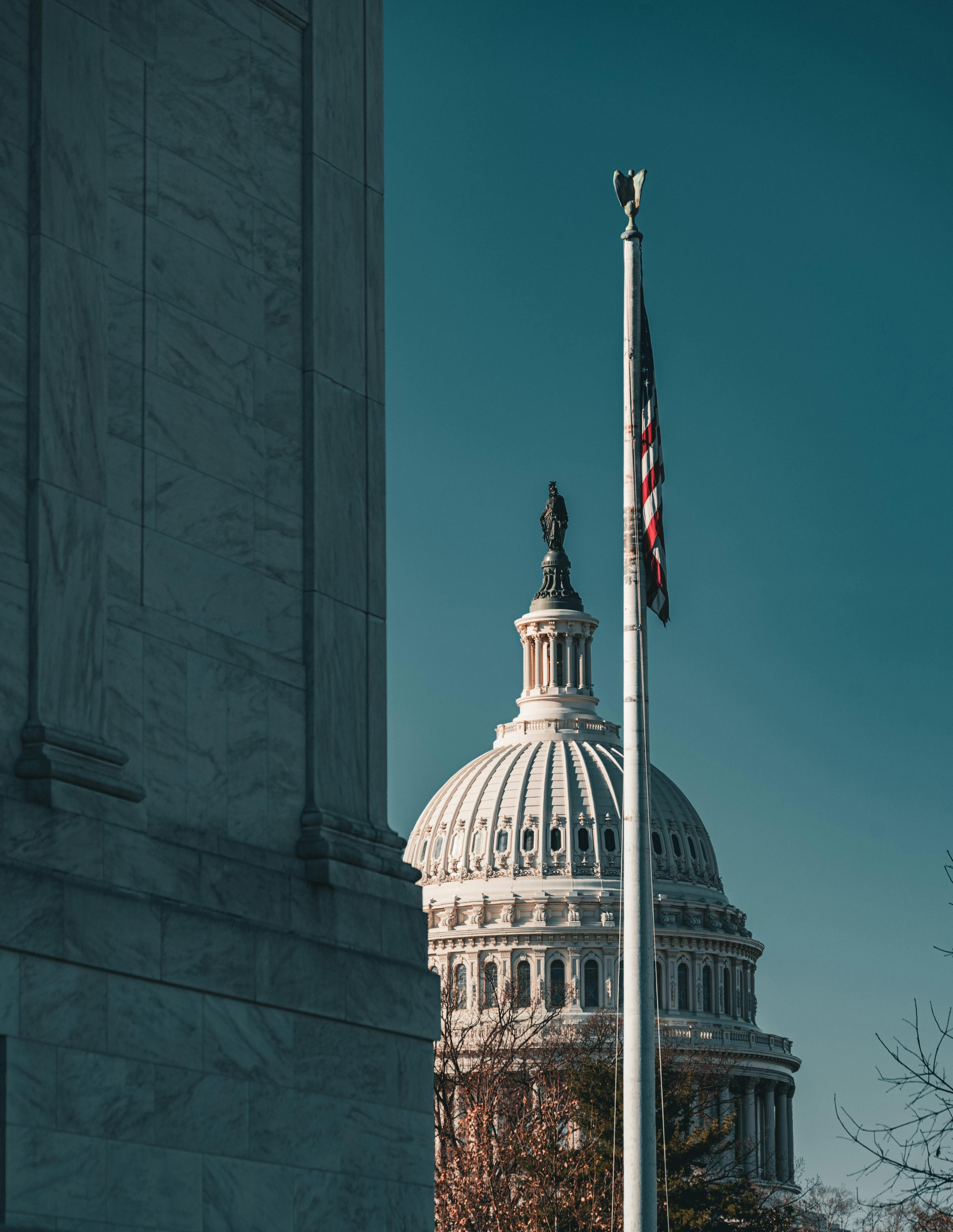
Photo by 之吟 许 from Pexels: https://www.pexels.com/photo/us-capitol-dome-with-american-flag-in-washington-d-c-30207172/
McBee’s central claim is that the U.S. clean electrification industry has not built the institutional muscle to convert commercial scale into political durability. About a trillion dollars of clean energy capacity is either installed or sitting in the U.S. interconnection queue, with three times as many battery projects as gas projects waiting for connection. The industry behind that capacity cannot reliably mount a unified press conference. The way he put it:
"we have a capabilities deficit in the clean energy influence ecosystem. The scoreboard would tell you, we're down 53 to zip. We're getting smoked."
The American Clean Power Association (ACP) presents itself as a clean-energy trade association, but its leadership includes executives from major utility and energy companies, and its board includes representation from BP’s renewable-energy business. This structurally prevents it from making the one argument the industry actually needs to make: that clean electrification displaces fossil gas, not complements it.
The price of that posture became visible last summer, when the One Big Beautiful Bill terminated the residential clean energy credit in December 2025 and set the solar and wind production credits to phase out for projects starting construction after July 2026. "The way we booted the IRA fight. We deserve to be in Siberia for 10 years. It could not have been executed any worse,", McBee said on the podcast.
The story does not end in Washington. The IEA’s 2025 World Energy Investment report puts global energy investment at $3.3 trillion, with clean energy at $2.2 trillion — twice fossil fuels. Solar alone draws $450 billion. But the IEA’s executive summary names policy uncertainty as the principal factor keeping investors in a wait-and-see posture on new project approvals. The IEA’s commentary on cost of capital is sharper still: clean energy projects are characterized by high upfront costs and minimal ongoing expenditures, which makes project viability acutely sensitive to the cost of capital, which is in turn driven by perceived political risk.
What I’d call the durability discount is the risk premium global capital prices into clean energy investments because the industry that benefits from those investments cannot politically defend the policies underwriting them. McBee says hundreds of billions of dollars want to enter the U.S. clean energy market and cannot, because that capital cannot price the political volatility of holding through an electoral cycle. The same capital, at the margin, does not flow to Lagos, Karachi, or Hanoi either — Africa receives 2% of global clean energy investment while holding 20% of the world’s population. The cost-of-capital story is global. The durability discount is set in Washington.
For scale: McBee told the Volts host the crypto industry put roughly $200 million into U.S. political races last cycle. ACP’s most recent IRS filing showed annual revenue around $32 million. Crypto outspends the entire trade association of an industry that mobilizes $2.2 trillion globally per year. That is simply nuts.
Amped’s legal structure demonstrates some ambitious goals. McBee has built an LLC, a 501(c)(3), and a 501(c)(6), with a 501(c)(4) planned. The mix is a tacit acknowledgment that no single nonprofit or trade association format can do what’s needed: rapid-response digital communications, principals-only meetings between investors and lawmakers, and public-private deal structures to de-risk transmission and other bottlenecks. The platform aims to coordinate creator-led media, lobbying, and capital deployment — what McBee calls a flywheel and what the fossil fuel industry has had in some form for a century.
The serious question is whether one firm, however well-capitalized, can substitute for industry-wide cohesion. ACP is not going away. The Solar Energy Industries Association (SEIA) just hired a former Republican governor, Tim Pawlenty, as its president. The durability discount will not close until the industry’s incumbent institutions either change or are bypassed at scale.
The throughline of my posts has assumed that renewables’ structural advantages would translate into durable policy gains. The McBee conversation is a reminder that the translation step requires a lobbying institutional infrastructure that does not yet exist, but the good news is that the durability discount is a self-inflicted tax — and self-inflicted taxes are the kind you can stop paying.
The physics is done. The capital is there: $2.2 trillion globally last year, twice what fossil fuels pulled in, with three BESS projectes queued for every gas project in the U.S. What’s missing is the decision to organize.
Looking ahead to the 2026 Congressional Elections
Investment exposure. Per Atlas Public Policy, 78% of post-IRA clean energy spending went to Republican-held suburban and rural districts. 18 of the top 20 districts by clean manufacturing investment have GOP representation. Since the start of 2025, GOP-held districts have lost $49 billion in clean energy investment to cancellations and downsizing, per E2’s Clean Economy Works tracker.
Polling. A January 2026 Climate Power / LCV survey across 18 GOP-held battleground districts found utility bills have joined groceries as a top-tier affordability issue. 52% say more clean energy will make electricity more affordable in the next 1–2 years; only 20% disagree.
Tax credit phase-outs. The OBBB, signed July 4, 2025, terminated the residential clean energy credit (25D) on December 31, 2025, and phases out the 45Y/48E solar and wind production and investment credits for projects starting construction after July 4, 2026. Three Senate Republicans voted no: Collins (ME), Tillis (NC), Paul (KY). Tillis announced retirement immediately after.
Money on the field. LCV launched a $4 million ad campaign across 11 congressional districts in April 2026 tying OBBB to higher energy costs. Climate Power, Clean Energy for America, Protect Our Jobs, House Majority Forward are running parallel programs. Senate Majority PAC has committed $20 million to Ossoff alone. Senate Leadership Fund has committed $44 million against him.
The most useful map. Echo Communications’ “10 Energy Affordability Battlegrounds” identified Arizona, Florida, Georgia, Iowa, Maine, North Carolina, Ohio, Pennsylvania, Texas, and Virginia as the states where rising bills, data center proliferation, and competitive races align.
Status: Toss-up. Open seat after Tillis retired post-OBBB vote. Energy angle: As governor, Roy Cooper made NC the #9 clean energy state nationally. He centered his March 4, 2026 campaign kickoff on affordability — “make stuff cost less.” LCV Action Fund endorsed him in September 2025. NC-09 (Richard Hudson) is among the top three districts nationally for clean manufacturing investment, anchored by Toyota’s battery plant; bills are projected to rise 3% in 2026 and 14% in 2027. Whatley, former RNC chair, has tied himself tightly to Trump’s energy posture. Why it matters: The most expensive Senate race of 2026. Cooper is the clearest test case of a Democratic candidate running explicitly on a clean-energy-as-affordability frame in a state with major clean manufacturing exposure.
Status: Husted +6 in a December 2025 Emerson poll; race rated competitive. Special election to finish Vance’s term. Energy angle: Ohio saw 10% electricity bill increases in 2025, tied for among the sharpest in the nation. The state ranks 5th nationally for existing data centers. Brown is explicitly running on energy prices — his December 2025 launch ad attacked Husted for “doing nothing” on costs. OH-09 (Marcy Kaptur, D) leads the country in clean-energy project count. Husted, an OBBB voter, is trying to pin Brown to “anti-climate change policies” that he says raised electricity prices. Why it matters: Brown’s “dignity of work” frame is being remixed with utility-bill messaging — the closest national test of whether the labor-affordability-clean-energy synthesis works in a Trump-trending state.
Status: Open seat after Ernst retired. Lean R, but Echo and others flag energy as a sleeper issue. Energy angle: Iowa generates roughly 57–60% of its electricity from wind, the highest share of any state. The OBBB phase-out of the wind production tax credit (originally championed by Iowa’s Grassley in 1993) hits Iowa’s largest power-generation industry directly. Grassley fought to soften the phase-out and voted yes; Hinson voted yes in the House. State Sen. Zach Wahls has campaigned on clean energy and the loss of wind sector jobs. Why it matters: Iowa is the cleanest one-to-one test of whether OBBB rollback hurts Republicans in a state whose energy economy is built on the credits the bill cut.
Status: Open seat (Peters retiring). Toss-up. Trump +1.4 in 2024. Energy angle: Per a February 2026 Atlas Public Policy analysis, Michigan lost $4.1 billion in planned clean manufacturing investments and 11,700 anticipated jobs under the policy shift. $540 million in climate-related grants canceled or delayed in 2025, including $156 million slated for low-income residential solar. Trump administration ordered Consumers Energy to keep the JH Campbell coal plant open past its retirement date. Mallory McMorrow’s framing is the most aggressive: “There is a moment now, an opportunity… to really reframe the argument on clean energy. This is a freedom issue, it’s a cost issue.” Why it matters: The Democratic primary is itself a referendum on how to message clean energy in an auto-manufacturing state where EV investment has been the largest economic story of the last three years.
Status: Toss-up. Cook Political and Sabato’s both rate “leans D.” Ossoff up single digits. Energy angle: Ossoff is the author of the Solar Energy Manufacturing for America Act, folded into the IRA. Georgia is the #1 state for IRA-driven clean energy investment per E2, with $4.50 in private investment for every $1 of federal funding. The Qcells plant in Dalton is the largest solar manufacturing facility in the Western Hemisphere. Georgia Power customers’ bills are up $43/month since 2022; more than 300 new data centers proposed. In November 2025, two pro-affordability commissioners defeated incumbents on the Georgia Public Service Commission — a preview of the issue’s salience. Why it matters: Ossoff has the cleanest record-to-issue match of any Senate Democrat: the law he authored is the law being rolled back. If clean-energy-as-affordability works anywhere, it should work here.
Status: Collins running for sixth term. Toss-up. Harris won Maine in 2024. Energy angle: Maine had a 13% utility bill spike in 2025, seventh-highest in the nation. Collins voted no on OBBB — one of three GOP “no” votes — citing Medicaid, not energy. Maine offshore wind projects, which Collins championed for over a decade through UMaine’s Aqua Ventus program, have been blocked by the Trump administration. Climate Power’s Jesse Lee called Collins’s silence “deafening” on Trump’s broader climate rollback. ME-02 (Jared Golden, D) is one of the most vulnerable House Democratic seats. Why it matters: Collins’s “no” on OBBB complicates the Democratic attack. The interesting question is whether her silence on offshore wind cancellations gets weaponized against her by groups beyond the parties.
The cleanest case study in the country. Ciscomani voted yes on OBBB after publicly pledging to defend clean energy credits. His district contains the Lucid Motors plant in Casa Grande and is on the path of the SunZia transmission line — the largest renewable project in the country, which came online in April 2026 delivering power to 3 million homes. Arizona led the nation in electricity consumption growth in March 2026 (+19.4% YoY). Tucson Electric Power requested a 13% rate hike. Per a NERA analysis, OBBB’s clean energy cuts will raise Arizona household electricity bills 12.7% by 2032, costing $340 per household annually. LCV and House Majority Forward are already running ads accusing him of “creating a massive rate hike on electricity.”
CNBC reported in April 2026 that Republican incumbents in these four competitive districts face an “AI data center backlash” tied to rising electricity prices. Pennsylvania saw a 13% bill spike in 2025 (tied 5th nationally). Amazon’s $20 billion data center investment is concentrated in these districts. NRDC commissioned polling specifically in PA-1, 7, 8, 10 showing voters want data centers to “pay their own way” and want clean energy expansion. Governor Shapiro’s data-center pricing plan provides Democratic candidates a state-level frame. Brian Fitzpatrick (PA-1) was one of only two House Republicans to vote no on OBBB — meaningful in his bid for re-election.
Miller-Meeks won by 0.2% in 2024 — one of the closest House races in the country — and just won her June 2 primary against Pautsch. She faces Christina Bohannan again in November. Zach Nunn (IA-03) faces state Sen. Sarah Trone Garriott. Both Republicans voted for OBBB in a state where 57–60% of electricity comes from wind. Iowa wind tax credits — created by Grassley in 1993 — are the credits the bill phased out.
NV-03 is among the most competitive Democratic-held seats. Lee co-sponsors the bipartisan SHINE Act for residential solar permitting. NV-02 (Amodei) is the third-highest district in the country for clean manufacturing investment (Tesla’s Gigafactory in Sparks plus the Thacker Pass lithium mine). Lee’s positioning shows the Democratic version of the clean-energy-affordability frame in a state with high power costs and casino-driven electricity demand.
Golden’s district went Trump +10 in 2024. He’s the most vulnerable House Democrat seeking re-election. State Auditor Matt Dunlap is challenging from the left in the June 9 primary. Maine had a 13% utility bill spike in 2025. The race isn’t primarily about clean energy, but how Golden positions on energy affordability — and whether he gets credit or blame for Maine’s offshore wind setbacks — is part of the broader story.
Buddy Carter’s old district contains the largest solar manufacturing investment cluster in the country ($7.8B+, Qcells expansion). The seat is now open with Carter losing the Senate primary. Worth watching for whether either party tries to claim the Dalton manufacturing story.
Atlas Public Policy — Clean Economy Tracker for district-level investment and cancellation data, updated quarterly.
E2 — Clean Economy Works quarterly reports with state and district detail.
Climate Power — polling memos and ad tracking.
LCV Action Fund — endorsements and ad buys.
Cook Political Report — race ratings updated weekly.
Echo Communications — Electoral Landscape series on how candidates are executing energy messaging.
David Roberts, “Giving clean electricity a political voice of its own: A conversation with Steve McBee,” Volts, May 29, 2026.
IEA, “Cost of capital expectations for 2025 diverge amid rising uncertainty.”
E&E News / Politico, “New clean energy advocacy firm mounts ‘challenge to the groups in Washington.’”
Inside Climate News, “Washington’s Biggest Clean Energy Lobbying Group Pushes Natural Gas-Friendly Policy” (ACP membership and board composition).
Bipartisan Policy Center, “2025 Reconciliation Debate: One Big Beautiful Bill Act Energy Provisions.”
SEIA, “Explained: The Clean Energy Provisions in the One Big Beautiful Bill.”
Amped — public-facing materials (May 2026 launch).
Comments
Nothing yet. Say the first thing.
Sign in to join the conversation.