
When one thinks of self-published books, the vision you may conjure is of Amazon print-on-demand books about conspiracy theories or poorly edited (if edited at all) stories with half-baked ideas that go nowhere. So it stands to reason that when one hears the words “Self-Published Comics”, you may assume that the same holds true. But that isn’t necessarily the case. I’d like to address this and why we comics creators would choose to self-publish our own work as opposed to taking it to a major publisher with a wider reach and advertising budget.
When a person decides they want to write a book, even though they haven’t written anything since that creative writing class in high school, they can. The infrastructure is there for them to sit down, type it out, make a cover and print it. That’s great. I’m not knocking it. But when you’ve never made creative decisions, spent the time to revise, edit or even share what you’ve written with a friend before pressing “Publish”, the outcome will likely be…not so great. If enough people do this, then what you have is a pubic who just sees a sea of books that aren’t worth their time. Sure, there are probably some out there that are amazing. But the brand of self-published books is so tarnished by the ease in which one can vomit garbage that the diamonds get lost. I don’t know about you but I won’t wade through that to find something good.
Comics, on the other hand, have a natural control valve. In order to make a comic, you need to be able to draw. It can be stick figures, but you need to have visuals to go along with your text. Right there that eliminates laziness. You also need to dig deeper with your thought process. There are considerations to be made like page turns and pacing that will be obvious to the reader right away as to whether you know what you’re doing or not. Being a visual medium, you can also tell instantly whether or not you’ll be into a book, for the most part. If it looks great you’ll have an instant connection. This doesn’t happen in prose writing. You need to take time to get into the book before you will know if it’s your speed. Even something like music may take a few bars before you come to an opinion. But art is instantaneous. All that is to say, compared to the ocean of bad self-published prose books, bad self-published comics are a drop in the sea of high quality ones.
When most people think of comics, they think of super-heroes. I like them. They’re fun. But that’s not all that comics are. There are probably more genres of comics than that of film and prose combined. But I digress. When people think of comics publishers, therefore, they probably think of the big two, DC and Marvel. Let’s call them by their more accurate names. Warner Brothers and Disney. Back in the 1930s and all the way to the 80s, the landscape was quite different. These entities were companies who controlled their IPs to be sure. But they were their own boss. They were free to make their own decisions and the only person they had to answer to was the publisher. The creators didn’t share in the success of their creations and this became a battle in the late 70s to the early 90s and even continues in ways today. You as a creator can give your ideas to these companies, but you then relinquish rights and are tossed a few pennies if it goes on to be adapted to the screen. When these media corporations purchased the big two, there were new bosses for the bosses and bosses for their bosses. The creativity has been diluted and the product is, for the most part, stagnant and soulless. So why bring you ideas to them?
There are some other publishers that are right behind them in reach and market share. They too have investors and mandates. They too keep the intellectual property. You as a creator are, once again, an employee.
There are very few publishers who will take you on and allow you to keep your IP and have creative control. After all, there are publishers out there called IP farms that exist just to pay you to create ideas for them that they will turn around and package for Hollywood, getting rich off of your ideas. Image comics is an outlier in that they publish creator-owned books and the creators start to make money once operational and printing costs are recouped. They have brand recognition and your books can be placed in stores all across the country. Just don’t count on them to promote you. That’s still something you have to do yourself. Not only that, but they can’t publish every book that is sent their way. So what’s left? There are smaller publishers that are incredible. They have the same deal Image has. But they don’t have the reach or recognition so it takes longer, if at all, to recoup printing costs and then the creator’s cut after that tends to be a shared percentage.
We make comics to be told in their unique language. At least those of us who care about the medium do. So one could be forgiven if their stance is that this story they’re making is never meant to be turned into another form of entertainment and sacrifice the rights to it in order to get it into more hands. But let me tell you a little story.
When David Accampo and I created Lost Angels, we were both pretty green. Pitching to publishers was tough as a couple of unknowns. David was a pioneer of the radio drama format in a new thing called podcasts. He and his partner spun it off into a limited series at Hermes Press. I had drawn a few things for some anthologies but that was about it. Just by happenstance, David met the publisher of Comicker Press. They were a brand new company that not only set out to bring new voices to the comics world, but allowed them to keep 100% of the rights outside of print. That was a cherry on top for us. We just wanted this thing to live on the shelves. We didn’t care if we had to sacrifice our first born. But serendipity was at work here. I placed copies of the book at my local shop, Meltdown (r.i.p.) in Los Angeles. A producer strolled through the shop and found it. They contacted us and said they wanted to buy the option to make it into a tv show. Now, just because it hasn’t been made, doesn’t mean you don’t profit off of it. Every 18 months, the option lapses. This happened 10 years ago and the option is still being passed around. David and I have made more money off of that first graphic novel we ever produced than all the work we have done since, combined. Had we signed away our rights, someone else would have been getting that money. Someone who didn’t create the book, but facilitated the printing and distribution. That doesn’t seem right. Then on top of that you only get a % of the net sales of the book? Sure makes a case for going it alone. Not only that, but giving away your rights makes it so the publisher can spin it off or take it in other directions than your vision at any time.
So to maximize control over one’s work and reap the rewards without giving a percentage of the profits away, many comics creators have started self-publishing. You don’t have lawyers and executives sticking their fingers in the creative pie, telling you what to do in order to maximize their own cross-brand profitability. You don’t have to give half of the net profit to someone who paid for the print run. You can pay for the print run yourself or through crowdfunding. Sure, you still need to promote your work. But that is increasingly true for creators whether they work for the big two or anyone. You also then need to maintain a web store and fulfill orders. It is a lot of work. Adding to the difficulty is that you need to maintain and cultivate relationships with stores, travel to conventions to get on the radar of new fans and so on. Another issue self-publishers have run into is that if a fan or shop wants work from multiple creators, they need to seek them out, order from their respective sites and pay for shipping. It’s hard. And it’s harder to be successful with those barriers. Time and money are at a premium.
That’s why your friendly-neighborhood POWER PULP COMICS was conceived. Several of us (over 60 now) have banded together so you don’t need to chase everyone down individually. We’re all here under one roof. We’re all here to tell you about each other. We want you to know that every single book you order from this group of independent thinkers and creators is of the highest quality that comics has to offer. Period. And no more paying for shipping from all of the different visionaries here individually. Hell, place an order of $200 or more and your shipping is free!
By supporting POWER PULP by placing orders or telling your local shop to place one, you are participating in a revolution that gives agency back to comics creators and facilitates the ability for them to produce new, original comics that you’ll want to read over and over again. In that way, you are also part of Power Pulp. So thank you in advance. Get your surfboards ready because you’re about to ride the biggest wave of comics creativity in decades.
-Chris Anderson, POWER PULP COMICS
Speaking of ways to support our amazing creators, we have a few crowd funding campaigns going on right now. Supporting these campaigns are a way to get some extra goodies from books you would likely be ordering from us in the future anyway. It also allows the creators to physically make the books. Don’t you know physical media is the wave of the future?
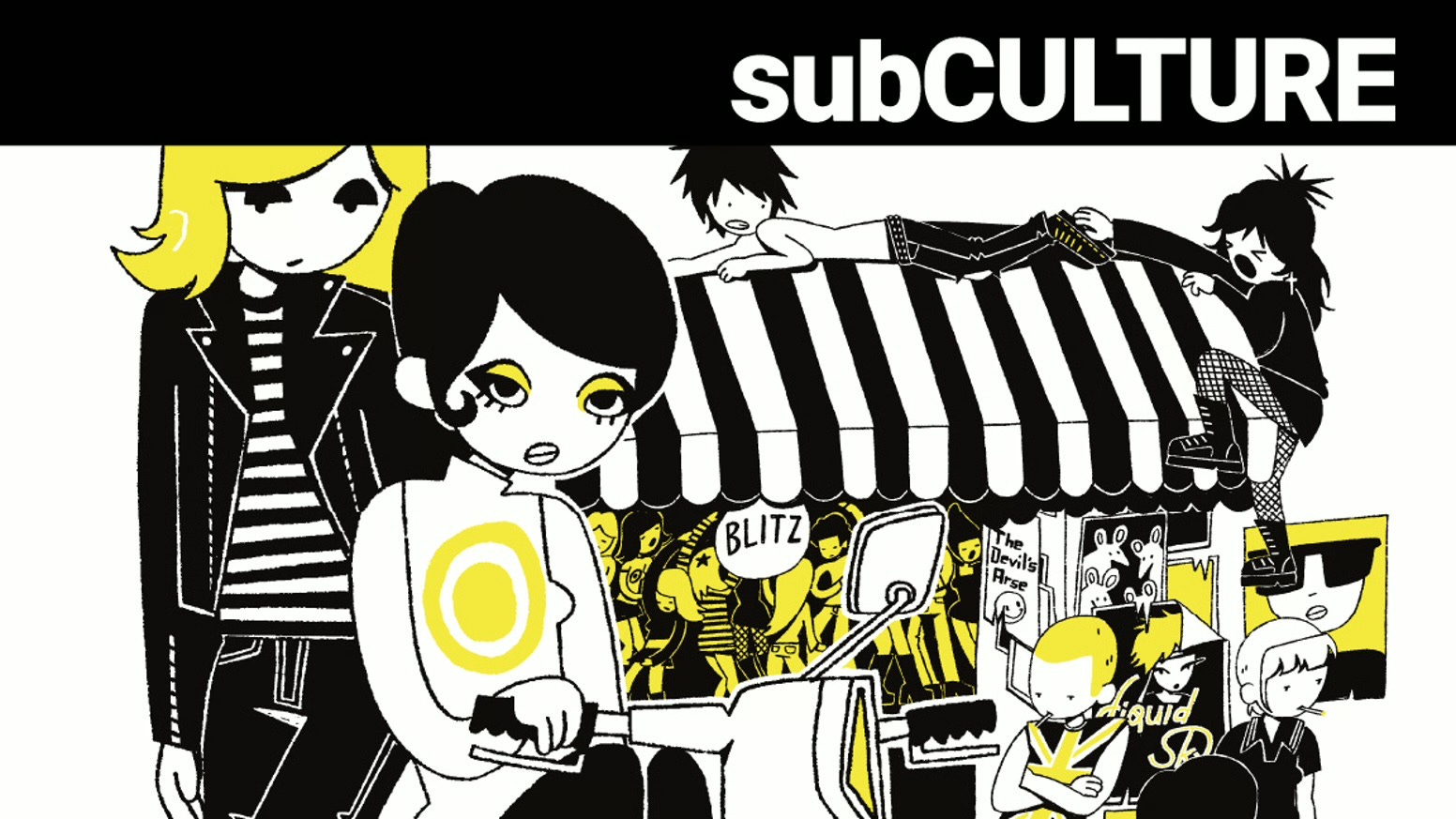
https://www.kickstarter.com/projects/sxbond/subculture
SUBCULTURE FROM LEGENDARY EDITOR, SHELLY BOND
subCULTURE: On In-Crowds & Outliers is a 128-page 8.5"x11" hardcover where over a dozen comics are intercut with essays, photos, and illustrations that set the stage and make a scene. It salutes the subsets & coteries of the 20th & 21st centuries. It’s a tribute to the social disruptors who razed the art and style status quo in order to form a more perfect cultural revolution. It's about survival in a world we no longer recognize.
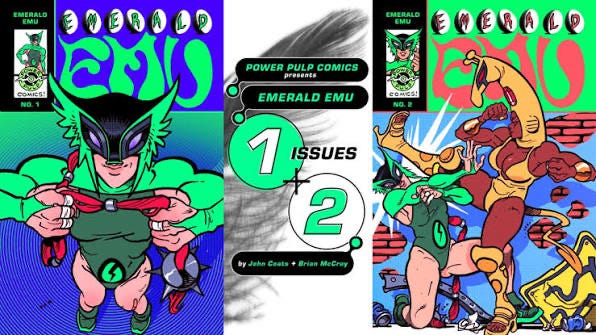
EMERALD EMU FROM JOHN COATS AND BRIAN McCRAY
Mild-mannered librarian, Molly Morgan, uses her super-strength to combat evil in the midwestern city of Des Moines, Iowa. Balancing a career, some beloved friendships, and super powered thugs can be exhausting, but the Emerald Emu carries it all with aplomb on her broad shoulders.
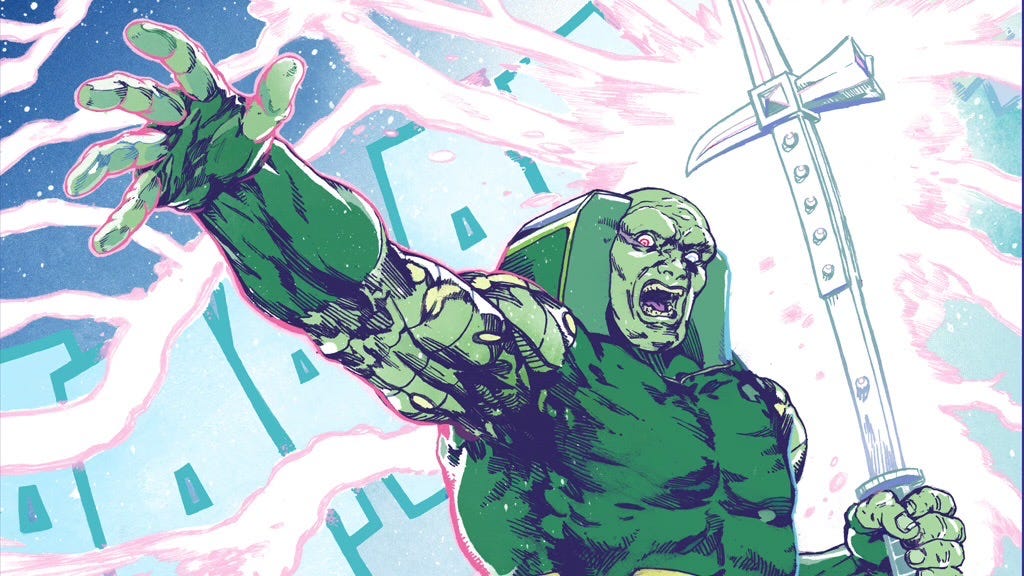
https://www.kickstarter.com/projects/kirttrik/death-of-power-9-10
DEATH OF POWER 9 and 10 by KIRT BURDICK
WARNING!!! This comic book contains images of extreme spicy pugilism.NOT FOR KIDS!!!
The death of death of power.
No posts
Comments
Nothing yet. Say the first thing.
Sign in to join the conversation.