
This post is part of our Guest writer series, EXTENDED THINKING, where we invite the most compelling writers, strategists and thinkers out there to give us their best takes on culture. This week, we are having an essay by web-weaving queen Sihaam.
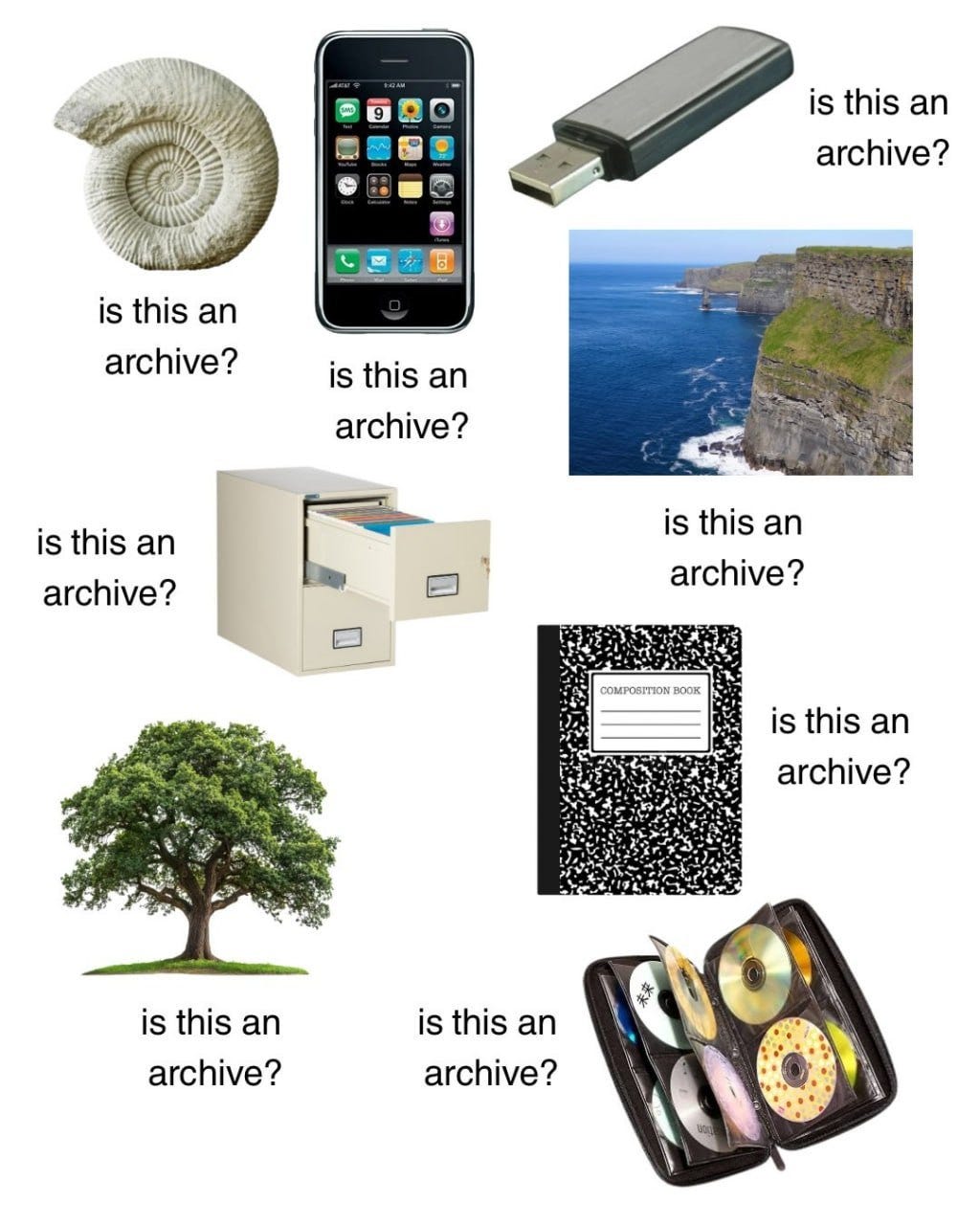
In 2024, YouTuber Kelsey Kreppel birthed the now famous TikTok audio “Luckily I have purse…” giving many a girl the vocabulary to express the anxious attachment they have to their handbags. It’s true; the purse has evolved beyond an accessory, to a portable archive, emergency kit, dare I say… an extension of the self.
(see: Pink Panthress performing onstage with her handbag circa 2022).
Forty years earlier, visionary science fiction writer Ursula K Le Guin planted the seeds for this in her Carrier bag theory of fiction. Challenging the myth that humanity’s first great invention was a weapon, Le Guin proposed that our earliest technology was probably a container: a basket, sling or bag used to gather and carry food. Vessels were the hot accessory of their time.
The distinction matters because it offers an alternative story about technology itself. The dominant narrative of innovation still favours what the spear stands for: domination and expansion. Technologies that move faster, scale bigger, optimise harder and disrupt whatever came before. It’s the same logic that continues to define much of Silicon Valley.
But what if we’re actually using technology in a completely different way?
The internet is full of digital vessels, cathedrals for anyone with eyes to see. Think of your camera roll, bloated with screenshots you’re reluctant to delete. Niche expansive Pinterest boards that manifest futures that aren’t quite reality yet. Spotify playlists that harbour illicit crushes, and paint a portrait of times rough and special at once. Saved folders, Notion pages, Letterboxd watchlists, and my personal favourite; browser tabs left open for months. None of these are especially productive: they don’t optimise our existence, but what they do is reminiscent of the carrier bag. They gather. They hold. They become liminal pseudo-realities of places we can keep returning to, while simultaneously holding nostalgic value and meaning.
At the beginning of the year creator Rosie O’Kotcha described our renewed fascination with the tactile as the age of analogue: iPods resurfaced, film cameras returned, typewriters became aspirational objects and readers swapped Kindles for dog-eared paperbacks. It was the pleasure of friction, assembling a collection of purposeful objects rather than relying on one infinitely optimised device. Instead of asking for one piece of technology to do everything, people began curating their own carrier bags: a camera, a notebook, an MP3 player, a paperback.
In the end, it’s about the purse, the vessel, the bag, the all-consuming need to gather, customise and archive. The independence of having not to rely on the spear to make advancements is influencing the way people create, share and archive online. Think of the influx of girls vibe coding in their bedrooms, teaching themselves to code to tinker, iterate and play without waiting for permission or technical mastery. The tools are there, ready to use in their carrier bags.
Musician Eden Mili is using touch designers to make music with their fingertips (literally), adding a layer of whimsy to their creations, while creator Computer Angel makes wearable clip-on camera accessories to document, hold and store memories. Artist Maya Man’s project Glanceback is a foray into transforming browser history, the internet’s most forgettable by product, into an intimate digital diary.
They forage through existing tools, repurposing overlooked features and forgotten interfaces into containers for identity, memory and experimentation. They treat software less like a machine for scaling and more like somewhere to keep things that matter, and they treat digital tools as containers for identity, memory and experimentation rather than engines of endless efficiency.
The overarching theme of showing up online in this way harkens back to the old internet nostalgia we’re sincerely missing in the late 2020s. By subverting the point of disruptive, generative tech, we’re ushering in a liberated era to combat growing tech fatigue. Perhaps that’s why Le Guin’s carrier bag feels so unexpectedly contemporary.
At a moment when technology is increasingly defined by automation, acceleration and abstraction, people keep finding ways to turn it back into something they can fill with their own lives. The truth is, if Le Guin’s original carrier bag gathered berries and herbs, today’s carrier bags gather screenshots, playlists, browser histories and half-finished ideas.
You can find Sihaam on Instagram, YouTube, Substack, TikTok and LinkedIn.
No posts
Comments
Nothing yet. Say the first thing.
Sign in to join the conversation.