
This is PopPoetry’s Epic Summer Odyssey: We’re looking back at silver screen adaptations of Homer’s famous poem in the run-up to the film event of 2026: Christopher Nolan’s The Odyssey. Subscribe to get each weekly installment of the series delivered to your inbox.
Upgrade to a paid subscription to become a part of the PopPoetry (Audio)Book Club! This summer, we’re listening to Claire Danes narrate Emily Wilson’s translation of The Odyssey.
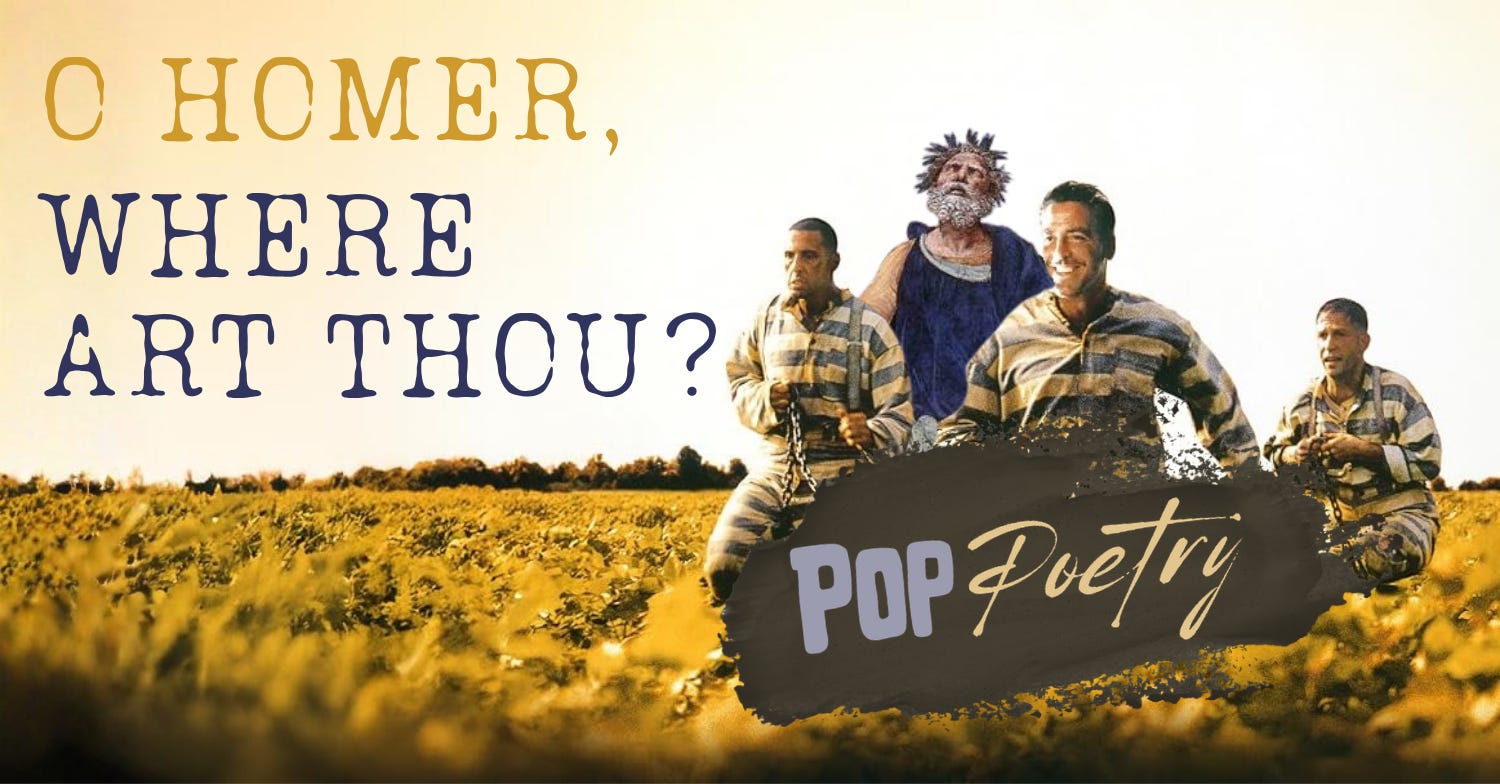
On its own terms, the 2000 film O Brother, Where Art Thou? is by far the best adaptation of The Odyssey to date. But that’s perhaps because it strays so far from the source material. What does that mean for those of us who love that material?
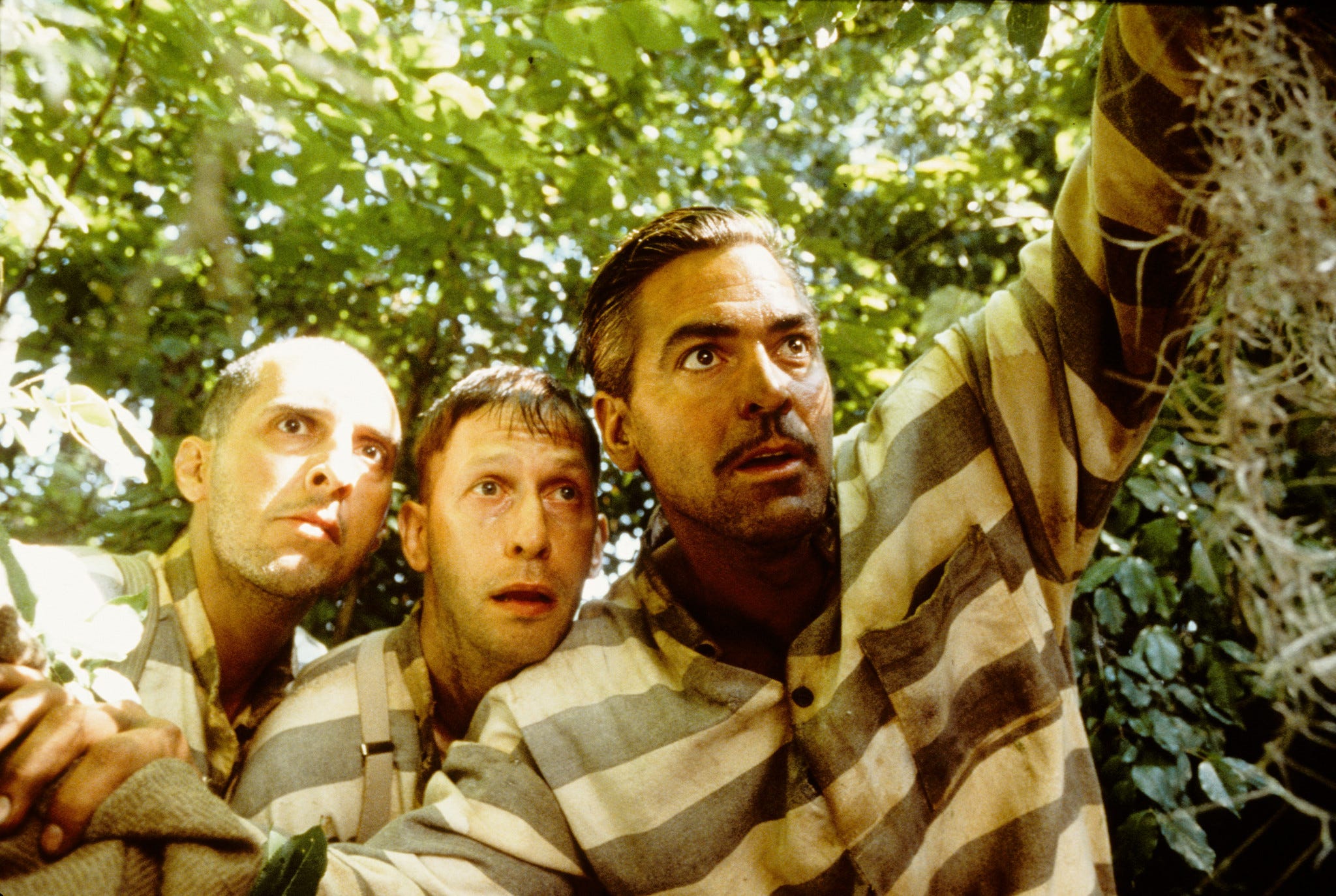
Joel & Ethan Coen’s film follows Ulysses Everett McGill (George Clooney), a stand-in, of course, for Odysseus, and his two fellow chain gang members whos serve as stand-ins for Odysseus’ men in the original epic: Pete (Coen Brothers favorite John Turturro) and Delmar (Tim Blake Nelson). The three escape their punishment and go in search of a treasure Ulysses promises them that, of course, does not exist. The real aim? To get back to his Penelope, or in this case, his Penny (Holly Hunter). Ulysses’ estranged wife is beset not by a host of suitors, but by just one fairly insufferable one (Ray McKinnon). Hijinks ensue. Foes are defeated. And some bitchin’ folk music is sung.
The film was a sensation when it came out and still fascinates audiences today, and for good reason. It’s hilarious, strange, and visually arresting: one of the first films ever digitally altered in its entirety to have a dusty, warm visual tone without the use of other real digital special effects. Clooney is weird and manic, and Turturro’s face does its usual amazing slate of tricks. Nelson’s earnest goofiness is unmissable, and the three make for an unlikely but magnetic trio on screen.
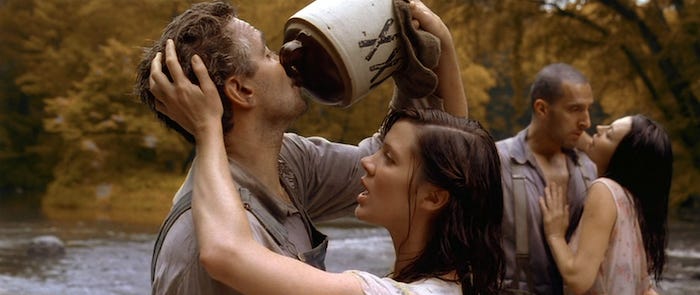
You can watch the entire film without knowing that it’s based on The Odyssey, but for those with even a passing knowledge of Homer’s epic poem, many of the hits are there: the river-bathing sirens, and my personal favorite: the cyclops, aka John Goodman with an eye patch.
The movie was nominated for every award under the sun, and Clooney won a Golden Globe for it. The music from the film also topped charts and earned Grammys. The film is routinely cited among the best of the 21st century (not to mention one of its first). It succeeded. But its relationship to the poem, poetry, and literature more generally is fraught.
The writing is very good, but the script doesn’t approach poetry or attempt it in any real way. I would argue that the ideological space that the imagistic, musical, and emotional aspects that the craft of poetry occupies in the original are taken up by the film’s true musical investment in American folk. I’ll take it for the pure artistry, but it still isn’t poetry. The Brothers Coen simply aren’t interested in this facet of the original material.
Or maybe they just don’t know it.
Like many of the western canon’s most revered pieces of literature, The Odyssey permeates the culture so deeply that even those who haven’t read it know something about it. Including, as it happens, the well-known brothers who wrote, directed, and produced the film.
Tim Blake Nelson, who has a degree in Classics, was the only one who had actually read Homer’s epic poem before working on the film.
An interview the Coens gave soon after the film’s release makes me cock my head like a dog trying to understand his human’s speech:
“We didn’t start with the premise of updating the Odyssey,” says NYU-educated Joel. The setting came first. The situation, these three fugitives in the chain gang, given the Clooney character is trying to get back home, it just suggested the Odyssey to us.”
Both admit they have never read Homer’s epic poem, although they did read the classic comic version of it.
Ethan says it’s “much easier that way. “It’s very freeing, man. We’re thinking of doing an adaptation of Dickens’ Martin Chuzzlewit. We figure nobody knows the original and we don’t have to read that. We can make up whatever we want.”
Nobody has read the thing, so we can do whatever we want. Ok. Hm.
What do you make of that?
I admire O Brother a great deal, but its gleeful appropriation gives me pause, a pause that has deepened since researching more about the film’s creation.
We’re fast entering a post-literate age (a terrifying phrase that literally keeps me up at night). A recent survey indicated that nearly 70% of American readers read 0 to 4 books last year. Nobody knows Martin Chuzzlewit, sure, but most people aren’t reading anyone, at all, including Dickens.
If we want to live in a society where people read, as Ann Patchett argues, it’s our responsibility to cultivate readers—and that includes ourselves.
AI, too, allows us to do whatever we want, so to speak, when it comes to creating “art,” text, and other outputs that once were made exclusively by humans. If I want a script based on the 18th century epistolary novel Clarissa where the title character isn’t a young woman trapped by the patriarchy’s insistence on female virtue but is instead a skateboard-riding elephant with a can-do attitude, I can have it in a matter of moments.
We have more power to do foolish things and less desire to do noble things than ever: We have been so busy determining what we can do with technology and media that we have studiously avoided asking whether we should do these things, as they say. The reason for this is that capitalism has made the reappropriation of IP very lucrative, and that the capitalist inventions of social media and the infinite scroll are highly addictive, dopamine-farming cash machines.
YouTube is a quicker hit than a 12,000-line poem.
But you know all this.
First and foremost, Homer and Dickens are in the public domain, so you can do whatever you like with their works whether people have read those original works or not. But more broadly, I’m sort of stunned by the Coen Brothers’ “we don’t have to read that” attitude. If you haven’t read it, why on earth would you want to adapt it? Why would you avoid a deeper conversation with the artists and makers who came before you?
Do we owe anything to the works and authors we adapt, nod to, are inspired by, or ape? If so, what? If The Odyssey ceases to have any meaning outside its adaptations, what will we have lost?
When I write about poetry and pop culture here, my hope is that it will drive folks back to poetry, not merely toward television, popular music, and film. If you can enjoy O Brother, you can wade through an excellent contemporary translation on audiobook, like the one we’re tackling in our book club.
If we want to live in a society where people read, as Ann Patchett argued in a recent TED talk, it’s our responsibility to cultivate readers—and that includes ourselves.
I do not wish to see a world where literature is merely a hunting ground for new Netflix miniseries ideas. I want a world where children and adults read books: poetry, novels, short stories, memoirs, essays, play scripts, graphic novels. I want my children to understand the joy of entering not only someone else’s world, but someone else’s shoes. We meet our ancestors in ancient poetry; we meet ourselves there, too.
I wonder if Christopher Nolan also has a mercenary attitude when it comes to his adaptation of the ancient epic. Stick around and we’ll find out together.
Matt Damon talks The Odyssey on a recent episode of Amy Poehler’s Good Hang podcast. Thanks to Mr. PopPoetry for the tip!
The Mary Oliver documentary is here, and folks like Stephen Colbert and Oprah are singing the poet’s praises.
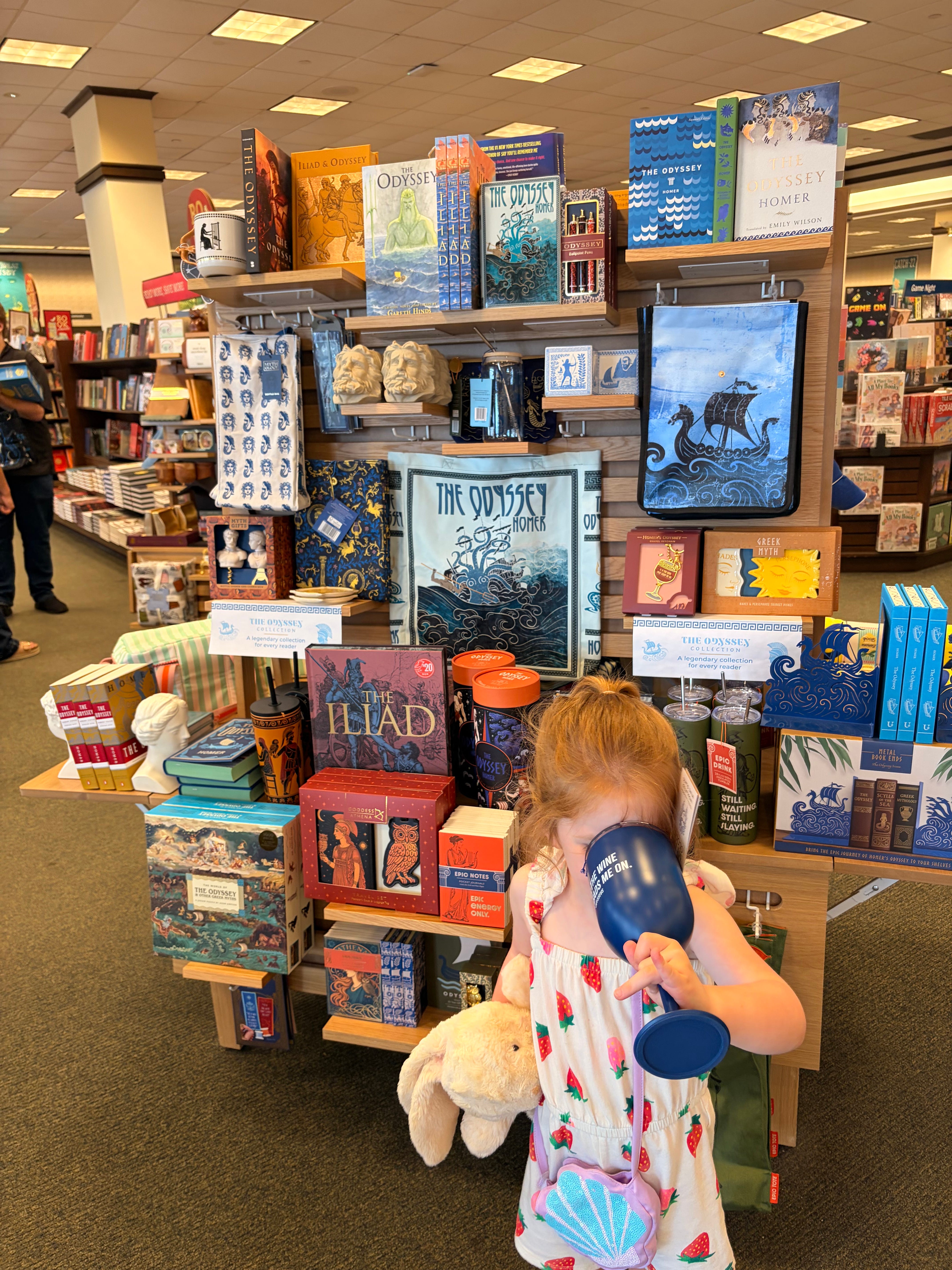
Barnes & Noble is doing its damnedest to capitalize on The Odyssey fever caused by Nolan’s upcoming movie this summer. This display is insane. I have more complaining in my body about merchandise sales proximate to book sales, but that will have to wait for another day.
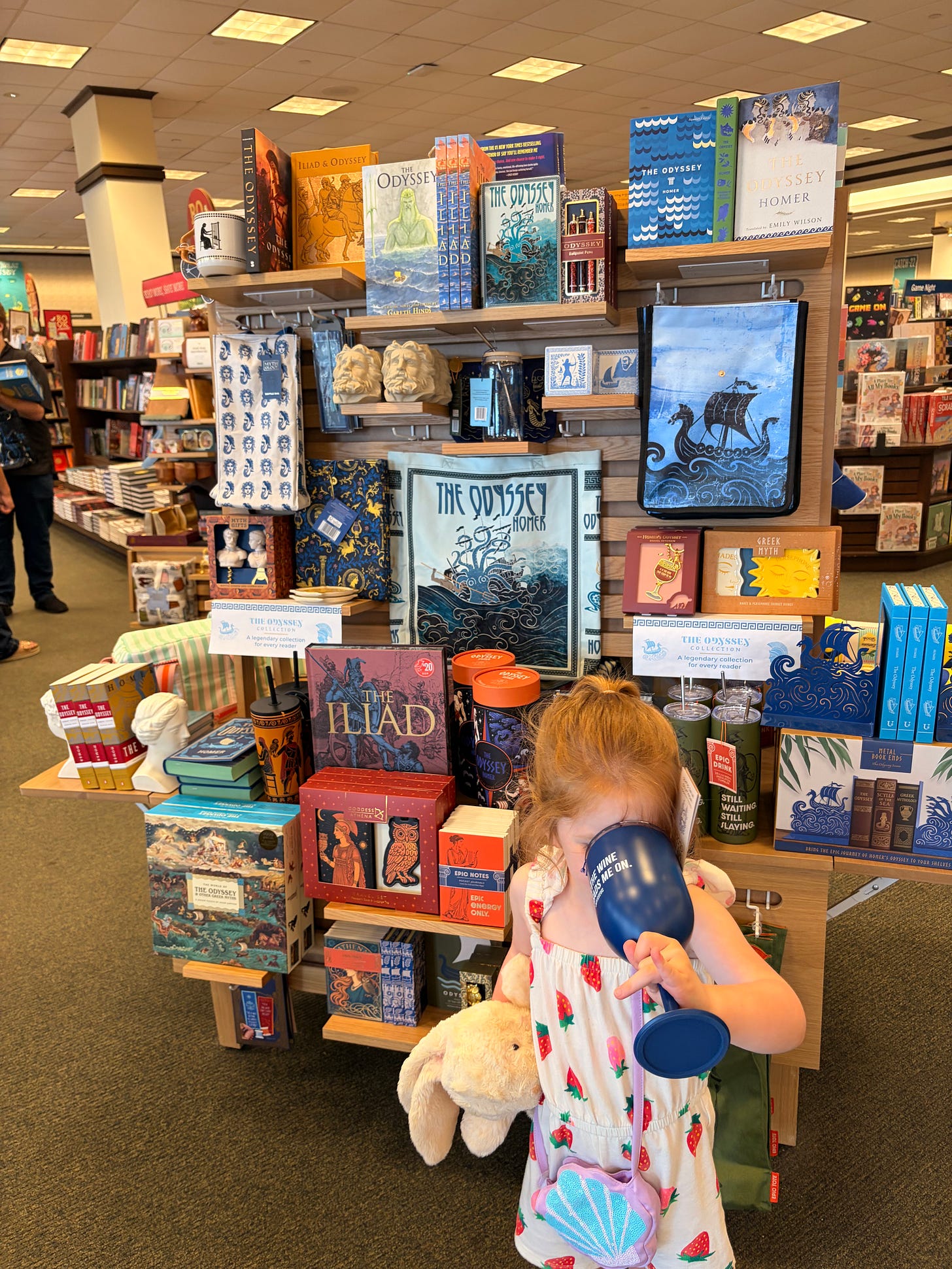
Heaven help me: My eldest, pretending to drink from a chalice emblazoned with the words “It is the wine that leads me on. — ODYSSEUS” when we hit up Barnes & Noble yesterday
Comments
Nothing yet. Say the first thing.
Sign in to join the conversation.