
This is PopPoetry’s Epic Summer Odyssey: We’re looking back at silver screen adaptations of Homer’s famous poem in the run-up to the film event of 2026: Christopher Nolan’s The Odyssey. Subscribe to get each weekly installment of the series delivered to your inbox.
Upgrade to a paid subscription to become a part of the PopPoetry (Audio)Book Club! This summer, we’re listening to Claire Danes narrate Emily Wilson’s translation of The Odyssey.
Last week, we looked at a straight-ahead, cram-it-all-in period-piece take on the world’s most famous poem.
This week’s film? Not so interested in completeness.
Italy loves The Odyssey. Why? The tale and its hero are deeply Mediterranean, and Odysseus’ wanderings take him through places that don’t cleanly map onto Italy, but could, if you want to think of his journey as taking place in the world we know.
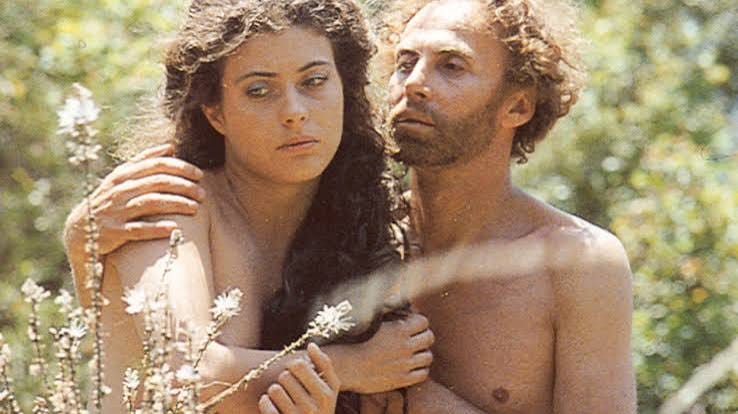
Nostos: Il Ritorno (1989) is a love letter to the Italian coast and is the kind of thing that would make your parents ask, “What the hell did I just watch?” That’s a hallmark of greatness, to me, but it has some obvious shortcomings as an adaptation of a poem.
A real film-lover’s film, the film whose title translates, literally, to Return: The Return, only returns again and again to one thing—its own aesthetics.
I’m oversimplifying, but still. Nostos refers to the journey home, which is distinct from the actual return in which Odysseus lands in Ithaca. Like some other adaptations of Homer’s epic, Nostos: Il Ritorno primarily focuses on the part of The Odyssey where Odysseus attempts to come home but has not reached it. But even this part of the story is both compressed and elongated in unusual ways.
Even as a sub-90 minute flick, this thing is trim. It’s only interested in what it’s interested in, which I respect as an artist. And what is it interested in? Dope-ass shots that the internet is largely not able to deliver to me via Google Images.
Guess you’ll just have to watch it yourself, which you can currently do, for free on our YouTube overlord.
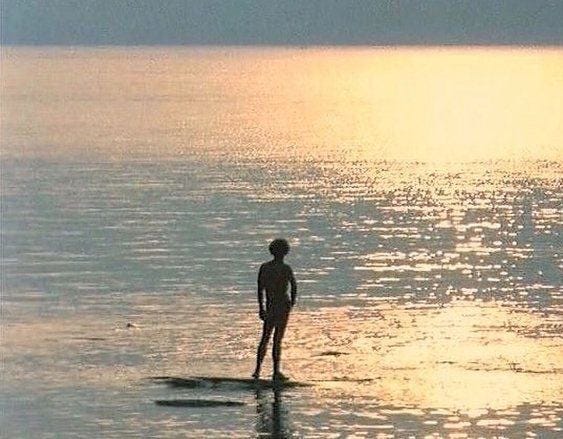
My favorite shot is of a little sliver of beach sand which, after several long moments, shivers to life as Odysseus regains consciousness and emerges from beneath the sand that has buried him when he washes up on shore. We see only a slice of his body, but we know what’s happening. It’s almost like a birth from within the earth rather than a bit of refuse tossed ashore.
In another shot, he swims into the moon.
It’s a never-ending series of establishing shots until, all of a sudden, there are the end credits. Yes, it’s an experimental film, and experiment it does: with temporality, story, image, and even language, in its way. There is very little dialogue in the film, but what is there is spoken in a fabricated language that is a mash-up of Ancient Greek, Italian, and other languages. So even when you hear human speech, you can’t really hear it. It’s language devoid of meaning, which is the opposite, to me, of poetry.
In some ways, Nostos is the opposite of what you want from a poem adaptation: it’s devoid of meaningful language at all, even for all of its poetic cinematography.
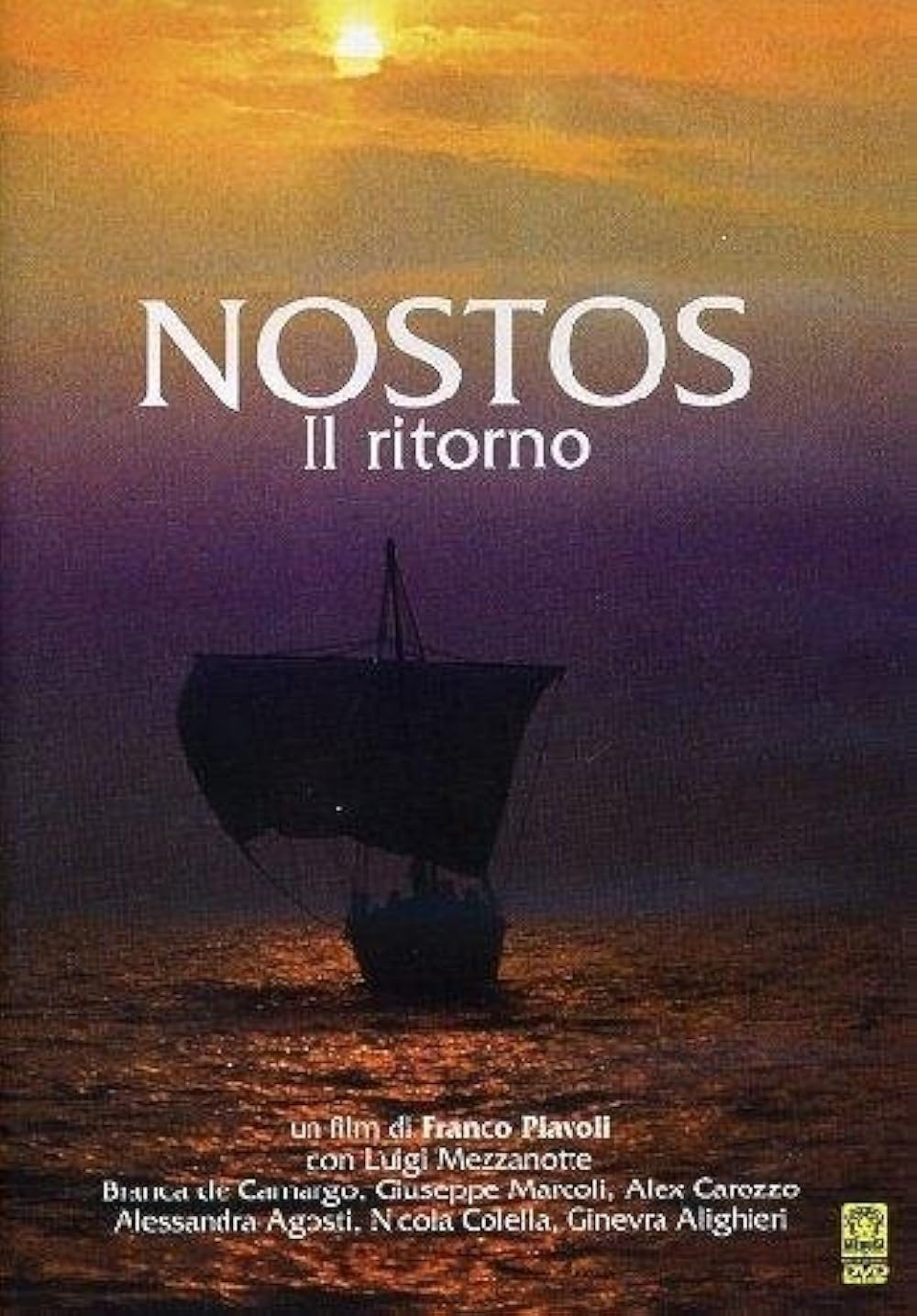
The film ends before Odysseus is able to have an actual reunification with Penelope or dispatch with the ostensible suitors. For a film basically titled Return: The Return, it’s a little bit funny that he doesn’t actually return. Or rather, he returns, but seems only to ponder how changed he is or will be once he actually returns. The film’s final image of a doorway he has not yet entered does most of the work, here.
In terms of poetry? I’d give Ulysses a C- and Nostos an F. Stay tuned for the final grades for our upcoming films.
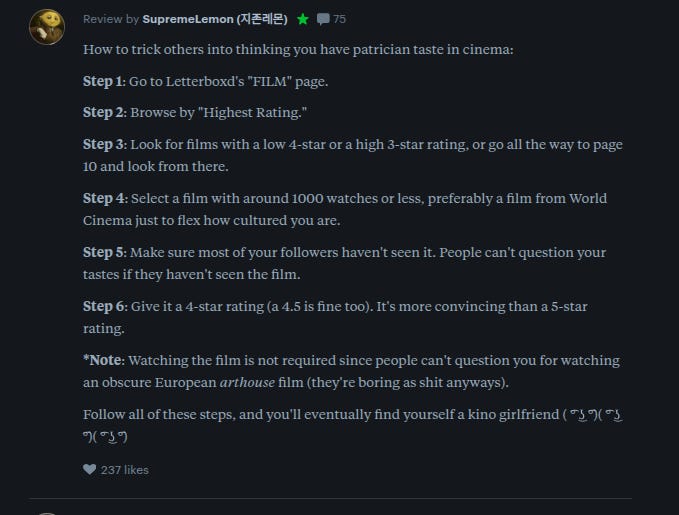
By the way, the Letterbox’d for this film is outstanding, if you need a chuckle:
Have you seen this movie? What did you think? Let me know in the comments!
The Telemachy (2012). Seems cute but the Telemachy itself is only one part of The Odyssey.
Ulysses’ Gaze (1998): Not available on streaming. Harvey Keitel, are you gonna let this stand? I also love that it has a 27% on Rotten Tomatoes.
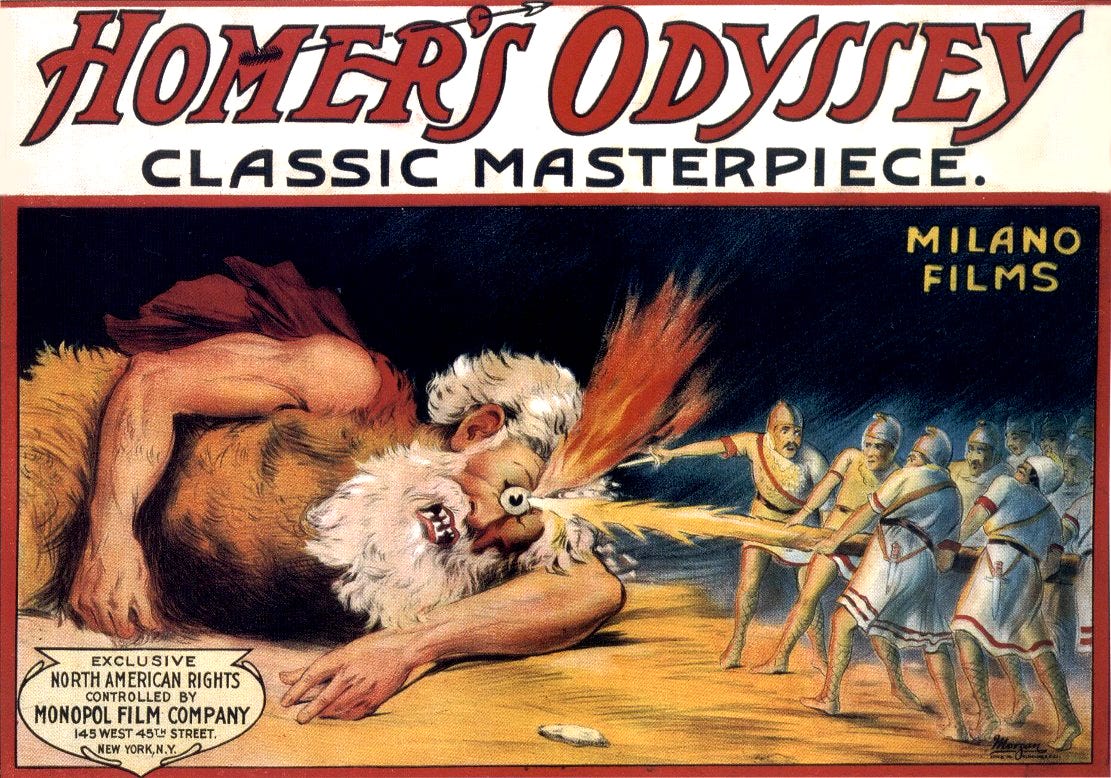
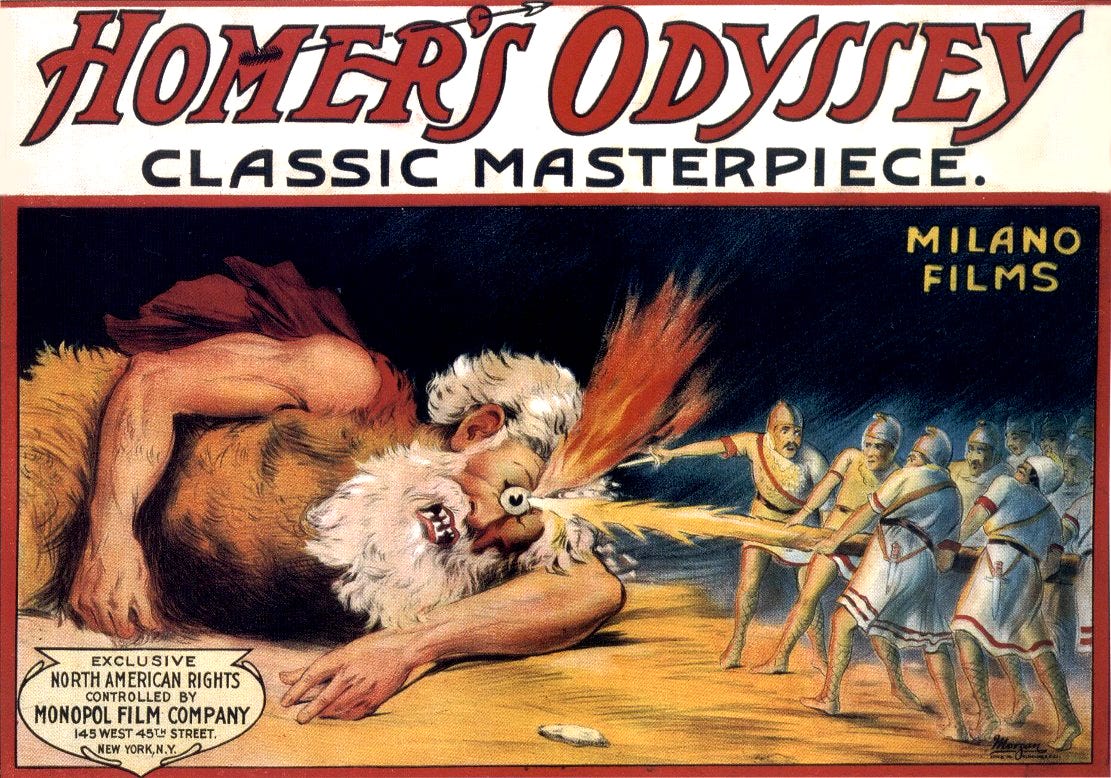
L’Odissea (1911): A silent film, and one of the first known adaptations for screen. It’s more like a story with some film pieces spliced in. Historically fascinating, but not much of a film experience. The nature of the beast. And perhaps the most insane film poster ever:
I’ve always liked Ellen Burstyn.
Late Fame is getting a wider release this summer and fall. Get in my veins, Willem-Dafoe-as-a-“once-celebrated poet!”
Spoken-word poet Guy Kelton Jones made it onto a recent episode of America’s Got Talent. Interesting! I mostly just wish that they would bring back Def Poetry Jam without sticking it on HBO.
Songwriter and poet Leonard Cohen’s estate objected, as you do, to the inclusion of “Hallelujah” in the idiotic Freedom 250 festivities.
Which reminds me: I think it’s time to get Cohen’s work on PopPoetry. If I were to do a call for submission for guest post pitches for Cohen’s books of poetry, which are many, would you submit?
If you’re excited about this, email poetrygoespop at gmail dot com :)
Jesse Welles reading Mary Oliver is your moment of zen, today:
And THAT is how you do a poet justice: you involve her estate.
If you haven’t read my two-part investigation into Oliver’s work in the Annette Benning film Nyad, you can dive in here:
Catch up on our Summer poetry Odyssey here:
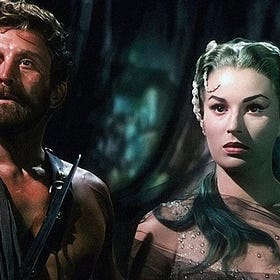
Behold! The Most Complete Odyssey Film… So Far.
·
Jun 25
This is PopPoetry’s Epic Summer Odyssey: We’re looking back at silver screen adaptations of Homer’s famous poem in the run-up to the film event of 2026: Christopher Nolan’s The Odyssey. Subscribe to get each weekly installment of the series delivered to your inbox.
Comments
Nothing yet. Say the first thing.
Sign in to join the conversation.