
When I wished to bring to light the science of the mystery and modality of Creation, I came upon a subterranean vault filled with darkness and winds. I saw nothing because of the darkness, nor could I keep alight because of the violence of the winds. Lo and behold, a person then appeared to me in my sleep in a form of the greatest beauty. He said to me: “Take a lamp and place it under a glass to shield it from the winds; then it will give thee light in spite of them. Then go into the underground chamber; dig in its center and from there bring forth a certain God-made image, designed according to the rules of Art. As soon as you have drawn out this image, the winds will cease to blow through the underground chamber. Then dig in its four corners and you will bring to light the knowledge of the mysteries of Creation, the causes of Nature, the origins and modalities of things.” At that I said, “Who then art thou?” He answered: “I am thy Perfect Nature. If thou wishest to see me, call me by my name.”
So goes the Recital of Hermes in the Ghayat al-Hakim, known in the West as The Picatrix. “The same account also appears, word for word, in a text attributed to Appollonius of Tyana.”1
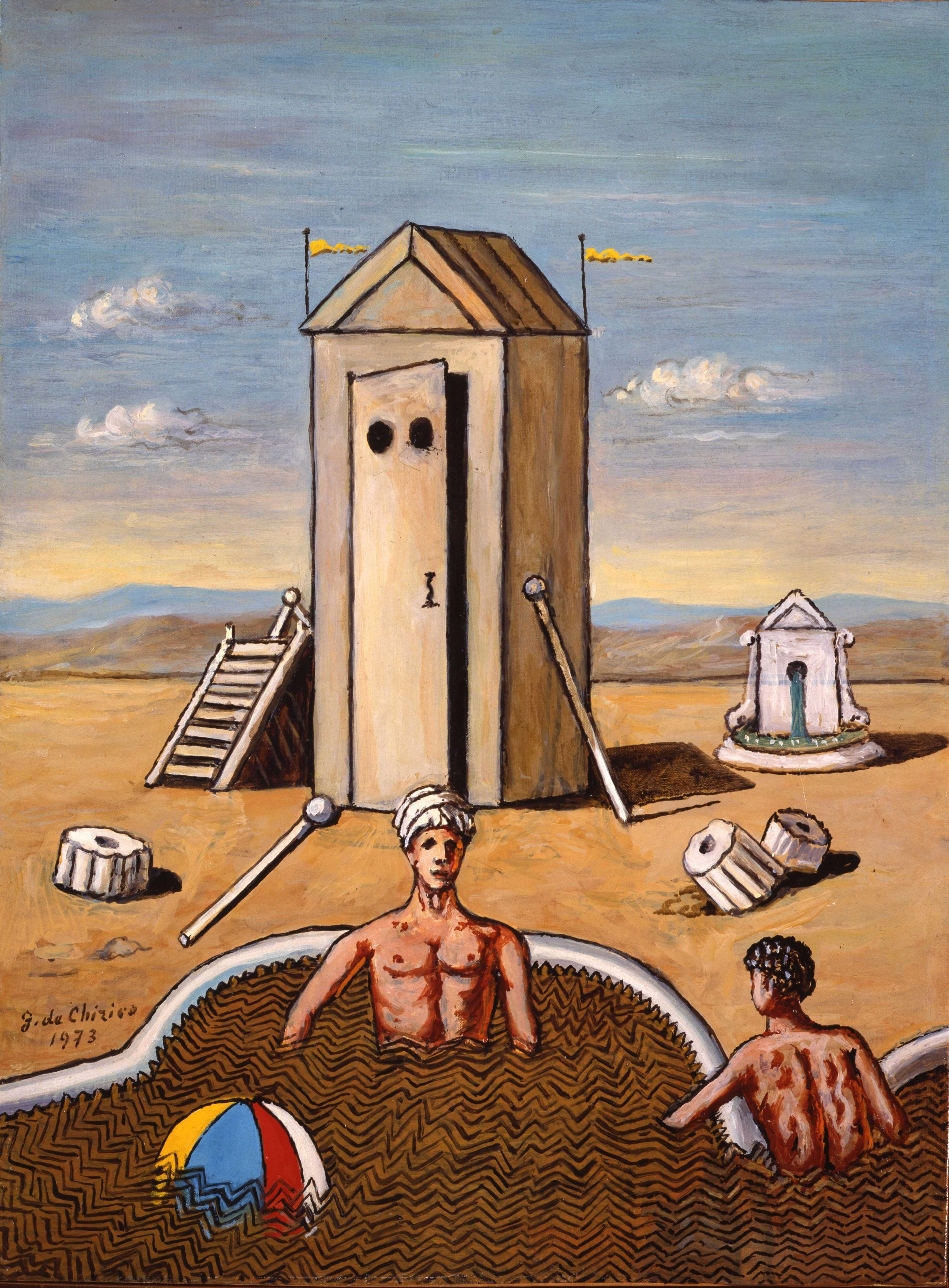
In the autumn of 1968, the Romanian esotericist Jean Parvulesco entered into a subterranean realm under the city of Rome.
At the end of October 1968, 15 days before my forced departure from Rome, Julius Evola decided to show me direct evidence of the existence of a “other world”, a world parallel to our immediate conventional reality, our daily life, moreover, a world parallel to this parallel world itself. In Via Vittorio Emanuele, almost directly below his apartment, there was a rather peculiar cafe called Daponte Blue, which, among other things, was distinguished by the fact that it was open all night. I was confidentially invited to go down there by Evola. The place was filled to capacity with ghosts, swarming killers, degenerates in the final stages, whores of both sexes and shadows of anxious dead not understanding how to get back to their place, lost half way or even at the very beginning. They were the dregs of both worlds, silvery, purple flashes, sheer horror in one word. But this did not prevent the fact that from time to time there appeared “liberated in life”, beings belonging to the “race of the saved”, overcoming human boundaries, “individual beings”, hidden in the mass of delinquents staggering at night, completely fearless, burned by inner fire .
In fact, Daponte Blue was a metaphysical hatch that opened the way to the “other world”, a threshold of ontological transition, an occult living room in the service of two worlds.
In the vicinity of Rome, on the vertical of a sacred mountain, on top of which the almighty sanctuary of the ancient Goddess Victoria is awake, the metaphysical hatch “Daponte Blue” opened a dangerously steep road leading to a forbidden valley, locked between two high walls of red soil, where rose a garden of red marble statues of a mysterious Roma Principia, representing the sacred number of Roman families prior to modern European history, constituting the original imperial divine race; each of the statues was decorated with a family coat of arms. It was the Hall of Arms.
But this antecedent race…is it not represented in its later totality in the final Great European Empire of the Hohenstaufen, which reached its climax and its end with Frederick II of Hohenstaufen, whose sacred remains still lie today in the courtyard of the Cathedral of Palermo and whose kingdom is symbolized in Castel del Monte?
Here I must recall the conclusions I reached on this subject in The Return of the Great Times: “The monumental units of Roman imperial assertion that adorn the Hall of Arms are not burial mounds, not mausoleums, not archaic tombs, as might be assumed if consider them apart from the current of liturgical visits, but, as I quickly understood, this is a transcendental inventory of the Roots of Blood, which is the original, archetypal supertemporal receptacle of the Imperium Magnum, as well as an ensemble of commemorations that constitutes the Dogmatic Historical of religious, metahistorical events, secret marriage, hermetic and highly heroic level, which marked the formation of the blood of the first Race and the principle projection of this constituted – and meaningful – formation as a continuous occult continuation of the Divine Destiny, the bottomless calling of it and its Final Crown. Because the Coronation is here.
And I might wonder: why did it have to happen that Rome opened itself to me? What was the last hidden purpose of this therapy of the abyss, these so dangerous visits to the timeless dwellings of Rome at its origins, in which I was involved in 1968? I ask myself, but still do not find the answer.
The thing is, I think I get it now.
There is no longer any doubt: the origins of what Miguel Serrano called “the secret of Julius Evola” is something that has nothing to do with human nature.2
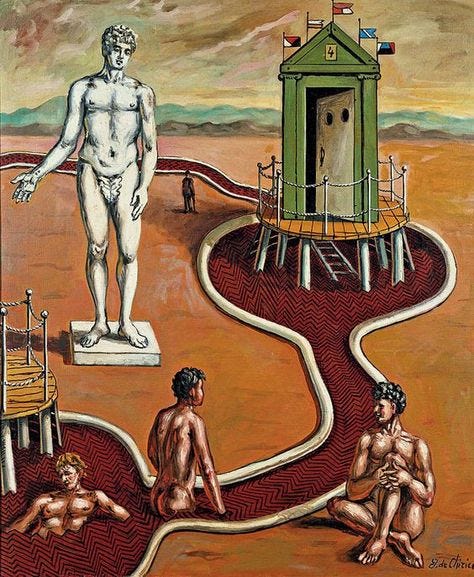
I have spent many hours searching for the remnants of this metaphysical hatch, circumnambulating the base of the building in which the Baron once lived. There are no records of Daponte Blu, no archival testaments or living memories among the locals. Where was this ‘threshold of ontological transition,’ one connected to an occult pocket under the earth of the Eternal City? I do not doubt the existence of such liminal fjords, and I had every reason to believe that such a portal could exist in this very spot, on both metaphysical and topographical grounds. It is clear from the account that a physical opening gave way to a spiritual one, that the sinkhole was at least half-existent in the realm of matter.
Directly adjacent to Evola’s apartment, separated by only a street, stands the Palazzo della Cancelleria. Commissioned by Cardinal Riario at the end of the 15th century, it is one of the finest examples of Renaissance lucidity in the realm of form. What’s more, it was said to have been financed with the winnings of a single night of gambling. In the 1930s, excavations in the cellar revealed an astonishing sight. An emerald lake, buried under the building, shimmered over the remnants of an ancient mausoleum. There lay Aulus Hiritus, consul and loyal general to Julius Caesar, as if entombed in a sheet of faery glass. And to the sides were other unknown tombs, scattered under the streets, and most peculiar of all, a mithraeum, one of those caves of initiation that Evola found so compelling. Whether the Baron was consciously aware of this discovery, it matters not, for Parvulesco certainly had no inclination of its existence. Could Daponte Blu have had access to a certain cellar hatch, one that opened into this imperial repository, one with a second opening, an opening into a metahistorical layer, the Hall of Arms?
Andrea Scarabelli, in his biography of Julius Evola, is one of the only writers I have encountered to explore this anecdote further. One that opened up new vistas and new possibilities.
It was this study that drew in Jean Parvulesco in 1968. He had discovered Evola’s name in Paris, at a time when his translations into French were multiplying, thanks in part to the presence of a large ‘Guénonian’ audience. A revolutionary close to the OAS (Secret Army Organisation), a scholar of political conspiracies, a literary and film critic, a member of GRECE (Research and Study Group for European Civilisation) and the Nouvelle Droite (‘New Right’), the Romanian Traditionalist spent several months in Rome and visited him almost every day. Their conversations returned insistently to two themes: Tantrism and the Polaire Brotherhood…
According to Parvulesco, the latter was experienced by Evola as a kind of ‘initiatory ascesis’ which, far from weakening him, opened up new horizons. He described these in very vivid terms as ‘dizzying metacosmic spaces opening up to him and within him through the secret passage into his own interiority.’ This liberation, Parvulesco claimed, was brought about by ‘indecipherable ontological codes and ceaseless, lofty mediumistic procedures’ dating back to the 1920s, to the ‘Ur Groups, and to the special powers imparted to the members of the Midnight Sun conspiracy.’ Parvulescu speaks of ‘Groups’ in the plural, referring not so much to the journal as to ‘links’ or ‘chains.’ Struck by his interlocutor, Parvulesco wrote the essay La mission occulte de Julius Evola (“The Occult Mission of Julius Evola), published in 1992 in Robert Steuckers’ Vouloir and expanded five years later in Le retour des Grands Temps (“The Return of Great Times”). It is a text on the ‘other Evola’ — the occult one, tirelessly at work behind the activist.
Why, Parvulesco asks, after reaching the spiritual heights of the Ur Group, did Evola engage in an unparalleled metapolitical struggle? Why, after transcending history, did he choose to direct its forces? According to Parvulesco, political militancy served as a diversion to conceal other operations carried out in the shadows. Evola, he argues, launched his assault on history by approaching European counter-revolutionary movements in the name of ‘a wide-ranging work of dissimulation.’ With a certain hyperbole, Parvulesco nonetheless captures the peculiarity of a man who left the world only to return to it, ‘concealing, with his disturbing activist initiatives, other activities that were the bearers of a hidden mission.’ Evola’s figure coincides with the mystery of this return, which compelled him to keep one foot in history and the other beyond it — much like his ‘differentiated man.’ This hypothesis may remain unverified, but it is as imaginative as the author who set it down on paper.
According to Parvulesco’s inspired words, Evola’s mission came from the depths of Arcane Rome, ‘cosmic, abyssal, hermetically sealed within itself behind a series of occult marriages that have allowed it to remain unknown.’ This religion ‘still exists in history, and will continue to exist invisibly until the end. ‘All one has to do is get back on the old path.’’ Two unpublished books arose from their conversations. The first was a collection of ‘testimonies and revelations’ on the ‘ontological perpetuation of Roma Principia.’ It had little success with publishers: many did not even read it, fearing what they might find. Two years later, he tried again with I quaderni neri dei miei dialoghi con Julius Evola (“The Black Notebooks of My Dialogues with Julius Evola”). Parvulesco submitted the manuscript to an unknown publisher, who demanded the deletion of entire paragraphs. He refused. ‘Perhaps I will have to wait for some honourable man to produce an underground edition, intended only for the circles of the shadows and secrecy.’ To this day, such an edition has never appeared. Something, however, has filtered through.
In the ‘Gnostic diary’ Le Gué des Louves, Parvulesco, adopting the stylistic features of the finest ‘fantastic realism’, recounts a ‘metaphysical journey’ that began in Rome in 1968, under Evola’s invisible patronage. One evening, after leaving the philosopher’s house, he decided to take a walk along the street towards the Tiber. Keeping to the pavement on the left, he came across a rather sinister establishment, halfway between a bar and a nightclub: ‘I will call it, as in some of my most terrible nightmares, Daponte Blu.’ Open until dawn and bathed in a bluish light, it was frequented by all manner of unsavoury characters: ‘A sublime haunt, saturated with murderers and late-stage junkies, prostitutes of either sex, and the corpses of restless shadows, unable to return. The dregs of two worlds, silver and violet flashes, utter terror.’ In that bar, worthy of the secret services, he experienced moments of total loss of consciousness. Guided invisibly by Evola, who led him ‘from a distance’, he stumbled upon the ‘mysteriosophic cave of the Daponte Blu’, where the incredible adventures recounted in his ‘Gnostic diary’ begin. This is only the final chapter of a ‘secret mission’ intended to harness the primordial fire and breathe new life into the West. During those afternoons, Parvulesco realised that these forces had not disappeared, but were still active. When the time was right, the Midnight Sun Conspiracy would manifest them again. Indeed, his nocturnal incursions revealed “how the higher operation — concerning the living signs of the loftiest Imperial Elevation, with their ‘unbearable light’ — attributable to the glacial and haughty recluse of Corso Vittorio Emanuele and his associates — an operation aimed at overturning worlds and heavens — was complete, entirely complete. His ‘hidden mission’ had been crowned with success. Finis coronat opus.”3
And so it dawned upon me that I was searching in the wrong place.
In fact, the possible location of this infernal establishment was perhaps closer to the subterranean realm under Riario’s former palace. But such speculation will be saved for later.
___________
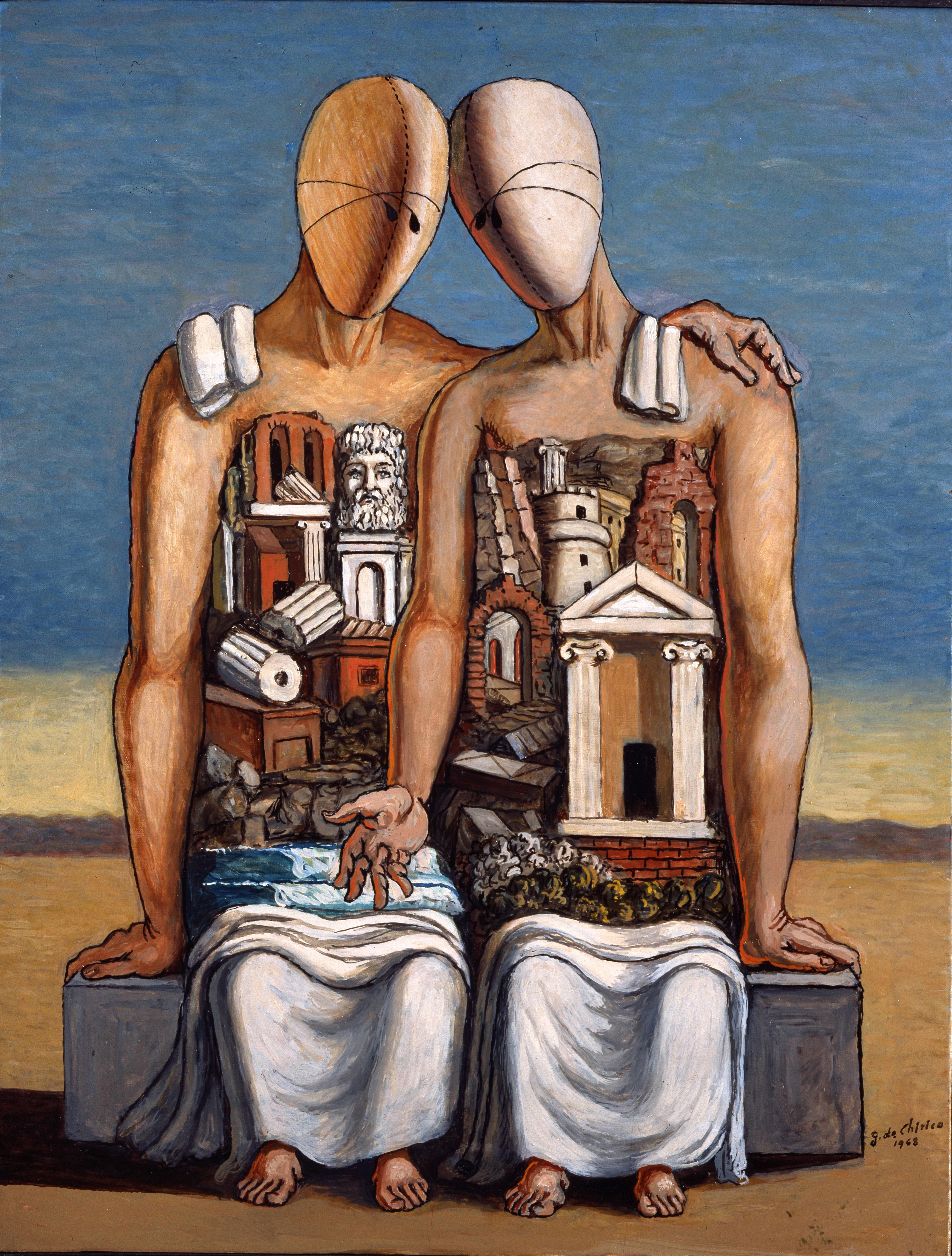
This article series will run in parallel to “The Very Near East.” Two threads, entangled without touching, one above ground and one below.
In this first opening, we will place two visionary accounts in conversation, in which the following articles will serve as an extended footnote, an exegesis of the unexplainable.
Our second account occurred four years after Jean Parvulesco’s first descent into the strange world of Daponte Blu. And the author, at least exoterically, could not be further removed from the Romaninian.
Mohammad Ali Amir-Moezzi is a world-renowned academic and one of the leading scholars of early Twelver Shiism. The account you will read was taken from an article he wrote detailing a pilgrimage he made to the Jamkaran mosque as a young man.
In the year 329 of the Hegira (940-941 CE), Abū l-Qāsim Muḥammad ibn al-Ḥasan, the twelfth and last Imam of the Twelver Shiites or Imami Shiites, entered what the faithful call the Great Occultation. Recognized as the eschatological Savior, destined by God to manifest Himself publicly at the “end of our Times” to fill the earth with justice and initiate all humanity into the hidden truths beneath the letter of the religions, he thus became the “Hidden Imam,” the awaited Well-Guided One (al-Mahdī), the Lord of the Times. Endowed, according to Twelver belief, with an extraordinarily providential longevity, occulted yet present in the hearts of his faithful, unknown yet active for the spiritual safeguarding of humanity, the Hidden Imam has, for more than a millennium, been the center of piety, the object of hopes, and the refuge of the distressed among Imami Shiites.
For more than a thousand years, a rich hagiographic literature has reported that he appears from time to time, in the most diverse places, to one or more privileged faithful, to resolve their problems, assist them in their despair, heal their otherwise incurable ills, teach them prayers, or even initiate them into secret truths—thereby proving, to minds tempted by doubt, his existence and his efficacy. Certain of these blessed places are particularly prized because, it is said, the apparitions there have been numerous. One goes there to humbly and discreetly devote oneself to piety and asceticism, to invocations and supplications so that the miraculous encounter may take place. The mosque of Sahla in Najaf, that of ‘Alī in Hilla, or the Cave of Sāmarrā’, all three in Iraq, are part of these places and are considered as many sanctuaries of the Hidden Imam. In Iran, the old mosque of Jamkarān, about ten kilometers southeast of Qom, fulfills the same function….
The first account is that of my own journey to Jamkarān in August 1973, when I was seventeen years old. I made this trip at the request of an old relative, the great-uncle of my father whom everyone in the family called âqâ, “the Monsieur.” A strange and reclusive character, respected and feared at the same time, he had practically spent the previous forty years in the cellar of his house in Tehran — a cellar that contained several rooms that no one, not even his wife, had seen. One only knew the first of them, filled with books. His piety, his kindness, and his great erudition in traditional sciences were known to all; he was suspected of being an alchemist and astrologer, of belonging to secret sects or even of practicing magic, but in reality no one literally knew his underground life.
In August 1973, the Monsieur, almost a centenarian, fell gravely ill. To everyone’s astonishment, it was I whom he asked for at his bedside. This only half-surprised me; a little earlier, after a lunch with Henry Corbin, I had decided to go to Paris to study Islamology. This news had delighted the Monsieur; according to his wife, the fact that a young man of the family had decided to expatriate himself to study scientifically the religion he cherished above all had marvelously surprised him, and he sought to meet me. When I was near his bed, in his immense chamber obscured by heavy curtains, he told me, in a weak but calm voice and without my being at all prepared, a strange story:
“About fifty years ago, I made my one and only pilgrimage to Jamkarān, to the sanctuary of the Imam of the Times. After taking shelter in the mosque and completing my prayers, I went to visit Monsieur P., an old friend who lives in Jamkarān. He invited me to spend the night at his house. After dinner, he led me to the cellar of his house. There, passing through the door at the back of the cellar, we entered a long gallery that led to other galleries. It was a kind of labyrinth of corridors more or less wide, of rooms more or less large, of staircases going up and down, all strangely lit by a light whose origin I do not know. Monsieur P. then said to me: ‘All the cellars of the several hundred houses in Jamkarān communicate with one another and give access to this hidden city that extends as far as the underground layers of Qom. Here is the dwelling place of the Companions of the Hidden Imam, of the people of the occult initiatic hierarchy, scattered over the surface of the earth and who meet from time to time, sometimes in the company of their Pole, the Imam himself.’ Guided by P., I saw storerooms, libraries, places of prayer, cells for retreat, some men and women. P. said to me: ‘Here is the true city of Jamkarān; all its inhabitants are People of the Secret. You are now one of them because, by the life you have led, you have shown yourself worthy of it.’ He then led me before a group of about fifty people gathered in a large, richly decorated hall, tapestried with marvelous colored wool coverings. There were men and women, all more radiant and more beautiful than the others, with good eyes and broad foreheads. A young man stepped forward toward me and told me secrets that I have forgotten but that ravished me to myself. When I came back to myself, I found myself in a caravan between Qom and Tehran. After questioning the travelers, I realized that a week had passed since my adventure. What had I done during that week? I have never known. All I know is that I have never again dared set foot in Jamkarān and that I have never seen P. again. Since this experience, I have difficulty bearing the company of men and I only feel well in my cellar, doing what I have to do. And for fifty years, questions have haunted and tormented me: Was it a dream? Was it an authentic spiritual vision? A concrete reality of the sensible world? Does this city really exist beneath Jamkarān? Was the young man who spoke to me the Imam of the Times himself? What did he initiate me into? You are the third person to whom I am telling this story. For fifty years, I hoped to have answers, through men, through books, through inspirations or dreams, but all my efforts were in vain. Today, I feel myself at the twilight of my life and I ask you a service: go to Jamkarān, find P.—I know he is still alive—and try to discover the secret. I await your return with impatience.”
Listening to the Monsieur’s account, I had felt shivers run down my spine several times and I thought I knew why. A great reader, I had spent my adolescence dreaming over the Missions of Saint-Yves d’Alveydre, Beasts, Men and Gods by Ossendowski, The King of the World by Guénon, or the old Shiite accounts of the secret City governed by the Hidden Imam and his sons. The Shambhala of the Tibetans, the Agartha of the Hindus, the Green Island in the White Sea of the Shiites were the passion of my past years, and the idea of a hidden kingdom, governed by a savior and inhabited by initiates, all guardians of spiritual life on earth and awaiting the right moment to save suffering humanity, seemed magically reassuring to me. Listening to the Monsieur, a confused and uneasy feeling had come over me: was he confiding in me because he knew of my decision regarding my university studies—that to his eyes was the sign of my profound and pure faith—or did he know, in a way that escaped me since I hid my readings from others, of my interest in the subterranean Kingdom? The idea of this journey to Jamkarān enchanted me and at the same time made me profoundly uneasy. In any case, I could not refuse the request, probably the last, of an old man whom I loved. I set off on the traces of his half-century-old dream.
Twice a week, on Sundays and Wednesdays, dilapidated minibuses made the Qom-Jamkarān-Qom run. That Sunday, I was the only passenger; other pilgrims, I thought, were making the journey on foot, but I was in a great hurry. The heat was overwhelming and the weather extremely heavy. Halfway, the vehicle broke down. The repair took a long time and I decided to continue on foot. The dusty road crossed a charmless desert. Very rarely, a torrential rain soon began to fall, accompanied by a cold wind. Within a few minutes, I was soaked, covered in mud up to my knees. An hour later, I reached Jamkarān. It was a hamlet of a few dozen ochre-colored adobe buildings, the same color as the surrounding desert and the neighboring mountains. Poplars and tamarisks gave the village a touch of greenery. The sanctuary of the Hidden Imam, then the only monument of the oasis, was a small, sober mosque without any ornamentation and ochre in color as well. According to the author of the History of Qom, a work from the end of the 10th century, Jamkarān was, before the country’s conversion to Islam, a major Zoroastrian religious and aristocratic site, containing no fewer than twelve fire temples. Its very name literally means “the edge of Jam,” that is, of the land of Jamshīd, the mythical king-prophet of ancient Iran. According to the same author, on 17 Ramadan 373/22 February 984, following a meeting of an inhabitant with the Hidden Imam and according to the latter’s recommendations, the old mosque of Jamkarān was consecrated as a sanctuary of the Twelfth Imam.
I quickly visited the sanctuary, which had no remarkable feature except its evident antiquity. What struck me was the silence and calm that reigned there. Four pilgrims were there, performing their prayer or gathering in a corner. I then asked the baker for P.’s address. Once at his house, I quickly told him the whole story and the purpose of my visit. He welcomed me very warmly and invited me to have lunch with him. It was no longer raining, but my clothes were still soaked. I felt fever coming on; I had undoubtedly caught a cold. He gave me a change of clothes and offered me tea. He was a very old man, but he seemed to me much less old than the Monsieur. He lived, with his servant, who was as old as he was, in a small house with only two rooms overlooking a small courtyard with an empty basin and an immense poplar. I had noticed, in a corner of the courtyard, the door of the cellar at the bottom of a few descending steps. He spoke to me of a thousand and one things but deliberately, it seemed to me, avoided the questions that preoccupied me. I did not know if it was my fever or the tone of his grave, monotonous, and particularly warm voice that enveloped me in a feeling of gray calm. The servant served lunch. After eating, I tried several times to bring the conversation back to his cellar, to those of Jamkarān, and to the hidden city. Each time he skillfully avoided answering and changed the subject as if he had not heard me. He spoke to me of philosophy, theology, the hidden meanings of the Koran, the sayings of the Imams, astrology, the antiquity of Jamkarān, and the medicinal plants that grow there. I realized that he was of impressive erudition and that the subjects he addressed were of great interest, but my fever and my fixation on the subterranean city prevented me from giving them my full attention. Only, during one of his long monologues, I caught a few phrases that seemed to me to have a distant connection with my preoccupations. It was, I believe, during a reflection on a tradition of the Prophet: “Here, in Jamkarān, time passes differently. We are here in the domain of the Lord of the Times, and it is his time that unfolds here.” A new attempt on my part to bring up the hidden city met with another evasion. The rules of courtesy did not allow me to insist further. I wanted to take my leave, but before I could say a word, he invited me to go visit some of his friends in the neighborhood. I had no desire to do so. My frustration weighed on me and my fever was beginning to make me suffer, but I could not refuse the offer. Guided by P., I went successively to four of his neighbors. I drank numerous glasses of tea and smoked numerous cigarettes. During the conversations, I repeated my questions to each of my hosts. With one of them, I even went near the door of the cellar while launching a clumsy pleasantry about the subterranean city. Always the same courteous evasions and subject changes. I was seized by a kind of vertigo and, in my feverish state, I told myself that P. had deliberately taken me to these people in order to make me understand that the guarding of Jamkarān’s secret did not depend on his own will but was a collective duty. But were his neighbors not his accomplices? Had he not himself chosen my hosts?
I still had time before taking the evening bus back to Qom. The heat was becoming unbearable again and my fever made it even more overwhelming. On the way to the roadside stop, I stopped at the baker’s, who knew me, and asked him my questions. He told me with a smile that he had to close his shop and return home.
The Jamkarān-Qom journey lasts about fifteen minutes; from the first minutes, I sank, drenched in sweat, into a feverish drowsiness. Between waking and sleeping, I saw pell-mell and in a dizzying succession the face of the Monsieur, the doors of the cellar, the poplars of the sanctuary of the Hidden Imam, phrases from Ossendowski in French about the subterranean kingdom of the King of the World...; I heard the monotonous voice of P., the psalms of a group of faceless men in a dark room, the noise of the minibus engine.
The driver woke me in Qom. It was there that I understood, without anguish, that it was Wednesday. It seemed incredible to me. I had spent three days in Jamkarān, but what had I done, what had I become during those three days? Had I dreamed? Was it my lamentable feverish state that had completely erased three full days from my mind? In Tehran, the great anxiety of my family confirmed the reality that terrified me. I was supposed to have gone for one day to a friend’s and I had remained untraceable for more than four days. The Monsieur had died on Monday. In my distress, I received the news almost with relief.
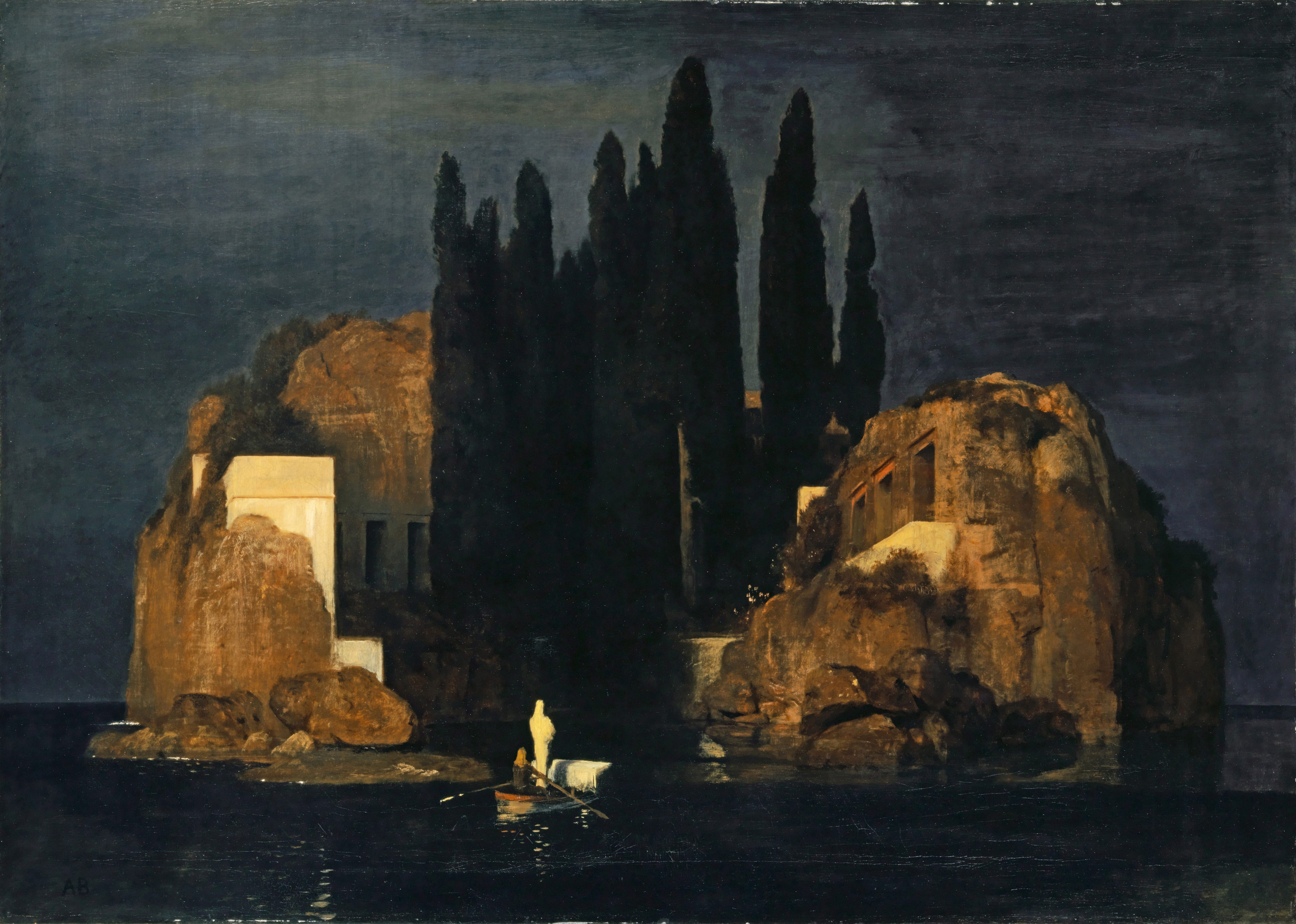
Post-scriptum: My second visit to Jamkarān is quite recent; it dates from April 1995. The place was barely recognizable. The small hamlet of a few hundred village houses had become a small town of several tens of thousands of inhabitants. An ultra-modern highway directly links Tehran to Jamkarān, bypassing Qom. Every Wednesday, thousands of pilgrims go there in dozens of specially chartered air-conditioned buses. The sanctuary has been renovated and immensely enlarged, with loudspeakers everywhere for sermons that gather thousands of faithful. The town now includes several other mosques, travel agencies, hotels and restaurants, several printing houses and publishing houses. According to well-informed sources, an apolitical wing of the clergy, considering Shiism as an essentially eschatological doctrine and opposing the revolutionary clans in power, sought and almost succeeded in promoting Jamkarān to the rank of the great holy cities of Qom and Mashhad. The ochre oasis, dotted with poplars and tamarisks, that I had known and that had haunted part of my youth no longer exists. None of the inhabitants I had visited were still alive. I could not find the location of the old bakery. I was able to visit several cellars; they presented nothing abnormal.4
Henry Corbin, The Man of Light in Iranian Sufism, trans. Nancy Pearson (New Lebanon, NY: Omega Publications, 1994). Page 18
https://thegreatawakening4pt.wordpress.com/2022/02/08/jean-parvulesco-the-secret-of-julius-evola/
Andrea Scarabelli, Julius Evola: An Adventurous Life, trans. Sergio Knipe, ed. with a foreword by Jafe Arnold (London: Arktos / PRAV Publishing, 2026).
Amir-Moezzi, “Jamkaran et Mahan,” Page 154-67
Comments
Nothing yet. Say the first thing.
Sign in to join the conversation.