
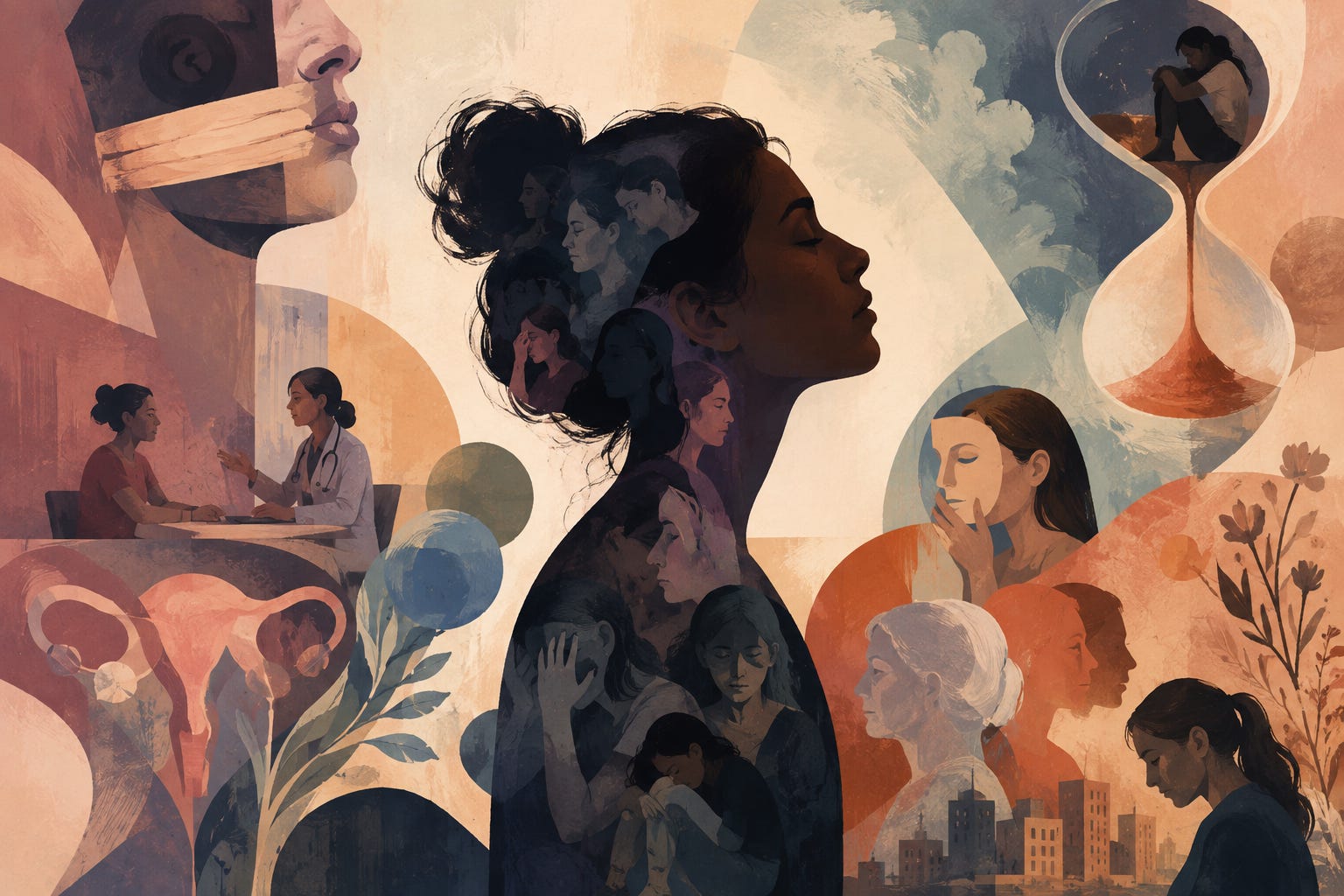
“You’re overthinking it.”
“It happens to every woman.”
“It’ll settle after marriage.”
“It’s just your hormones.”
Most women have heard at least one of these sentences.
Some hear them from family members trying to reassure them. Others hear them from friends who have learnt to accept discomfort as part of being a woman. And sometimes, perhaps most painfully, they hear them inside a consultation room.
At first, these phrases sound comforting. Over time, they become dangerous. Because every time a woman’s symptoms are dismissed as “normal,” she learns to ignore her body instead of listening to it. She stops asking questions. She delays seeking help. She convinces herself that suffering is simply part of womanhood.
And that is where the women’s health gap truly begins.
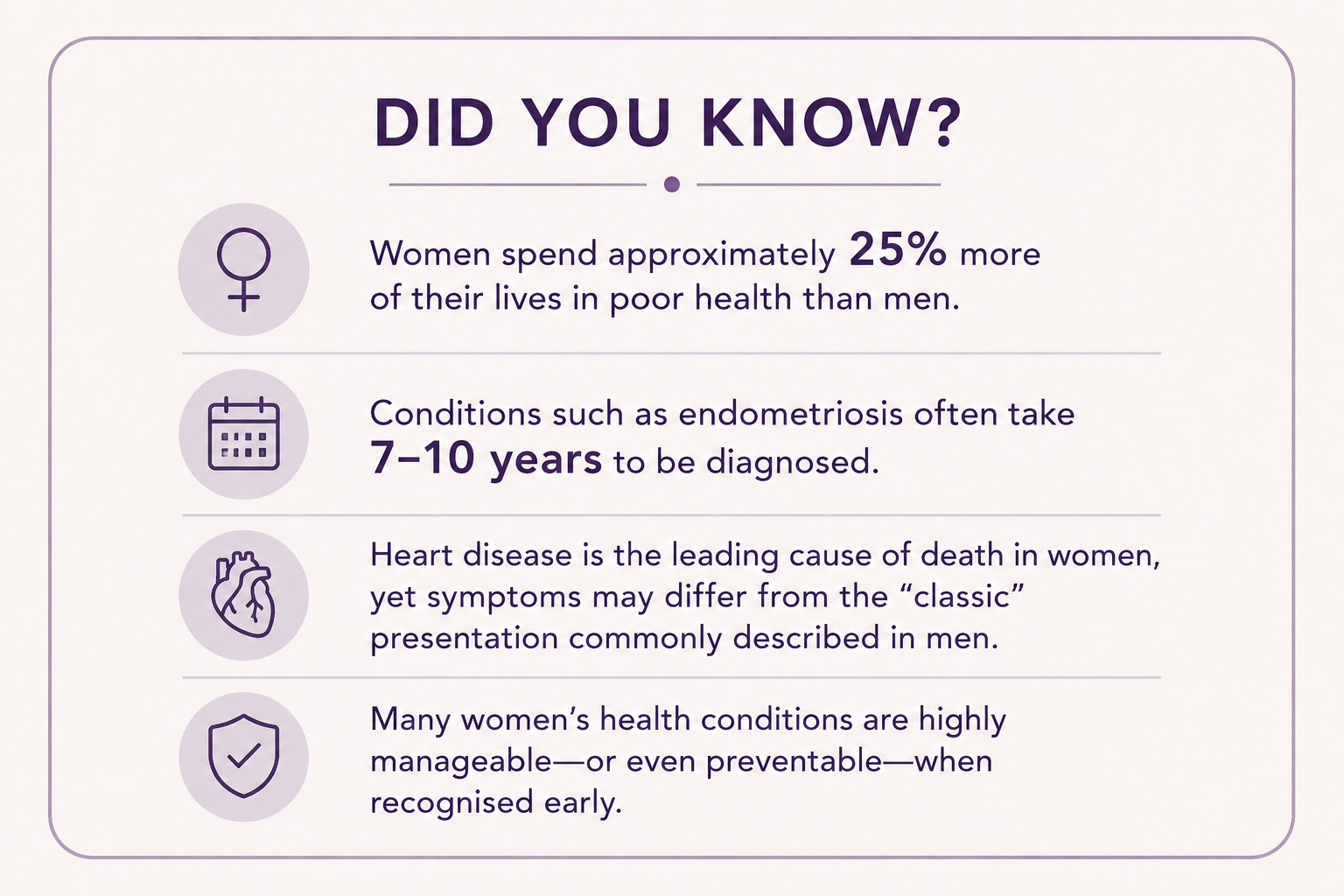
Recently, the conversation around women’s health has gained global attention after reports estimated that women spend nearly 25% more of their lives in poor health than men.
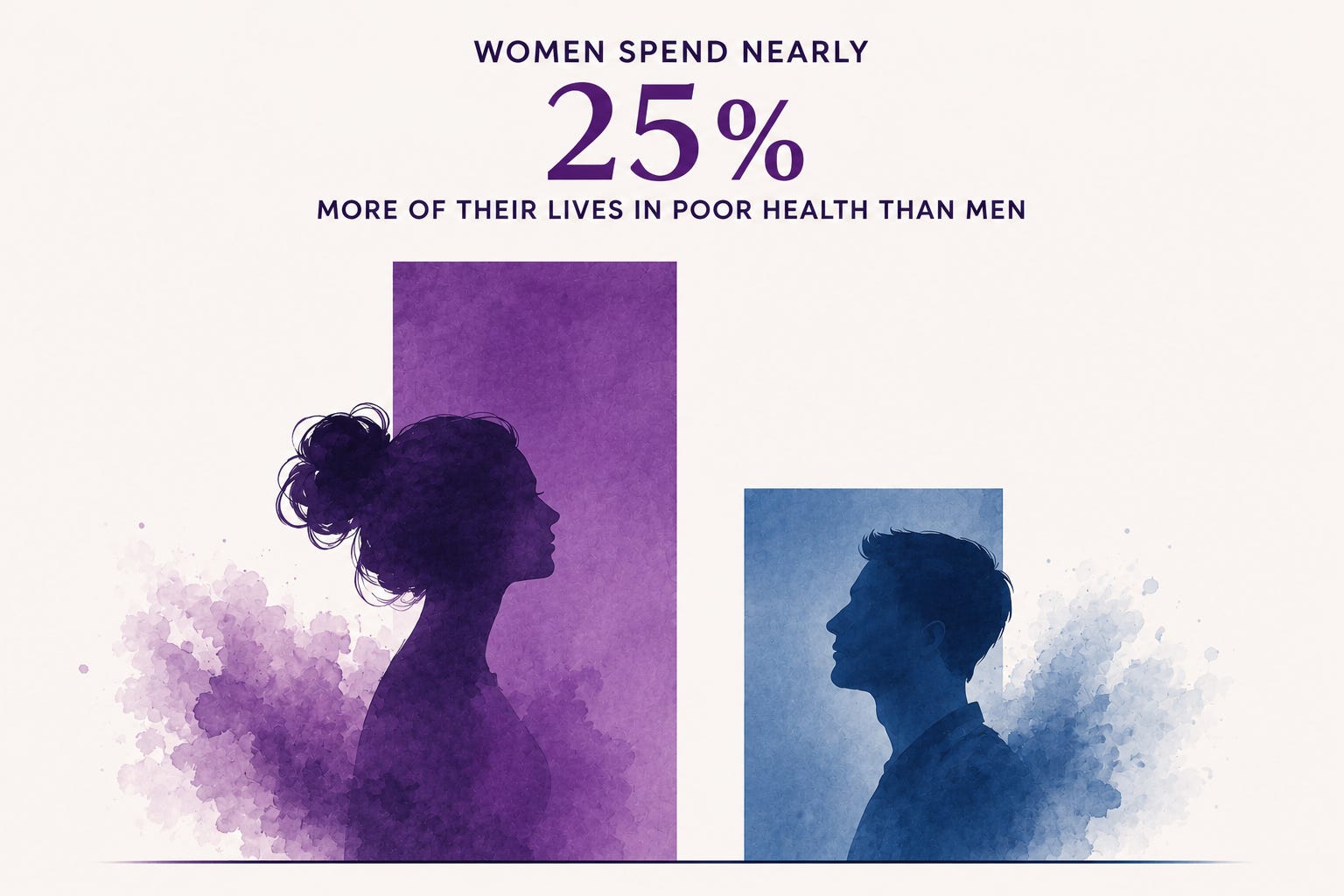
It’s a startling statistic.
But for many women, it isn’t surprising.
The gap doesn’t exist because women are naturally sicker than men.
It exists because women’s health has historically been viewed through a narrow lens—one largely centred around pregnancy and childbirth—while countless other health conditions affecting women have remained under-recognised, under-researched, and too often, under-treated.
Women’s health is far more than reproductive health.
It spans adolescence, fertility, chronic pain, mental wellbeing, cardiovascular health, menopause, ageing, and everything in between.
Yet too many women still spend years searching for answers that should have come much sooner.
Some illnesses are visible.
Many of the conditions affecting women are not. They’re carried quietly—in meetings, classrooms, homes, and workplaces.
A teenager curls up every month because her periods are so painful she cannot attend school.
A young woman silently changes her plans around heavy menstrual bleeding.
Someone trying to conceive wonders if the problem is somehow her fault.
A new mother assumes leaking urine after childbirth is simply something she has to live with.
A woman in her late forties struggles with brain fog, sleep disturbances, mood changes, and exhaustion, believing she is “just getting older.”
Another experiences unusual fatigue or discomfort from heart disease—without the crushing chest pain often associated with men—and her symptoms go unrecognised.
These stories may seem unrelated. They are not. Together, they represent millions of women adapting their lives around symptoms instead of receiving timely care.
The cost isn’t only physical. It’s emotional, professional, financial and deeply personal.
There isn’t one single reason.
It’s the result of decades of small systemic failures that have quietly accumulated.
For much of modern medical history, women were significantly underrepresented in clinical research. Many diagnostic criteria and treatment pathways were developed using predominantly male participants, despite the fact that diseases often present differently in women.
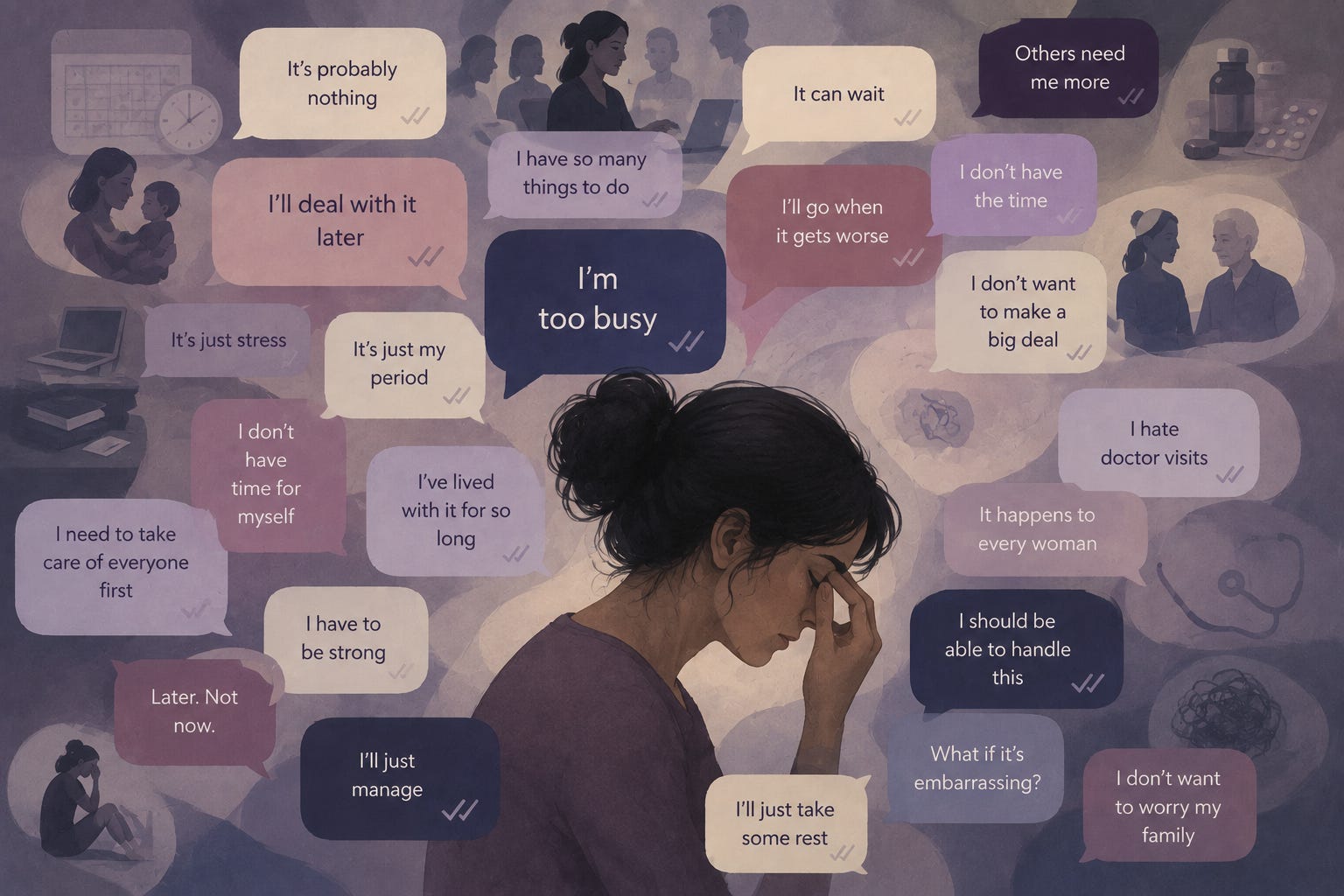
At the same time, society has conditioned women to become caregivers first and patients second.
They schedule appointments for children.
They remind ageing parents to take medication.
They encourage partners to see a doctor.
Yet when it comes to themselves, they postpone.
“I’m too busy.”
“It can wait.”
“It’s probably nothing.”
Then there is the silence.
Menstruation.
Infertility.
Miscarriage.
Pelvic pain.
Menopause.
Pelvic floor dysfunction.
Sexual health.
Despite affecting millions of women, many of these conversations still happen in whispers—or not at all.
And when conversations are delayed, diagnoses often are too.
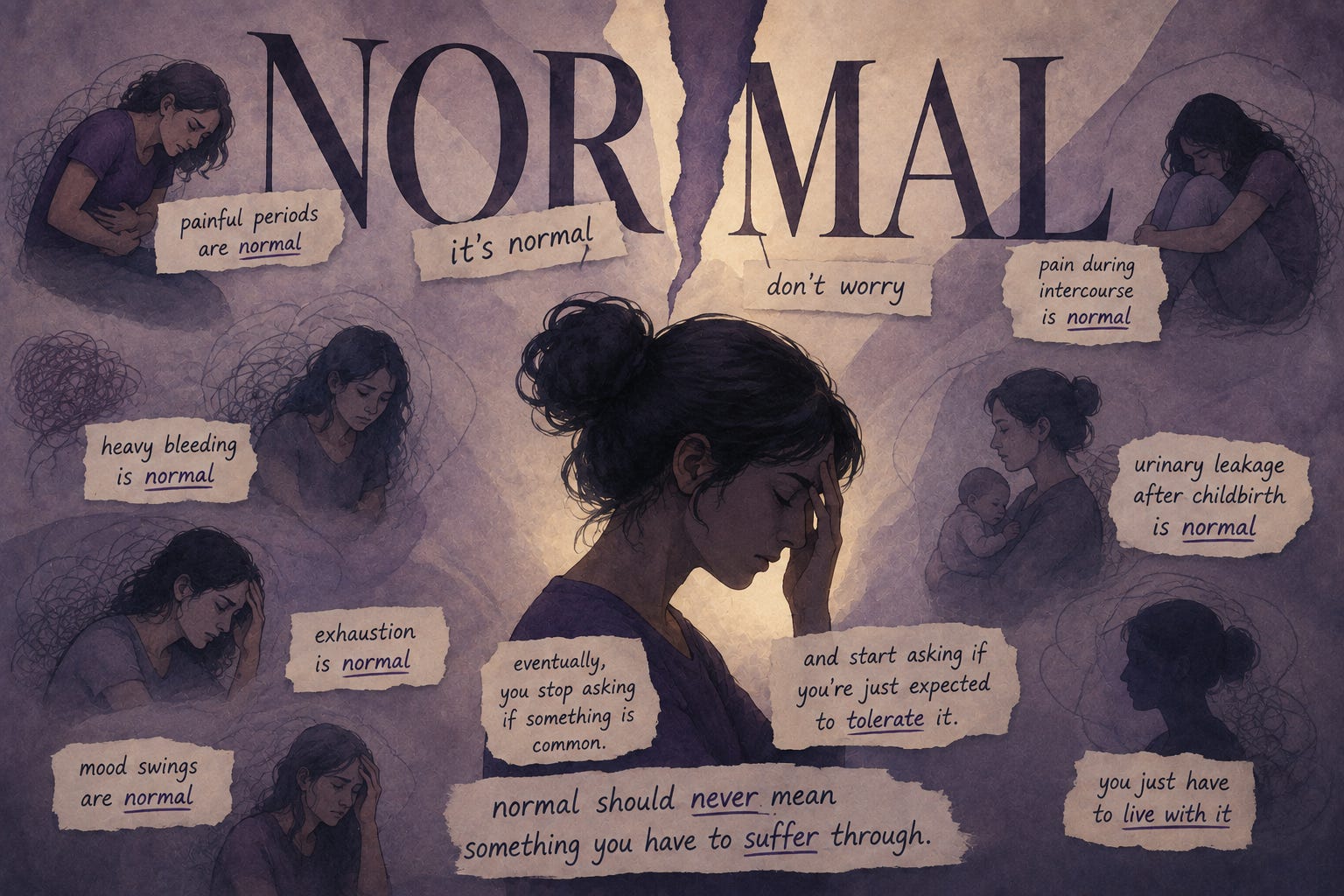
The word normal can be reassuring.
But sometimes it becomes a barrier.
Painful periods are labelled normal.
Heavy bleeding is called normal.
Exhaustion is normal.
Mood swings are normal.
Pain during intercourse is normal.
Urinary leakage after childbirth is normal.
Eventually, women stop asking whether something is common.
Instead, they begin asking whether they’re simply expected to tolerate it.
There is an important distinction between common and normal.
Many symptoms are common.
That does not mean they should be ignored.
A condition may affect millions of women and still deserve proper diagnosis, treatment, and compassion.
Normal should never mean “something you have to suffer through.”
The solution won’t come from one breakthrough.
It will come from thousands of small changes.
It means teaching menstrual health in schools without embarrassment.
Investing in research focused on conditions that disproportionately affect women.
Designing workplaces that acknowledge women’s health beyond pregnancy alone.
Creating healthcare systems that recognise how diseases present differently in women.
Most importantly, it means believing women when they describe their symptoms.
Because women know their own bodies.
If something feels different…
If pain begins interfering with everyday life…
If symptoms persist despite being told everything is “fine”…
It is okay to ask another question.
It is okay to seek another opinion.
Advocating for your health is not overreacting.
It is participating in your own care.
The women’s health gap is not simply a medical issue.
It reflects how societies value women’s experiences, whose symptoms are believed, which conditions receive funding, and whose pain is considered worthy of attention.
Closing that gap requires better research.
Better education.
Better healthcare.
But it also requires changing the language we’ve inherited.
Perhaps instead of saying,
“It happens to every woman,”
we should start asking,
“Tell me more.”
Because sometimes, the most powerful intervention isn’t a new medicine.
It’s finally listening.
Women’s health is not a niche within medicine; it is half of healthcare.
Every time we stop asking women to simply endure and start listening to what their bodies are trying to say, we move one step closer to closing a gap that should never have existed.
No posts
Comments
Nothing yet. Say the first thing.
Sign in to join the conversation.