
A few weeks ago, a woman came to see me with her six-week-old daughter.
She apologised before she even sat down.
“I don’t know why I’m here, doctor. The baby is healthy. My reports are fine. I just… don’t feel like myself.”
She wasn’t sleeping, even when the baby slept. She cried in the bathroom so no one would hear. She felt a strange distance from her own daughter, and then unbearable guilt for feeling that distance at all.
She had mentioned it to her mother-in-law once.
“Every new mother goes through this. It’ll pass once you settle into a routine.”
So she stopped mentioning it.
It sounded reasonable. In fact, it sounded so reasonable that she believed it too.
When I asked how long this had been going on, she said, “Since the second week.”
It was now week six.
That gap — between when something starts and when someone finally says it out loud — is where I want to spend this letter.
Almost every new mother goes through a version of what this patient described. It’s called the baby blues, and it affects the overwhelming majority of women — some estimates put it as high as 4 in 5. It begins two to three days after delivery, peaks around day five, and resolves on its own within about two weeks. Tearfulness, mood swings, anxiety, feeling overwhelmed by something as small as a nappy change.
It is uncomfortable. It is not, by itself, an illness.

Postpartum depression is a different diagnosis. It lasts longer than two weeks. It sits heavier — persistent numbness or sadness, loss of interest in the baby, overwhelming guilt, a feeling of failure that doesn’t lift no matter how much reassurance is offered. In more severe cases, thoughts of self-harm.
My patient at week six wasn’t experiencing blues anymore. She was experiencing depression that everyone around her had mistaken for a phase.
Recent estimates suggest that roughly 1 in 5 new mothers in India experiences postpartum depression — and most clinicians who work in this space believe that number is a significant undercount, because so much of it is never reported at all.
Not because it isn’t happening. Because it’s being called something else — adjustment, tiredness, hormones, a phase every mother is expected to quietly pass through.
None of this happens because a woman is ungrateful, or unloving, or not trying hard enough. It happens because of things that are entirely physical and entirely circumstantial, often all colliding at once:
Oestrogen and progesterone, built up steadily across nine months, collapse within days of delivery — one of the sharpest hormonal drops the body ever experiences.
Sleep deprivation that isn’t ordinary tiredness, but the fragmented, cumulative kind known to worsen mood on its own.
An identity being reorganised overnight around someone else’s survival.
A body still healing from delivery, being asked to nurture at the same time.
Fewer hands at home than previous generations had — many young couples today are raising a newborn away from the extended family support that once absorbed the early weeks.
A quiet cultural pressure to look composed and endlessly grateful, which makes admitting difficulty feel like admitting failure.
A prior history of anxiety or depression, or a traumatic delivery, raises the risk further still.
I want to tell you something I don’t say often.
I have delivered hundreds of babies. I counsel new mothers on exactly what their body and mind are about to go through. I assumed all of that would protect me.
It didn’t.
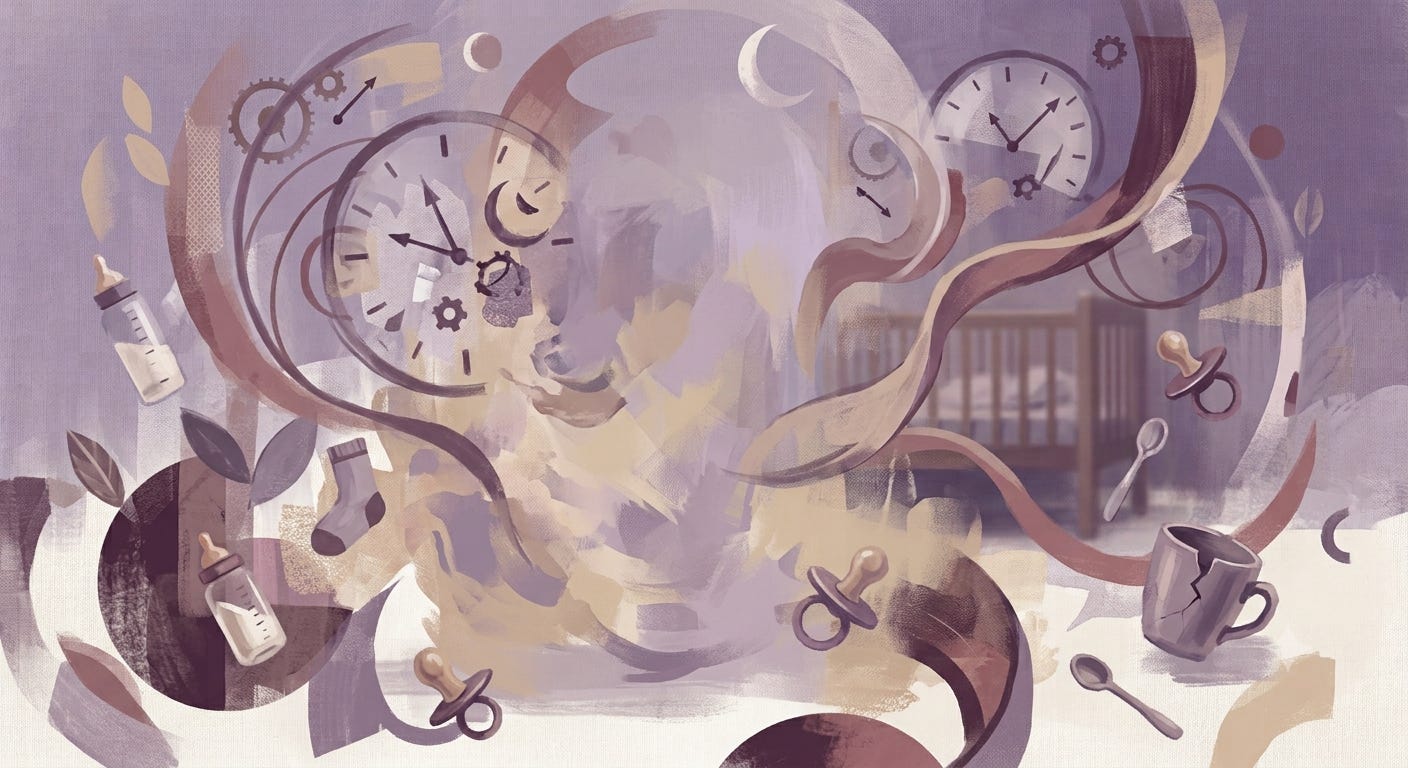
By the fourth day with my own first baby, I remember sitting on the edge of the bed, looking at my daughter, and feeling — nothing, where I had expected to feel everything. Then guilt, immediately after, heavy enough to frighten me.
What helped wasn’t the textbook. It was my husband noticing I had gone quiet, and simply saying, “This is hard. You’re allowed to feel however you feel” — instead of trying to fix it.
If it can happen to a gynaecologist who delivers babies for a living, it can happen to anyone. That is the whole point of this letter.

There is one more thing I need to tell you, because staying quiet about it does more harm than saying it plainly.
A labour and delivery nurse in Massachusetts, Lindsay Clancy, is someone who — professionally — had supported countless women through childbirth. After her third baby, her own mental health began to unravel. Mania. An inability to sleep. Frightening thoughts. She sought help. She was placed on multiple psychiatric medications. When that wasn’t enough, she was admitted to a psychiatric hospital.
Nineteen days after discharge, in January 2023, in what her defence describes as severe postpartum psychosis, her family was struck by a tragedy no household should ever have to face — one that also left her own life hanging in the balance for a time. The outcome of that illness is something the whole world is still coming to terms with. Her trial is ongoing this year, and it has forced a difficult, necessary conversation about how this illness is recognised — and how easily it can be missed, even by people who were trying.
I’m not sharing this to frighten you. I’m sharing it because it dismantles an assumption many of us carry — that this only happens to women who are unsupported or unprepared. Lindsay Clancy was a trained medical professional. She sought help more than once. It still wasn’t caught quickly enough.
Postpartum psychosis is rare — roughly 1 to 2 in every 1,000 deliveries — but it is a genuine psychiatric emergency, and it can escalate within hours, not weeks.
It usually appears within the first days to six weeks after delivery. It doesn’t always look dramatic at first. Take seriously:
Confusion or an inability to tell what’s real
Extreme mood swings — euphoria one hour, despair the next
Paranoia that feels out of character
Hallucinations, or beliefs that don’t match reality
Days without sleep, even when there is every opportunity to rest
Speech or behaviour that suddenly doesn’t make sense
Frightening, intrusive thoughts about harming herself or the baby
Here is the detail clinicians say gets missed most often: a woman in psychosis can still sound calm and logical on the surface. You don’t need visible hallucinations for someone to be dangerously unwell — irritability, confusion, or unusual paranoia can be the only warning, especially layered on top of severe sleep deprivation.
This is not something to monitor and wait out. It needs same-day psychiatric care. In India, the government’s Tele MANAS helpline — 14416 or 1-800-891-4416 — is free, 24/7, and available in over 20 languages. Or go straight to the nearest emergency room.
A mother in the middle of this often cannot see it clearly enough to ask for help herself. Which means someone else has to be watching.
Don’t dismiss “she seems different” as just tiredness. You know her. Trust the change.
Share the nights. Sleep loss is one of the strongest known triggers for both depression and psychosis to worsen.
Go with her to postnatal check-ups, and say what you’re noticing — even if she downplays it in the room.
Be especially alert in the weeks after any hospitalisation or medication change.
Believe her when she says something feels wrong, even when she otherwise seems composed.
If there’s real concern, don’t leave her alone with the baby, and say so without shame — it’s protection, not punishment.
Talk about this before the baby arrives. Make a plan for it the way you make a birth plan.
If something in this letter felt uncomfortably familiar — you have done nothing wrong, and asking for help is not a failure of love. It’s the most responsible thing you can do, for yourself and for your baby.
And if you’re reading this as someone’s partner, mother, or friend — ask her this week how she’s really doing. Not the answer she gives at the door when relatives are visiting.
Ask twice, if you have to. And listen like it matters, because it does.
This letter touches on postpartum depression and psychosis. If something in it felt personal, please don’t sit with it alone — Tele MANAS (14416 / 1-800-891-4416) is free and confidential, 24/7.
No posts
Comments
Nothing yet. Say the first thing.
Sign in to join the conversation.