
In recent years, football clubs have increasingly stepped beyond the pitch to promote social causes, which raises questions about how fans respond to these efforts. Victor Araújo and Malu Gatto’s research explores how anti-sexism initiatives in football can provoke backlash among male fans while strengthening trust among women. As football clubs across the world increasingly use their platforms to champion social causes – from anti-racism campaigns to gender equality initiatives – researchers are beginning to ask an important question: can sports teams actually change their supporters’ attitudes? Clubs are no longer simply sporting institutions. Many now present themselves as civic actors who promote social justice messages to millions of fans through stadium campaigns, social media, and club-led initiatives. But how do supporters respond when their team takes a public stance on issues such as gender equality?
Recent research examines a gender-equality campaign launched by a Brazilian football club and asks whether football fandom, a powerful form of social identity, can be leveraged to promote greater egalitarian attitudes among supporters.The results reveal a complex dynamic: the same campaign that improved trust among women fans also triggered a backlash among some male supporters.
Political scientists have long understood that collective identities such as political parties, religious groups, and social movements shape how individuals think about social and political issues. But football clubs are not typically thought of as “value-oriented” institutions. Their core mission is sporting success, not moral or ideological guidance. Yet fandom can produce extremely strong emotional attachments. Supporters invest time, money, and identity into their clubs in ways that resemble political or religious commitment.
To examine just how strong this identity can be, Araújo and Gatto first analysed a national survey of more than 2,000 Brazilians, comparing the importance of four types of identity:
Political Parties
Social Movements
Religion
Football Teams
The results suggest that football identity is remarkably widespread.
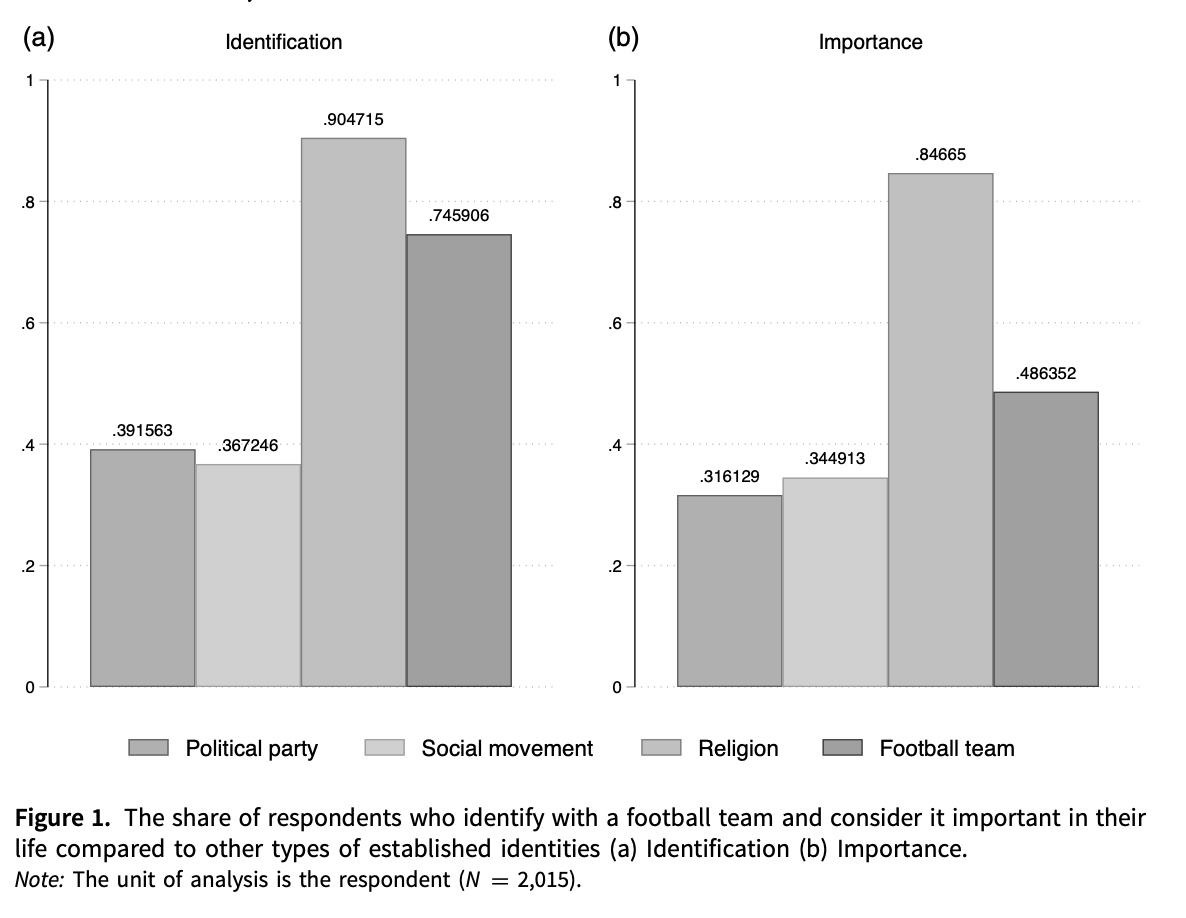
Nearly three-quarters of respondents reported identifying with a football team, a larger share than those identifying with political parties or social movements. Only religion ranked higher. Even more strikingly, almost half of respondents said their football team was an important part of their lives—again exceeding the importance placed on political parties and social movements. These findings suggest that football fandom represents a powerful but understudied source of collective identity, capable of shaping attitudes in ways that resemble more explicitly political institutions.
To explore whether this identity could influence attitudes toward gender equality, the researchers partnered with Esporte Clube Bahia, a major Brazilian football club that has actively promoted social initiatives. Among these initiatives was a campaign aimed at challenging sexism in football, a persistent issue both in Brazil and internationally. The researchers designed an online survey experiment involving more than 2,000 football fans, recruited through the club’s mailing list and social media channels. Participants were randomly shown an equality campaign message, but with one crucial difference.
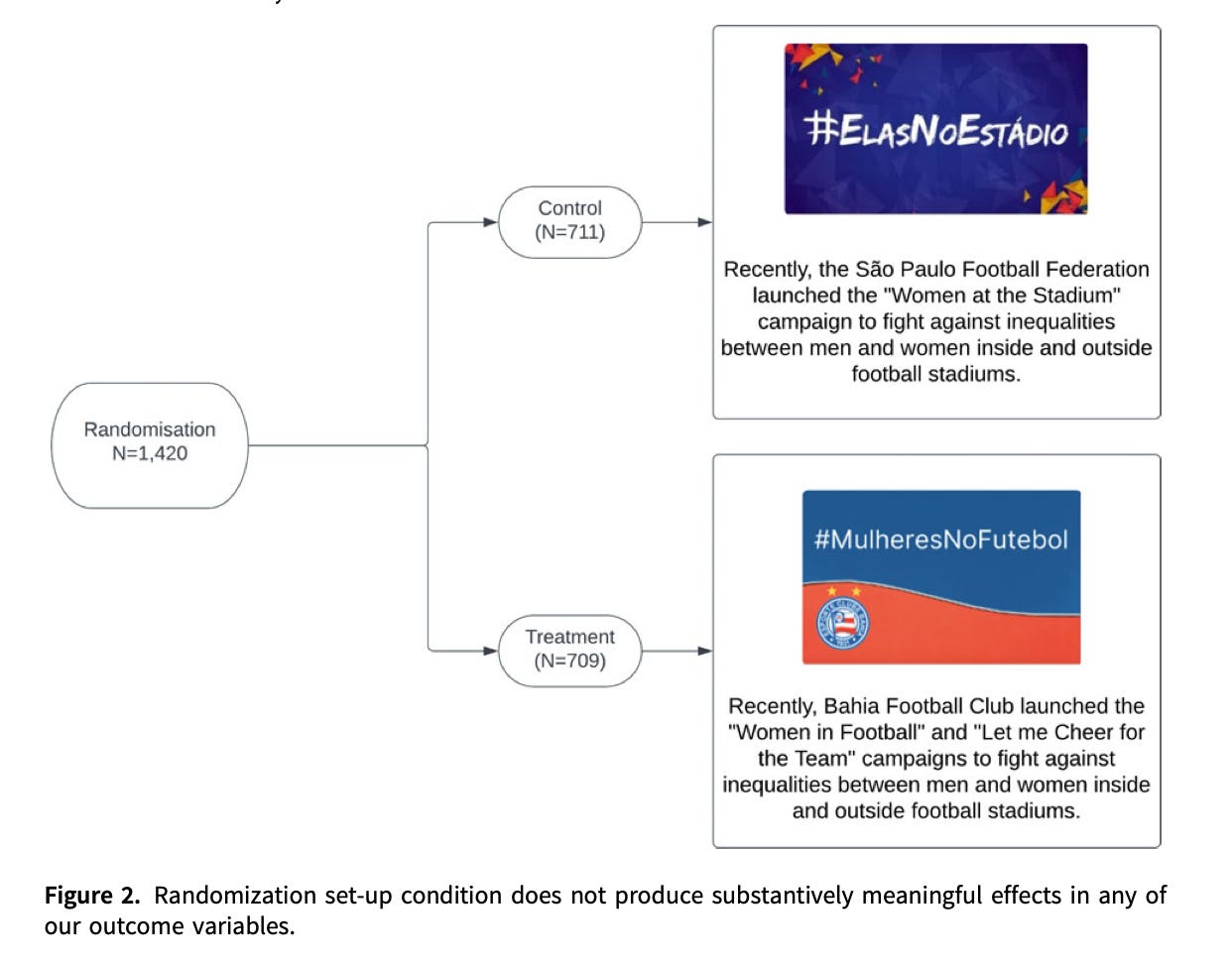
Some participants saw the campaign attributed to the São Paulo Football Federation, a broader football organization. Others saw the exact same message attributed to their own club, Bahia.
The researchers then measured several outcomes, including:
attitudes toward women in football
support for the club engaging in social activism
evaluations of the campaign itself
perceptions of the club’s responsiveness to supporters
The logic was simple: if club identity matters, supporters should respond differently when the message comes from their own team.
The results revealed that football identity does indeed influence attitudes – but not always in the way campaign designers might hope.
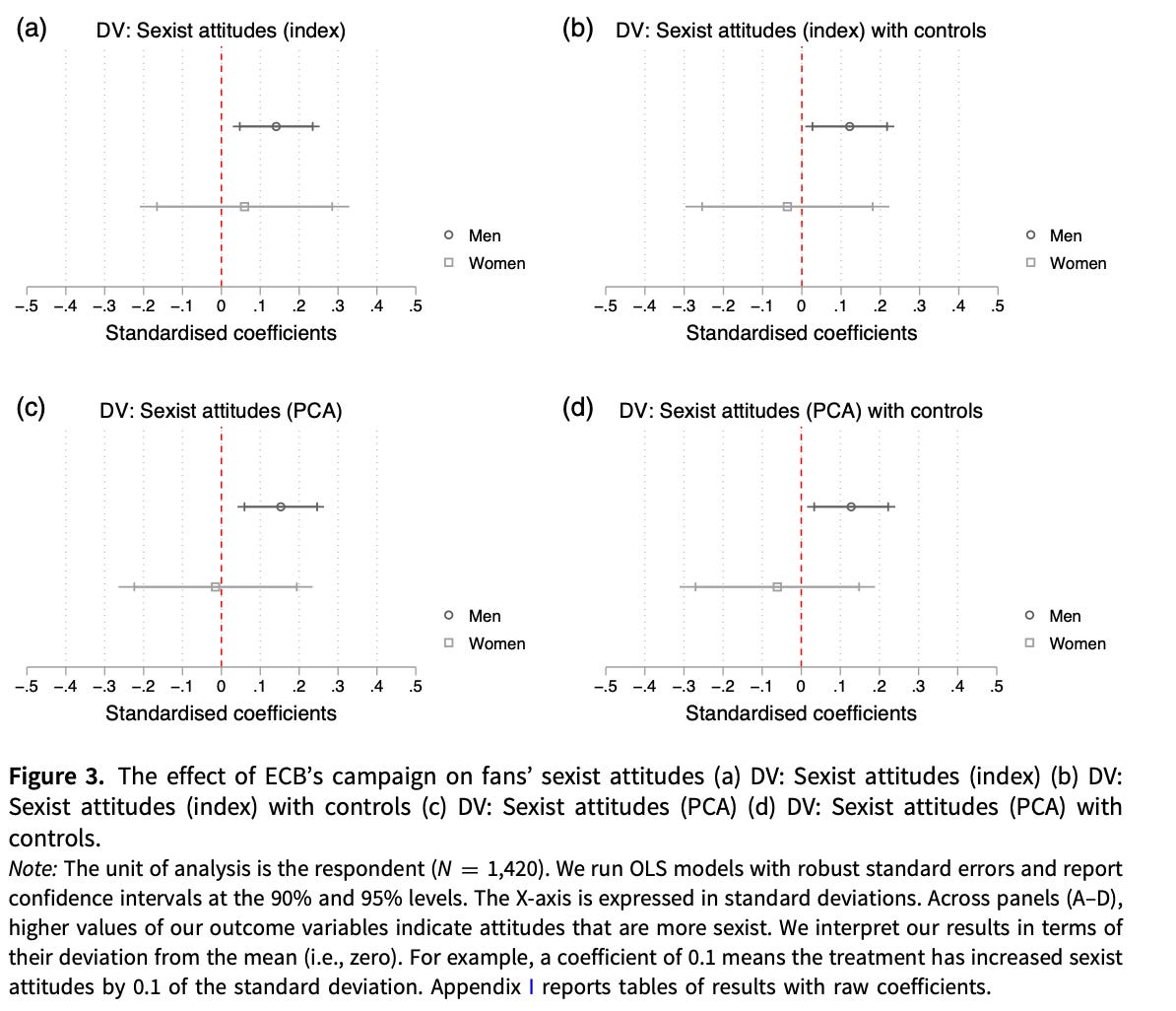
Among male fans, exposure to their club’s anti-sexism campaign led to slightly more sexist responses compared to those who saw the campaign attributed to another organisation. Women’s attitudes, by contrast, remained largely unchanged. In other words, the campaign appears to have produced a backlash among some male supporters. The authors interpret this reaction through the lens of status threat. For many fans, football stadiums have historically been male-dominated spaces. Efforts to promote gender equality may therefore be perceived as challenging established hierarchies within fan culture. Rather than embracing the message, some men responded defensively by expressing stronger beliefs that men are better suited to roles such as players, coaches, or referees.
The backlash extended beyond attitudes toward women. When asked whether their club should promote other social causes, including racial equality, LGBT rights, or environmental protection, male fans exposed to the campaign were less supportive of these initiatives as well.
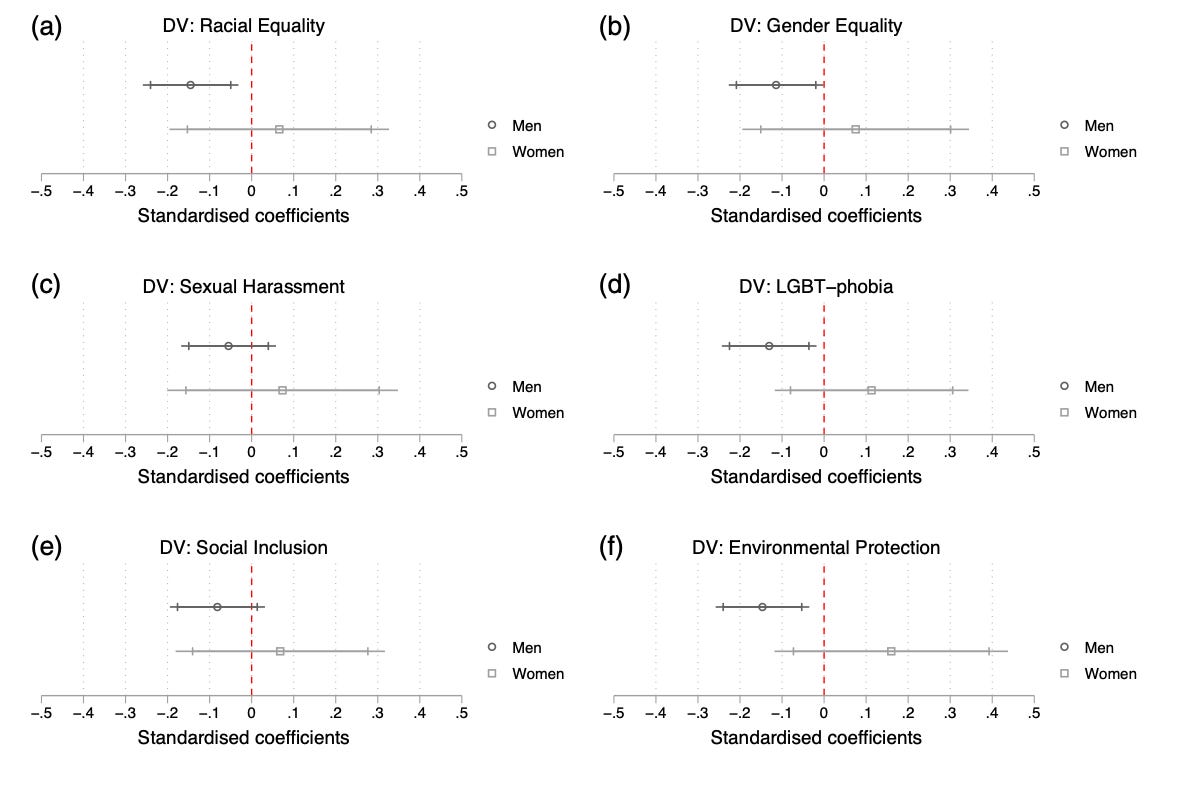
This suggests that the campaign triggered a broader reaction against the idea of football clubs engaging in social activism. Male supporters may have interpreted the initiative not simply as a statement about gender equality, but as part of a wider shift in how their club defines its social role.
Despite this backlash, the campaign also produced more positive effects.
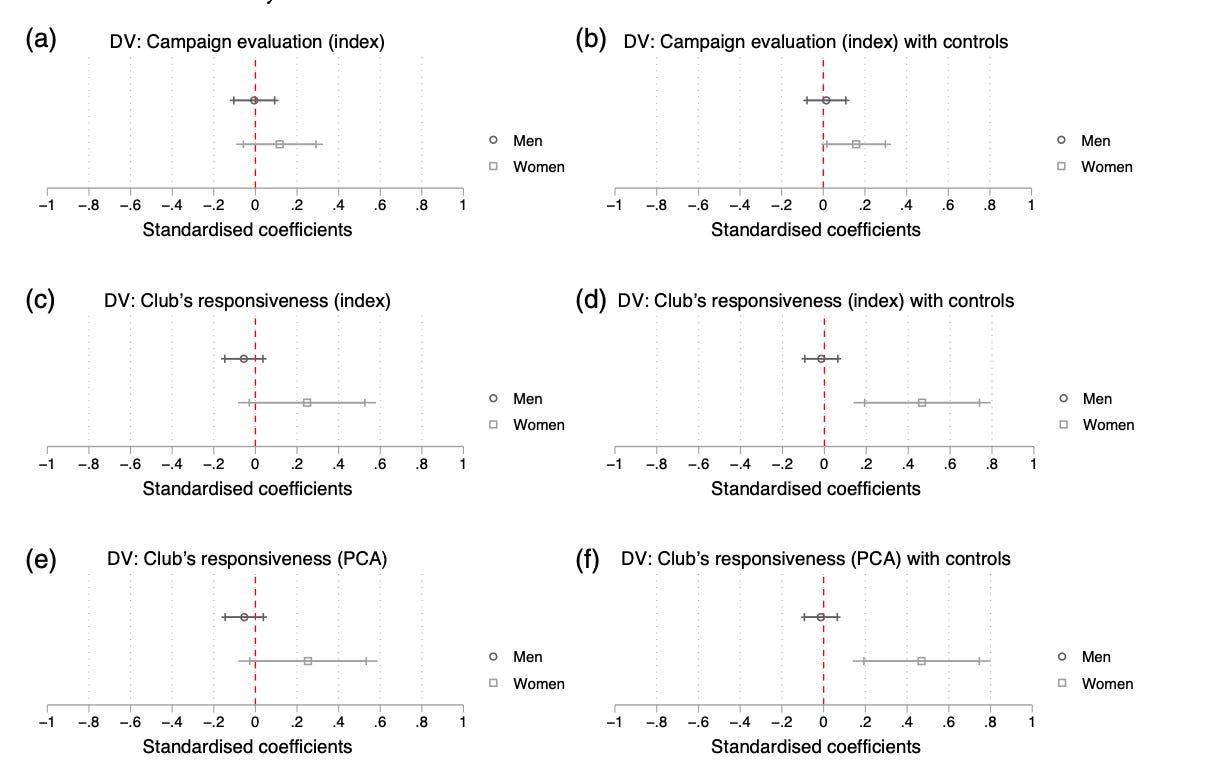
Women exposed to the campaign were more likely to evaluate it positively and to view the club as more responsive to its supporters. For a group historically underrepresented within football fandom, such recognition may signal a meaningful attempt at inclusion. The campaign therefore appears to have strengthened women’s sense of institutional trust and belonging, even as it provoked resistance among some male fans.
Altogether, the findings highlight the potential and the risks of social activism in sport. Football clubs possess enormous cultural influence. Their identities are powerful enough to shape how supporters interpret messages about social issues. But when these messages challenge existing hierarchies, they may also generate unexpected forms of backlash.
In the case studied here, the anti-sexism campaign produced mixed outcomes:
backlash among male fans
increased trust among women supporters
For clubs seeking to promote equality, the lesson may not be that such campaigns should be abandoned—but rather that their effects are likely to be complex and uneven. As sports organisations continue to position themselves as agents of social change, understanding how fans interpret and react to these messages will become increasingly important. Researchers at the intersection of politics, identity, and sport will undoubtedly continue to explore this question in the years ahead.
No posts
Comments
Nothing yet. Say the first thing.
Sign in to join the conversation.