

As the 2026 election season enters its competitive spring push, text messages and emails soliciting donations for political hopefuls are showering inboxes once again. Campaigns around the world are expected to break new records on political ad spend this year, and the rhetoric in these campaigns are of a compelling nature for scholars at the Public Opinion Analytics Lab.
Last year, results from POAL researchers Dr Katharina Lawall (University of Reading), Dr Stuart Turnbull-Dugarte (University of Southampton), and Dr. Florian Foos (LSE) were published in the University of Chicago’s Journal of Politics on the topic of positive vs. negative campaigning’s effectiveness for fundraising. The team tested whether fundraising emails containing negative or positive cues, both on political identity and specific partisan issues, encouraged party supporters to donate money through associated digital fundraising platforms. They ran this test in collaboration with a British political party during the 2019 General Election, in a campaign that was divided among three fronts on the issue of Britain’s exit from the European Union. The ruling Conservatives campaigned on the premise of “getting Brexit done”, the main opposition, the Labour Party, ran on the premise that they could successfully renegotiate the agreement with the EU and kickstart a second referendum, and a collection of smaller parties who tactically selected candidates to unseat pro-Brexit incumbents.

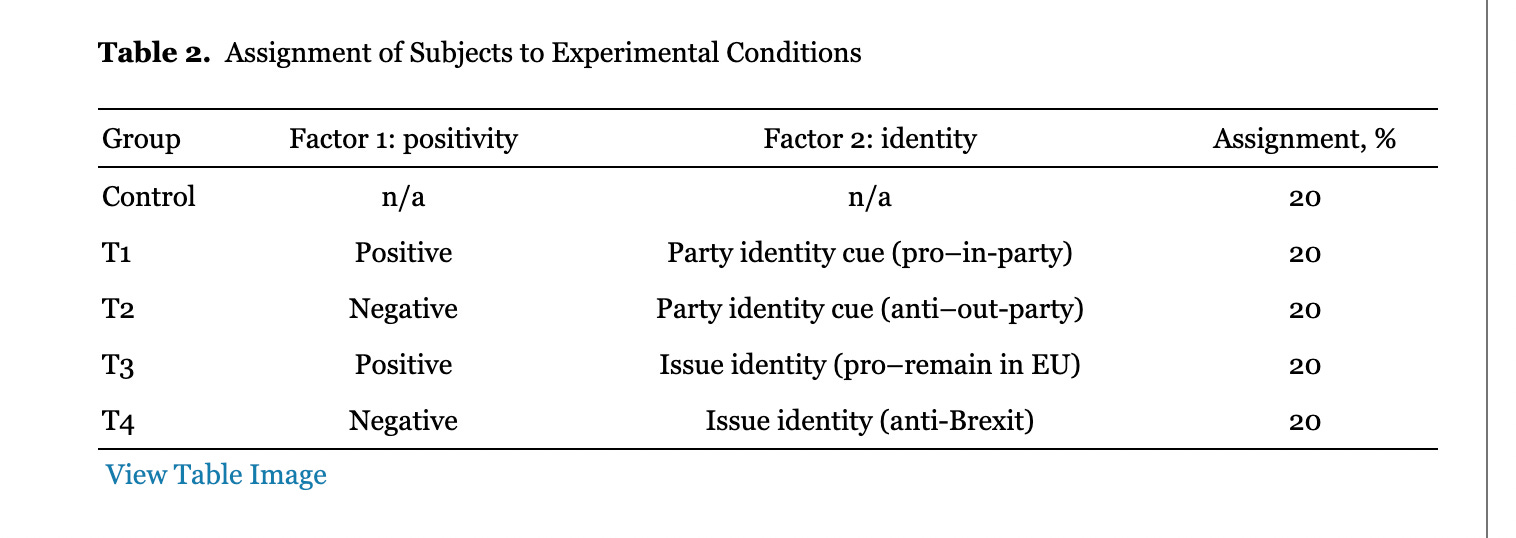
In the study, the researchers randomly assigned around 90,000 party supporters to receive a campaign email that contained either a negative or a positive cue, either vis-a-vis the party itself, or to do with the issue of Brexit. . Thus, the party members were randomly assigned into 4 distinct groups – receiving a pro-party message, receiving an ant-rival-party message, receiving a pro-issue message (in this case, a pro-remain one),or receiving an anti-issue message (in this case, an anti-leave one). A fifth control group received no e-mail. They then examined the effects of the cues on time-stamped donations to the political party as a measure of costly (i.e., financial) political behaviour.
The findings from the study, titled Negative Political Identities and Costly Political Action, suggest that voters should prepare for another busy season of alarming text messages and urgent calls to action.
The results revealed that political messages which primed readers with a negative identity were more effective than those priming a positive identity in encouraging party activists to take costly political action. In other words, negative messages that rallied for mobilisation against its competitors were more effective than positive messages that fostered support for the individual’s party. This relates strongly to the period of immense affective polarisation that continues to loom over global elections.
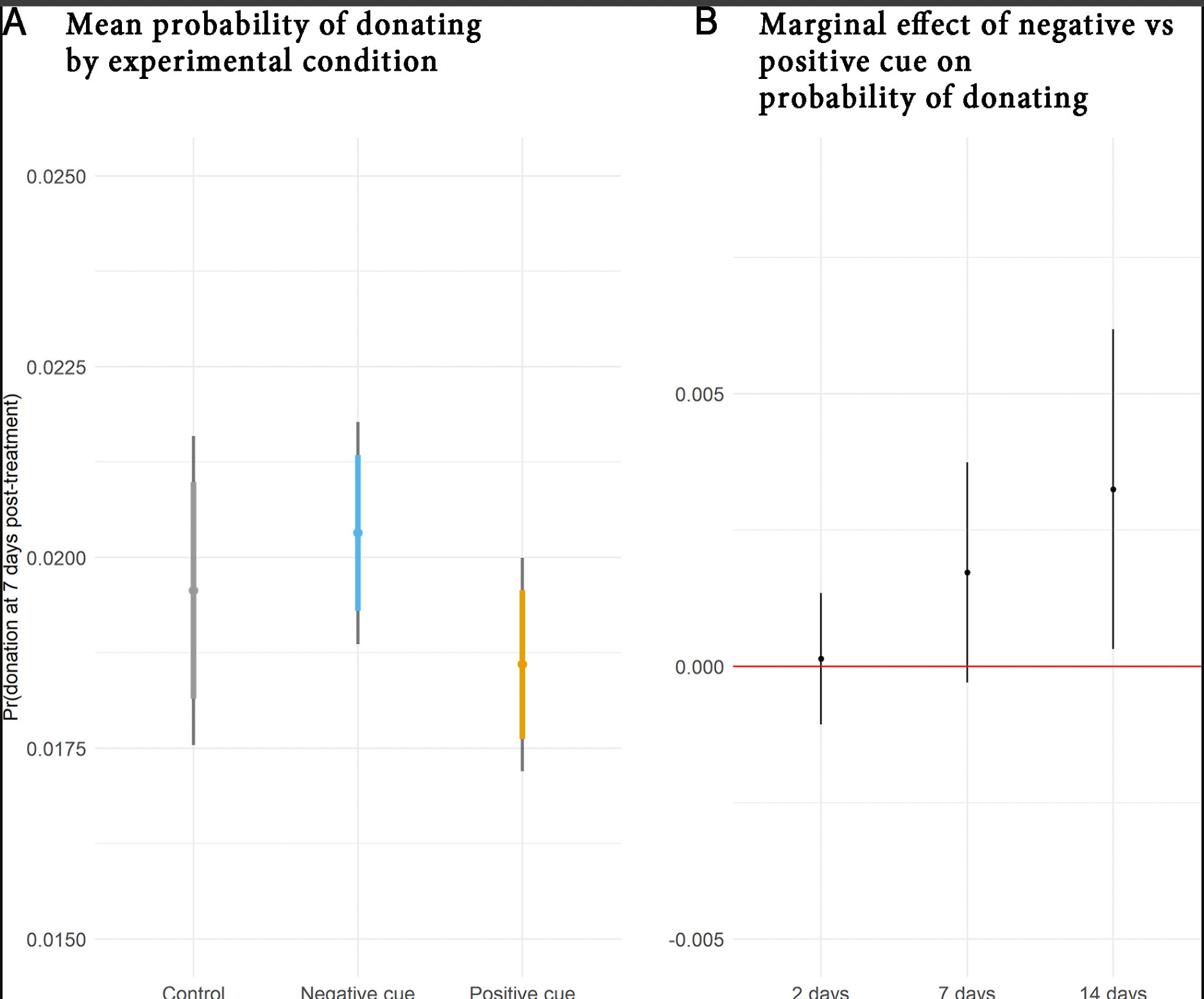
Even more successful than embedding negative party identity cues in messages were the inclusion of negative issue identity cues. While activating negative party identities can be dispersed to multiple different groups in multiparty systems, the binary nature of issue identity concentrates negative feelings to a single political out-group. Political messages that primed a reader with a negative issue identity led to a dramatic 15% increase in donation activity relative to the control group.
The strategic use of negative campaigning in political fundraising is likely to continue through this next election cycle. Will voters continue to be mobilised via rhetoric against an out-group, or will such messages weaken over time? Researchers at POAL will continue to study this field.
This is the first among a series of essays on ongoing public opinion research at POAL. Understanding the effects of different approaches to political messaging is a key research topic of the Public Opinion Analytics Lab. For more information about our pioneering group or to learn about our academic-driven consulting services, visit us online or contact our office at publicopinionanalyticslab@gmail.com.
No posts
Comments
Nothing yet. Say the first thing.
Sign in to join the conversation.