
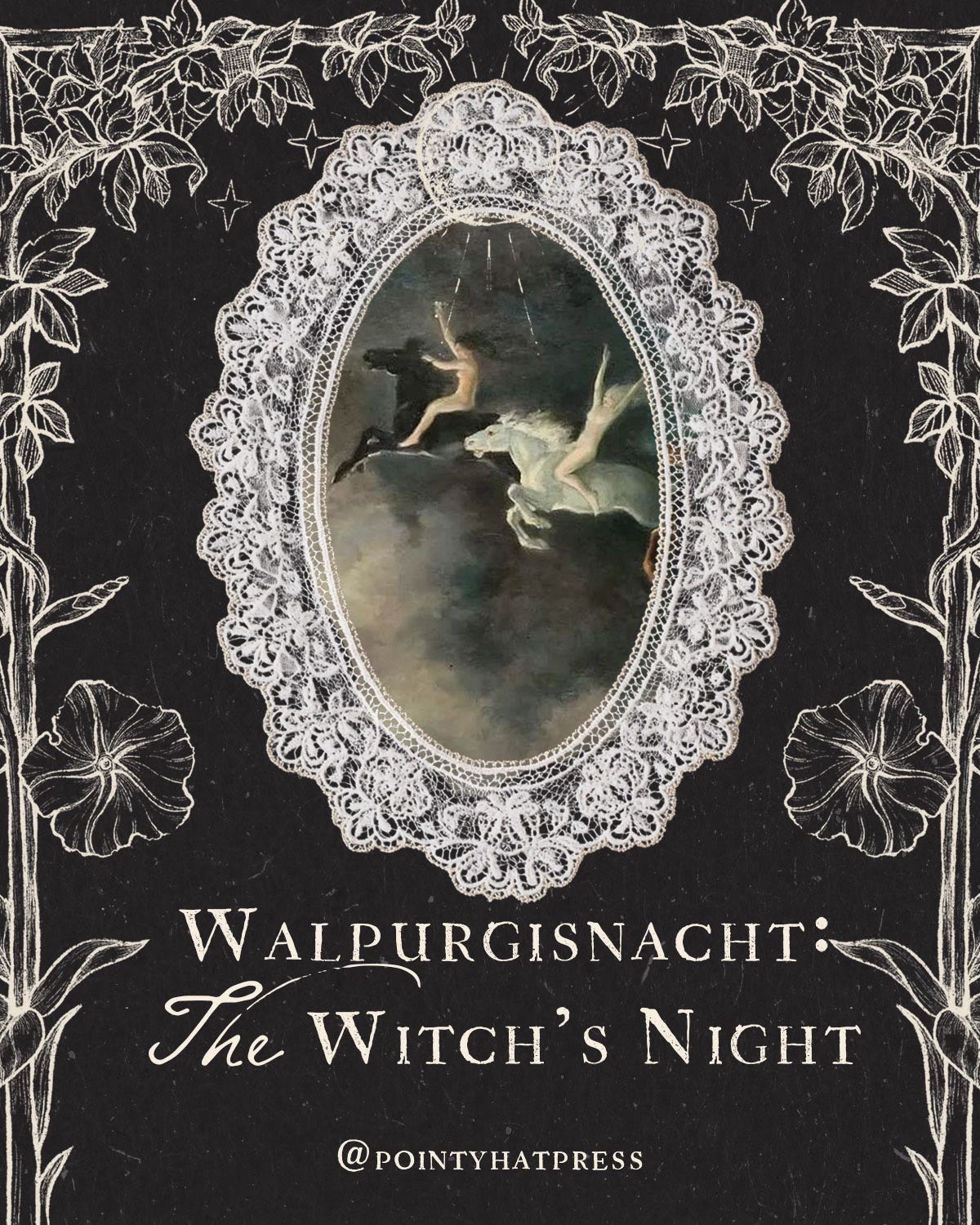
An invitation arrives on the Eve of May, urging us to fly. To free the witch. This invitation dares us to dance around the blaze of our numinosity and divine meaning from wisps of smoke and ash. In some communities, April 30th is known as Walpurgisnacht or the Witch’s Night. It’s a holy day for the wyrd and the wild, for shapeshifting and impossible magic, when the veil slips and we witness what lies on the other side of the physical plane.
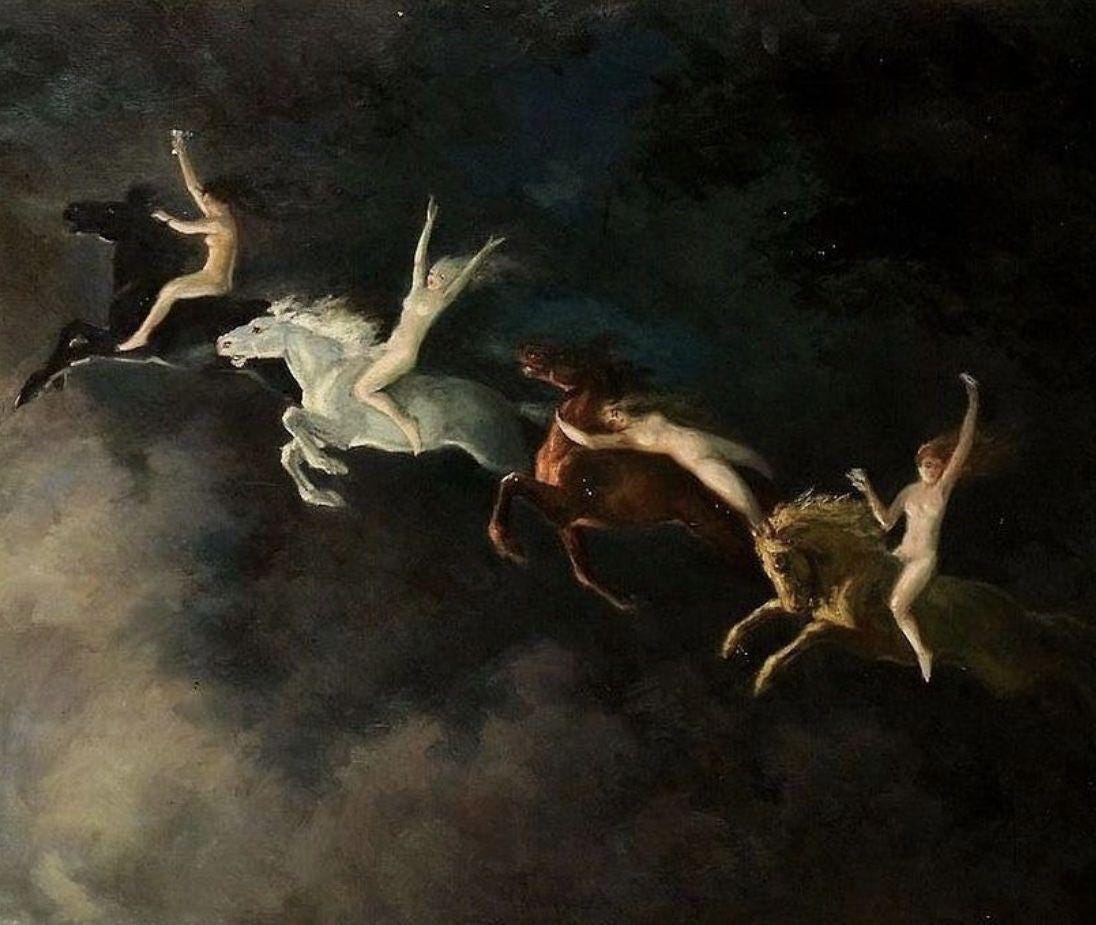
May initiates us into a season of miracles. This month begins the chapter of the year dedicated to the maiden, the growing gibbous moon, and the solar king ascending his throne while falling in love with the grain goddess in full bloom. For those who follow the Wheel of the Year, May 1st is called Beltane, a sabbat that’s the inverse of Samhain, but equally bewitching. The witch has many seasons and selves, and this month, she is the shifting soil beneath our feet and the stones tumbling smooth at the river’s edge, the crackling bonfire, and the thorn leading to the rose’s velvet mouth.
No matter where we look, May is teeming with magic.
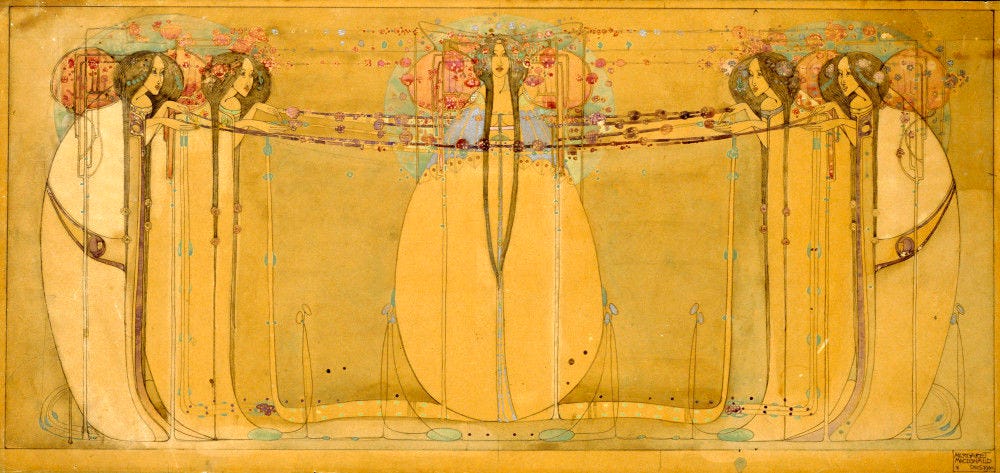
Our Gaelic ancestors tell us that on the first of May, the goddess transforms into a queen, the May Queen, our springtime muse and the quiet harbinger of summer. In some agricultural communities, the Beltane fires were lit for her as the thorn trees bloomed. Farmers moved their animals out to pasture, traditionally walking between two lit pyres on their way to the fields. According to oral legends, the smoke from Beltane fires protected livestock and drove away blight, drought, and threats to future harvests caused by mischievous fairies. To appease any errant fae folk, people hung bells in doorways, planted extra rows of colorful flowers in their gardens, and crafted crowns or thorny wreaths to hang near the thresholds.

In the Greco-Roman world, May Queens were abundant. One of our favorites was Flora, the goddess of ripening plants. She hosted a multi-day festival called Floralia at the end of April and the start of May, dedicated to dancing, drinking, and flirting. Revelers rarely wore clothes, and instead, they adorned themselves in flowers, desire, and little else. In Flora’s domain, the ritual was pleasure.
Persephone (or Kore) was another May Queen, one who personified maidenhood and growth. She was the beloved daughter of Demeter, goddess of earth and grain, and together, they hosted the Eleusinian Mysteries. Persephone and Demeter taught people about cyclical sowing and reaping, and illuminated the mysteries of sex, death, and the Underworld. In Persephone’s garden, sensuality was sacred.
The goddess Maia also oversaw May Day festivities and decorum. Maia was a star goddess and one of the Seven Sisters who guarded the secrets of the Pleiades. In stories, she was the giver of enlightenment and mother to the silver-tongued Olympian, Hermes.
Maia embodied life-force energy and encouraged people to do the same by ‘wearing the green’ during her sacred month. ‘Wearing the green’ was a way for humans to emulate nature’s green hills and freshly plowed fields, make-shift mossy beds where lovers rendezvoused in secret.
‘Wearing the green’ wasn’t a taboo ritual, it was celebrated. Up until the 16th century, marriage bonds were temporarily lifted in parts of rural Europe during May, blurring the boundaries of sacred union and sexual liberation. Additionally, Maia inspired the ritual of ‘May Riding, where, from atop a white steed, the goddess led love-struck lords and ladies into the woods. There, veiled by trees, young lovers surrendered to their yearnings. The name ‘Maia’ translates to ‘magic,’ and in her wooded haven, desire merged with divinity.
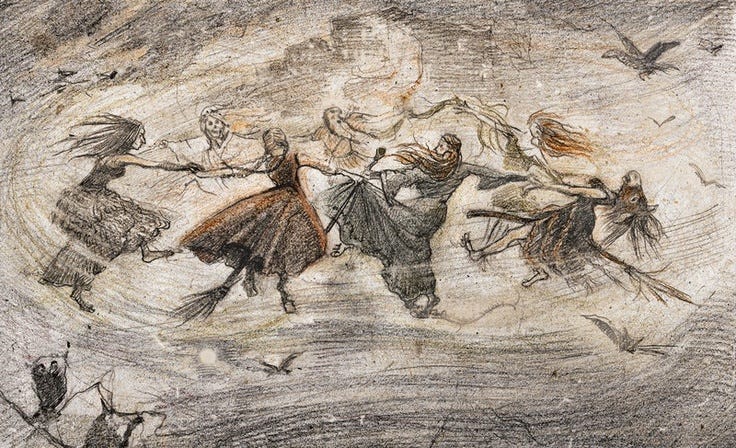
Rooted in the mysteries of May, secrets unearthed in the pursuit of pleasure and freedom, the May Queen grows wings, and the Goddess takes flight.
Perhaps that’s why, instead of sweet-faced maidens or meddlesome sprites molding the rituals of May, Germanic folklore points to flocks of broom-riding witches.
Jacob Grimm, Teutonic Mythology
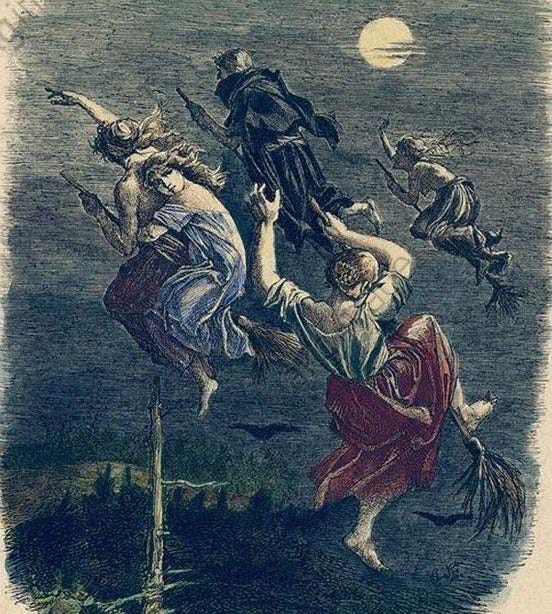
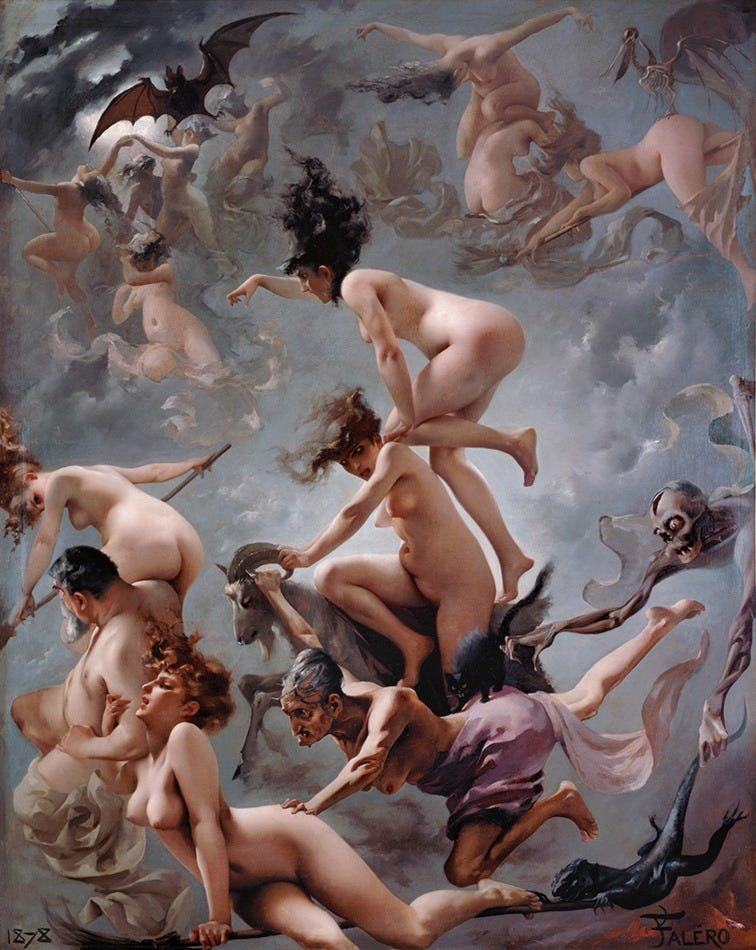
Our Germanic ancestors called May Eve Walpurgisnacht or Witch’s Night. According to its legend, come nightfall, flocks of witches emerge from the shadows and fly to the Brocken to dance with the devil. The Brocken was a mountain, the highest peak of the Harz mountain range in Germany, and while the heathens were dancing and partaking in pleasures of the flesh, the good, pious villagers stayed home and lit fires to repel wayward witches and ghosts.
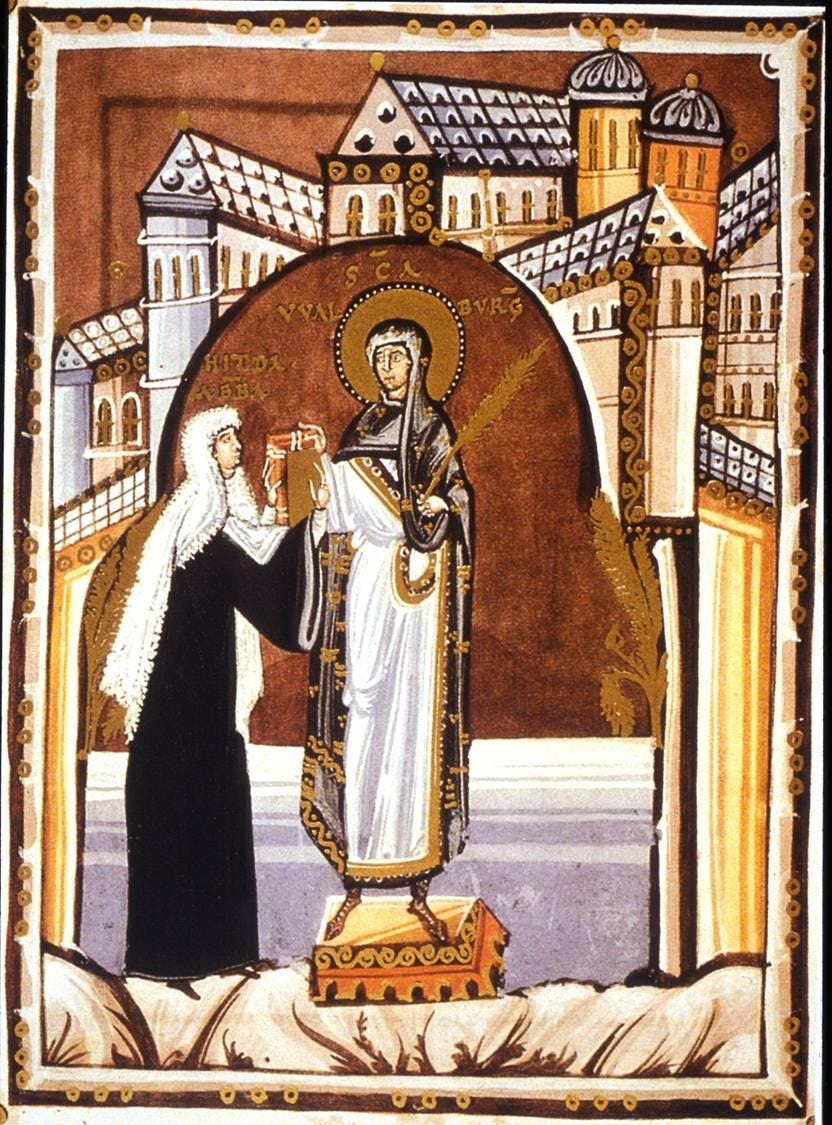
People also prayed to Saint Walpurga, a Christian nun and missionary associated with healing, travel, writing and record-keeping, and herbal wisdom. If Walpurga heard your prayers, she’d protect you from storms, curses, and witchcraft.

Born in England in the 8th century, 11-year-old Walpurga began living at a monastery when her father and two brothers left on a religious pilgrimage to Rome. Walpurga’s father, Richard the Pilgrim, was an English nobleman (and eventual Christian Saint) who believed his mission was to evangelize Pagans and eradicate the old gods. However, Richard died of a fever during his journey to Rome, and because Walpurga’s mother was also deceased, the girl spent the next two decades at the monastery. In addition to studying and tending the monastery gardens, Walpurga learned to read and write, a privilege at the time not often afforded to women.
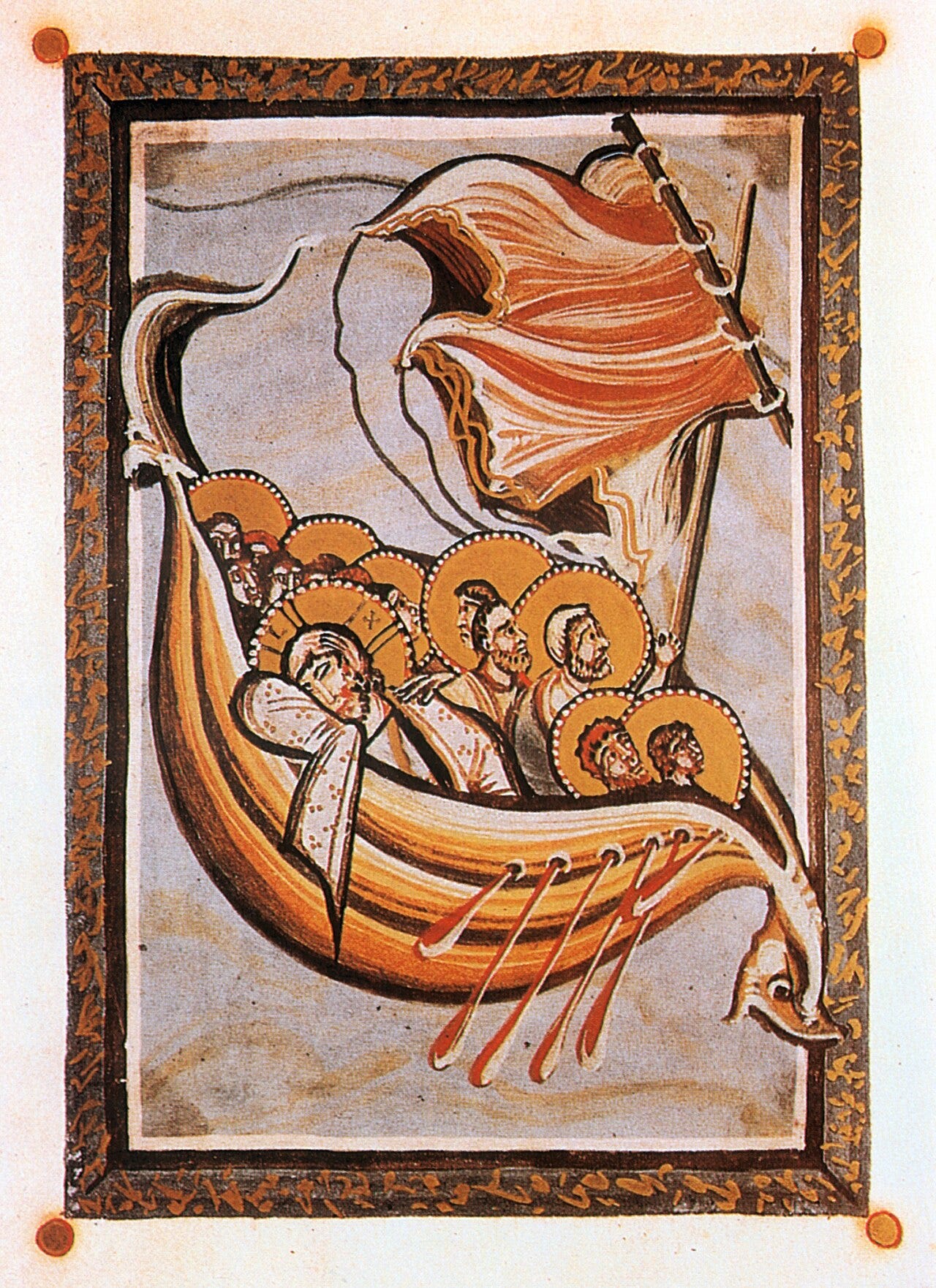
In 748, Walpurga responded to a call for aid in Germany, and during her journey across the sea, a terrible storm arose. The sailors panicked, and things seemed dire until Walpurga knelt and prayed. Immediately after her call for divine assistance, the clouds parted, the ocean calmed, and the seamen appointed Walpurga as a miracle worker.
Walpurga worked in Germany for a few years before the monastery at Heidenheim appointed her as its abbess. Heidenheim was an abbey for both nuns and monks, and Walpurga became a mystical guide for both women and men, furthering her reputation as a gifted healer and teacher. She continued performing miracles up until her death in 779, feats such as restoring sight to the blind, curing infertility, and reversing the effects of fatal infections and illnesses like rabies, the plague, and malaria.
After her death, Walpurga was entombed alongside one of her brothers at Heidenheim. She remained there for about a century until she appeared to one of the house hagiographers in a dream, asking to be moved. Although she didn’t explain why, Church officials obliged Walpurga’s request, but after a couple of decades in her new tomb, a Bishop made a startling discovery. When he went inside her burial chamber to make sure things were in order, he realized that Walpurga’s body looked better than when it had arrived. Her remains were also covered in a strange oil that had seemingly ‘healed’ parts of her body.
The church began bottling this oil, called Walpurga Oil, and offering it to their followers in need of miracles. Even today, a millennium after its discovery, Walpurga Oil persists as the most famous oil of the saints.
Modern depictions of Walpurga show the woman balancing a vial of her miraculous oil atop a book, whereas older imagery shows her flanked by a dog and holding sheaves of grain, not unlike ancient Grain Goddesses like Demeter, mother of the May Queen, Persephone.
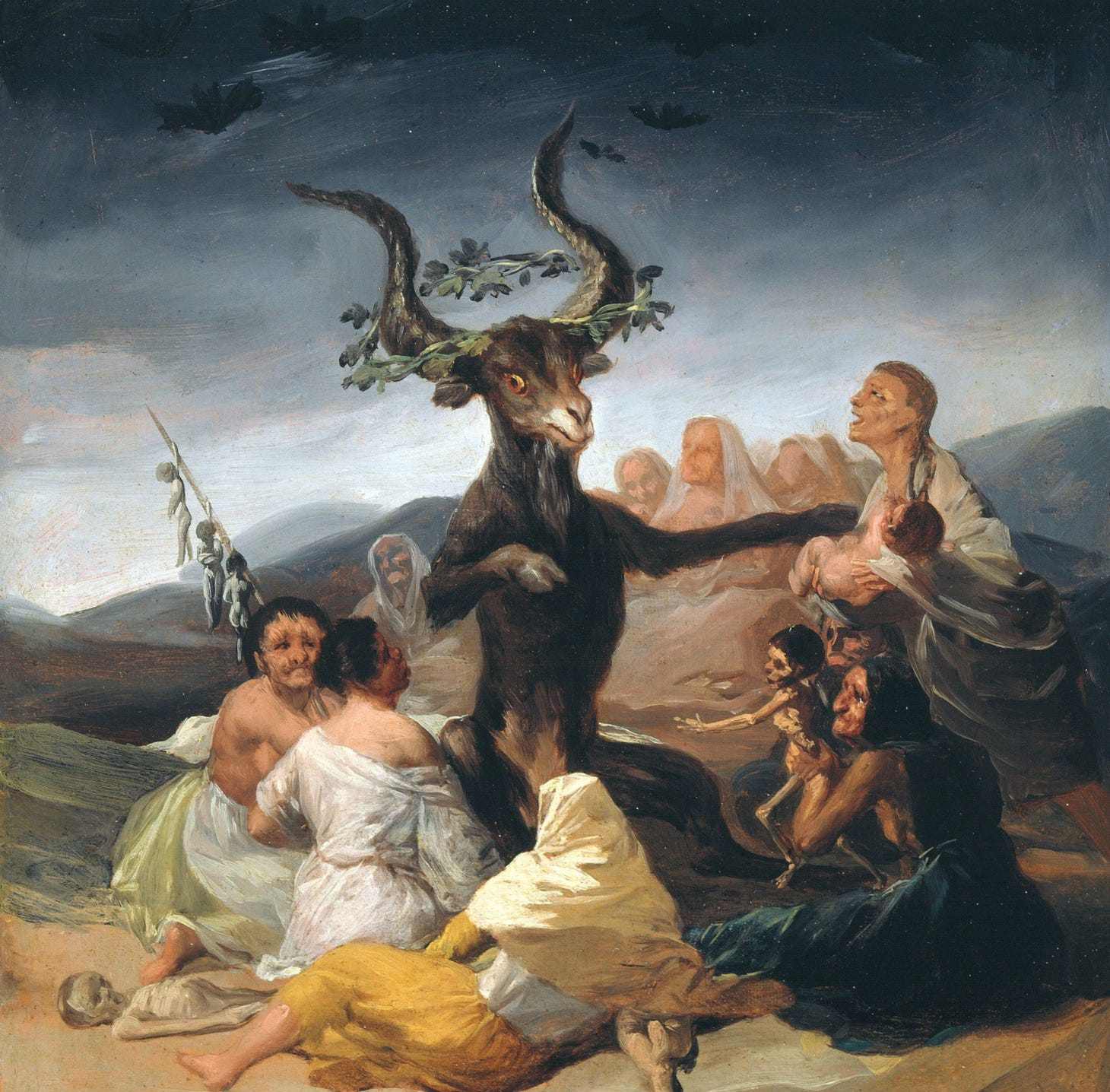
The legend of witches flying to the Brocken has been twisted and misshapen by the patriarchal pen, well-preserved in Gothic literature like Goethe’s Faust and Bram Stoker’s Dracula’s Guest, not to mention the countless paintings depicting witches in flight, but Walpurgisnacht still carries the lingering essence of earlier May Day traditions, when people celebrated the Goddess’s rituals of pleasure, sacred marriage, and fruitfulness of land and body.
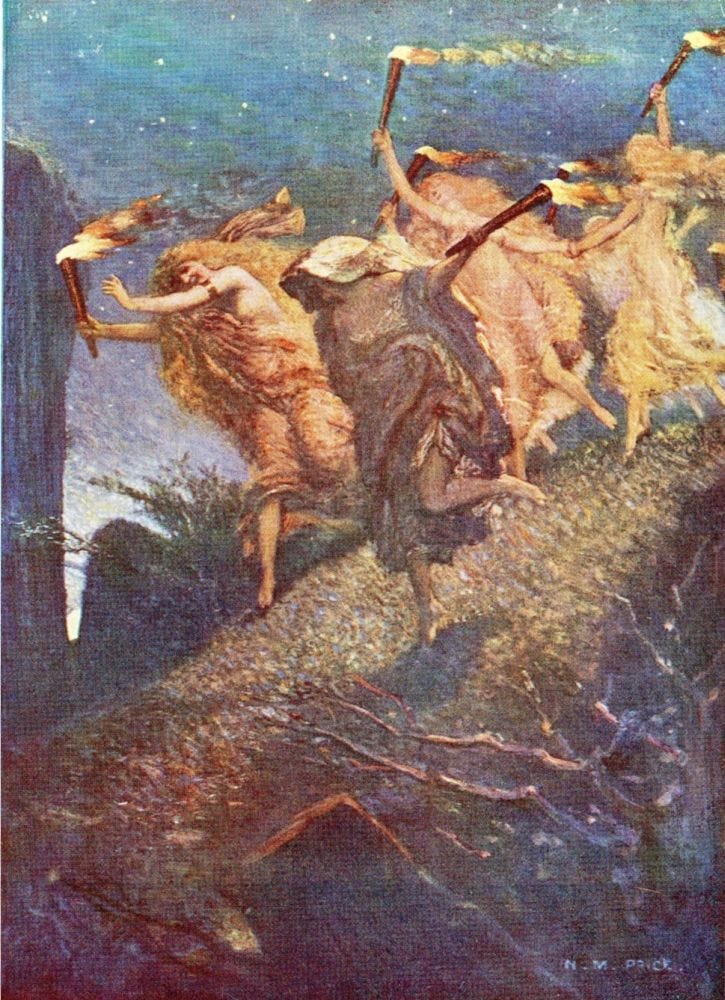
Pleasure and freedom were holy rites in the Goddess’s kingdom, but celebrations of bodily autonomy became hedonistic pursuits as Christianity’s reach increased during the Medieval era. The friction between the old gods and the new ones transformed May Eve into a night of fear. Walpurgisnacht became the witch’s sabbath, when the wicked danced around the fires of eternal damnation.
Barbara G. Walker, The Women’s Encyclopedia of Myths & Secrets
But, let’s not forget that devil and divinity are sisters, born from the same root—devi (Goddess) or deva (God). From devi and deva sprang the Persian word daeva, meaning “devil,” much like the Roman divus and divi (gods), from which emerged the Old English moniker for the king of Hell, divell.
Barbara G. Walker reminds us that Devi is the Sanskrit root word for several Indo-European names for the Great Mother. She writes that “The teachings of Krishna or Shiva were addressed to the Devi as interrogator of the catechism; she was also addressed as Dearly Beloved, the Shakti, a convention copied by the New Testament. Krishna’s virgin mother was her ‘maiden’ form, Devaki. The Goddess’s title as the Way of leading to the Gods was Devayani, the Divine Yoni. As the virgin mother of Mahavia, she was Devananda, Blessed Goddess. A Czech name for the Moon Goddess Devana, came from the same root, as also the Latin Diana, Minoan Diwija, Serbian Diiwica, and the Roman Diviana—all meaning, The Divinity.”
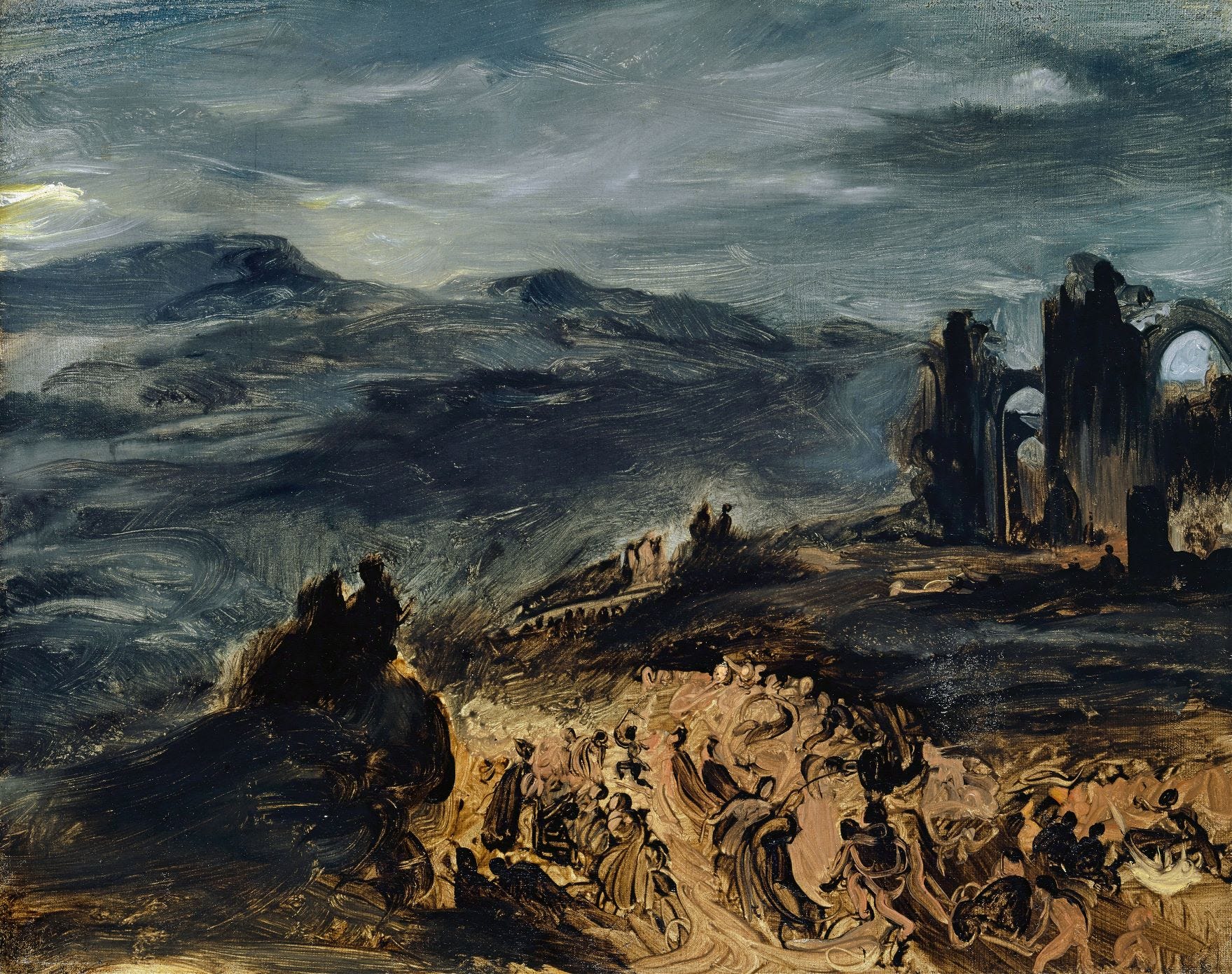
For generations, witches have met and made merry in the mountains because that is where the gods reside. Mountains are symbolic of the Great Mother and her hidden wisdom, secrets that only reveal themselves at places that are neither here nor there—thresholds, crossroads, liminal spaces, and dreamscapes. A mountain peak is a doorway into the goddess’s creative lair; it marks the blurry boundary where soil meets sky, stars singe our skin, and the sacred blends with the profane.
Mircea Eliade, Images & Symbols

Thanks for reading Walpurgisnacht: The Magic of May by Pointy Hat Press! Pointy Hat Press is a place for fairy tales and folklore, reimagined. Follow us on Substack and Instagram, sign up for our Moon Letters, and consider adding our original fairy tales to your library. You can also find us telling stories and talking about our latest creative quests on the Pointy Hat Press podcast.
No posts
Comments
Nothing yet. Say the first thing.
Sign in to join the conversation.