
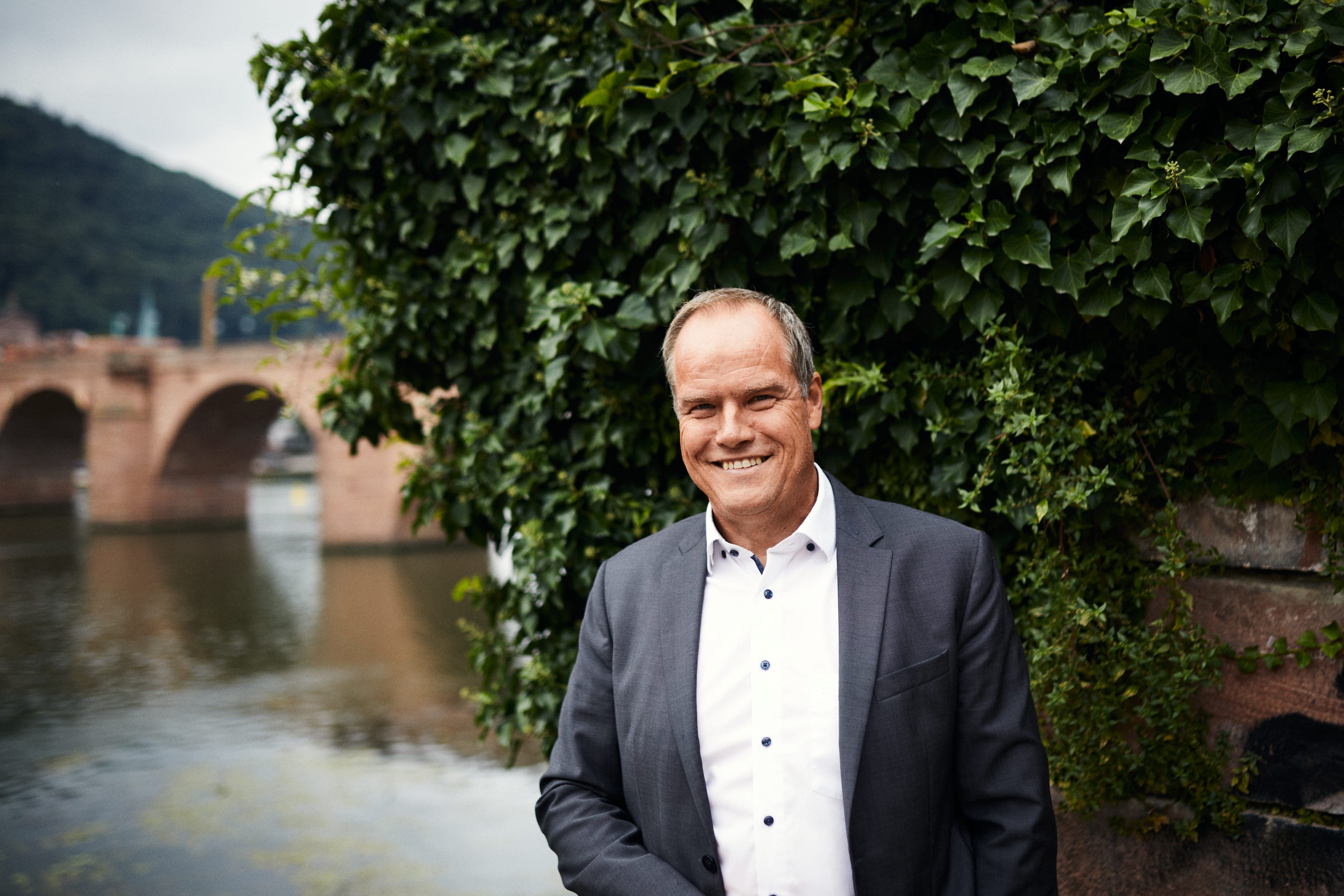
Welcome to our Start Here series featuring creators across industries who share the small and big ways to just get started. This week we're speaking with Mayor Eckart Würzner, who's spent nearly 20 years proving that ambitious environmental goals aren't just possible, they're profitable. From building 100% climate-neutral neighborhoods to creating win-win partnerships with 160+ companies, he's turned Heidelberg, Palo Alto’s sister city since 2017, into Germany's sustainability showcase.
Eckart doesn't fit the typical politician stereotype: he started as an environmental consultant, earned his PhD researching air pollution's impact on urban mortality (summa cum laude), and studied climate strategies in Brazil and the US as a German Marshall Fund Fellow. Today, as three-time elected Mayor and President of the Energy Cities network representing 30,000+ cities globally, he leads Heidelberg toward complete fossil fuel independence by 2030. He's built the world's largest passive energy district, established partnerships from Silicon Valley to China, and achieved remarkable results: 80% of citizens bike, walk, or use public transit, with 50%+ renewable energy citywide. His path teaches lessons that extend far beyond municipal politics—it's about thinking like a parent for the next generation.
TL;DR
Think like a parent for the next generation - decisions become clearer when you're building for your kids, not yourself
Control your own energy - own the infrastructure that matters instead of depending on others
Win-win or it won't work - lasting change benefits everyone involved, from citizens to businesses
Please: Germany's graduation season is here. What advice would you give 22-year-olds entering a world that looks completely different from when you graduated?
Eckart: Lots of things are changing—globally, in Iraq, China, the US. But when I was young, we talked about Waldsterben [forest death], about why people were killing whales. Greenpeace was just starting because we wanted a more sustainable lifestyle. It was stressful then too, not all happy and nice like people sometimes think.
I was fighting for my first job right after high school, competing to get into university, then later making more than 20 proposals to become an environmental advisor. So my advice? Be optimistic. Create your perspective for your future.
You've been transforming Heidelberg for nearly 20 years. When launching something completely new (like the Innovation Park or your Palo Alto partnership) what's your first not-so-obvious move?
Eckart: You have to understand that I'm an environmentalist who wanted to change the world. Of course you can't do that globally, but at the local level, you really can achieve big change.
As mayor in Germany, you're incredibly powerful—you head the energy utility, traffic company, administration, city council. You have political power AND what we call "service unit power." When I started, my message was always: "Rio is talking, Heidelberg is acting."
The not-so-obvious move? We decided to just build climate-neutral houses. It wasn't complicated, it was technically possible. I'd visited Amory Lovins in his house in Aspen, Colorado, at 2000+ meters altitude, using no energy. The examples already existed. We were just copying and improving.
Take our schools: we spent 160,000 euros on energy for one small primary school. You know how much they got for books and computers? Less than 10% of that. So we flipped it - now they get 160,000 for education and just 25,000 for energy through super-efficient retrofitting and private investment partnerships that pay for themselves in five years.
This is incredible. Take me back to that moment when you had this big idea. How did you decide "this is absolutely something we have to do"?
Eckart: First of all, everything we do is based on knowledge. When you work with people like Amory Lovins or Wolfgang Feist from the Passive House Institute here in Heidelberg, you know it's possible. You know the relevance.
Yes, our building standard costs 3-4% more initially. But we reduce energy demand by 65% compared to national standards. That's real money, and it's tangible.
At the beginning, nobody was willing to build this standard. Architects weren't prepared. The building committee said it was crazy. But I found enough partners who understood that globally, this was the right direction.
A well-known American investor once told me in New York: "I'll buy the whole area and build it to your standard." That confirmed we were on the right path.
I'm running a city of Nobel Prize winners: 65% of Heidelberg's citizens work in science or science-related business. It was easier here to get people on board because they wanted to be part of future development that's more resilient, climate-related, sustainable, and human-centered.
But here's my philosophy: if we knowledge cities don't take the lead, who else will?
There are competing needs you deal with daily. How do you continue making progress on what really matters while handling day-to-day problems?
Eckart: Two things: structures and people.
Structures first. In Germany, cities own their energy utilities - unlike France where EDF runs everything nationally. I have my own energy company. We produce our own energy, already over 50% green, serving citizens with our own renewable power. Take control of what you can control.
Second, you need qualified people. Planning combined heat and power plants, solar installations, creating sponge city systems to keep rainwater in the surface rather than sending it straight to sewers—this needs knowledge integrated into daily planning.
Many cities sell their utilities once for quick cash. It's better to feed the cow daily and get milk forever than to sell the cow once.
What rituals in your day help you make decisions clearly and prioritize correctly?
Eckart: The city council and administration must go in the same direction. We do check-ups every year or two; balance sheets to see where we are. The biannual report is the foundation of long-lasting strategy. Otherwise, you always run off track.
It's stressful being constantly controlled on whether you're achieving your goals, but it's good. It keeps you sharp. City councilors know you're on the right path, and you can adjust—speed up or modify programs while maintaining strategic balance.
Any parting advice for our audience sitting on big ideas but unsure how to execute?
Eckart: Everyone has a narrative. Mine is a bit unusual—I became a family father at 18. Now I have four kids and six grandchildren. It's very good if you behave like a mother or father when you have responsibility for any unit; a company, a city, whatever.
When you do that, you look for solutions that create a better world. Not for you, but for the next generation. With that perspective, you can overcome barriers. It doesn't matter if colleagues are from Asia, Africa, the United States, regardless of background.
If you believe in respectful, trustful, and equal situations for everybody, then you can create in your small world what you want to see in the global world.
Rate yourself on the Mayor's essential leadership traits before tackling your next big project:
Long-term thinking: I make decisions based on what's best for the next generation, not quick wins (1=never, 5=always)
Knowledge-first approach: I research proven examples before making major moves (1=wing it, 5=data-driven)
Coalition building: I can find partners who share my vision even when it's unpopular (1=go solo, 5=team builder)
Control key infrastructure: I identify and gain influence over the systems that matter most (1=hope for the best, 5=own the levers)
Win-win mindset: I design solutions that benefit all stakeholders, not just me (1=zero-sum, 5=mutual benefit)
Measurement discipline: I track progress religiously and adjust course based on data (1=set and forget, 5=constant monitoring)
Scoring: 25-30 = Ready to transform your organization; 20-24 = Strengthen weak areas first; Below 20 = Start with smaller pilot projects
Answers in bold
Digital planning tools or analog notebooks (both) • Most used emoji: 😊 • One thing technology can't solve in cities: Being in community • Surprising random skill: Early mornings, no alarm needed • Favorite underrated thing about Heidelberg: Its quiet urban intimacy • Most underrated aspect of city leadership: Quiet listening. Real attention • Most overrated buzzword in smart cities: Tech-first without real impact • If you weren't in governance, you'd be: Teaching environmental science again • Your leadership motto: Love the old, live for the new • Best ideas come from: Unexpected conversations • Most underrated trait of effective mayors: Clarity, especially under pressure • Climate advice you repeat most often: Act now. Not later • Least helpful advice about leadership: "Wait. It'll fix itself." • Favorite question to ask fellow mayors: What's your city's secret superpower?
Follow Heidelberg's transformation here.
Who's next? Reply and tell us who you'd like to hear from.
No posts
Comments
Nothing yet. Say the first thing.
Sign in to join the conversation.