
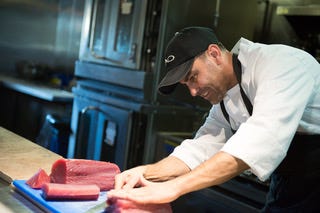
Welcome to our Start Here series featuring creators across industries who share the small and big ways to just get started. This week we're speaking with Georges Hawawini, restaurateur behind Xebec SF, who believes that desire beats passion, great home cooks don't always make great restaurateurs, and real success means making your employees more successful than you.
Georges doesn't fit the typical chef stereotype. He started his journey not in culinary school (proudly!), but slicing lettuce in his family's small deli as an immigrant kid. Today, he runs one of San Francisco's most unique and respected Japanese-Mediterranean fusion restaurants, but his path there teaches lessons that extend far beyond the kitchen.
TL;DR
1 - Desire is permanent, passion is seasonal; only desire survives the restaurant business.
2 - Your leasehold determines everything. Get the numbers right on paper first.
3 - Real success = making your employees more successful restaurateurs than you.
You talk about the difference between passion and desire. Can you explain what you mean?
Passion is like a seasonal vegetable. I might get passionate about kumquats or things of that nature, but to be a true successful entrepreneur, you have to have the deep desire. Because desire is almost innate. You want it so bad as opposed to having a passion. Desire is unwavering. Passion can come and go.
Most people think being a great cook equals restaurant success. True or false?
False. There's a saying in the industry: a great chef does not necessarily run a successful restaurant. A lot of people enter thinking, "I'm a great home cook, so I'm going to open up a restaurant." It's still a business. You have to be multifaceted. You can't be just one thing.
At the end of the day, anything you work towards is a business. Whether you're pitching for a new AI service or developing a building—it's still a business.
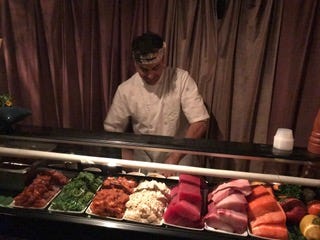
What makes someone an amazing restaurateur beyond cooking skills?
You have to be a great leader. You have to have huge people skills. How do you make every line cook that stands for eight hours feel great about their job at $25 an hour? How do you have them buy into your desire to put good food out?
That sometimes you're gonna take the hard job instead of delegating it. Building a strong team, being a strong leader…that is a skill that not a lot of people have.
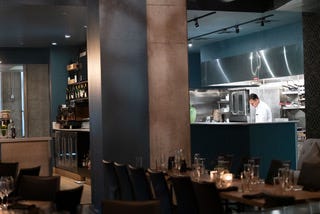
You love washing dishes. How does that help with leadership?
You're using your head so much on a regular basis. You're constantly thinking, managing by the hour. The dish washing station is the one place where I think the least. It's therapeutic and carefree. You're not thinking about anything except making sure that station stays clean.
Most importantly, it sets an example that you're willing to do anything. No task is beneath you when you're leading a team.
It's like doing yoga in the kitchen!
How do people become better home cooks?
Practice. AI can give you guidelines, but my advice is to freestyle. Taste your food, add, subtract, see how it changes that recipe. Don't always follow a recipe. Open up the fridge and just start cooking.
Go to a farmer's market and see something you've never seen before. Take it. Don't be afraid to make a mistake and burn something once in a while. You're only gonna learn from failure. Push yourself, experiment, use new ingredients, get out of your comfort zone.
You've faced multiple crises—9/11, financial crashes, the pandemic, plus getting robbed the day before opening. How do you handle adversity?
Those were the times where I actually was motivated as opposed to looking down on my luck. Your true character is judged with adversity. Any manager can manage a well-run business where sales are high. But bring a manager to manage a business with limited budget, with adversity, and let's see what they're made out of.
Tell us about the night before opening.
We left around 10:30 PM. We had tried every dish, went over everything with the service staff. We just left a beautiful restaurant that nobody had walked into yet as a client. We came in the next morning and saw we got broken into—all the alcohol was wiped out. About $25,000 worth.
Me staying calm, staying positive (because my character is that if you're going to challenge me), I'm going to come out fighting. I was interviewed on TV and I actually thanked them because it just fueled me. We opened up a week later, and we were very busy.
He says this with a smile on his face. Wow.
What drives you? Recognition? Michelin stars?
If anybody has ever mentioned Michelin to me, I cringe because I do not want it. What happens is you set unrealistic expectations. People go in thinking, "This is going to blow me out of the water." I don't do what I do for recognition.
My biggest success? At least three to four chefs that have worked for me have gone on to open up their own places and be successful—extremely successful. I've had the responsibility of many families being successful because of what they've learned working with me. That's why I do it.
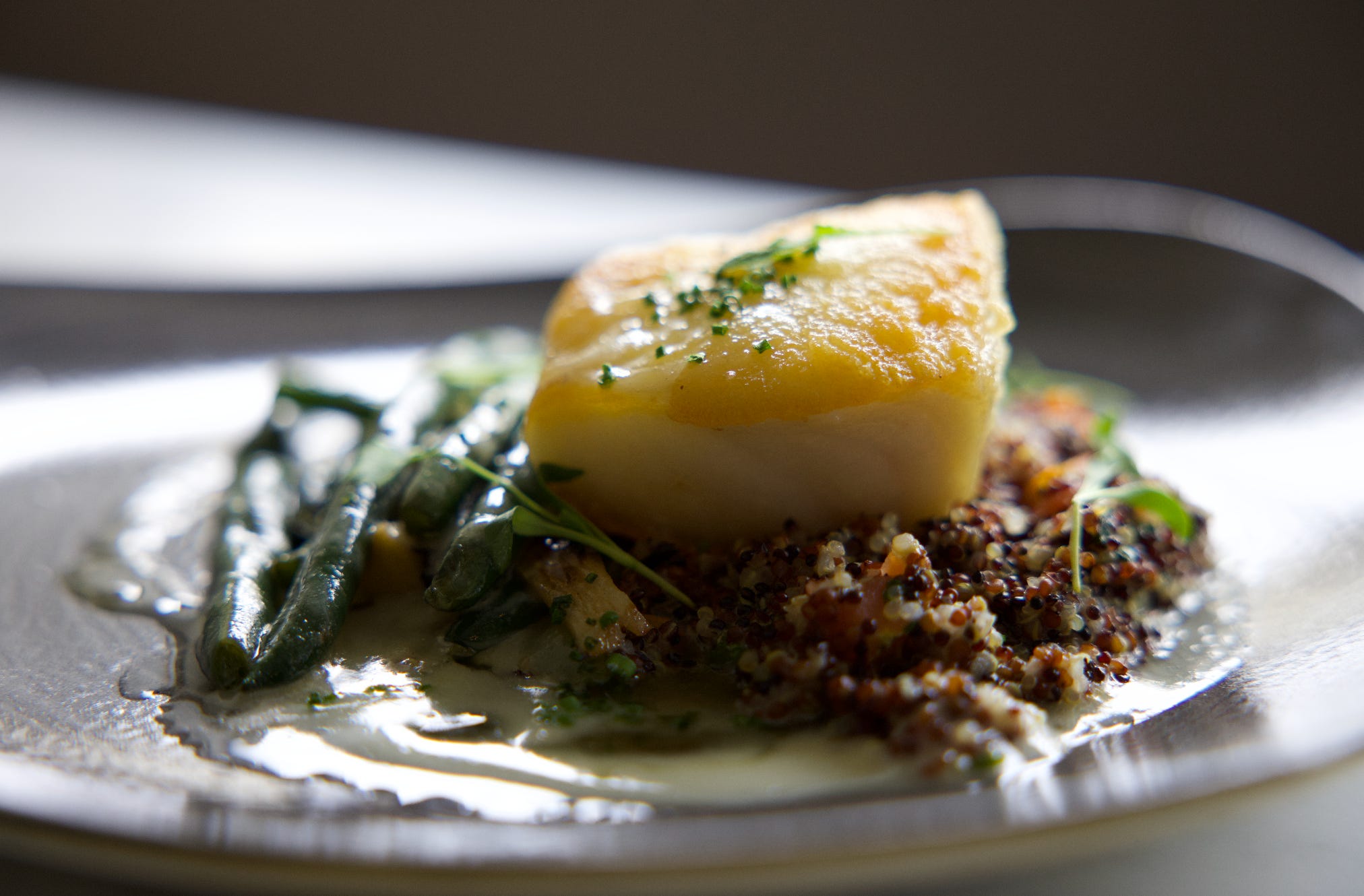
The most important business advice for aspiring restaurateurs?
Look at your leasehold first. So many chefs don't understand that it starts there. If you don't sign a good leasehold, I don't care if you work 26 hours a day, you're not gonna succeed.
Create a pro forma for the entire term of your lease: five years, ten years, twenty years. Do your due diligence and be honest with yourself. If it doesn't look good on paper, don't convince yourself. Make sure the numbers work.
Georges says you need "so many qualities that come together" to succeed; before you open your doors, check if you have his essential traits.
Desire: I think about this restaurant concept _____ times per day (1=never, 5=constantly)
Leadership: I would happily wash dishes for 8 hours if it helped my team (1=never, 5=absolutely)
Numbers: I've created a detailed financial plan including worst-case scenarios (1=no plan, 5=spreadsheet master)
Adversity: When things go wrong, I get _____ motivated (1=less, 5=more)
Character: I measure success by how successful my employees become (1=disagree, 5=totally agree)
Freestyle: I can create meals without recipes using random ingredients (1=need instructions, 5=chef mode)
Scoring: 25-30 = Start looking for locations; 20-24 = Work on weak areas first; Below 20 = Maybe try catering instead
Answers in bold
First kitchen job: Slicing lettuce • Favorite kitchen job: Filleting fish (duh) • Mediterranean or Japanese • Most used emoji: Thank you 🙏 • Favorite underrated ingredient: Ras Al Hanout • SF neighborhood: Hayes Valley • Napa or Sonoma • Food trend people are sleeping on: elevated Lebanese cuisine • Most overrated trend: still fried chicken • Kitchen mantra: "Today, I do my job correctly" • If not restaurants: finance or real estate • Daily routine starts with: making coffee for my staff • Least helpful advice: "Get out of this business" • Strangest review: "I never left your restaurant hungry!" • Most overused word in reviews: Amazing • If you're not willing to take a risk, don't open a restaurant.
Visit Georges at Xebec SF.
Who’s next? Reply and tell us who you'd like to hear from.
No posts
Comments
Nothing yet. Say the first thing.
Sign in to join the conversation.